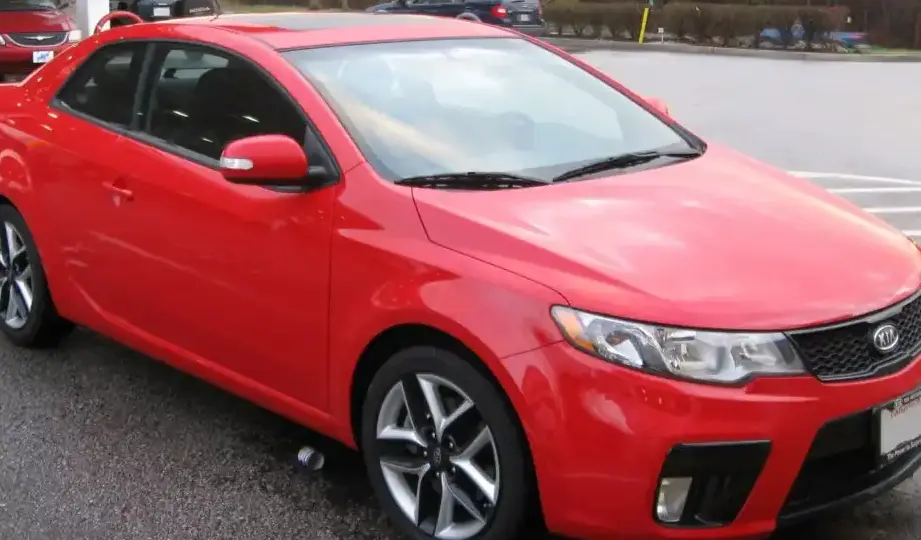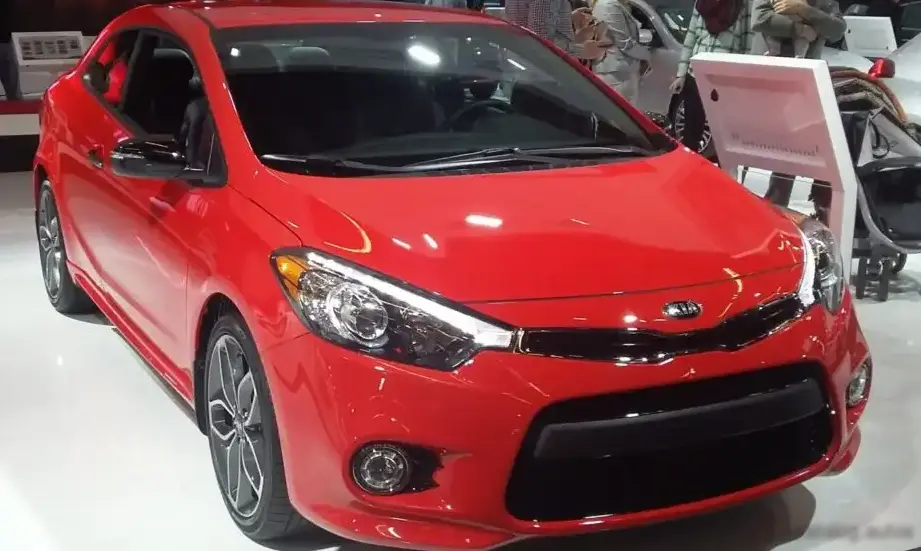
The Kia Forte Koup, specifically the 2.0 GDI variant producing 173 horsepower, was a two-door coupe offered by Kia from the 2013 to 2016 model years. Positioned as a sporty alternative to the Forte sedan, the Koup aimed to attract a younger demographic with its coupe styling and available performance upgrades. This generation, known internally as the Forte II, was based on the Hyundai Elantra’s platform, sharing many mechanical components but offering a distinct aesthetic. The 2.0 GDI trim represented a mid-range offering within the Koup lineup, bridging the gap between the base 1.8L engine and potential performance-oriented packages.
Technical Specifications
| Brand | Kia |
| Model | Forte |
| Generation | Forte II Koup |
| Type (Engine) | 2.0 GDI (173 Hp) |
| Start of production | 2013 |
| End of production | 2016 |
| Powertrain Architecture | Internal Combustion engine |
| Body type | Coupe |
| Seats | 5 |
| Doors | 2 |
| Fuel consumption (economy) – urban (EPA) | 9.8 l/100 km (24 US mpg, 28.8 UK mpg, 10.2 km/l) |
| Fuel consumption (economy) – extra urban (EPA) | 7.1 l/100 km (33.1 US mpg, 39.8 UK mpg, 14.1 km/l) |
| Fuel consumption (economy) – combined (EPA) | 8.7 l/100 km (27 US mpg, 32.5 UK mpg, 11.5 km/l) |
| Fuel Type | Petrol (Gasoline) |
| Emission standard | ULEV-II |
| Weight-to-power ratio | 7.7 kg/Hp, 129.9 Hp/tonne |
| Weight-to-torque ratio | 6.4 kg/Nm, 156.9 Nm/tonne |
| Power | 173 Hp @ 6500 rpm |
| Power per litre | 86.5 Hp/l |
| Torque | 209 Nm @ 4700 rpm (154.15 lb.-ft. @ 4700 rpm) |
| Engine layout | Front, Transverse |
| Engine Model/Code | Nu / G4NC |
| Engine displacement | 1999 cm3 (121.99 cu. in.) |
| Number of cylinders | 4 |
| Engine configuration | Inline |
| Cylinder Bore | 81 mm (3.19 in.) |
| Piston Stroke | 97 mm (3.82 in.) |
| Compression ratio | 11.5:1 |
| Number of valves per cylinder | 4 |
| Fuel injection system | Direct injection |
| Engine aspiration | Naturally aspirated engine |
| Valvetrain | DOHC, D-CVVT |
| Engine oil capacity | 4 l (4.23 US qt | 3.52 UK qt) |
| Coolant | 6 l (6.34 US qt | 5.28 UK qt) |
| Kerb Weight | 1332 kg (2936.56 lbs.) |
| Max. weight | 1760 kg (3880.14 lbs.) |
| Max load | 428 kg (943.58 lbs.) |
| Trunk (boot) space – minimum | 378 l (13.35 cu. ft.) |
| Fuel tank capacity | 50 l (13.21 US gal | 11 UK gal) |
| Length | 4530 mm (178.35 in.) |
| Width | 1780 mm (70.08 in.) |
| Height | 1410 mm (55.51 in.) |
| Wheelbase | 2700 mm (106.3 in.) |
| Front track | 1553-1557 mm (61.14 – 61.3 in.) |
| Rear (Back) track | 1566-1570 mm (61.65 – 61.81 in.) |
| Front overhang | 880 mm (34.65 in.) |
| Rear overhang | 950 mm (37.4 in.) |
| Ride height (ground clearance) | 140 mm (5.51 in.) |
| Minimum turning circle (turning diameter) | 10.6 m (34.78 ft.) |
| Approach angle | 14.5° |
| Departure angle | 20.7° |
| Drivetrain Architecture | The Internal combustion engine (ICE) drives the front wheels of the vehicle. |
| Drive wheel | Front wheel drive |
| Number of gears and type of gearbox | 6 gears, manual transmission |
| Front suspension | Independent, type McPherson with coil spring and anti-roll bar |
| Rear suspension | Coil spring, Torsion |
| Front brakes | Ventilated discs, 280 mm |
| Rear brakes | Disc, 262 mm |
| Assisting systems | ABS (Anti-lock braking system) |
| Steering type | Steering rack and pinion |
| Power steering | Electric Steering |
| Tires size | 205/55 R16; 215/45 R17 |
| Wheel rims size | 6.5J x 16; 7J x 17 |
Powertrain & Engine Architecture
The heart of the 2.0 GDI Koup is the Hyundai-Kia Nu engine family, specifically the G4NC code. This 1.999-liter inline-four cylinder engine utilizes direct fuel injection (GDI) to enhance both power and fuel efficiency. Direct injection allows fuel to be sprayed directly into the combustion chamber, resulting in a more complete burn and improved volumetric efficiency. The engine features a double overhead camshaft (DOHC) valvetrain with Kia’s Dual Continuously Variable Valve Timing (D-CVVT) system. D-CVVT optimizes valve timing based on engine load and speed, further improving performance and reducing emissions. The 6-speed manual transmission was standard, providing drivers with a more engaging driving experience. The engine produces 173 horsepower at 6500 rpm and 209 Nm (154.15 lb-ft) of torque at 4700 rpm.
Driving Characteristics
The 2.0 GDI Koup with the 6-speed manual offered a noticeable step up in performance compared to the base 1.8L engine. While not a sports car, the 173 hp engine provided adequate acceleration for everyday driving and even some spirited maneuvers. The manual transmission allowed for precise control over gear selection, maximizing the engine’s power band. The gear ratios were tuned for a balance between acceleration and fuel economy. Compared to a potential automatic transmission variant (not widely offered), the manual provided a more direct connection to the engine and a more engaging driving experience. The Koup’s suspension, while tuned for comfort, offered reasonable handling characteristics, making it a relatively enjoyable car to drive on winding roads.
Equipment & Trim Levels
The 2.0 GDI Koup typically came standard with features such as air conditioning, power windows and locks, a touchscreen audio system with Bluetooth connectivity, and a tilt/telescoping steering wheel. Higher trim levels, or when equipped with optional packages, could include features like a sunroof, leather upholstery, heated front seats, a premium audio system, and alloy wheels. Interior upholstery was typically cloth on the base models, with leather available as an upgrade. The dashboard layout was relatively straightforward and functional, with a focus on ease of use.
Chassis & Braking
The Koup utilized a McPherson strut front suspension and a coil spring torsion beam rear suspension. This setup provided a good balance between ride comfort and handling. The front brakes were ventilated discs, providing ample stopping power, while the rear brakes were solid discs. Anti-lock Braking System (ABS) was standard, enhancing safety during emergency braking situations. The Koup’s chassis was designed to provide a stable and predictable driving experience, with reasonable body control during cornering.
Market Reception & Comparison
The Kia Forte Koup 2.0 GDI was generally well-received by automotive critics as a stylish and affordable coupe. It was praised for its attractive design, comfortable interior, and decent performance. However, some critics noted that the interior materials were not as premium as those found in some of its competitors. Compared to other coupes in its class, such as the Honda Civic Coupe or the Scion tC, the Koup offered a competitive level of features and performance at a lower price point. Fuel economy was respectable, averaging around 27 mpg in combined driving. Reliability was generally considered good, although some owners reported minor issues with the electrical system.
Legacy
The Kia Forte Koup 2.0 GDI has established itself as a reliable and affordable used car option. The Nu engine family, in general, has proven to be relatively durable, with many examples exceeding 150,000 miles with proper maintenance. Common maintenance items include regular oil changes, timing chain inspection (though generally robust), and occasional sensor replacements. The Koup’s relatively simple mechanical design makes it relatively easy and inexpensive to repair. Today, the 2.0 GDI Koup represents a good value for buyers looking for a stylish and practical coupe with a decent amount of power.