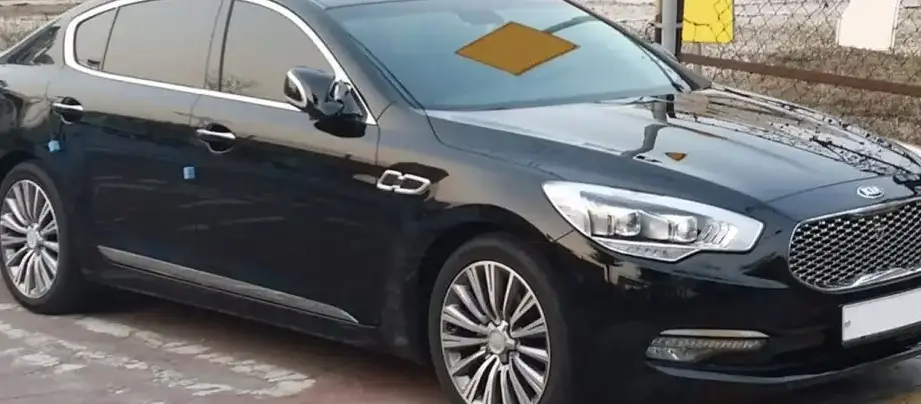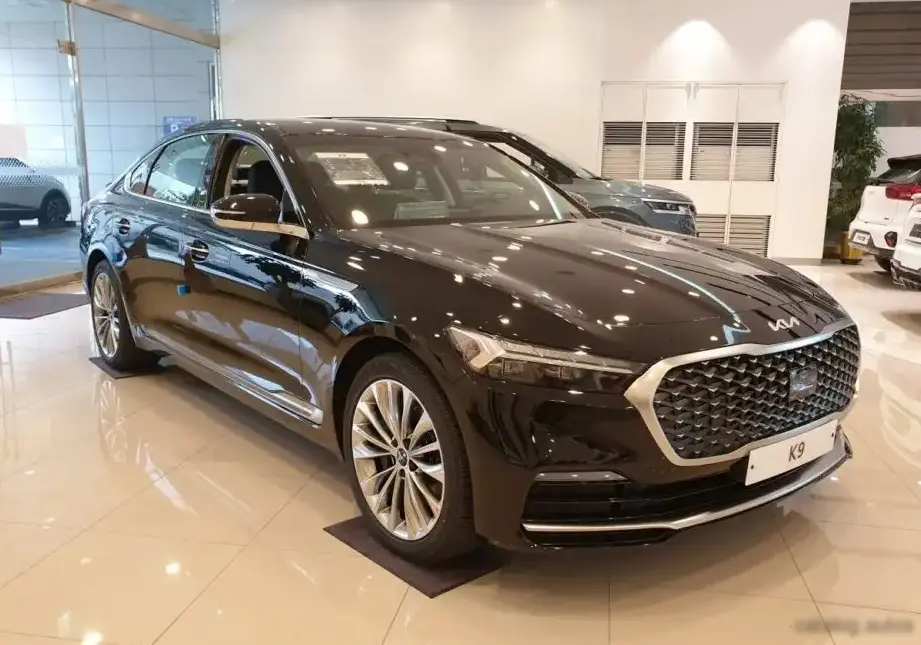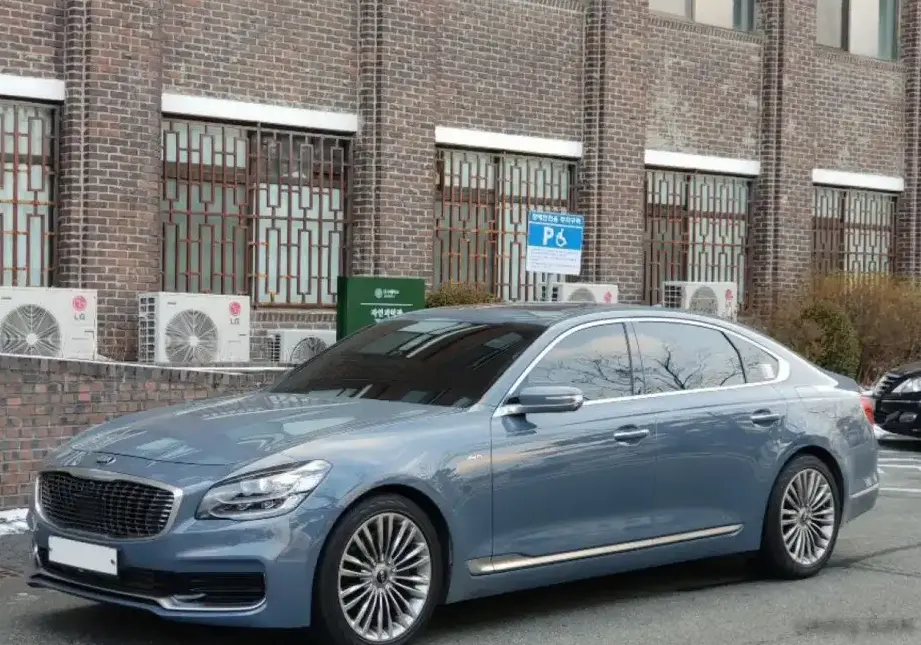
The Kia K9 II 3.3 T-GDI V6 Automatic, produced from April 2018 to May 2021, represents a significant step in Kia’s ambition to compete in the luxury sedan segment. This variant, positioned as a mid-to-upper trim level within the K9 II range, aimed to offer a compelling blend of performance, technology, and refinement. The K9 II, internally designated as the RH platform, was primarily targeted towards the Korean domestic market, with limited exports to select regions. It served as Kia’s flagship sedan, intended to challenge established European and Japanese luxury brands. This specific 3.3-liter twin-turbocharged V6 configuration was designed to provide a balance between the more accessible 3.8L naturally aspirated engine and the range-topping 5.0L V8.
Technical Specifications
| Brand | Kia |
| Model | K9 |
| Generation | K9 II |
| Type (Engine) | 3.3 T-GDI V6 (370 Hp) Automatic |
| Start of production | April, 2018 |
| End of production | May, 2021 |
| Powertrain Architecture | Internal Combustion engine |
| Body type | Sedan |
| Seats | 5 |
| Doors | 4 |
| Fuel consumption (urban) | 13.5 l/100 km (17.4 US mpg, 20.9 UK mpg, 7.4 km/l) |
| Fuel consumption (extra urban) | 9.2 l/100 km (25.6 US mpg, 30.7 UK mpg, 10.9 km/l) |
| Fuel consumption (combined) | 11.5 l/100 km (20.5 US mpg, 24.6 UK mpg, 8.7 km/l) |
| CO2 emissions | 199 g/km |
| Fuel Type | Petrol (Gasoline) |
| Weight-to-power ratio | 5.4 kg/Hp, 183.6 Hp/tonne |
| Weight-to-torque ratio | 4 kg/Nm, 253.1 Nm/tonne |
| Power | 370 Hp @ 6000 rpm |
| Power per litre | 110.7 Hp/l |
| Torque | 510 Nm @ 1300-4500 rpm (376.16 lb.-ft. @ 1300-4500 rpm) |
| Engine Model/Code | Lambda II / G6DP |
| Engine displacement | 3342 cm3 (203.94 cu. in.) |
| Number of cylinders | 6 |
| Engine configuration | V-engine |
| Fuel injection system | Direct injection |
| Engine oil capacity | 6.9 l (7.29 US qt | 6.07 UK qt) |
| Coolant capacity | 10.1 l (10.67 US qt | 8.89 UK qt) |
| Kerb Weight | 2015 kg (4442.31 lbs.) |
| Length | 5120 mm (201.57 in.) |
| Width | 1915 mm (75.39 in.) |
| Height | 1490 mm (58.66 in.) |
| Wheelbase | 3105 mm (122.24 in.) |
| Front track | 1629-1659 mm (64.13 – 65.31 in.) |
| Rear track | 1639 mm (64.53 in.) |
| Drivetrain Architecture | Rear wheel drive |
| Number of gears | 8 |
| Gearbox type | Automatic transmission |
| Front suspension | Independent multi-link suspension |
| Rear suspension | Independent multi-link suspension |
| Front brakes | Ventilated discs |
| Rear brakes | Ventilated discs |
| Tire size | 245/50 R18; 245/45 R19 98W; 275/40 R19 101W |
| Wheel rims size | 18; 19 |
Powertrain & Engine Architecture
At the heart of the K9 II 3.3 T-GDI lies the Lambda II G6DP engine, a 3.3-liter V6 featuring twin-scroll turbochargers and direct fuel injection. This engine is part of Kia’s modern engine family, designed for both performance and efficiency. The direct injection system optimizes combustion, while the twin-scroll turbochargers minimize turbo lag and provide a broad torque curve. The engine produces 370 horsepower at 6000 rpm and a substantial 510 Nm (376 lb-ft) of torque available from a low 1300 rpm all the way to 4500 rpm. This broad torque band is a key characteristic of the engine, contributing to effortless acceleration. The engine is paired with a smooth-shifting 8-speed automatic transmission, which is tuned for comfort and refinement rather than aggressive sportiness. The transmission features a conventional torque converter and allows for manual gear selection via steering wheel-mounted paddles.
Driving Characteristics
The 3.3 T-GDI powertrain delivers a refined and comfortable driving experience. The readily available torque makes for effortless cruising and confident overtaking maneuvers. While not as overtly sporty as some of its European rivals, the K9 II offers a composed and stable ride. The 8-speed automatic transmission contributes to relaxed highway driving, with well-chosen gear ratios that keep the engine within its optimal power band. Compared to the base 3.8L engine, the 3.3 T-GDI provides a noticeable increase in performance, offering quicker acceleration and a more responsive feel. However, it doesn’t quite match the outright power of the 5.0L V8, which is geared towards those prioritizing maximum performance. The rear-wheel-drive configuration contributes to a balanced feel, although it doesn’t offer the all-weather capability of an all-wheel-drive system.
Equipment & Trim Levels
The K9 II 3.3 T-GDI typically came well-equipped, reflecting its positioning as a luxury sedan. Standard features often included leather upholstery, power-adjustable and ventilated front seats, a premium audio system, a large infotainment touchscreen with navigation, and a suite of advanced driver-assistance systems (ADAS) such as adaptive cruise control, lane-keeping assist, and automatic emergency braking. Optional extras could include a rear-seat entertainment system, a panoramic sunroof, and upgraded interior trim materials. The interior design emphasized spaciousness and comfort, with a focus on high-quality materials and a refined aesthetic.
Chassis & Braking
The K9 II utilizes an independent multi-link suspension setup for both the front and rear axles, providing a comfortable and controlled ride. The suspension is tuned to prioritize ride quality over outright handling sharpness. Ventilated disc brakes are fitted on all four wheels, providing ample stopping power. The inclusion of ABS (Anti-lock Braking System) and other electronic stability control systems further enhances safety. The K9 II’s chassis is designed to provide a quiet and refined driving experience, with extensive sound insulation to minimize road and wind noise.
Market Reception & Comparison
The K9 II 3.3 T-GDI received generally positive reviews, with critics praising its comfortable ride, spacious interior, and generous equipment list. However, it faced challenges in competing with established luxury brands due to Kia’s relatively newer reputation in the segment. Fuel economy was considered average for its class, with combined figures around 11.5 l/100 km (20.5 US mpg). Compared to the 3.8L version, the 3.3 T-GDI offered significantly improved performance, but at a higher price point. The 5.0L V8 provided even more power but came with a further increase in cost and fuel consumption. Reliability reports have been generally favorable, with few major issues reported with the 3.3 T-GDI powertrain.
Legacy
The Kia K9 II 3.3 T-GDI represents a pivotal moment in Kia’s brand evolution, demonstrating the company’s ability to produce a genuinely competitive luxury sedan. While not a massive sales success globally, it helped to elevate Kia’s image and establish its credentials in the premium segment. On the used car market, the K9 II 3.3 T-GDI offers a compelling value proposition, providing a luxurious and well-equipped vehicle at a significantly lower price than its European and Japanese rivals. The Lambda II engine has proven to be relatively reliable, making it a potentially attractive option for buyers seeking a comfortable and refined luxury sedan.