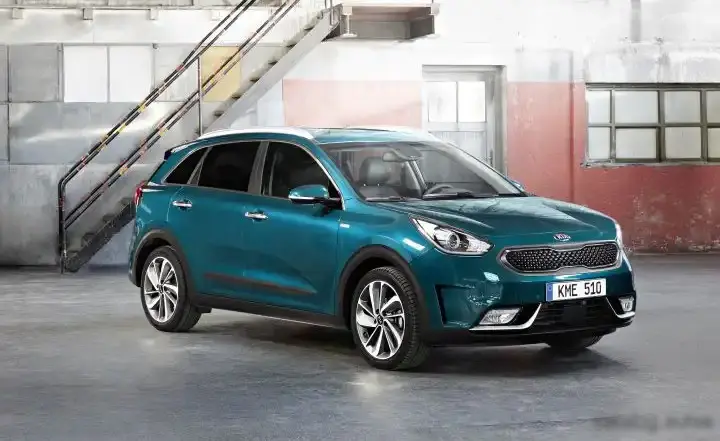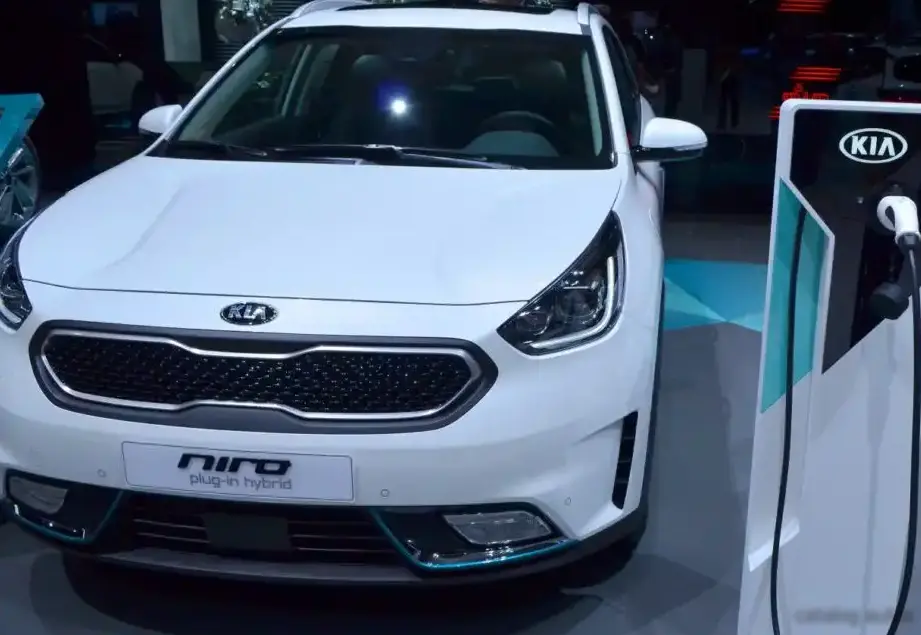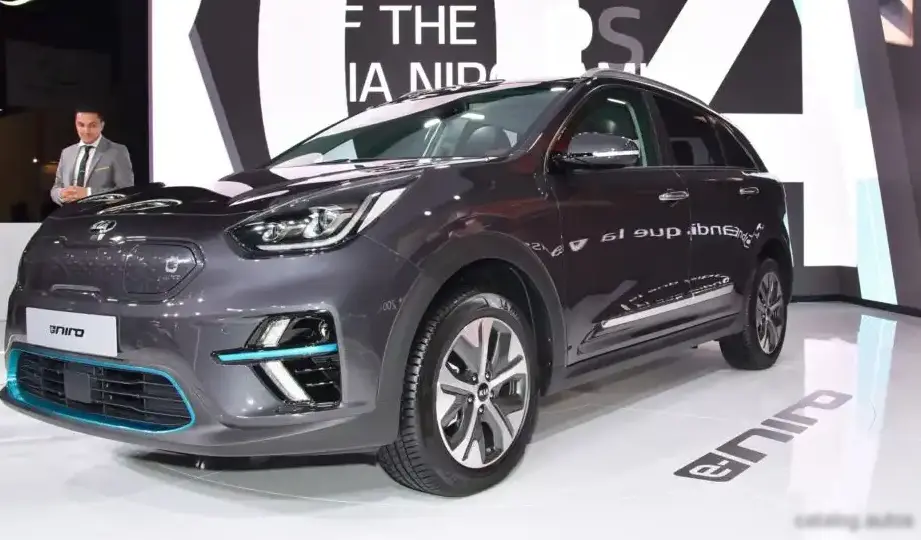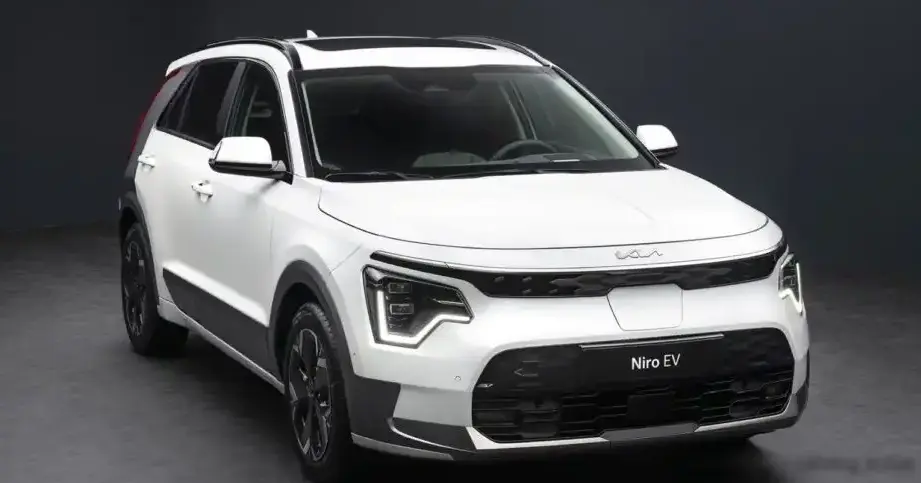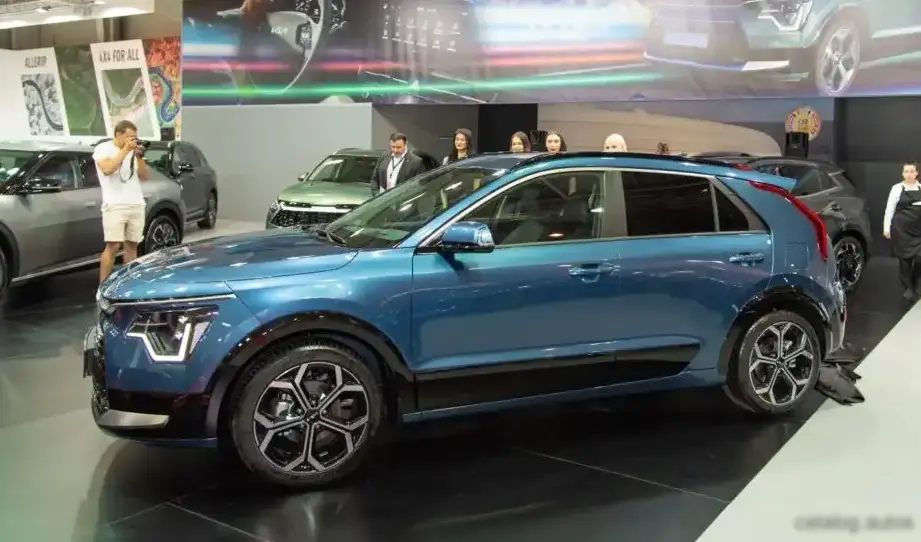
The Kia Niro I (facelift, introduced in July 2019 and produced through June 2022) 1.6 GDI 141 hp Plug-in Hybrid with a Dual Clutch Transmission (DCT) represented a significant step in Kia’s expansion of its eco-friendly vehicle lineup. Positioned as a mid-range offering within the Niro family, this variant aimed to balance fuel efficiency with a reasonable level of performance and practicality. It falls within the first generation of the Niro (LC), built on the 1HX platform shared with the Hyundai Ioniq. The facelift brought styling updates and refinements to the powertrain, enhancing its appeal in the increasingly competitive plug-in hybrid SUV segment.
Technical Specifications
| Brand | Kia |
| Model | Niro |
| Generation | Niro I (facelift 2019) |
| Type (Engine) | 1.6 GDI (141 Hp) Plug-in Hybrid DCT |
| Start of production | July, 2019 |
| End of production | June, 2022 |
| Powertrain Architecture | PHEV (Plug-in Hybrid Electric Vehicle) |
| Body type | SUV |
| Seats | 5 |
| Doors | 5 |
| Combined fuel consumption (WLTP) | 5.3 l/100 km (44.4 US mpg, 53.3 UK mpg, 18.9 km/l) |
| CO2 emissions (WLTP) | 31 g/km |
| Fuel consumption (NEDC, WLTP equivalent) | 1.3 l/100 km (180.9 US mpg, 217.3 UK mpg, 76.9 km/l) |
| CO2 emissions (NEDC, WLTP equivalent) | 29 g/km |
| Fuel Type | Petrol / electricity |
| Acceleration 0 – 100 km/h | 10.8 sec |
| Acceleration 0 – 62 mph | 10.8 sec |
| Acceleration 0 – 60 mph | 10.3 sec |
| Maximum speed | 172 km/h (106.88 mph) |
| Emission standard | Euro 6d |
| Weight-to-power ratio | 10.8 kg/Hp, 92.8 Hp/tonne |
| Weight-to-torque ratio | 5.7 kg/Nm, 174.5 Nm/tonne |
| Gross battery capacity | 8.9 kWh |
| Net (usable) battery capacity | 7.1 kWh |
| Battery voltage | 360 V |
| Battery technology | Lithium-polymer (LiPo) |
| Battery weight | 117 kg (257.94 lbs.) |
| Battery location | Under the rear seats / Under the trunk |
| All-electric range (WLTP) | 65 km (40.39 mi) |
| All-electric range (NEDC, WLTP equivalent) | 58 km (36.04 mi) |
| Average Energy consumption (WLTP) | 12.2 kWh/100 km (19.63 kWh/100 mi, 172 MPGe, 8.2 km/kWh, 5.1 mi/kWh) |
| Average Energy consumption (NEDC, WLTP equivalent) | 10.5 kWh/100 km (16.9 kWh/100 mi, 199 MPGe, 9.5 km/kWh, 5.9 mi/kWh) |
| Max speed (electric) | 120 km/h (74.56 mph) |
| Electric motor power | 61 Hp @ 1798-2500 rpm |
| Electric motor Torque | 170 Nm @ 0-1798 rpm (125.39 lb.-ft. @ 0-1798 rpm) |
| Electric motor location | Between the combustion engine and the transmission |
| System power | 141 Hp @ 5700 rpm |
| System torque | 265 Nm @ 1000-2400 rpm (195.45 lb.-ft. @ 1000-2400 rpm) |
| Power | 105 Hp @ 5700 rpm |
| Torque | 147 Nm @ 4000 rpm (108.42 lb.-ft. @ 4000 rpm) |
| Engine layout | Front, Transverse |
| Engine Model/Code | Smartstream / G4LE |
| Engine displacement | 1580 cm3 (96.42 cu. in.) |
| Number of cylinders | 4 |
| Engine configuration | Inline |
| Cylinder Bore | 72 mm (2.83 in.) |
| Piston Stroke | 97 mm (3.82 in.) |
| Compression ratio | 13:1 |
| Number of valves per cylinder | 4 |
| Fuel injection system | Direct injection |
| Engine aspiration | Naturally aspirated engine |
| Valvetrain | DOHC, Dual CVVT |
| Engine oil capacity | 3.8 l (4.02 US qt | 3.34 UK qt) |
| Coolant | 6 l (6.34 US qt | 5.28 UK qt) |
| Kerb Weight | 1519-1576 kg (3348.82 – 3474.49 lbs.) |
| Max. weight | 2000 kg (4409.25 lbs.) |
| Max load | 424-481 kg (934.76 – 1060.42 lbs.) |
| Trunk (boot) space – minimum | 324 l (11.44 cu. ft.) |
| Trunk (boot) space – maximum | 1322 l (46.69 cu. ft.) |
| Fuel tank capacity | 43 l (11.36 US gal | 9.46 UK gal) |
| Permitted trailer load with brakes (12%) | 1300 kg (2866.01 lbs.) |
| Permitted trailer load without brakes | 600 kg (1322.77 lbs.) |
| Permitted towbar download | 100 kg (220.46 lbs.) |
| Length | 4355 mm (171.46 in.) |
| Width | 1805 mm (71.06 in.) |
| Height | 1545 mm (60.83 in.) |
| Wheelbase | 2700 mm (106.3 in.) |
| Front track | 1565 mm (61.61 in.) |
| Rear (Back) track | 1579 mm (62.17 in.) |
| Front overhang | 870 mm (34.25 in.) |
| Rear overhang | 785 mm (30.91 in.) |
| Ride height (ground clearance) | 160 mm (6.3 in.) |
| Drag coefficient (Cd) | 0.29 |
| Minimum turning circle (turning diameter) | 10.6 m (34.78 ft.) |
| Drivetrain Architecture | The Internal combustion engine (ICE) and electric motor drive the front wheels of the car with the ability to work in full electric or mixed mode. |
| Drive wheel | Front wheel drive |
| Number of gears and type of gearbox | 6 gears, automatic transmission DCT |
| Front suspension | Independent, type McPherson with coil spring and anti-roll bar |
| Rear suspension | Independent multi-link spring suspension with stabilizer |
| Front brakes | Ventilated discs |
| Rear brakes | Disc |
| Assisting systems | ABS (Anti-lock braking system) |
| Steering type | Steering rack and pinion |
| Power steering | Electric Steering |
| Tires size | 205/60 R16 |
| Wheel rims size | 6.5J x 16 |
INTRODUCTION
The Kia Niro I facelift 1.6 GDI Plug-in Hybrid DCT, launched in 2019, built upon the success of the original Niro, offering a compelling blend of fuel efficiency, practicality, and technology. Designed to appeal to environmentally conscious buyers, this variant combined a 1.6-liter gasoline engine with an electric motor and a lithium-polymer battery pack, allowing for a significant amount of all-electric driving range. The Niro aimed to carve out a niche in the burgeoning compact SUV market, competing with vehicles like the Toyota Prius Prime and Mitsubishi Outlander PHEV. The DCT transmission was a key component, offering smoother and more efficient gear changes compared to a traditional automatic.
Powertrain & Engine Architecture
At the heart of the Niro PHEV lies Kia’s Smartstream 1.6 GDI engine (G4LE code). This naturally aspirated, inline-four cylinder engine produces 105 horsepower at 5700 rpm and 147 Nm (108.42 lb-ft) of torque at 4000 rpm. It utilizes direct fuel injection and a dual continuously variable valve timing (DOHC, Dual CVVT) system to optimize combustion efficiency. The electric motor, delivering 61 hp and 170 Nm (125.39 lb-ft) of torque, is integrated between the engine and the 6-speed Dual Clutch Transmission (DCT). The DCT, unlike a conventional automatic, uses two separate clutches for odd and even gears, enabling quicker and more seamless shifts. The 8.9 kWh lithium-polymer battery pack, located under the rear seats and extending into the trunk, provides an all-electric range of up to 65 km (40.39 miles) under WLTP testing. The system intelligently manages the interplay between the gasoline engine and electric motor, prioritizing electric power whenever possible and seamlessly transitioning to hybrid mode when needed.
Driving Characteristics
The 1.6 GDI Plug-in Hybrid DCT offers a refined driving experience, particularly in urban environments where the electric motor can handle most driving duties. In full electric mode, the Niro is quiet and responsive, providing brisk acceleration for city driving. When the gasoline engine engages, the transition is generally smooth, although some drivers may notice a slight change in engine note. The DCT transmission contributes to a more engaging driving experience than a traditional automatic, with quick and precise gear changes. However, the combined system output of 141 hp doesn’t deliver particularly sporty performance; acceleration from 0-60 mph takes around 10.3 seconds. The focus is clearly on efficiency rather than outright speed. The gear ratios are tuned for fuel economy, meaning the engine can sometimes feel strained during aggressive acceleration or when climbing hills. Compared to the standard hybrid Niro, the PHEV offers significantly more electric range, but at the cost of some trunk space due to the larger battery pack.
Equipment & Trim Levels
The Niro 1.6 GDI Plug-in Hybrid DCT typically came well-equipped, even in base trim. Standard features often included a touchscreen infotainment system with Apple CarPlay and Android Auto compatibility, a rearview camera, automatic climate control, and a suite of safety features such as lane departure warning, forward collision avoidance assist, and automatic emergency braking. Higher trim levels added features like leather upholstery, a panoramic sunroof, a premium sound system, and adaptive cruise control. Interior upholstery was typically cloth in lower trims, with leather options available on higher-spec models. The dashboard layout was functional and modern, with a focus on ease of use. Optional extras included a wireless phone charger, heated and ventilated front seats, and a head-up display.
Chassis & Braking
The Niro PHEV utilizes a McPherson strut front suspension and a multi-link rear suspension, providing a comfortable and controlled ride. Stabilizer bars are fitted to both axles to reduce body roll during cornering. The braking system consists of ventilated discs at the front and solid discs at the rear. ABS (Anti-lock Braking System) is standard, along with electronic brake-force distribution (EBD). The steering is electrically assisted, providing light and precise control. The vehicle’s relatively low curb weight (1519-1576 kg / 3348.82 – 3474.49 lbs.) contributes to its nimble handling. Tire size is typically 205/60 R16.
Market Reception & Comparison
The Kia Niro 1.6 GDI Plug-in Hybrid DCT was generally well-received by critics, who praised its fuel efficiency, comfortable ride, and spacious interior. However, some reviewers noted its relatively modest performance and the slightly compromised trunk space compared to the standard hybrid model. Compared to the non-plug-in hybrid Niro, the PHEV offered a significant advantage in terms of all-electric range, making it a more attractive option for drivers with short commutes or access to charging infrastructure. Against competitors like the Toyota Prius Prime, the Niro offered a more SUV-like design and a more engaging driving experience, while the Prius Prime typically boasted slightly better fuel economy. Reliability reports have been generally positive, with few major issues reported with the powertrain.
Legacy
The Kia Niro I 1.6 GDI Plug-in Hybrid DCT has proven to be a reliable and efficient vehicle, maintaining a solid reputation in the used car market. The Smartstream engine and DCT transmission have demonstrated good durability, and the lithium-polymer battery pack has generally held its charge well over time. As the demand for plug-in hybrid vehicles continues to grow, the Niro PHEV remains a popular choice for buyers seeking a practical and environmentally friendly SUV. Its blend of fuel efficiency, comfort, and technology has cemented its place as a significant player in the compact plug-in hybrid segment.