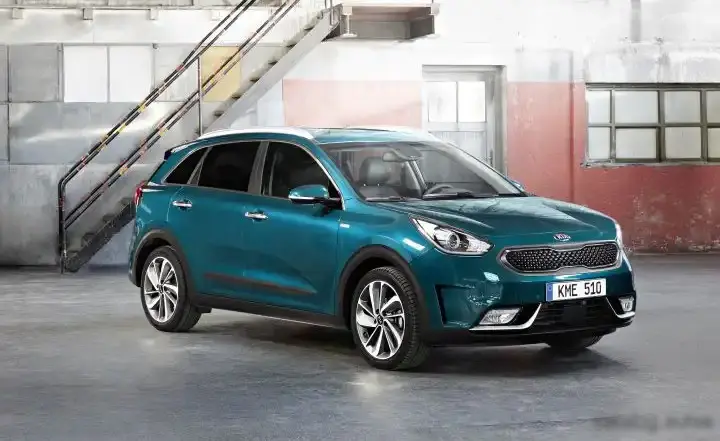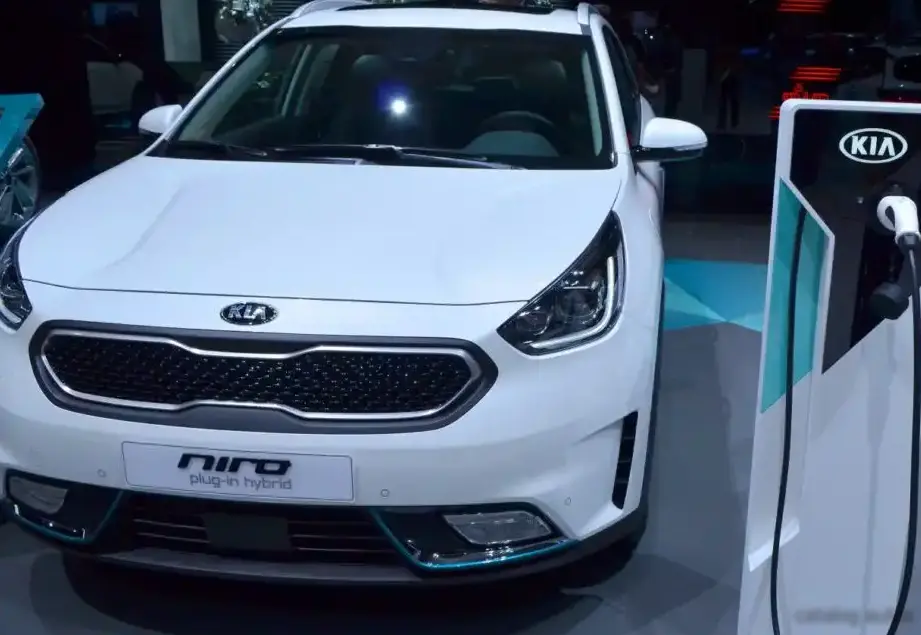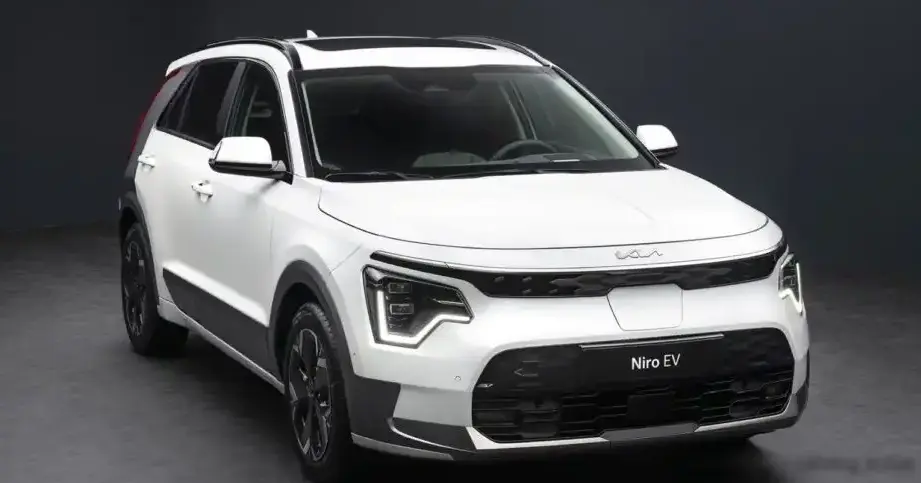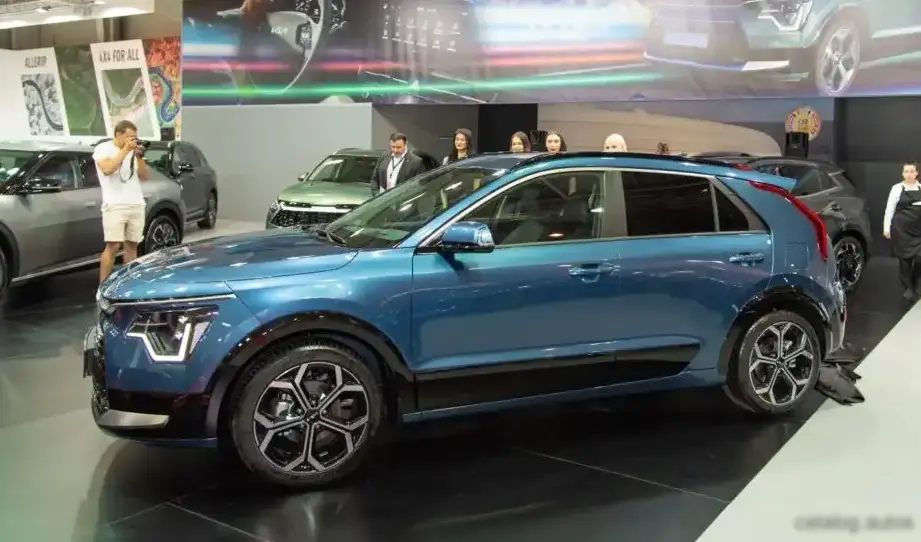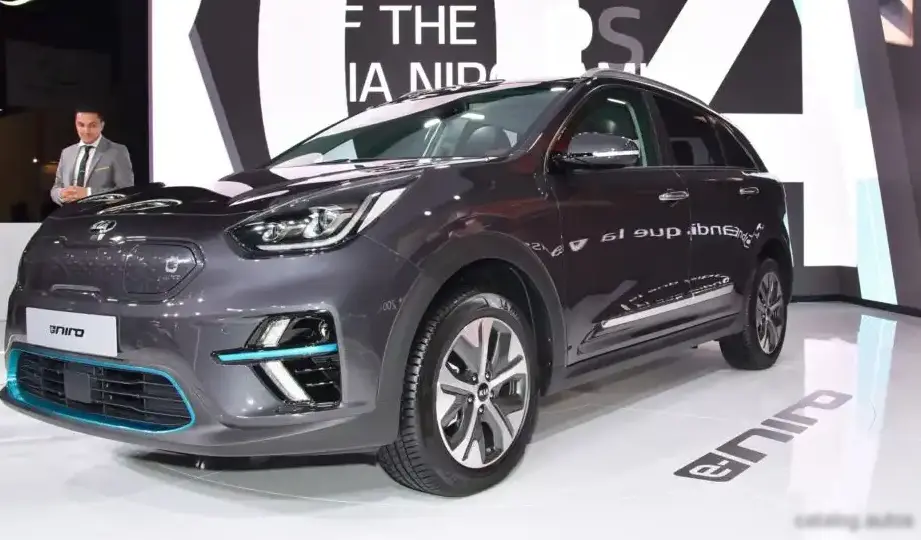
The Kia Niro, launched in 2016, represented Kia’s first foray into the dedicated hybrid and electric vehicle market. The e-Niro, the all-electric variant, arrived in 2018 and quickly gained popularity for its practicality, range, and value proposition. The 42 kWh version, producing 136 horsepower, was a key model in the Niro lineup from December 2018 until its replacement by the second-generation Niro in July 2022. This variant occupied a mid-range position within the e-Niro family, offering a balance between affordability and range, appealing to buyers seeking a daily-commutable EV without range anxiety.
Technical Specifications
| Brand | Kia |
| Model | Niro |
| Generation | Niro I (facelift 2019) |
| Type (Engine) | e-Niro 42 kWh (136 Hp) |
| Start of production | December, 2018 |
| End of production | July, 2022 |
| Powertrain Architecture | BEV (Electric Vehicle) |
| Body type | SUV |
| Seats | 5 |
| Doors | 5 |
| Fuel Type | Electricity |
| Acceleration 0 – 100 km/h | 9.8 sec |
| Acceleration 0 – 62 mph | 9.8 sec |
| Acceleration 0 – 60 mph | 9.3 sec |
| Maximum speed | 155 km/h (96.31 mph) |
| Emission standard | Euro 6d-TEMP |
| Weight-to-power ratio | 11.7 kg/Hp, 85.4 Hp/tonne |
| Weight-to-torque ratio | 4 kg/Nm, 248.1 Nm/tonne |
| Gross battery capacity | 42 kWh |
| Net (usable) battery capacity | 39.2 kWh |
| Battery voltage | 327 V |
| Battery technology | Lithium-polymer (LiPo) |
| Battery weight | 315 kg (694.46 lbs) |
| Battery location | Below the floor |
| All-electric range | 289 km (179.58 mi) |
| Average Energy consumption | 15.3 kWh/100 km (24.62 kWh/100 mi, 137 MPGe, 6.5 km/kWh, 4.1 mi/kWh) |
| Electric motor power | 136 Hp @ 2600-8000 rpm |
| Electric motor Torque | 395 Nm @ 0-2400 rpm (291.34 lb.-ft. @ 0-2400 rpm) |
| Electric motor location | Front axle, Transverse |
| Electric motor type | Synchronous |
| System power | 136 Hp @ 2600-8000 rpm |
| System torque | 395 Nm @ 0-2400 rpm (291.34 lb.-ft. @ 0-2400 rpm) |
| Kerb Weight | 1592-1646 kg (3509.76 – 3628.81 lbs) |
| Max. weight | 2080 kg (4585.62 lbs) |
| Max load | 434-488 kg (956.81 – 1075.86 lbs) |
| Trunk (boot) space – minimum | 451 l (15.93 cu. ft) |
| Trunk (boot) space – maximum | 1405 l (49.62 cu. ft) |
| Max. roof load | 100 kg (220.46 lbs) |
| Length | 4375 mm (172.24 in) |
| Width | 1805 mm (71.06 in) |
| Height | 1570 mm (61.81 in) |
| Wheelbase | 2700 mm (106.3 in) |
| Front track | 1576 mm (62.05 in) |
| Rear (Back) track | 1585 mm (62.4 in) |
| Front overhang | 885 mm (34.84 in) |
| Rear overhang | 790 mm (31.1 in) |
| Ride height (ground clearance) | 155 mm (6.1 in) |
| Drag coefficient (Cd) | 0.29 |
| Minimum turning circle | 10.6 m (34.78 ft) |
| Drivetrain Architecture | One electric motor drives the front wheels |
| Drive wheel | Front wheel drive |
| Number of gears | 1 |
| Gearbox type | Automatic transmission |
| Front suspension | Independent, type McPherson with coil spring and anti-roll bar |
| Rear suspension | Independent multi-link spring suspension with stabilizer |
| Front brakes | Ventilated discs, 305×25 mm |
| Rear brakes | Disc, 300×10 mm |
| Assisting systems | ABS (Anti-lock braking system) |
| Steering type | Steering rack and pinion |
| Power steering | Electric |
| Tires size | 215/55 R17 |
| Wheel rims size | 7J x 17 |
INTRODUCTION
The Kia Niro e-Niro 42 kWh, launched in late 2018 as part of the Niro I facelift, was a significant step for Kia in the burgeoning electric vehicle market. Built on the 1HX0 platform (shared with the Hyundai Kona Electric), the e-Niro aimed to provide a practical, affordable, and reasonably long-range electric SUV. The 42 kWh battery pack offered a usable capacity of 39.2 kWh, translating to a real-world range of approximately 179 miles. This model positioned itself as an accessible entry point into the EV world, targeting urban commuters and environmentally conscious buyers.
Powertrain & Engine Architecture
The e-Niro 42 kWh utilizes a permanent magnet synchronous motor (PMSM) producing 136 horsepower and 291 lb-ft of torque. This motor is mounted transversely at the front axle, driving the front wheels. The 42 kWh lithium-polymer battery pack is located under the floor, contributing to a low center of gravity and improved handling. The powertrain features a single-speed automatic transmission, typical of most electric vehicles, providing seamless acceleration. The motor’s power delivery is characterized by instant torque, offering brisk acceleration from a standstill. The e-Niro employs a sophisticated thermal management system for the battery pack, crucial for maintaining optimal performance and longevity, especially in varying climates. The onboard charger supports both Level 2 AC charging and DC fast charging, allowing for convenient charging at home, work, or public charging stations.
Driving Characteristics
The 42 kWh e-Niro delivers a smooth and quiet driving experience. Acceleration to 60 mph takes around 9.3 seconds, which is adequate for everyday driving but noticeably slower than the 64 kWh version or performance-oriented EVs. The single-speed transmission provides linear power delivery, and the instant torque makes merging onto highways relatively effortless. The regenerative braking system allows for one-pedal driving in certain conditions, enhancing efficiency and reducing brake wear. While the suspension is tuned for comfort, the e-Niro handles reasonably well, with minimal body roll in corners. The relatively low center of gravity contributes to a stable and planted feel. Compared to the longer-range 64 kWh model, the 42 kWh version feels slightly less refined during highway cruising due to the motor working harder to maintain speed.
Equipment & Trim Levels
The e-Niro 42 kWh typically came standard with features such as a touchscreen infotainment system with Apple CarPlay and Android Auto compatibility, a rearview camera, automatic climate control, and a suite of safety features including forward collision warning, lane keeping assist, and automatic emergency braking. Higher trim levels added features like a larger touchscreen, a premium sound system, heated and ventilated front seats, and a panoramic sunroof. Interior upholstery was typically cloth, with leather options available on higher trims. The dashboard layout is functional and user-friendly, with clearly labeled controls. Optional extras included a fast-charging capability upgrade and various paint colors.
Chassis & Braking
The e-Niro utilizes a McPherson strut front suspension and a multi-link rear suspension, providing a comfortable ride and decent handling. The front brakes are ventilated discs measuring 305x25mm, while the rear brakes are solid discs measuring 300x10mm. The braking system is assisted by ABS (Anti-lock Braking System) and electronic stability control. The steering is electrically assisted, providing a light and responsive feel. The vehicle rides on 17-inch alloy wheels with 215/55 R17 tires. The suspension is tuned to prioritize comfort over sporty handling, making it well-suited for everyday driving conditions.
Market Reception & Comparison
The Kia Niro e-Niro 42 kWh was generally well-received by critics and consumers alike. It was praised for its practicality, affordability, and decent range. Compared to other EVs in its class, such as the Nissan Leaf and BMW i3, the e-Niro offered a more spacious interior and a longer range at a competitive price point. However, the 42 kWh version was often criticized for its slower acceleration compared to the 64 kWh model. Fuel economy, measured in MPGe, was excellent, typically exceeding 130 MPGe. Reliability reports have been generally positive, with few major issues reported.
Legacy
The Kia Niro e-Niro 42 kWh played a crucial role in establishing Kia as a serious contender in the electric vehicle market. It demonstrated that EVs could be practical, affordable, and appealing to a wide range of buyers. While the 42 kWh version has been discontinued, it remains a popular choice in the used car market, offering a cost-effective entry point into EV ownership. The powertrain has proven to be relatively reliable, with the battery pack maintaining a good level of capacity even after several years of use. The e-Niro’s success paved the way for Kia’s continued investment in electric vehicle technology, culminating in the launch of the second-generation Niro and other all-electric models.