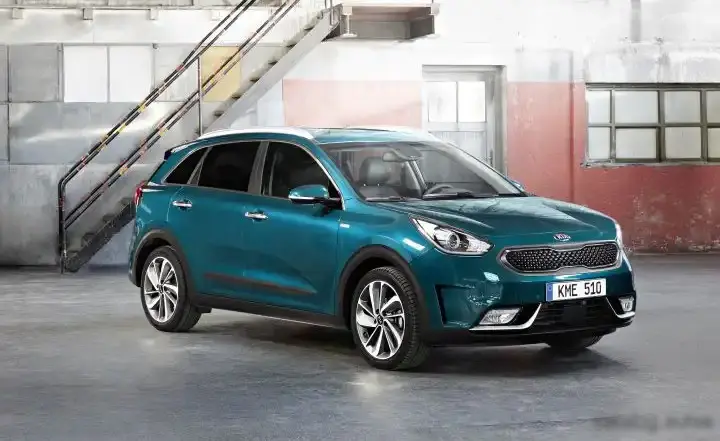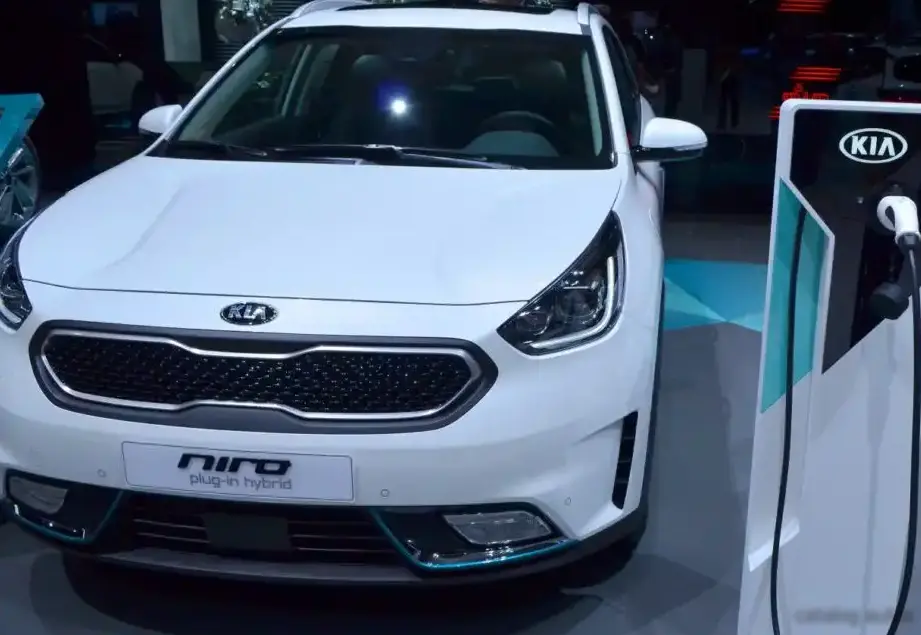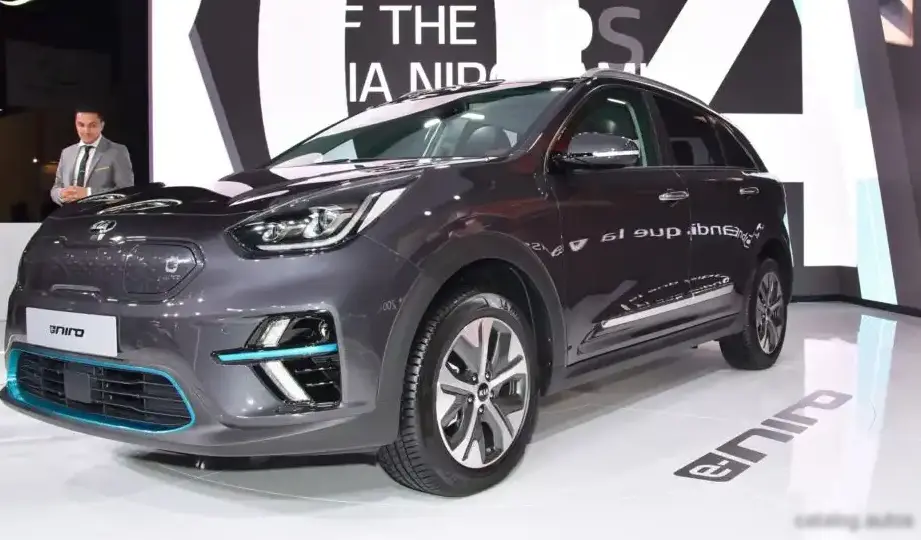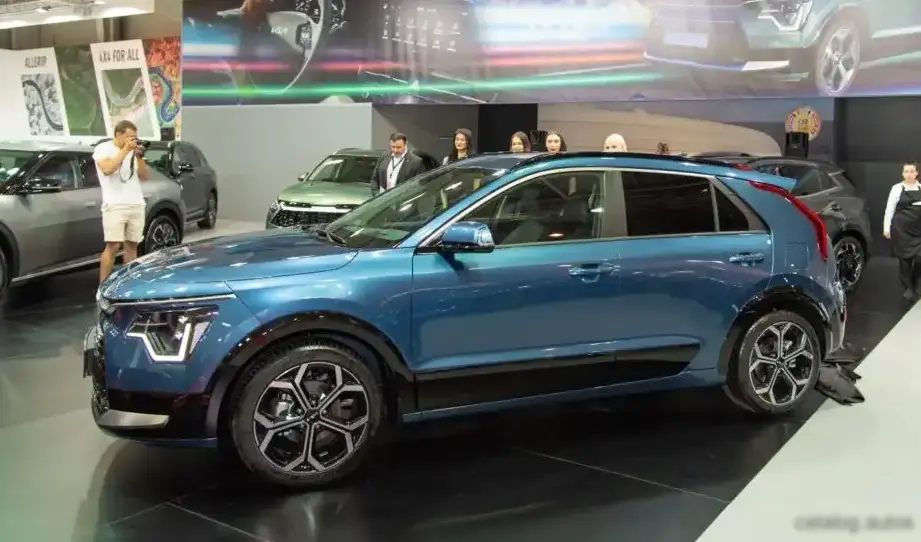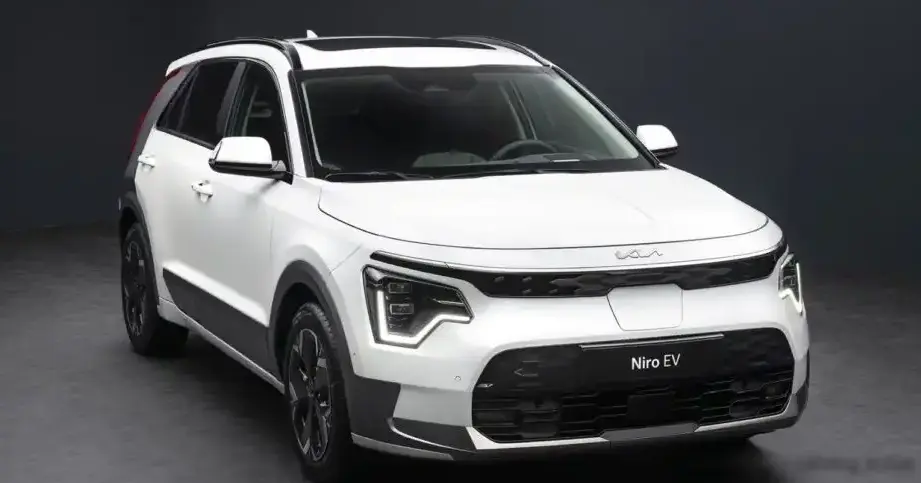
The Kia Niro II 1.6 GDI (138 Hp) Full Hybrid DCT is a compact crossover SUV introduced by Kia in July 2025 as part of the second generation Niro lineup (designated as the SG2). Positioned as a mid-range offering within the Niro II series, this variant combines a 1.6-liter gasoline direct injection engine with a full hybrid electric system and a dual-clutch transmission (DCT). It represents Kia’s commitment to fuel efficiency and reduced emissions, targeting environmentally conscious consumers seeking a practical and versatile vehicle. The Niro II builds upon the success of the first-generation Niro, offering improved styling, technology, and interior space, all while maintaining the core principles of a hybrid powertrain.
Technical Specifications
| Brand | Kia |
| Model | Niro |
| Generation | Niro II |
| Type (Engine) | 1.6 GDI (138 Hp) Full Hybrid DCT |
| Start of production | July, 2025 |
| Powertrain Architecture | FHEV (Full Hybrid Electric Vehicle) |
| Body type | SUV |
| Seats | 5 |
| Doors | 5 |
| Fuel consumption at Low speed (WLTP) | 3.9-4.1 l/100 km (60.3 – 57.4 US mpg) |
| Fuel consumption at Medium speed (WLTP) | 3.7-4.6 l/100 km (63.6 – 51.1 US mpg) |
| Fuel consumption at high speed (WLTP) | 3.9-4.3 l/100 km (60.3 – 54.7 US mpg) |
| Fuel consumption at very high speed (WLTP) | 5.7-6.0 l/100 km (41.3 – 39.2 US mpg) |
| Combined fuel consumption (WLTP) | 4.5-4.9 l/100 km (52.3 – 48 US mpg) |
| CO2 emissions (WLTP) | 102-111 g/km |
| Fuel Type | Petrol (Gasoline) |
| Acceleration 0 – 100 km/h | 11.1 sec |
| Acceleration 0 – 62 mph | 11.1 sec |
| Acceleration 0 – 60 mph | 10.5 sec |
| Maximum speed | 170 km/h (105.63 mph) |
| Emission standard | Euro 6e bis |
| Weight-to-power ratio | 10.1 kg/Hp |
| Weight-to-torque ratio | 5.3 kg/Nm |
| Gross battery capacity | 1.32 kWh |
| Battery voltage | 240 V |
| Battery technology | Lithium-polymer (LiPo) |
| Battery weight | 34 kg (74.96 lbs.) |
| Battery location | Under the rear seats |
| Max speed (electric) | 120 km/h (74.56 mph) |
| Electric motor power | 44 Hp @ 1798-2500 rpm |
| Electric motor Torque | 170 Nm @ 0-1798 rpm (125.39 lb.-ft. @ 0-1798 rpm) |
| Electric motor location | Between the combustion engine and the transmission |
| Electric motor type | Synchronous |
| System power | 138 Hp @ 5700 rpm |
| System torque | 265 Nm @ 1000-2400 rpm (195.45 lb.-ft. @ 1000-2400 rpm) |
| Power | 102 Hp @ 5700 rpm |
| Torque | 144 Nm @ 4000 rpm (106.21 lb.-ft. @ 4000 rpm) |
| Engine layout | Front, Transverse |
| Engine Model/Code | Smartstream / G4LE |
| Engine displacement | 1580 cm3 (96.42 cu. in.) |
| Number of cylinders | 4 |
| Engine configuration | Inline |
| Cylinder Bore | 72 mm (2.83 in.) |
| Piston Stroke | 97 mm (3.82 in.) |
| Compression ratio | 14:1 |
| Number of valves per cylinder | 4 |
| Fuel injection system | Direct injection |
| Engine aspiration | Naturally aspirated engine |
| Valvetrain | DOHC, Dual CVVT |
| Engine oil capacity | 4.1 l (4.33 US qt | 3.61 UK qt) |
| Coolant | 5.8 l (6.13 US qt | 5.1 UK qt) |
| Kerb Weight | 1399-1490 kg (3084.27 – 3284.89 lbs.) |
| Max. weight | 1940 kg (4276.97 lbs.) |
| Max load | 450-541 kg (992.08 – 1192.7 lbs.) |
| Trunk (boot) space – minimum | 451 l (15.93 cu. ft.) |
| Trunk (boot) space – maximum | 1445 l (51.03 cu. ft.) |
| Fuel tank capacity | 42 l (11.1 US gal | 9.24 UK gal) |
| Max. roof load | 75 kg (165.35 lbs.) |
| Permitted trailer load with brakes (12%) | 1110 kg (2447.13 lbs.) |
| Permitted trailer load without brakes | 600 kg (1322.77 lbs.) |
| Permitted towbar download | 100 kg (220.46 lbs.) |
| Length | 4420 mm (174.02 in.) |
| Width | 1825 mm (71.85 in.) |
| Height | 1560 mm (61.42 in.) |
| Wheelbase | 2720 mm (107.09 in.) |
| Front track | 1573-1585 mm (61.93 – 62.4 in.) |
| Rear (Back) track | 1585-1596 mm (62.4 – 62.83 in.) |
| Front overhang | 895 mm (35.24 in.) |
| Rear overhang | 805 mm (31.69 in.) |
| Ride height (ground clearance) | 160 mm (6.3 in.) |
| Drag coefficient (Cd) | 0.285 |
| Minimum turning circle (turning diameter) | 10.6 m (34.78 ft.) |
| Drivetrain Architecture | The Internal combustion engine (ICE) and electric motor drive the front wheels of the car with the ability to work in full electric or mixed mode. |
| Drive wheel | Front wheel drive |
| Number of gears and type of gearbox | 6 gears, automatic transmission DCT |
| Front suspension | Independent type McPherson |
| Rear suspension | Independent multi-link suspension |
| Front brakes | Ventilated discs |
| Rear brakes | Disc |
| Assisting systems | ABS (Anti-lock braking system) |
| Steering type | Steering rack and pinion |
| Power steering | Electric Steering |
| Wheel rims size | 6.5J x 16 ET46; 7.5J x 18 ET52 |
INTRODUCTION
The Kia Niro II 1.6 GDI Full Hybrid DCT, launched in July 2025, is a key component of Kia’s strategy to expand its presence in the highly competitive compact SUV segment. Built on the updated K3 platform (internally known as SG2), the Niro II represents a significant evolution over its predecessor, offering a more refined driving experience, improved fuel economy, and a more spacious and technologically advanced interior. This 138 horsepower variant occupies a central position in the Niro II lineup, offering a balance between performance, efficiency, and affordability. It caters to buyers who prioritize fuel savings and practicality without sacrificing a reasonable level of power and responsiveness.
Powertrain & Engine Architecture
At the heart of the Niro II 1.6 GDI Full Hybrid DCT lies Kia’s Smartstream G4LE 1.6-liter inline-four cylinder gasoline engine. This engine utilizes direct fuel injection (GDI) technology to optimize combustion efficiency and power output. The engine produces 102 horsepower at 5700 rpm and 144 Nm (106.21 lb-ft) of torque at 4000 rpm. It’s paired with a 44 horsepower electric motor powered by a 1.32 kWh lithium-polymer battery pack located under the rear seats. The combined system output is 138 horsepower and 265 Nm (195.45 lb-ft) of torque. The engine features a Dual Continuous Variable Valve Timing (DOHC, Dual CVVT) system for improved valve control and efficiency. Power is delivered to the front wheels via a six-speed dual-clutch transmission (DCT), which provides quick and smooth gear changes, contributing to both performance and fuel economy. The DCT is a crucial element in optimizing the hybrid system’s efficiency, allowing for seamless transitions between electric and gasoline power.
Driving Characteristics
The Niro II 1.6 GDI Full Hybrid DCT delivers a comfortable and refined driving experience. While not designed for outright performance, the combined output of the gasoline engine and electric motor provides adequate acceleration for everyday driving situations. The 0-60 mph sprint takes approximately 10.5 seconds. The DCT transmission contributes to responsive acceleration, and the hybrid system allows for short bursts of electric-only driving at lower speeds. The steering is light and precise, making the Niro easy to maneuver in urban environments. Compared to higher-output Niro variants, this 1.6 GDI model offers a more relaxed driving experience, prioritizing fuel efficiency over sporty performance. The gear ratios are tuned for optimal fuel economy, meaning the engine may rev slightly higher during acceleration compared to a traditional automatic transmission.
Equipment & Trim Levels
The Niro II 1.6 GDI Full Hybrid DCT typically comes standard with a comprehensive suite of features, including automatic climate control, a touchscreen infotainment system with Apple CarPlay and Android Auto compatibility, a rearview camera, and a range of advanced driver-assistance systems (ADAS) such as lane keeping assist, forward collision avoidance assist, and adaptive cruise control. Interior upholstery is typically cloth, with options for leather upgrades on higher trim levels. Available optional extras include a larger touchscreen display, a premium sound system, a panoramic sunroof, and heated and ventilated front seats. The trim level dictates the availability of these features, with higher trims offering more luxurious appointments and advanced technology.
Chassis & Braking
The Niro II utilizes an independent McPherson strut suspension at the front and an independent multi-link suspension at the rear, providing a comfortable ride and good handling characteristics. The suspension is tuned to prioritize comfort and stability, rather than sporty handling. Braking duties are handled by ventilated discs at the front and solid discs at the rear, equipped with an Anti-lock Braking System (ABS) to enhance safety. The brake system is integrated with the hybrid system, utilizing regenerative braking to recapture energy and improve fuel efficiency.
Market Reception & Comparison
The Kia Niro II 1.6 GDI Full Hybrid DCT has been generally well-received by automotive critics, praised for its fuel efficiency, comfortable ride, and spacious interior. Compared to other trims in the Niro II lineup, this variant offers a compelling value proposition for buyers who prioritize fuel economy and affordability. While the higher-output Niro trims offer more performance, they come at a higher price point and with slightly lower fuel economy figures. The Niro II also competes with other hybrid crossovers such as the Toyota Prius, Hyundai Kona Hybrid, and Nissan Kicks, offering a competitive combination of features, fuel efficiency, and price.
Legacy
The Kia Niro II 1.6 GDI Full Hybrid DCT powertrain is expected to be a reliable and durable unit, benefiting from Kia’s reputation for quality and reliability. The Smartstream engine and DCT transmission are relatively new designs, but they have undergone extensive testing and development. In the used car market, this variant is likely to hold its value well due to its fuel efficiency and practicality. The Niro II’s hybrid powertrain and modern features position it as a desirable and environmentally conscious choice for buyers seeking a versatile and efficient compact SUV.