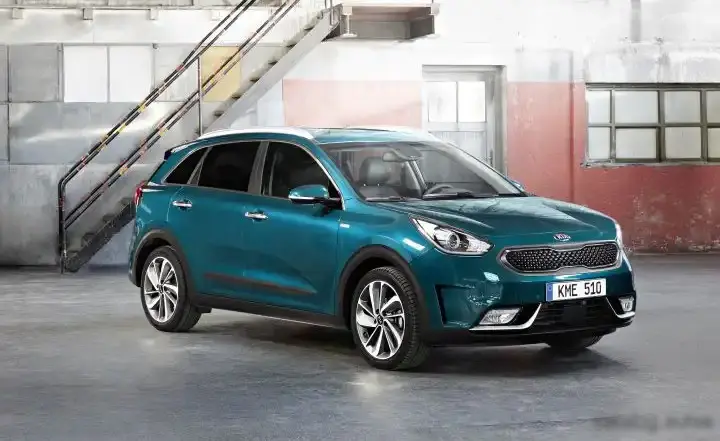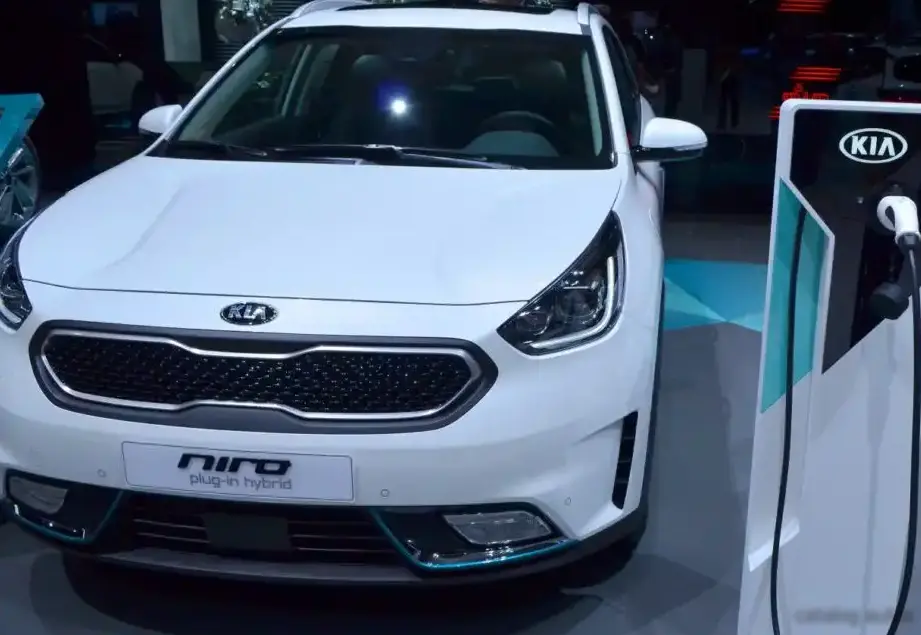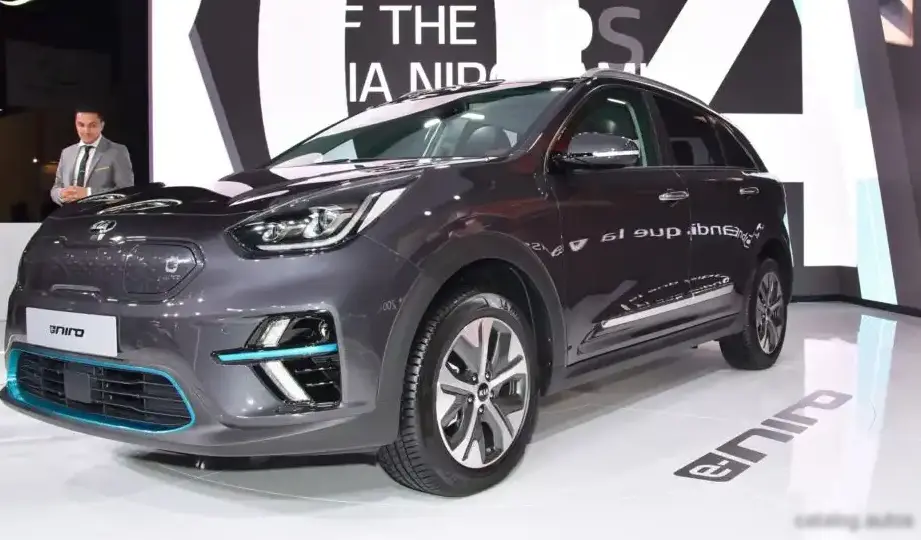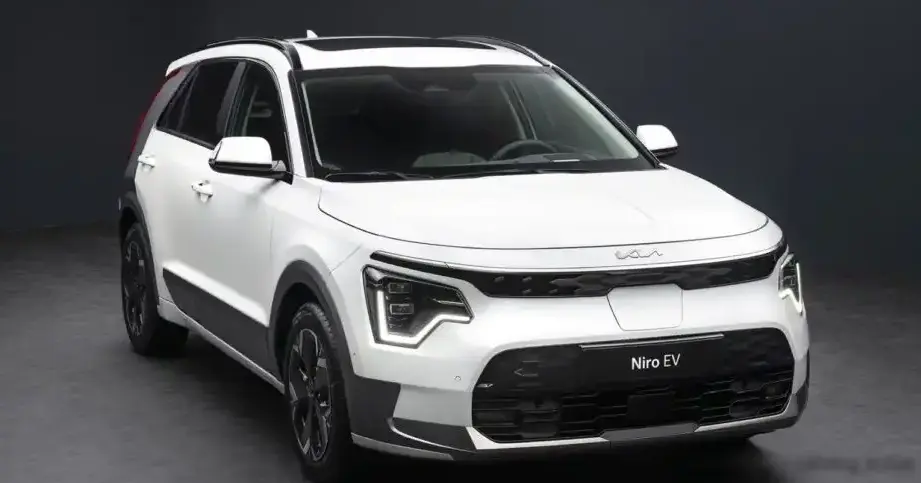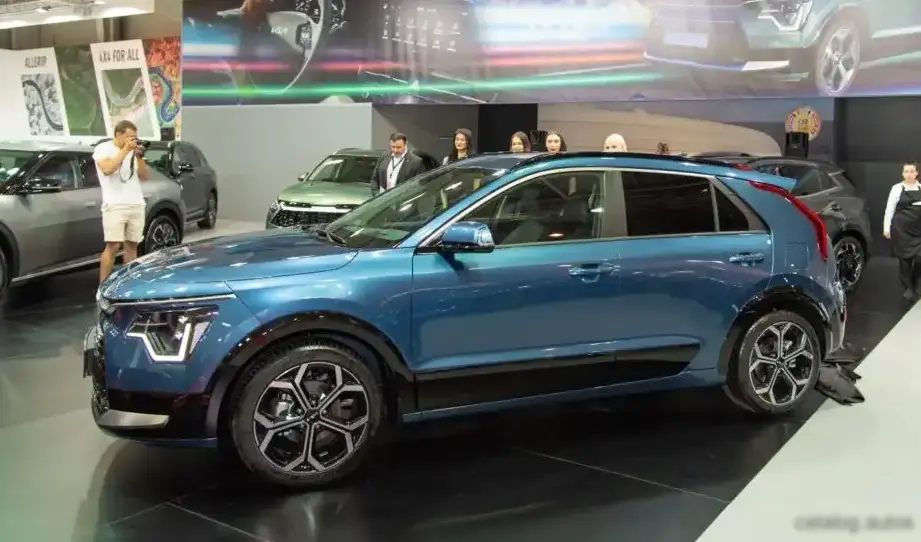
The Kia Niro II 1.6 GDI (141 Hp) Full Hybrid DCT is a compact crossover SUV produced by the South Korean manufacturer Kia between June 2022 and April 2024. This variant represents a key offering within the second generation Niro (ES2) lineup, built on the updated platform. Positioned as a mid-range trim, it balances fuel efficiency with a reasonable level of performance and features, appealing to buyers seeking a practical and economical family vehicle. The Niro II aimed to improve upon the first generation’s success by offering a more refined driving experience, updated technology, and a more spacious interior.
Technical Specifications
| Brand | Kia |
| Model | Niro |
| Generation | Niro II |
| Type (Engine) | 1.6 GDI (141 Hp) Full Hybrid DCT |
| Start of production | June, 2022 |
| End of production | April, 2024 |
| Powertrain Architecture | FHEV (Full Hybrid Electric Vehicle) |
| Body type | SUV |
| Seats | 5 |
| Doors | 5 |
| Fuel consumption (urban) | 3.4-3.8 l/100 km (69.2 – 61.9 US mpg) |
| Fuel consumption (extra urban) | 3.6-4.5 l/100 km (65.3 – 52.3 US mpg) |
| Fuel consumption (combined) | 3.4-4.2 l/100 km (69.2 – 56 US mpg) |
| CO2 emissions | 79-97 g/km |
| Fuel Type | Petrol (Gasoline) |
| Acceleration 0 – 100 km/h | 10.4 sec |
| Acceleration 0 – 62 mph | 10.4 sec |
| Acceleration 0 – 60 mph | 9.9 sec |
| Maximum speed | 165 km/h (102.53 mph) |
| Emission standard | Euro 6d |
| Weight-to-power ratio | 9.9 kg/Hp |
| Weight-to-torque ratio | 5.3 kg/Nm |
| Gross battery capacity | 1.32 kWh |
| Battery voltage | 240 V |
| Battery technology | Lithium-polymer (LiPo) |
| Battery weight | 34 kg (74.96 lbs) |
| Max speed (electric) | 120 km/h (74.56 mph) |
| Electric motor power | 44 Hp @ 1798-2500 rpm |
| Electric motor Torque | 170 Nm @ 0-1798 rpm (125.39 lb.-ft. @ 0-1798 rpm) |
| Electric motor location | Between the combustion engine and the transmission |
| System power | 141 Hp @ 5700 rpm |
| System torque | 265 Nm @ 1000-2400 rpm (195.45 lb.-ft. @ 1000-2400 rpm) |
| Engine Power | 105 Hp @ 5700 rpm |
| Engine Torque | 144 Nm @ 4000 rpm (106.21 lb.-ft. @ 4000 rpm) |
| Engine layout | Front, Transverse |
| Engine Model/Code | Smartstream / G4LE |
| Engine displacement | 1580 cm3 (96.42 cu. in.) |
| Number of cylinders | 4 |
| Engine configuration | Inline |
| Cylinder Bore | 72 mm (2.83 in.) |
| Piston Stroke | 97 mm (3.82 in.) |
| Compression ratio | 14:1 |
| Number of valves per cylinder | 4 |
| Fuel injection system | Direct injection |
| Engine aspiration | Naturally aspirated engine |
| Valvetrain | DOHC, Dual CVVT |
| Engine oil capacity | 3.8 l (4.02 US qt | 3.34 UK qt) |
| Coolant | 5.8 l (6.13 US qt | 5.1 UK qt) |
| Kerb Weight | 1399-1490 kg (3084.27 – 3284.89 lbs) |
| Max. weight | 1940 kg (4276.97 lbs) |
| Max load | 450-541 kg (992.08 – 1192.7 lbs) |
| Trunk (boot) space – minimum | 451 l (15.93 cu. ft.) |
| Trunk (boot) space – maximum | 1445 l (51.03 cu. ft.) |
| Fuel tank capacity | 42 l (11.1 US gal | 9.24 UK gal) |
| Max. roof load | 100 kg (220.46 lbs) |
| Permitted trailer load with brakes (12%) | 1300 kg (2866.01 lbs) |
| Permitted trailer load without brakes | 600 kg (1322.77 lbs) |
| Permitted towbar download | 100 kg (220.46 lbs) |
| Length | 4420 mm (174.02 in.) |
| Width | 1825 mm (71.85 in.) |
| Height | 1545 mm (60.83 in.) |
| Wheelbase | 2720 mm (107.09 in.) |
| Front track | 1573-1585 mm (61.93 – 62.4 in.) |
| Rear (Back) track | 1585-1596 mm (62.4 – 62.83 in.) |
| Front overhang | 895 mm (35.24 in.) |
| Rear overhang | 805 mm (31.69 in.) |
| Ride height (ground clearance) | 160 mm (6.3 in.) |
| Drag coefficient (Cd) | 0.285 |
| Minimum turning circle (turning diameter) | 10.6 m (34.78 ft.) |
| Drivetrain Architecture | The Internal combustion engine (ICE) and electric motor drive the front wheels of the car with the ability to work in full electric or mixed mode. |
| Drive wheel | Front wheel drive |
| Number of gears and type of gearbox | 6 gears, automatic transmission DCT |
| Front suspension | Independent type McPherson |
| Rear suspension | Independent multi-link suspension |
| Front brakes | Ventilated discs |
| Rear brakes | Ventilated discs |
| Assisting systems | ABS (Anti-lock braking system) |
| Steering type | Steering rack and pinion |
| Power steering | Electric Steering |
| Wheel rims size | 6.5J x 16 ET46; 7.5J x 18 ET52 |
INTRODUCTION
The Kia Niro II 1.6 GDI Full Hybrid DCT, launched in 2022, represents a significant evolution of Kia’s hybrid crossover. Building upon the success of the first-generation Niro, this variant aimed to deliver improved fuel economy, a more refined driving experience, and enhanced technology. The Niro II is part of a broader strategy by Kia to expand its eco-friendly vehicle offerings, catering to the growing demand for fuel-efficient and environmentally conscious transportation. This specific 1.6 GDI configuration with the dual-clutch transmission (DCT) was positioned as a sweet spot in the lineup, offering a balance between affordability and features, making it a popular choice for families and commuters.
Powertrain & Engine Architecture
At the heart of the Niro II 1.6 GDI is Kia’s Smartstream G4LE 1.6-liter four-cylinder gasoline engine. This engine produces 105 horsepower at 5700 rpm and 144 Nm (106.21 lb-ft) of torque at 4000 rpm. It features direct fuel injection (GDI) and a dual continuously variable valve timing (DOHC, Dual CVVT) system for optimized efficiency and performance. The engine is paired with a 44 horsepower electric motor, drawing power from a 1.32 kWh lithium-polymer battery pack. The combined system output is 141 horsepower and 265 Nm (195.45 lb-ft) of torque. The power is delivered to the front wheels via a six-speed dual-clutch transmission (DCT). The DCT provides quicker and smoother gear changes compared to a traditional automatic transmission, contributing to improved fuel economy and a more engaging driving experience. The hybrid system intelligently switches between electric, gasoline, and combined power modes to maximize efficiency.
Driving Characteristics
The Niro II 1.6 GDI DCT offers a comfortable and refined driving experience. While not particularly sporty, the combined output of the engine and electric motor provides adequate acceleration for everyday driving situations. The 0-60 mph time is around 9.9 seconds, and the top speed is 165 km/h (102.53 mph). The DCT transmission contributes to smooth and responsive gear changes, and the hybrid system seamlessly blends power delivery. Compared to higher-output Niro variants, this 1.6 GDI version feels less eager to accelerate, but it excels in fuel efficiency. The electric motor provides instant torque at low speeds, making it ideal for city driving. The suspension is tuned for comfort, absorbing bumps and imperfections in the road effectively. The steering is light and precise, making it easy to maneuver in tight spaces.
Equipment & Trim Levels
The Niro II 1.6 GDI typically came standard with a range of features, including automatic climate control, a touchscreen infotainment system with Apple CarPlay and Android Auto compatibility, a rearview camera, and a suite of advanced driver-assistance systems (ADAS) such as lane keeping assist, forward collision warning, and automatic emergency braking. Interior upholstery was typically cloth, with options for leather upgrades on higher trims. Optional extras included a larger touchscreen display, a premium sound system, a panoramic sunroof, and heated and ventilated front seats. The dashboard layout is modern and user-friendly, with a focus on intuitive controls and a clean aesthetic.
Chassis & Braking
The Niro II utilizes a front-wheel-drive layout with an independent McPherson strut suspension in the front and an independent multi-link suspension in the rear. This suspension setup provides a good balance between ride comfort and handling. The vehicle is equipped with ventilated disc brakes on all four wheels, providing ample stopping power. Anti-lock braking system (ABS) is standard, along with electronic stability control (ESC) and traction control. The chassis is designed to be lightweight yet rigid, contributing to improved fuel efficiency and handling. The steering system is an electric power steering (EPS) system, providing precise and responsive steering feel.
Market Reception & Comparison
The Kia Niro II 1.6 GDI Full Hybrid DCT was generally well-received by critics and consumers alike. It was praised for its fuel efficiency, comfortable ride, and spacious interior. Compared to other trims in the Niro lineup, such as the plug-in hybrid (PHEV) variant, the 1.6 GDI offered a lower price point and simpler operation. However, it lacked the all-electric range of the PHEV. Compared to competitors like the Toyota Prius and Hyundai Ioniq, the Niro II offered a more conventional SUV styling and a more engaging driving experience. Fuel economy figures consistently ranked among the best in its class, making it an attractive option for budget-conscious buyers.
Legacy
The Kia Niro II 1.6 GDI Full Hybrid DCT has proven to be a reliable and durable vehicle. The Smartstream engine and DCT transmission have demonstrated good long-term reliability, with few reported issues. On the used car market, these models continue to hold their value well, thanks to their fuel efficiency and reputation for reliability. The Niro II helped solidify Kia’s position as a leader in the hybrid vehicle segment, paving the way for future electric and hybrid models. Its blend of practicality, efficiency, and affordability has made it a popular choice for drivers seeking a versatile and eco-friendly crossover SUV.