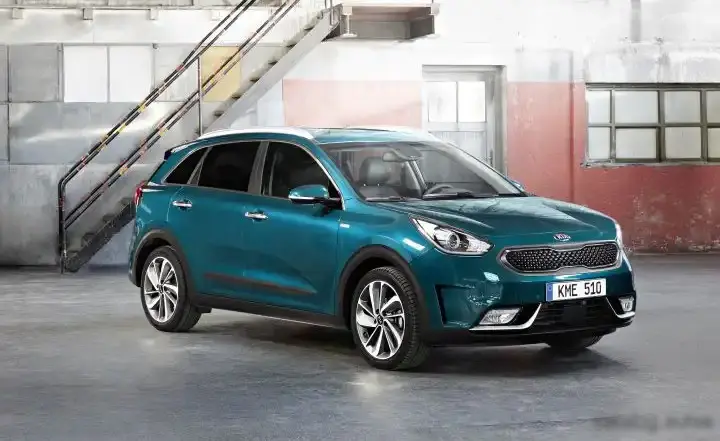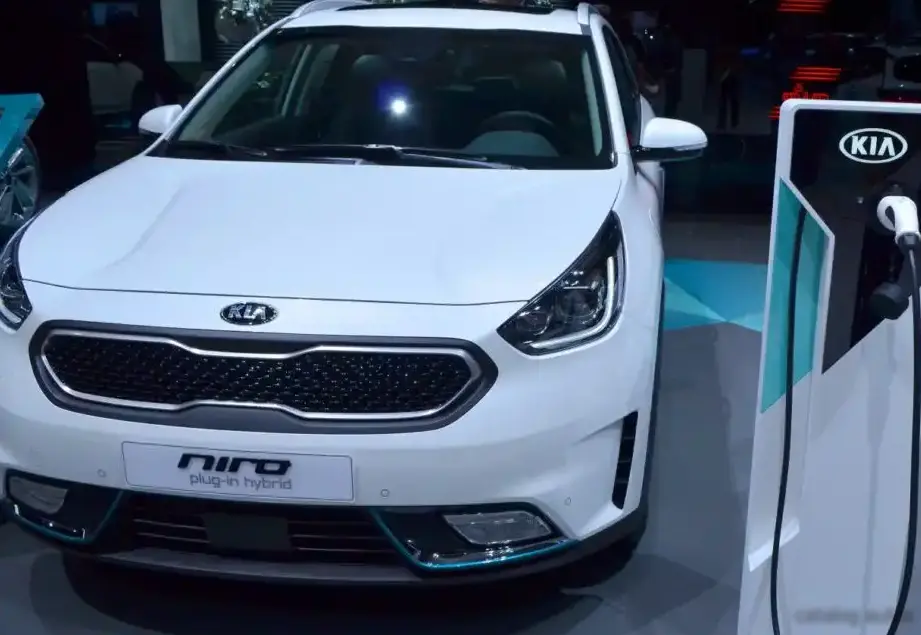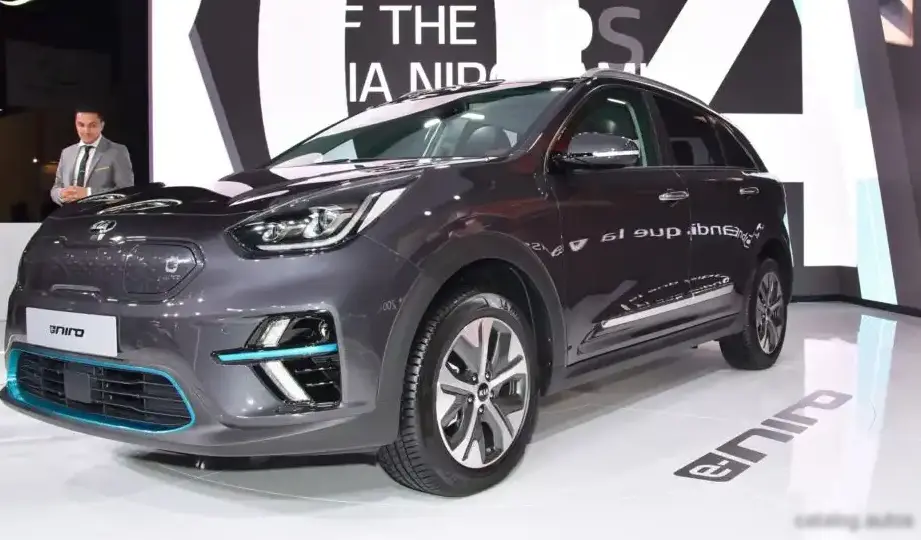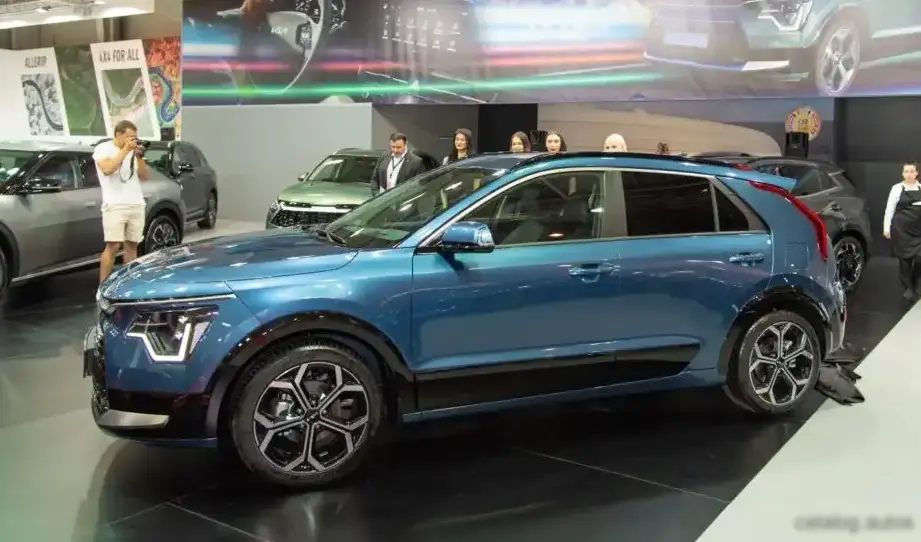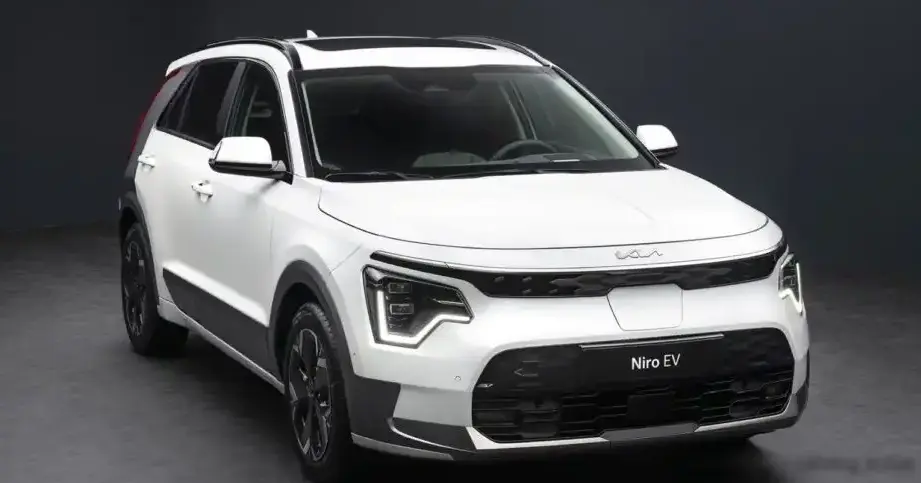
The Kia Niro II 1.6 GDI (180 Hp) Plug-in Hybrid DCT represents a significant step in Kia’s commitment to electrified vehicles, launched in July 2025. Positioned as a mid-range offering within the second-generation Niro lineup (designated the SG2), this variant combines a 1.6-liter gasoline direct injection engine with an electric motor and a dual-clutch transmission (DCT) to deliver both fuel efficiency and respectable performance. It builds upon the success of the first-generation Niro, expanding its appeal to consumers seeking a practical and environmentally conscious compact SUV. The Niro II is primarily marketed towards environmentally conscious buyers, families needing a versatile vehicle, and those looking to reduce their carbon footprint without sacrificing everyday usability.
Technical Specifications
| Brand | Kia |
| Model | Niro |
| Generation | Niro II |
| Type (Engine) | 1.6 GDI (180 Hp) Plug-in Hybrid DCT |
| Start of production | July, 2025 |
| Powertrain Architecture | PHEV (Plug-in Hybrid Electric Vehicle) |
| Body type | SUV |
| Seats | 5 |
| Doors | 5 |
| Combined fuel consumption (WLTP) | 2.4-2.7 l/100 km (98 – 87.1 US mpg, 117.7 – 104.6 UK mpg, 41.7 – 37 km/l) |
| CO2 emissions (WLTP) | 53-61 g/km |
| Fuel Type | Petrol / electricity |
| Acceleration 0 – 100 km/h | 9.9 sec |
| Acceleration 0 – 62 mph | 9.9 sec |
| Acceleration 0 – 60 mph | 9.4 sec |
| Maximum speed | 185 km/h (114.95 mph) |
| Emission standard | Euro 6e bis |
| Weight-to-power ratio | 8.4 kg/Hp, 118.5 Hp/tonne |
| Weight-to-torque ratio | 5.7 kg/Nm, 174.5 Nm/tonne |
| Gross battery capacity | 11.1 kWh |
| Battery voltage | 360 V |
| Battery technology | Lithium-polymer (LiPo) |
| Battery weight | 111 kg (244.71 lbs.) |
| Battery location | Under the rear seats / Under the trunk |
| All-electric range (WLTP) | 57-62 km (35.42 – 38.53 mi) |
| Average Energy consumption (WLTP) | 8.1-8.3 kWh/100 km (13.04 – 13.36 kWh/100 mi, 259 – 252 MPGe, 12.3 – 12 km/kWh, 7.7 – 7.5 mi/kWh) |
| Max speed (electric) | 134 km/h (83.26 mph) |
| Electric motor power | 84 Hp @ 1798-2500 rpm |
| Electric motor Torque | 203 Nm @ 0-1798 rpm (149.73 lb.-ft. @ 0-1798 rpm) |
| Electric motor location | Between the combustion engine and the transmission |
| Electric motor type | Synchronous |
| System power | 180 Hp @ 5700 rpm |
| System torque | 265 Nm @ 1000-2400 rpm (195.45 lb.-ft. @ 1000-2400 rpm) |
| Power | 102 Hp @ 5700 rpm |
| Torque | 144 Nm @ 4000 rpm (106.21 lb.-ft. @ 4000 rpm) |
| Engine layout | Front, Transverse |
| Engine Model/Code | Smartstream / G4LE |
| Engine displacement | 1580 cm3 (96.42 cu. in.) |
| Number of cylinders | 4 |
| Engine configuration | Inline |
| Cylinder Bore | 72 mm (2.83 in.) |
| Piston Stroke | 97 mm (3.82 in.) |
| Compression ratio | 14:1 |
| Number of valves per cylinder | 4 |
| Fuel injection system | Direct injection |
| Engine aspiration | Naturally aspirated engine |
| Valvetrain | DOHC, Dual CVVT |
| Engine oil capacity | 4.1 l (4.33 US qt | 3.61 UK qt) |
| Coolant | 5.8 l (6.13 US qt | 5.1 UK qt) |
| Kerb Weight | 1519-1610 kg (3348.82 – 3549.44 lbs.) |
| Max. weight | 2060 kg (4541.52 lbs.) |
| Max load | 450-541 kg (992.08 – 1192.7 lbs.) |
| Trunk (boot) space – minimum | 348 l (12.29 cu. ft.) |
| Trunk (boot) space – maximum | 1342 l (47.39 cu. ft.) |
| Fuel tank capacity | 37 l (9.77 US gal | 8.14 UK gal) |
| Max. roof load | 75 kg (165.35 lbs.) |
| Permitted trailer load with brakes (12%) | 1010 kg (2226.67 lbs.) |
| Permitted trailer load without brakes | 600 kg (1322.77 lbs.) |
| Permitted towbar download | 100 kg (220.46 lbs.) |
| Length | 4420 mm (174.02 in.) |
| Width | 1825 mm (71.85 in.) |
| Height | 1560 mm (61.42 in.) |
| Wheelbase | 2720 mm (107.09 in.) |
| Front track | 1573-1585 mm (61.93 – 62.4 in.) |
| Rear (Back) track | 1585-1596 mm (62.4 – 62.83 in.) |
| Front overhang | 895 mm (35.24 in.) |
| Rear overhang | 805 mm (31.69 in.) |
| Ride height (ground clearance) | 160 mm (6.3 in.) |
| Drag coefficient (Cd) | 0.285 |
| Minimum turning circle (turning diameter) | 10.6 m (34.78 ft.) |
| Drivetrain Architecture | The Internal combustion engine (ICE) and electric motor drive the front wheels of the car with the ability to work in full electric or mixed mode. |
| Drive wheel | Front wheel drive |
| Number of gears and type of gearbox | 6 gears, automatic transmission DCT |
| Front suspension | Independent type McPherson |
| Rear suspension | Independent multi-link suspension |
| Front brakes | Ventilated discs |
| Rear brakes | Disc |
| Assisting systems | ABS (Anti-lock braking system) |
| Steering type | Steering rack and pinion |
| Power steering | Electric Steering |
| Wheel rims size | 6.5J x 16 ET46; 7.5J x 18 ET52 |
INTRODUCTION
The Kia Niro II 1.6 GDI Plug-in Hybrid DCT, introduced in July 2025, is a compact SUV designed to bridge the gap between traditional gasoline vehicles and fully electric cars. Built on the updated Niro platform (SG2), it offers a compelling combination of fuel efficiency, practicality, and a reduced environmental impact. This variant specifically targets buyers who desire the flexibility of electric driving for shorter commutes while retaining the range and convenience of a gasoline engine for longer journeys. The Niro II represents Kia’s ongoing efforts to expand its eco-friendly vehicle offerings and appeal to a wider range of consumers.
Powertrain & Engine Architecture
At the heart of the Niro II 1.6 GDI PHEV lies Kia’s Smartstream G4LE 1.6-liter inline-four cylinder gasoline engine. This engine produces 102 horsepower at 5700 rpm and 106.21 lb.-ft. of torque at 4000 rpm. It utilizes direct fuel injection (GDI) and a dual continuously variable valve timing (DOHC, Dual CVVT) system to optimize combustion efficiency and reduce emissions. The engine is paired with a 84 hp electric motor, delivering 149.73 lb.-ft. of torque, integrated between the engine and the 6-speed dual-clutch transmission (DCT). The DCT provides quick and smooth gear changes, enhancing both performance and fuel economy. The 11.1 kWh lithium-polymer battery pack, located under the rear seats and trunk, provides an all-electric range of 35.42 to 38.53 miles (57-62 km) according to WLTP standards. The powertrain operates in several modes, including electric-only, hybrid, and sport, allowing the driver to prioritize fuel efficiency or performance as needed.
Driving Characteristics
The Niro II 1.6 GDI Plug-in Hybrid DCT offers a refined and comfortable driving experience. In electric mode, the vehicle provides near-silent acceleration and responsive performance for city driving. When the gasoline engine engages, the transition is generally seamless, and the combined output of 180 horsepower provides adequate power for highway merging and overtaking. The DCT contributes to brisk acceleration, achieving 0-60 mph in approximately 9.4 seconds. Compared to the standard hybrid Niro, the plug-in hybrid variant offers a more noticeable electric driving experience and improved fuel economy when regularly charged. However, it may feel slightly less responsive than the higher-output Niro trims. The gear ratios are tuned for efficiency, prioritizing fuel economy over outright performance.
Equipment & Trim Levels
The Niro II 1.6 GDI Plug-in Hybrid DCT typically comes well-equipped with standard features such as automatic climate control, a touchscreen infotainment system with Apple CarPlay and Android Auto compatibility, and a suite of advanced driver-assistance systems (ADAS) including forward collision avoidance assist, lane keeping assist, and adaptive cruise control. Interior upholstery is typically cloth, with available upgrades to leatherette or leather. Optional extras may include a panoramic sunroof, premium audio system, and heated/ventilated front seats. The trim level often dictates the availability of these features, with higher trims offering more luxurious appointments.
Chassis & Braking
The Niro II utilizes an independent McPherson strut front suspension and an independent multi-link rear suspension, providing a comfortable ride and stable handling. The suspension is tuned to balance ride comfort with responsive handling. Braking duties are handled by ventilated discs at the front and solid discs at the rear, equipped with an anti-lock braking system (ABS). The electric motor also contributes to regenerative braking, capturing energy during deceleration and replenishing the battery. The steering is electrically assisted, providing a light and precise feel.
Market Reception & Comparison
The Kia Niro II 1.6 GDI Plug-in Hybrid DCT has been generally well-received by automotive critics, praised for its fuel efficiency, practicality, and comfortable ride. Compared to other plug-in hybrid SUVs in its class, the Niro offers a competitive price point and a generous warranty. Its fuel economy of 2.4-2.7 l/100 km is impressive, and its all-electric range is sufficient for many daily commutes. However, some reviewers have noted that its interior materials are not as premium as those found in some competitors. Compared to the standard Niro Hybrid, the PHEV variant offers a more substantial electric driving experience but comes at a higher price.
Legacy
The Kia Niro II 1.6 GDI Plug-in Hybrid DCT represents a significant step forward in Kia’s electrification strategy. The Smartstream engine and DCT combination have proven to be reliable in other Kia models, and the lithium-polymer battery pack is expected to offer good longevity. On the used car market, these models are expected to hold their value well due to their fuel efficiency and environmental benefits. As the demand for electrified vehicles continues to grow, the Niro II 1.6 GDI Plug-in Hybrid DCT is poised to become a popular choice for environmentally conscious buyers seeking a practical and affordable compact SUV.