Technical Specifications
| Brand | Kia |
| Model | Niro |
| Generation | Niro II |
| Type (Engine) | e-Niro 64.8 kWh (204 Hp) |
| Start of production | July, 2022 |
| Powertrain Architecture | BEV (Electric Vehicle) |
| Body type | SUV |
| Seats | 5 |
| Doors | 5 |
| Fuel Type | Electricity |
| Acceleration 0 – 100 km/h | 7.8 sec |
| Acceleration 0 – 62 mph | 7.8 sec |
| Acceleration 0 – 60 mph | 7.4 sec |
| Maximum speed | 167 km/h (103.77 mph) |
| Weight-to-power ratio | 8.2 kg/Hp, 121.3 Hp/tonne |
| Weight-to-torque ratio | 6.6 kg/Nm, 151.6 Nm/tonne |
| Gross battery capacity | 64.8 kWh |
| Battery voltage | 358 V |
| Battery technology | Lithium-polymer (LiPo) |
| Battery weight | 443 kg (976.65 lbs) |
| Battery location | Below the floor |
| All-electric range | 463 km (287.69 mi) |
| Average Energy consumption | 15.9 kWh/100 km (25.59 kWh/100 mi) |
| MPGe | 132 |
| km/kWh | 6.3 |
| mi/kWh | 3.9 |
| Electric motor power | 204 Hp @ 6000-9000 rpm |
| Electric motor Torque | 255 Nm @ 0-6000 rpm (188.08 lb.-ft. @ 0-6000 rpm) |
| Electric motor location | Front axle, Transverse |
| System power | 204 Hp @ 6000-9000 rpm |
| System torque | 255 Nm @ 0-6000 rpm (188.08 lb.-ft. @ 0-6000 rpm) |
| Kerb Weight | 1682-1739 kg (3708.18 – 3833.84 lbs) |
| Max. weight | 2200 kg (4850.17 lbs) |
| Max load | 461-518 kg (1016.33 – 1141.99 lbs) |
| Trunk (boot) space – minimum | 475 l (16.77 cu. ft) |
| Trunk (boot) space – maximum | 1392 l (49.16 cu. ft) |
| Max. roof load | 100 kg (220.46 lbs) |
| Permitted trailer load with brakes (12%) | 750 kg (1653.47 lbs) |
| Permitted trailer load without brakes | 300 kg (661.39 lbs) |
| Permitted towbar download | 100 kg (220.46 lbs) |
| Length | 4420 mm (174.02 in) |
| Width | 1825 mm (71.85 in) |
| Height | 1570 mm (61.81 in) |
| Wheelbase | 2720 mm (107.09 in) |
| Front track | 1571 mm (61.85 in) |
| Rear (Back) track | 1581 mm (62.24 in) |
| Front overhang | 895 mm (35.24 in) |
| Rear overhang | 805 mm (31.69 in) |
| Ride height (ground clearance) | 150 mm (5.91 in) |
| Drag coefficient (Cd) | 0.286 |
| Minimum turning circle | 10.6 m (34.78 ft) |
| Drivetrain Architecture | One electric motor drives the front wheels |
| Drive wheel | Front wheel drive |
| Number of gears | 1 |
| Type of gearbox | automatic transmission |
| Front suspension | Independent type McPherson |
| Rear suspension | Independent multi-link suspension |
| Front brakes | Ventilated discs |
| Rear brakes | Ventilated discs |
| Assisting systems | ABS (Anti-lock braking system) |
| Steering type | Steering rack and pinion |
| Power steering | Electric Steering |
| Wheel rims size | 7.0J x 17 ET52 |
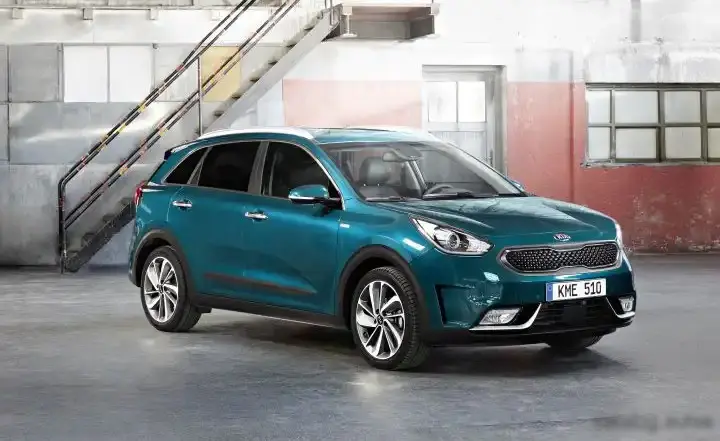
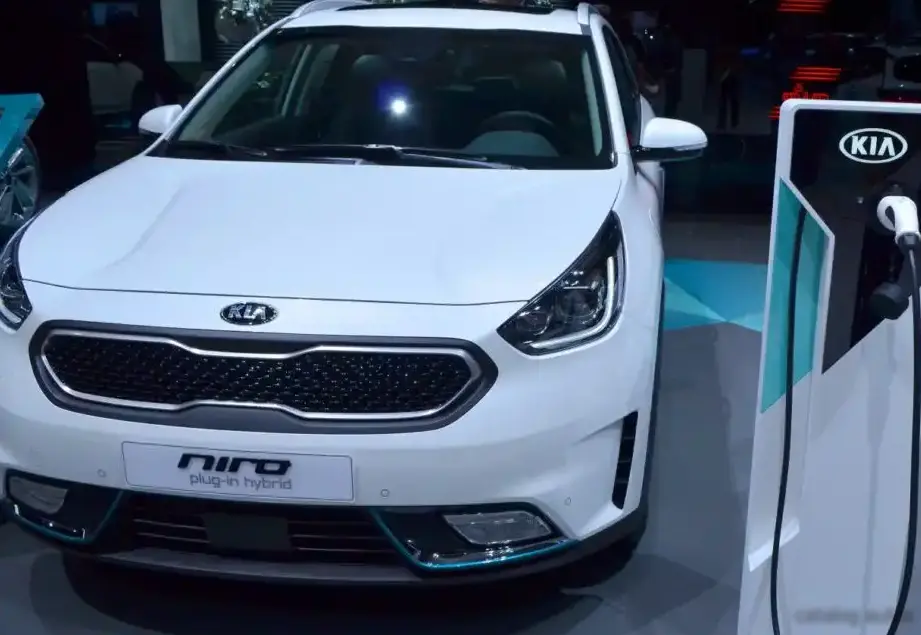
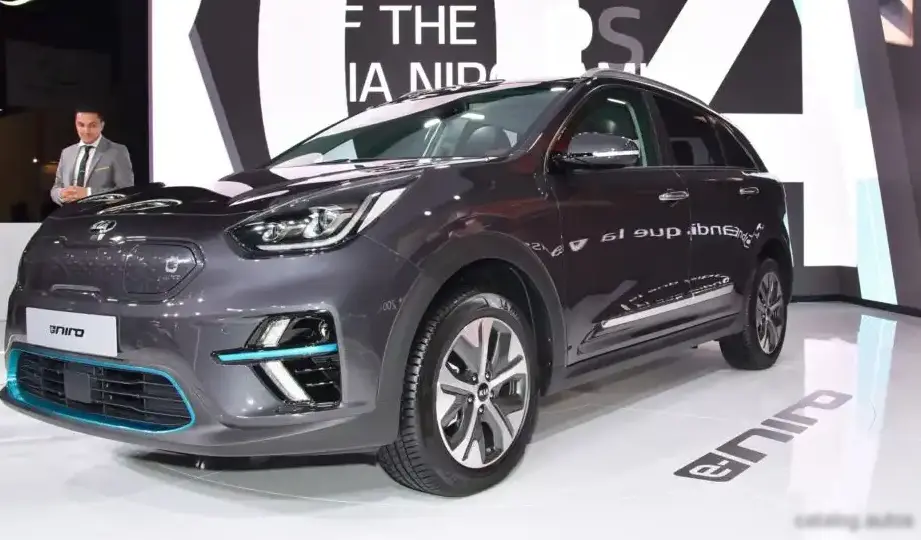
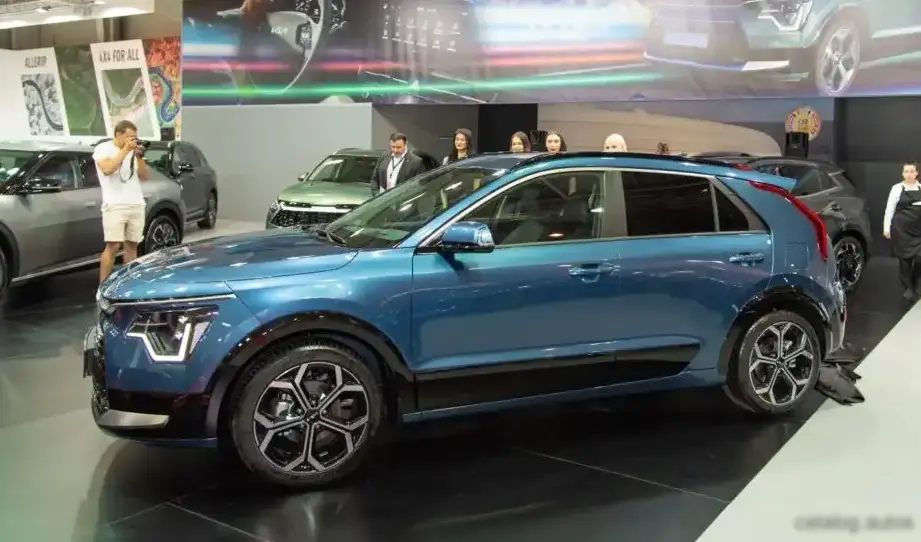
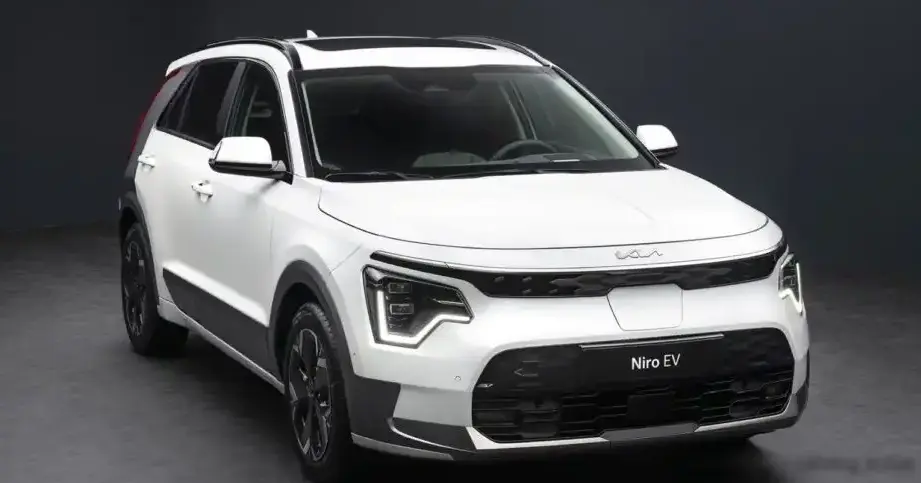
The Kia Niro II e-Niro 64.8 kWh is a fully electric compact SUV introduced as part of Kia’s expanding electric vehicle lineup. Positioned as a mid-range offering within the Niro II family, it slots between the hybrid and plug-in hybrid variants, providing a longer all-electric range and zero tailpipe emissions. The Niro II generation, launched in 2022, represents a significant upgrade over its predecessor, featuring a more modern design, improved interior space, and enhanced technology. The 64.8 kWh battery pack is a key component, delivering a competitive range of up to 463 km (287.69 miles) on the WLTP cycle.
Powertrain & Engine Architecture
The e-Niro 64.8 kWh utilizes a permanent magnet synchronous motor (PMSM) driving the front wheels. This motor produces 204 horsepower and 255 Nm (188.08 lb-ft) of torque. The power is delivered through a single-speed automatic transmission, characteristic of most electric vehicles. The 64.8 kWh lithium-polymer battery pack is mounted under the floor, contributing to a low center of gravity and improved handling. Kia employs an advanced battery thermal management system to optimize battery performance and longevity, particularly in varying climates. The vehicle features 800V charging capability, allowing for rapid DC fast charging – capable of adding approximately 100 miles of range in under 20 minutes with a compatible charger. The motor’s efficiency is maximized through regenerative braking, which captures energy during deceleration and returns it to the battery.
Driving Characteristics
The e-Niro 64.8 kWh offers a smooth and responsive driving experience. The instant torque delivery of the electric motor provides brisk acceleration, achieving 0-60 mph in approximately 7.4 seconds. While not a performance-oriented vehicle, it offers ample power for everyday driving and highway merging. The single-speed transmission provides seamless acceleration without gear changes. Compared to the base Niro hybrid, the e-Niro offers significantly quicker acceleration and a quieter cabin experience. Compared to higher-output EVs, the e-Niro prioritizes efficiency and range over outright speed. The suspension is tuned for comfort, providing a compliant ride over most road surfaces. The low center of gravity contributes to stable handling, although it’s not as sporty as some competitors.
Equipment & Trim Levels
The e-Niro 64.8 kWh typically comes well-equipped with standard features including a touchscreen infotainment system with Apple CarPlay and Android Auto compatibility, a digital instrument cluster, and a suite of advanced driver-assistance systems (ADAS) such as forward collision avoidance assist, lane keeping assist, and adaptive cruise control. Interior upholstery is typically cloth or synthetic leather, depending on the trim level. Optional extras often include a panoramic sunroof, heated and ventilated front seats, a premium sound system, and a head-up display. Trim levels vary by market, but generally offer increasing levels of luxury and technology. The interior design emphasizes a clean and modern aesthetic with user-friendly controls.
Chassis & Braking
The Niro II utilizes a front-wheel-drive platform with an independent McPherson strut suspension in the front and an independent multi-link suspension in the rear. This setup provides a good balance of ride comfort and handling. The e-Niro 64.8 kWh is equipped with ventilated disc brakes on all four wheels, providing adequate stopping power. The ABS (Anti-lock Braking System) and electronic stability control (ESC) are standard safety features. The vehicle’s weight, due to the battery pack, is higher than its gasoline-powered counterparts, but the low center of gravity helps to mitigate the effects of this weight on handling. Steering is electrically assisted, providing a light and responsive feel.
Market Reception & Comparison
The Kia Niro II e-Niro 64.8 kWh has been well-received by critics and consumers alike. It’s praised for its competitive range, fast charging capabilities, and spacious interior. Compared to other EVs in its class, such as the Hyundai Kona Electric and the Nissan Leaf, the Niro offers a compelling combination of value, practicality, and technology. Fuel economy, expressed as MPGe, is excellent, and the total cost of ownership is often lower than comparable gasoline-powered vehicles due to reduced fuel and maintenance costs. Some critics have noted that the interior materials are not as premium as those found in some competitors, but the overall build quality is generally considered to be good.
Legacy
The Kia Niro II e-Niro 64.8 kWh represents a significant step forward in Kia’s electric vehicle strategy. The powertrain has proven to be reliable in early reports, and the 800V charging system is a key advantage. As the used car market matures, the e-Niro is expected to hold its value well due to its desirable features and growing demand for electric vehicles. The Niro II, and specifically the e-Niro variant, has helped to establish Kia as a major player in the EV market, demonstrating the brand’s commitment to sustainable transportation. Long-term battery health will be a key factor in the vehicle’s continued reliability and resale value.