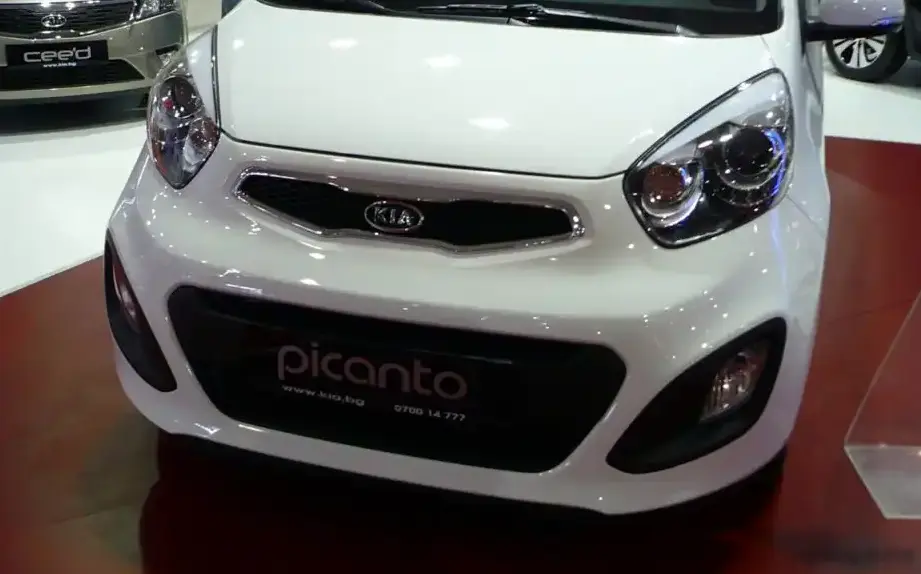
The Kia Picanto II, produced from 2011 to 2015, represented a significant step forward for Kia’s city car offering. Within the Picanto II range, the 1.0 12V LPI (82 hp) 3-door hatchback occupied the entry-level position, aimed at buyers prioritizing affordability and fuel efficiency. This variant was primarily sold in markets where LPG (Liquefied Petroleum Gas) infrastructure was well-established, offering a cost-effective alternative to traditional gasoline. The Picanto II, built on the TA platform, aimed to provide a more refined and spacious interior compared to its predecessor, while maintaining a compact footprint ideal for urban environments.
Technical Specifications
| Brand | Kia |
| Model | Picanto |
| Generation | Picanto II 3D |
| Type (Engine) | 1.0 12V LPI (82 Hp) |
| Start of production | 2011 |
| End of production | 2015 |
| Powertrain Architecture | Internal Combustion engine |
| Body type | Hatchback |
| Seats | 5 |
| Doors | 3 |
| Fuel consumption (urban) | 7.4 l/100 km (31.8 US mpg) |
| Fuel consumption (extra urban) | 5 l/100 km (47 US mpg) |
| Fuel consumption (combined) | 5.9 l/100 km (39.9 US mpg) |
| Fuel Type | Petrol (Gasoline)/LPG |
| Acceleration 0 – 100 km/h | 14.4 sec |
| Acceleration 0 – 62 mph | 14.4 sec |
| Acceleration 0 – 60 mph | 13.7 sec |
| Maximum speed | 153 km/h (95.07 mph) |
| Emission standard | Euro 5 |
| Weight-to-power ratio | 10.7 kg/Hp |
| Weight-to-torque ratio | 9.4 kg/Nm |
| Power | 82 Hp |
| Torque | 94 Nm @ 3500 rpm (69.33 lb.-ft. @ 3500 rpm) |
| Engine layout | Front, Transverse |
| Engine Model/Code | B3LA |
| Engine displacement | 998 cm3 (60.9 cu. in.) |
| Number of cylinders | 3 |
| Engine configuration | Inline |
| Fuel injection system | Multi-port manifold injection |
| Engine aspiration | Naturally aspirated |
| Engine oil capacity | 2.9 l (3.06 US qt | 2.55 UK qt) |
| Coolant capacity | 5.1 l (5.39 US qt | 4.49 UK qt) |
| Kerb Weight | 880 kg (1940.07 lbs.) |
| Max. weight | 1340 kg (2954.19 lbs.) |
| Max load | 460 kg (1014.13 lbs.) |
| Trunk (boot) space – minimum | 200 l (7.06 cu. ft.) |
| Trunk (boot) space – maximum | 605 l (21.37 cu. ft.) |
| Fuel tank capacity | 35 l (9.25 US gal | 7.7 UK gal) |
| Length | 3595 mm (141.54 in.) |
| Width | 1595 mm (62.8 in.) |
| Height | 1480 mm (58.27 in.) |
| Wheelbase | 2385 mm (93.9 in.) |
| Front track | 1421 mm (55.94 in.) |
| Rear track | 1424 mm (56.06 in.) |
| Minimum turning circle | 9.8 m (32.15 ft.) |
| Drivetrain | Front wheel drive |
| Number of gears | 5 gears, manual transmission |
| Assisting systems | ABS (Anti-lock braking system) |
| Steering type | Steering rack and pinion |
| Tires size | 165/60 R14 |
| Wheel rims size | 14 |
Powertrain & Engine Architecture
The heart of the Picanto II 1.0 LPI is the B3LA engine, a 998cc inline-three cylinder unit. This engine utilizes a multi-point fuel injection system, delivering fuel to each cylinder individually for optimized combustion. The engine features a double overhead camshaft (DOHC) valvetrain, contributing to improved breathing and efficiency. The “LPI” designation indicates that the engine is designed to run on Liquefied Petroleum Gas, utilizing a dedicated LPG injection system alongside the gasoline system. This allows the vehicle to switch between fuels, or operate solely on LPG depending on driver preference and availability. The 5-speed manual transmission was the standard offering for this variant, chosen for its simplicity and contribution to fuel economy. The engine’s relatively low output necessitated careful gear selection to maintain momentum, particularly when fully loaded or tackling inclines.
Driving Characteristics
The 82 hp output of the 1.0 LPI engine translates to modest, but adequate, performance for city driving. Acceleration from 0-60 mph takes around 13.7 seconds, and top speed is limited to 95 mph. The engine’s torque peak of 69 lb-ft at 3500 rpm provides sufficient pull for everyday maneuvers, but requires the driver to utilize the full rev range for quicker overtaking. The 5-speed manual transmission offers a reasonable spread of gears, but the ratios are geared towards economy rather than outright performance. Compared to the slightly more powerful gasoline-only versions of the Picanto II, the LPI model feels a bit less responsive, especially at higher speeds. However, the smooth transition between fuels and the lower running costs associated with LPG often outweighed this performance difference for owners.
Equipment & Trim Levels
The 1.0 LPI 3-door variant typically represented the base trim level of the Picanto II range. Standard equipment generally included power steering, central locking, electric front windows, and an ABS anti-lock braking system. Interior appointments were basic, with cloth upholstery and a functional, if somewhat spartan, dashboard layout. Optional extras included air conditioning, alloy wheels, and a radio/CD player. The 3-door configuration further emphasized the Picanto’s youthful appeal, often attracting younger drivers or those seeking a more compact and agile city car.
Chassis & Braking
The Picanto II utilizes a front-wheel-drive chassis with a MacPherson strut front suspension and a torsion beam rear suspension. This setup provides a comfortable ride quality, well-suited for navigating urban roads. The braking system consists of disc brakes on the front wheels and drum brakes on the rear. While adequate for the vehicle’s weight and performance, the rear drum brakes were a cost-saving measure compared to the all-disc setup found on higher-spec Picanto models. The steering is light and precise, making it easy to maneuver in tight spaces. A stabilizer bar was included to reduce body roll during cornering, enhancing stability.
Market Reception & Comparison
The Kia Picanto II 1.0 LPI was generally well-received in markets with established LPG infrastructure. Critics praised its fuel efficiency, affordability, and surprisingly spacious interior for its size. However, the engine’s limited power output was a common criticism, particularly when compared to competitors offering larger displacement engines. In terms of reliability, the Picanto II proved to be a dependable vehicle, with relatively few reported issues. Compared to the gasoline-only Picanto variants, the LPI model offered lower running costs due to the cheaper price of LPG, but required access to LPG refueling stations. The 1.0 LPI often competed with other city cars such as the Fiat Panda, Toyota Aygo, and Hyundai i10.
Legacy
The Kia Picanto II 1.0 LPI remains a popular choice in the used car market, particularly for buyers seeking an economical and reliable city car. The B3LA engine has proven to be durable and relatively easy to maintain, although regular servicing is essential to ensure optimal performance. The availability of LPG as a fuel source continues to be a significant draw for owners, offering a cost-effective alternative to gasoline. While not a performance car, the Picanto II 1.0 LPI provides a practical and affordable transportation solution for urban dwellers, and its reputation for reliability ensures its continued presence on roads today.