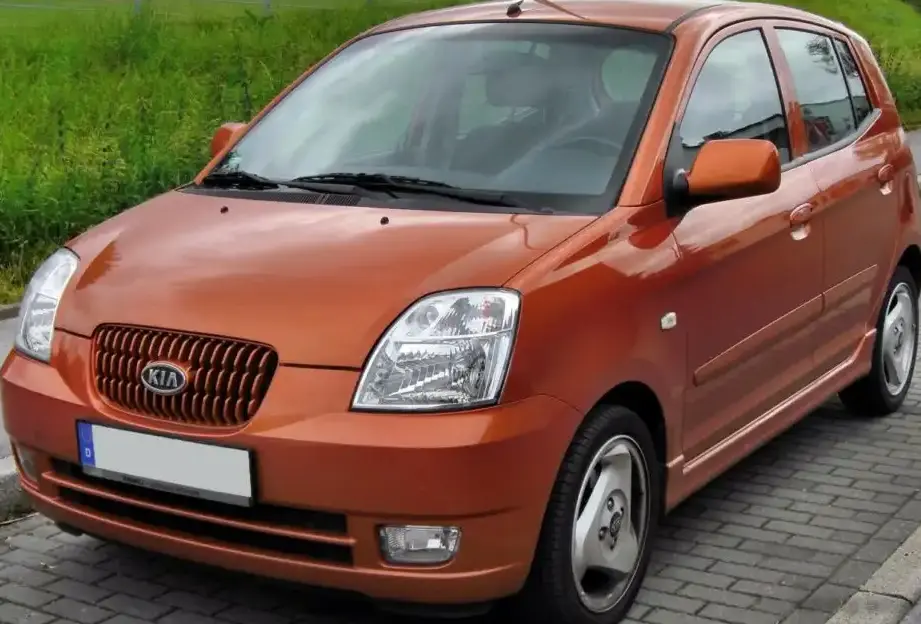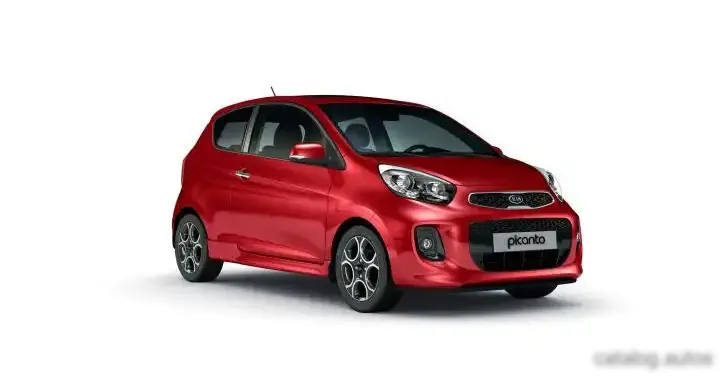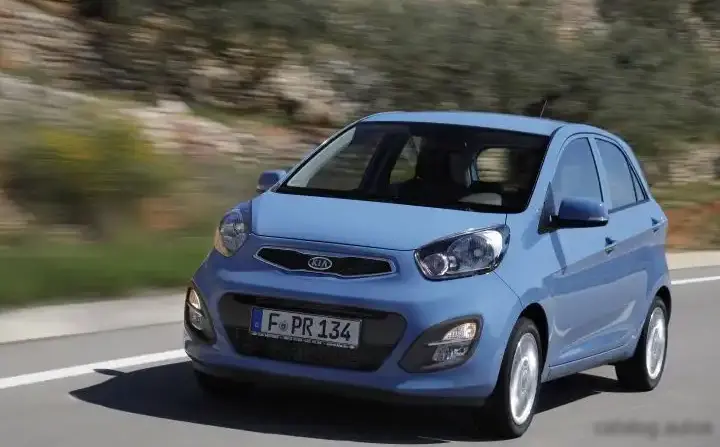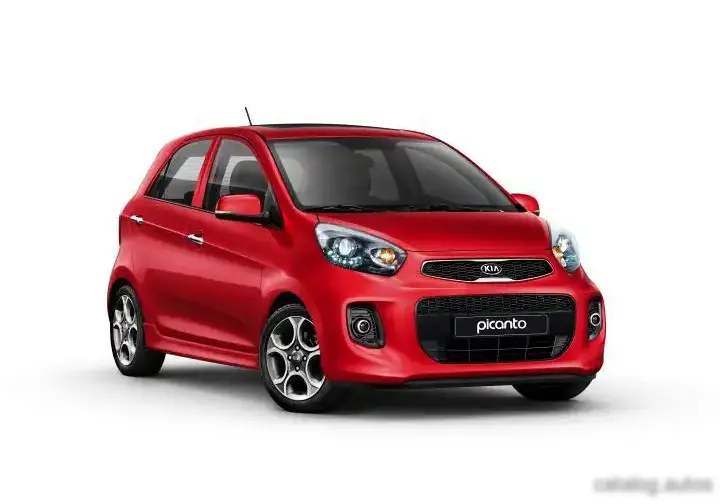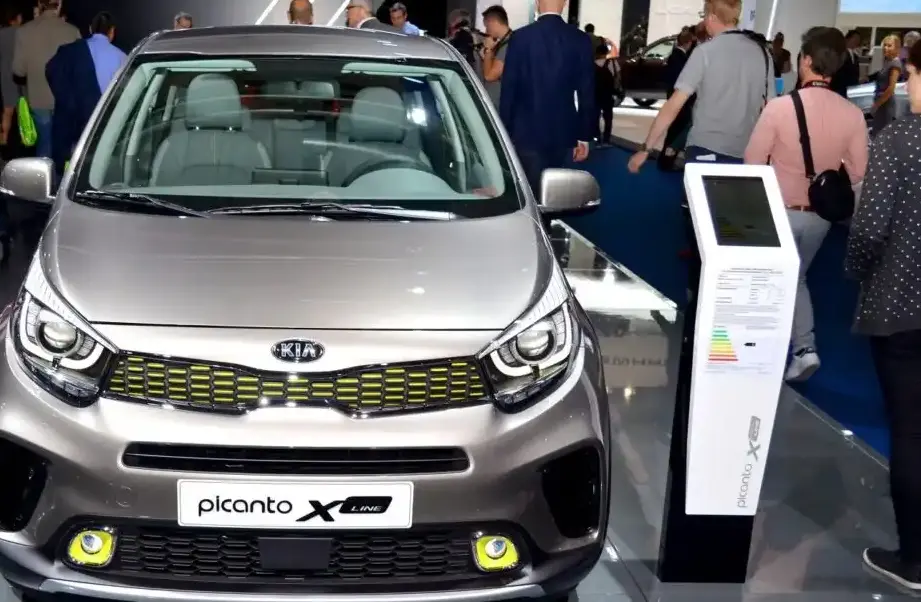
The Kia Picanto III 1.0 T-GDi, produced from October 2017 to June 2020, represents a significant step forward for Kia’s city car offering. This variant, powered by the Kappa II 1.0-liter turbocharged three-cylinder engine producing 100 horsepower, was positioned as a mid-range option within the Picanto III lineup, bridging the gap between the base 1.0-liter naturally aspirated engine and the more performance-oriented variants. It aimed to provide a balance of fuel efficiency, respectable performance, and modern features for the increasingly competitive European and Asian city car market. The Picanto III itself is built on the Kia/Hyundai BA platform, shared with the Hyundai i10, and represents the third generation of Kia’s popular A-segment hatchback.
Technical Specifications
| Brand | Kia |
| Model | Picanto |
| Generation | Picanto III |
| Type (Engine) | 1.0 T-GDi (100 Hp) |
| Start of production | October, 2017 |
| End of production | June, 2020 |
| Powertrain Architecture | Internal Combustion engine |
| Body type | Hatchback |
| Seats | 5 |
| Doors | 5 |
| Fuel consumption (urban) | 5.6 l/100 km (42 US mpg, 50.4 UK mpg, 17.9 km/l) |
| Fuel consumption (extra urban) | 4 l/100 km (58.8 US mpg, 70.6 UK mpg, 25 km/l) |
| Fuel consumption (combined) | 4.5 l/100 km (52.3 US mpg, 62.8 UK mpg, 22.2 km/l) |
| CO2 emissions | 104 g/km |
| Fuel Type | Petrol (Gasoline) |
| Acceleration 0 – 100 km/h | 10.1 sec |
| Acceleration 0 – 62 mph | 10.1 sec |
| Acceleration 0 – 60 mph | 9.6 sec |
| Maximum speed | 180 km/h (111.85 mph) |
| Power | 100 Hp @ 4500 rpm |
| Torque | 172 Nm @ 1500-4000 rpm (126.86 lb.-ft. @ 1500-4000 rpm) |
| Engine layout | Front, Transverse |
| Engine Model/Code | Kappa II / G3LC |
| Engine displacement | 998 cm3 (60.9 cu. in.) |
| Number of cylinders | 3 |
| Engine configuration | Inline |
| Cylinder Bore | 71 mm (2.8 in.) |
| Piston Stroke | 84 mm (3.31 in.) |
| Compression ratio | 10:1 |
| Number of valves per cylinder | 4 |
| Fuel injection system | Direct injection |
| Engine aspiration | Turbocharger, Intercooler |
| Valvetrain | DOHC |
| Engine oil capacity | 3.6 l (3.8 US qt | 3.17 UK qt) |
| Coolant | 5.3 l (5.6 US qt | 4.66 UK qt) |
| Kerb Weight | 933 kg (2056.91 lbs.) |
| Max. weight | 1400 kg (3086.47 lbs.) |
| Max load | 467 kg (1029.56 lbs.) |
| Trunk (boot) space – minimum | 255 l (9.01 cu. ft.) |
| Trunk (boot) space – maximum | 1010 l (35.67 cu. ft.) |
| Fuel tank capacity | 35 l (9.25 US gal | 7.7 UK gal) |
| Length | 3595 mm (141.54 in.) |
| Width | 1595 mm (62.8 in.) |
| Width including mirrors | 1880 mm (74.02 in.) |
| Height | 1485 mm (58.46 in.) |
| Wheelbase | 2400 mm (94.49 in.) |
| Front overhang | 675 mm (26.57 in.) |
| Rear overhang | 520 mm (20.47 in.) |
| Ride height (ground clearance) | 141 mm (5.55 in.) |
| Minimum turning circle | 9.4 m (30.84 ft.) |
| Drivetrain Architecture | Front wheel drive |
| Number of gears and type of gearbox | 5 gears, manual transmission |
| Front suspension | Independent, type McPherson with coil spring and anti-roll bar |
| Rear suspension | Semi-independent, coil spring |
| Front brakes | Ventilated discs |
| Rear brakes | Disc |
| Assisting systems | ABS (Anti-lock braking system) |
| Steering type | Steering rack and pinion |
| Power steering | Electric Steering |
| Tires size | 195/45 R16 |
| Wheel rims size | 16 |
Powertrain & Engine Architecture
The heart of the Picanto 1.0 T-GDi is the Kappa II G3LC engine, a 998cc turbocharged three-cylinder gasoline engine. This engine utilizes direct injection, a technology that improves fuel efficiency and power output by injecting fuel directly into the combustion chamber. The engine also features a twin-scroll turbocharger with an intercooler, which minimizes turbo lag and maximizes boost pressure. The DOHC (Double Overhead Camshaft) valvetrain further enhances engine breathing and performance. The engine’s relatively high compression ratio of 10:1 contributes to its efficiency. The 5-speed manual transmission was the standard offering, providing a balance between fuel economy and driver engagement. While an automatic transmission was available on other Picanto III trims, it wasn’t offered with the 1.0 T-GDi engine in most markets.
Driving Characteristics
The 1.0 T-GDi Picanto offers a noticeable improvement in performance over the naturally aspirated 1.0-liter engine. The turbocharger provides a significant boost in torque, particularly at lower RPMs, making it more responsive in city driving. While not a sports car, the 100 horsepower output and relatively light weight (around 933 kg or 2057 lbs) allow for brisk acceleration, with a 0-60 mph time of around 9.6 seconds. The 5-speed manual transmission is well-matched to the engine, with gear ratios optimized for both fuel efficiency and everyday drivability. Compared to higher-spec Picanto variants, the 1.0 T-GDi offers a more engaging driving experience due to the manual gearbox, while still providing a comfortable ride quality suitable for urban environments.
Equipment & Trim Levels
The 1.0 T-GDi trim typically included features such as air conditioning, power windows, central locking, and a basic audio system with USB connectivity. Higher trim levels added features like alloy wheels, a touchscreen infotainment system with Apple CarPlay and Android Auto compatibility, a rear-view camera, and parking sensors. Interior upholstery was typically cloth, with a focus on durability and practicality. Safety features included ABS, airbags, and stability control. Optional extras often included metallic paint, upgraded audio systems, and a sunroof.
Chassis & Braking
The Picanto III utilizes a McPherson strut front suspension and a semi-independent coil spring rear suspension. This setup provides a comfortable ride quality while maintaining reasonable handling characteristics. The front brakes are ventilated discs, offering good stopping power, while the rear brakes are discs. The electric power steering provides light and precise steering feel, making it easy to maneuver in tight city streets. The relatively lightweight construction of the Picanto contributes to its agility and responsiveness.
Market Reception & Comparison
The Kia Picanto 1.0 T-GDi was generally well-received by automotive critics. It was praised for its fuel efficiency, peppy performance, and surprisingly spacious interior for a car of its size. Compared to rivals like the Hyundai i10, Volkswagen up!, and Toyota Aygo, the Picanto offered a compelling combination of value, features, and warranty coverage. The 1.0 T-GDi variant offered a noticeable performance advantage over the base 1.0-liter engine, making it a more appealing option for drivers who frequently drive on highways or carry passengers. Fuel economy figures were competitive, averaging around 52.3 US mpg in combined driving conditions.
Legacy
The Kappa II 1.0 T-GDi engine has proven to be a relatively reliable powertrain. While some early models experienced minor issues with the turbocharger, these were generally addressed through software updates and improved manufacturing processes. On the used car market, the Picanto 1.0 T-GDi remains a popular choice for buyers seeking an affordable, fuel-efficient, and well-equipped city car. Its compact size, nimble handling, and relatively low running costs make it an ideal vehicle for urban commuting and first-time car owners. The Picanto III, and specifically this 1.0 T-GDi variant, helped solidify Kia’s reputation for producing high-quality, value-for-money vehicles.