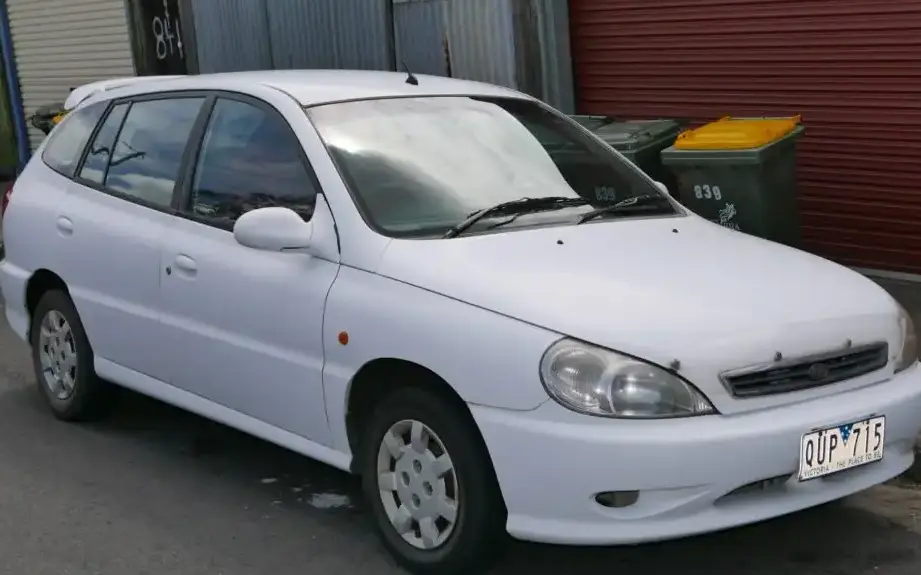
The Kia Rio IV Hatchback, specifically the YB facelift model produced from August 2020 onwards, represents a significant evolution in Kia’s subcompact offering. This variant, powered by a 1.0 T-GDI (Turbocharged Gasoline Direct Injection) engine producing 120 horsepower and incorporating a 48-volt mild hybrid system, aimed to balance fuel efficiency with acceptable performance in the highly competitive European and global small car segments. Positioned as a mid-range option within the Rio IV lineup, it offered a step up from the naturally aspirated base engines while remaining more accessible than the higher-specification trims. The Rio IV generation (YB) itself was a crucial model for Kia, demonstrating the brand’s increasing focus on design, quality, and technology.
Technical Specifications
| Brand | Kia |
| Model | Rio |
| Generation | Rio IV Hatchback (YB, facelift 2020) |
| Type (Engine) | 1.0 T-GDI (120 Hp) Mild Hybrid |
| Start of production | August, 2020 |
| Powertrain Architecture | MHEV (Mild Hybrid Electric Vehicle) |
| Body type | Hatchback |
| Seats | 5 |
| Doors | 5 |
| Fuel consumption (urban) | 4.9 l/100 km (48 US mpg, 57.6 UK mpg, 20.4 km/l) |
| Fuel consumption (extra urban) | 4.3 l/100 km (54.7 US mpg, 65.7 UK mpg, 23.3 km/l) |
| Fuel consumption (combined) | 4.5 l/100 km (52.3 US mpg, 62.8 UK mpg, 22.2 km/l) |
| CO2 emissions | 103 g/km |
| Fuel Type | Petrol (Gasoline) |
| Acceleration 0 – 100 km/h | 10.2 sec |
| Acceleration 0 – 62 mph | 10.2 sec |
| Acceleration 0 – 60 mph | 9.7 sec |
| Maximum speed | 190 km/h (118.06 mph) |
| Emission standard | Euro 6d-ISC-FCM |
| Weight-to-power ratio | 9.4 kg/Hp |
| Weight-to-torque ratio | 6.6 kg/Nm |
| Power | 120 Hp @ 6000 rpm |
| Torque | 172 Nm @ 1500-4000 rpm (126.86 lb.-ft. @ 1500-4000 rpm) |
| Engine layout | Front, Transverse |
| Engine Model/Code | G3LF |
| Engine displacement | 998 cm3 (60.9 cu. in.) |
| Number of cylinders | 3 |
| Engine configuration | Inline |
| Cylinder Bore | 71 mm (2.8 in.) |
| Piston Stroke | 84 mm (3.31 in.) |
| Compression ratio | 10.5:1 |
| Number of valves per cylinder | 4 |
| Fuel injection system | Direct injection |
| Engine aspiration | Turbocharger, Intercooler |
| Engine oil capacity | 3.6 l (3.8 US qt | 3.17 UK qt) |
| Coolant capacity | 5.9 l (6.23 US qt | 5.19 UK qt) |
| Kerb Weight | 1130-1228 kg (2491.22 – 2707.28 lbs.) |
| Max. weight | 1650 kg (3637.63 lbs.) |
| Max load | 422-520 kg (930.35 – 1146.4 lbs.) |
| Trunk (boot) space – minimum | 325 l (11.48 cu. ft.) |
| Trunk (boot) space – maximum | 1103 l (38.95 cu. ft.) |
| Fuel tank capacity | 45 l (11.89 US gal | 9.9 UK gal) |
| Max. roof load | 70 kg (154.32 lbs.) |
| Permitted trailer load (braked) | 900 kg (1984.16 lbs.) |
| Permitted trailer load (unbraked) | 450 kg (992.08 lbs.) |
| Permitted towbar download | 75 kg (165.35 lbs.) |
| Length | 4065-4070 mm (160.04 – 160.24 in.) |
| Width | 1725 mm (67.91 in.) |
| Width including mirrors | 1993 mm (78.46 in.) |
| Height | 1450 mm (57.09 in.) |
| Wheelbase | 2580 mm (101.57 in.) |
| Front track | 1512 mm (59.53 in.) |
| Rear track | 1518 mm (59.76 in.) |
| Minimum turning circle | 10.2 m (33.46 ft.) |
| Drivetrain | Front wheel drive, MHEV |
| Number of gears | 6 |
| Gearbox type | Manual transmission |
| Front suspension | Independent, McPherson with coil spring and anti-roll bar |
| Rear suspension | Coil spring, Elastic beam |
| Front brakes | Ventilated discs, 280 mm |
| Rear brakes | Disc, 262 mm |
| Assisting systems | ABS (Anti-lock braking system) |
| Steering type | Steering rack and pinion |
| Power steering | Electric |
| Tires size | 195/55 R16 87H; 205/45 R17 88V |
| Wheel rims size | 6.0J x 16; 6.5J x 17 |
Powertrain & Engine Architecture
The heart of this Rio variant is the Kappa 1.0 T-GDI engine, designated G3LF. This is a three-cylinder, inline engine featuring direct fuel injection and a single turbocharger with an intercooler. The engine’s compact size and lightweight construction contribute to the car’s overall efficiency. The 48-volt mild hybrid system consists of a 48V battery and a belt-driven starter generator (BSG). The BSG allows for extended stop/start functionality, regenerative braking (capturing energy during deceleration), and a small power assist during acceleration. The engine produces 120 horsepower at 6000 rpm and 172 Nm (126.86 lb-ft) of torque between 1500 and 4000 rpm. This engine is paired with a 6-speed manual transmission, delivering power to the front wheels. The transmission’s gear ratios are tuned for fuel economy and everyday drivability, rather than outright performance.
Driving Characteristics
The 1.0 T-GDI with the manual transmission offers a reasonable driving experience for urban and highway use. While not exceptionally quick – achieving 0-60 mph in around 9.7 seconds – the turbocharger provides a noticeable boost in power when needed, making overtaking maneuvers manageable. The mild hybrid system contributes to smoother stop/start transitions and a slight improvement in responsiveness. Compared to the base 1.25-liter naturally aspirated engine, the 1.0 T-GDI offers significantly more power and torque, resulting in a more confident and enjoyable driving experience. However, it doesn’t match the performance of larger-engined rivals or even higher-output versions of the Rio itself. The manual gearbox is generally well-matched to the engine, although some drivers may find the shift action slightly notchy.
Equipment & Trim Levels
The 1.0 T-GDI mild hybrid typically came equipped as a mid-range trim level, offering a balance of features and affordability. Standard equipment generally included air conditioning, a touchscreen infotainment system with Apple CarPlay and Android Auto compatibility, Bluetooth connectivity, power windows, and central locking. Safety features such as ABS, ESC (Electronic Stability Control), and multiple airbags were also standard. Optional extras could include alloy wheels, a rear-view camera, parking sensors, and a more advanced infotainment system with navigation. Interior upholstery was typically cloth, with a focus on durability and practicality. The dashboard layout was functional and user-friendly, with a clear instrument cluster and logically arranged controls.
Chassis & Braking
The Rio IV utilizes a front-wheel-drive chassis with an independent McPherson strut suspension at the front and a semi-independent torsion beam suspension at the rear. This setup provides a comfortable ride quality, although it’s not particularly sporty. The front brakes are ventilated discs, while the rear brakes are solid discs. ABS (Anti-lock Braking System) is standard, providing enhanced braking performance and stability. The steering is electrically assisted, offering light and precise control. The suspension is tuned for everyday driving conditions, prioritizing comfort over handling precision.
Market Reception & Comparison
The 1.0 T-GDI mild hybrid Rio was generally well-received by automotive critics, who praised its fuel efficiency, comfortable ride, and value for money. However, some reviewers noted that the engine could feel strained at higher speeds and that the interior materials were not as premium as those found in some rival vehicles. Compared to other trims in the Rio lineup, the 1.0 T-GDI offered a compelling combination of performance and economy. It was a popular choice for buyers who wanted a more engaging driving experience than the base models but didn’t want to pay the higher price of the top-spec trims. Fuel economy figures consistently hovered around 52.3 US mpg, making it an attractive option for cost-conscious drivers.
Legacy
The 1.0 T-GDI mild hybrid powertrain has proven to be relatively reliable in the Rio IV. While some owners have reported minor issues with the turbocharger or fuel injection system, these are not widespread. The engine’s relatively simple design and robust construction contribute to its longevity. On the used car market, this variant of the Rio IV holds its value reasonably well, thanks to its fuel efficiency and practicality. It remains a popular choice for buyers looking for an affordable and reliable small car.