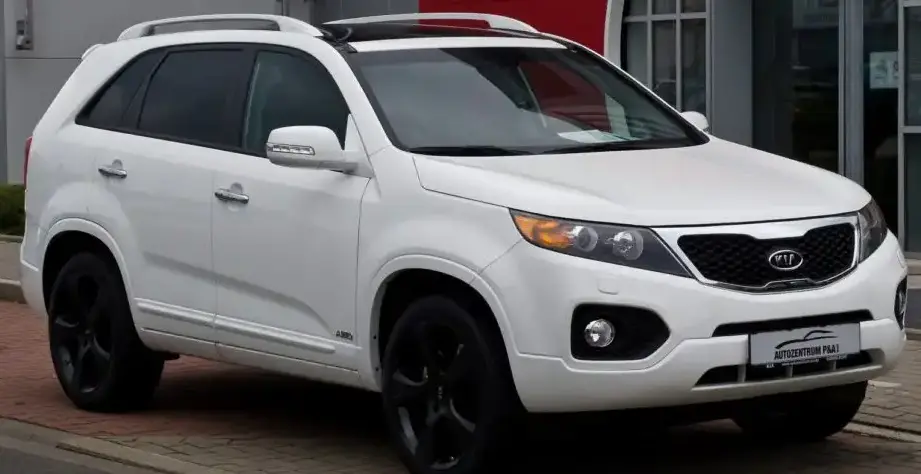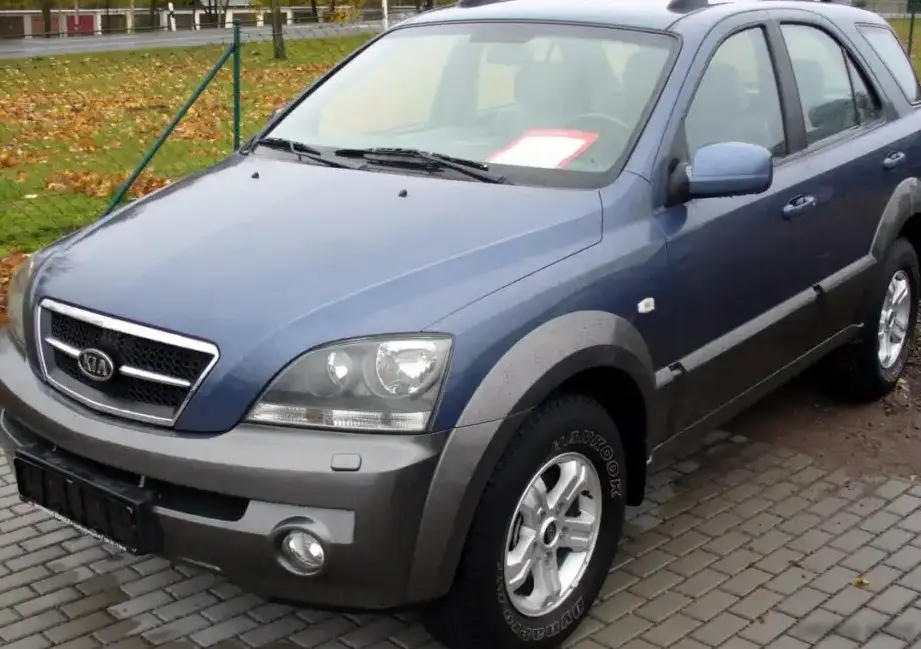
The Kia Sorento I 3.5 i V6 24V, produced from 2002 to 2006, represents Kia’s initial foray into the mid-size SUV segment. This first-generation Sorento (internally designated as the MQ) was a significant vehicle for the Korean automaker, aiming to establish a presence in a market dominated by Japanese and American brands. The 3.5-liter V6 variant, generating 195 horsepower, was positioned as the premium engine option within the Sorento lineup, offering a balance of power and refinement for buyers seeking a more capable and comfortable SUV. It was primarily marketed towards families and individuals desiring a versatile vehicle with all-wheel drive capability.
Technical Specifications
| Brand | Kia |
| Model | Sorento |
| Generation | Sorento I |
| Type (Engine) | 3.5 i V6 24V (195 Hp) |
| Start of production | 2002 |
| End of production | 2006 |
| Powertrain Architecture | Internal Combustion engine |
| Body type | SUV |
| Seats | 5 |
| Doors | 5 |
| Fuel consumption (urban) | 17.6 l/100 km (13.4 US mpg, 16.1 UK mpg, 5.7 km/l) |
| Fuel consumption (extra urban) | 9.7 l/100 km (24.2 US mpg, 29.1 UK mpg, 10.3 km/l) |
| Fuel consumption (combined) | 12.6 l/100 km (18.7 US mpg, 22.4 UK mpg, 7.9 km/l) |
| Fuel Type | Petrol (Gasoline) |
| Acceleration 0 – 100 km/h | 10.2 sec |
| Acceleration 0 – 62 mph | 10.2 sec |
| Acceleration 0 – 60 mph | 9.7 sec |
| Maximum speed | 192 km/h (119.3 mph) |
| Weight-to-power ratio | 9.9 kg/Hp, 101 Hp/tonne |
| Weight-to-torque ratio | 6.4 kg/Nm, 155.4 Nm/tonne |
| Power | 195 Hp @ 5800 rpm |
| Power per litre | 55.8 Hp/l |
| Torque | 300 Nm @ 3000 rpm (221.27 lb.-ft. @ 3000 rpm) |
| Engine layout | Front, Longitudinal |
| Engine Model/Code | Sigma / G6CU |
| Engine displacement | 3497 cm3 (213.4 cu. in.) |
| Number of cylinders | 6 |
| Engine configuration | V-engine |
| Cylinder Bore | 93 mm (3.66 in.) |
| Piston Stroke | 85.8 mm (3.38 in.) |
| Compression ratio | 10:1 |
| Number of valves per cylinder | 4 |
| Fuel injection system | Multi-port manifold injection |
| Engine aspiration | Naturally aspirated engine |
| Valvetrain | DOHC |
| Engine oil capacity | 4.4 l (4.65 US qt | 3.87 UK qt) |
| Coolant capacity | 11 l (11.62 US qt | 9.68 UK qt) |
| Kerb Weight | 1930 kg (4254.92 lbs.) |
| Max. weight | 2560 kg (5643.83 lbs.) |
| Max load | 630 kg (1388.91 lbs.) |
| Trunk (boot) space – minimum | 890 l (31.43 cu. ft.) |
| Trunk (boot) space – maximum | 1900 l (67.1 cu. ft.) |
| Fuel tank capacity | 80 l (21.13 US gal | 17.6 UK gal) |
| Length | 4567 mm (179.8 in.) |
| Width | 1857 mm (73.11 in.) |
| Height | 1730 mm (68.11 in.) |
| Wheelbase | 2710 mm (106.69 in.) |
| Front track | 1580 mm (62.2 in.) |
| Rear (Back) track | 1580 mm (62.2 in.) |
| Drive wheel | All wheel drive (4×4) |
| Number of gears | 4 |
| Gearbox type | automatic transmission |
| Front suspension | Double wishbone |
| Rear suspension | Coil spring |
| Front brakes | Ventilated discs |
| Rear brakes | Ventilated discs |
| Assisting systems | ABS (Anti-lock braking system) |
| Steering type | Steering rack and pinion |
| Power steering | Hydraulic Steering |
| Tires size | 245/70 R16 |
Powertrain & Engine Architecture
The heart of the Sorento I 3.5 i V6 is the Sigma engine, specifically the G6CU variant. This 3.5-liter, naturally aspirated V6 engine utilizes a 60-degree V-angle configuration for improved balance and smoothness. It features a double overhead camshaft (DOHC) valvetrain with four valves per cylinder, contributing to its respectable power output. Fuel delivery is managed by a multi-port fuel injection system, providing precise fuel metering for optimal combustion. The engine produces 195 horsepower at 5,800 rpm and 300 Nm (221 lb-ft) of torque at 3,000 rpm. Paired with this engine is a four-speed automatic transmission, designed to provide smooth and convenient shifting. This transmission was chosen for its ease of use and suitability for the target demographic, prioritizing comfort over outright performance.
Driving Characteristics
The 3.5L V6 automatic Sorento offered a noticeable step up in performance compared to the base 2.4L four-cylinder engine. While not a sports SUV, the V6 provided adequate power for highway merging, overtaking, and tackling moderate off-road conditions. The four-speed automatic transmission, while not as sophisticated as modern transmissions, offered smooth shifts and a reasonable spread of gear ratios. Acceleration from 0 to 60 mph took approximately 9.7 seconds, which was competitive for its class at the time. The all-wheel-drive system enhanced traction in slippery conditions, making it a capable vehicle for inclement weather. However, the automatic transmission did slightly diminish fuel economy compared to the available manual transmission.
Equipment & Trim Levels
The 3.5 i V6 trim typically came well-equipped, positioning it as the higher-end offering in the Sorento lineup. Standard features generally included air conditioning, power windows and locks, a CD player, and alloy wheels. Higher trim levels offered options such as leather upholstery, a sunroof, and upgraded audio systems. Safety features like ABS were standard. The interior design was functional and relatively spacious, prioritizing practicality over luxury. The Sorento aimed to provide a comfortable and well-equipped interior for families.
Chassis & Braking
The Sorento I utilized a body-on-frame construction, a common practice for SUVs of that era, providing robustness and durability. The front suspension employed a double wishbone setup, while the rear suspension utilized a coil spring arrangement. This configuration aimed to balance ride comfort with handling stability. Braking duties were handled by ventilated disc brakes on all four wheels, providing adequate stopping power for the vehicle’s weight. The ABS system further enhanced braking performance by preventing wheel lockup during hard braking.
Market Reception & Comparison
The Kia Sorento I was generally well-received by critics as a competent and affordable SUV. The 3.5L V6 engine was praised for its smooth operation and adequate power. However, some reviewers noted that the automatic transmission could feel somewhat dated compared to competitors. Fuel economy was also a point of criticism, as the V6 engine consumed a significant amount of fuel, especially in urban driving. Compared to rivals like the Honda Pilot and Toyota Highlander, the Sorento offered a more affordable price point but lacked some of the refinement and fuel efficiency of those Japanese competitors. The 1.8L engine was a more economical choice, but it lacked the power and capability of the V6.
Legacy
The Kia Sorento I played a crucial role in establishing Kia as a viable player in the SUV market. While the first-generation Sorento is now considered a classic, the 3.5L V6 powertrain has proven to be relatively reliable, with many examples still on the road today. However, like any older vehicle, regular maintenance is essential to ensure longevity. Common issues include oil leaks and wear on suspension components. The Sorento I laid the foundation for the subsequent generations of Sorento, which have continued to improve in terms of refinement, technology, and fuel efficiency. The used car market values these vehicles for their affordability and ruggedness, making them a popular choice for budget-conscious buyers seeking a capable SUV.