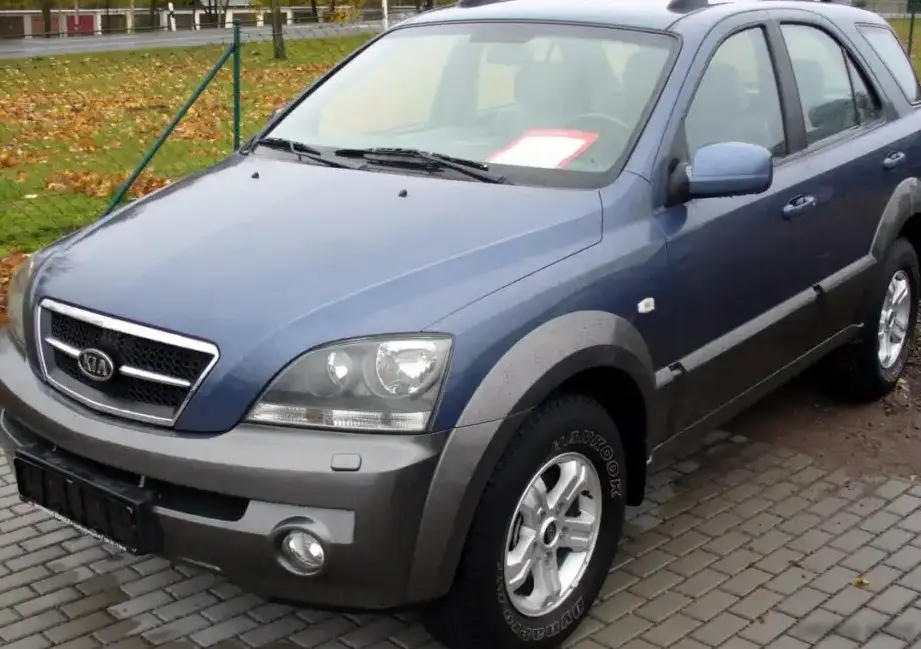
The Kia Sorento I (facelift, produced from 2006 to 2009) 2.5 CRDi, generating 170 horsepower, represented a significant step forward for the Korean automaker in the mid-size SUV segment. Introduced as part of the first generation Sorento (codenamed BC), the facelift brought styling revisions and, crucially, updated engine options to better compete in the European and global markets. This particular variant, equipped with the D4CB engine, was positioned as a strong contender offering a balance of performance, fuel efficiency, and all-wheel-drive capability. It aimed to appeal to families and drivers seeking a versatile vehicle for both on-road comfort and occasional off-road excursions.
Technical Specifications
| Brand | Kia |
| Model | Sorento |
| Generation | Sorento I (facelift 2006) |
| Type (Engine) | 2.5 CRDi (170 Hp) |
| Start of production | 2006 |
| End of production | 2009 |
| Powertrain Architecture | Internal Combustion engine |
| Body type | SUV |
| Seats | 5 |
| Doors | 5 |
| Fuel consumption (urban) | 10 l/100 km (23.5 US mpg) |
| Fuel Type | Diesel |
| Acceleration 0 – 100 km/h | 12.4 sec |
| Acceleration 0 – 62 mph | 12.4 sec |
| Acceleration 0 – 60 mph | 11.8 sec |
| Maximum speed | 180 km/h (111.85 mph) |
| Emission standard | Euro 4 |
| Weight-to-power ratio | 11.6 kg/Hp |
| Weight-to-torque ratio | 4.9 kg/Nm |
| Power | 170 Hp @ 3800 rpm |
| Torque | 400 Nm (295.02 lb.-ft.) |
| Engine layout | Front, Longitudinal |
| Engine Model/Code | D4CB |
| Engine displacement | 2497 cm3 (152.38 cu. in.) |
| Number of cylinders | 4 |
| Engine configuration | Inline |
| Cylinder Bore | 91 mm (3.58 in.) |
| Piston Stroke | 96 mm (3.78 in.) |
| Compression ratio | 19.3:1 |
| Number of valves per cylinder | 4 |
| Fuel injection system | Diesel Commonrail |
| Engine aspiration | Turbocharger, Intercooler |
| Engine oil capacity | 8.2 l (8.66 US qt | 7.21 UK qt) |
| Coolant | 10 l (10.57 US qt | 8.8 UK qt) |
| Kerb Weight | 1965 kg (4332.08 lbs.) |
| Fuel tank capacity | 80 l (21.13 US gal | 17.6 UK gal) |
| Length | 4590 mm (180.71 in.) |
| Width | 1865 mm (73.43 in.) |
| Height | 1730 mm (68.11 in.) |
| Drive wheel | All wheel drive (4×4) |
| Number of gears and type of gearbox | 5 gears, manual transmission |
| Front brakes | Ventilated discs |
| Rear brakes | Ventilated discs |
| Assisting systems | ABS (Anti-lock braking system) |
| Tires size | 245/70 R16; 245/65 R17 |
| Wheel rims size | 16; 17 |
Powertrain & Engine Architecture
The heart of the 2006-2009 Kia Sorento 2.5 CRDi is the D4CB engine, a 2.5-liter inline-four cylinder diesel. This engine utilizes a second-generation common-rail direct injection system, delivering fuel at extremely high pressure for improved combustion efficiency and reduced emissions. The D4CB features a variable geometry turbocharger (VGT) and an intercooler, enhancing both low-end torque and overall power output. The engine’s 19.3:1 compression ratio is typical for a diesel engine, contributing to its efficiency. The 5-speed manual transmission was the standard offering for this variant, providing a direct connection between the engine and the wheels. The transmission was chosen for its durability and suitability for the engine’s torque characteristics.
Driving Characteristics
The 170 hp and 400 Nm (295 lb-ft) of torque provided by the 2.5 CRDi engine delivered respectable performance for a mid-size SUV. While not exceptionally quick, the Sorento offered sufficient power for everyday driving and highway cruising. Acceleration from 0-60 mph took around 11.8 seconds, and the top speed was approximately 112 mph. The manual transmission allowed for greater driver control, but the gear ratios were tuned more for fuel economy and relaxed cruising than for outright performance. Compared to the later 2.2 CRDi engines, the 2.5 CRDi felt slightly less refined and had a narrower power band, requiring more frequent gear changes to maintain optimal performance. However, the 2.5 CRDi offered a more robust and simpler engine design, potentially leading to lower long-term maintenance costs.
Equipment & Trim Levels
The 2.5 CRDi variant of the Sorento I facelift typically came with a reasonable level of standard equipment. This included air conditioning, power windows and locks, a basic audio system, and ABS brakes. Higher trim levels, often denoted by designations like “LX” or “EX”, added features such as alloy wheels, a sunroof, upgraded audio systems, leather upholstery, and automatic climate control. The interior design was functional and durable, prioritizing practicality over luxury. The Sorento offered a spacious cabin for five passengers, with ample cargo space behind the rear seats.
Chassis & Braking
The Sorento I utilized a body-on-frame construction, providing a robust and durable chassis. The suspension consisted of independent double wishbones at the front and a multi-link setup at the rear, offering a comfortable ride quality. The all-wheel-drive system was typically a part-time system, allowing the driver to select between two-wheel drive and four-wheel drive modes. Braking duties were handled by ventilated discs on all four wheels, providing adequate stopping power. The ABS system helped to maintain control during emergency braking situations.
Market Reception & Comparison
The Kia Sorento I 2.5 CRDi was generally well-received by automotive critics as a capable and affordable SUV. It offered a compelling alternative to more established competitors from Japan and Europe. The diesel engine was praised for its fuel efficiency and torque, making it suitable for long-distance driving and towing. However, some critics noted that the interior quality and refinement were not on par with some of its rivals. Compared to the gasoline-powered versions of the Sorento, the 2.5 CRDi offered significantly better fuel economy and torque, making it a popular choice in Europe and other markets where diesel fuel was readily available and affordable.
Legacy
The Kia Sorento I 2.5 CRDi, particularly the facelifted models, have proven to be relatively reliable vehicles. The D4CB engine, while not without its potential issues (such as turbocharger wear and injector problems), is generally considered to be a durable unit when properly maintained. Today, these Sorentos can be found on the used car market at affordable prices, making them an attractive option for budget-conscious buyers seeking a capable and versatile SUV. The 2.5 CRDi variant remains a popular choice due to its fuel efficiency and all-wheel-drive capability, and its simplicity compared to later, more complex engine designs often appeals to owners who prefer to perform their own maintenance.