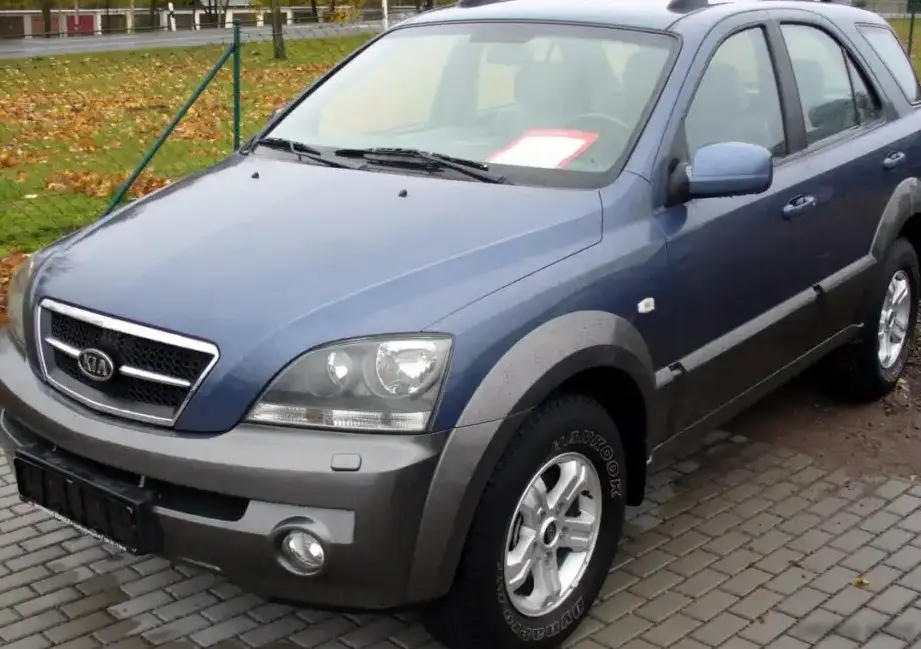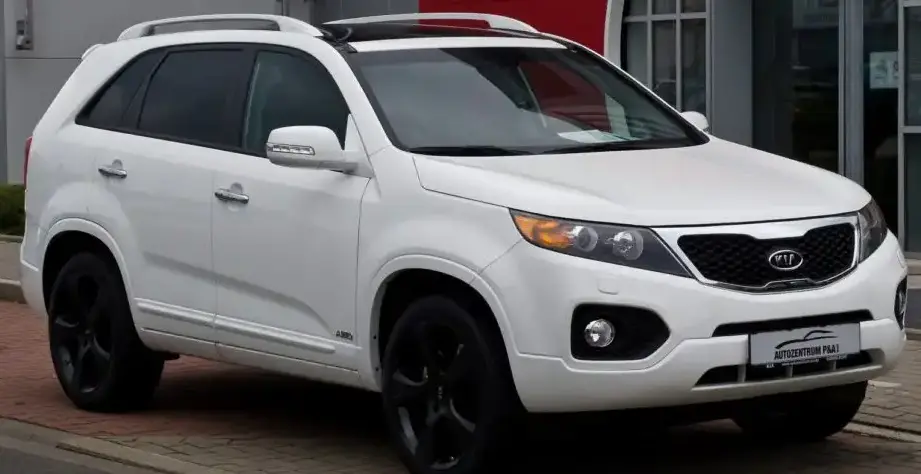
The Kia Sorento, launched in 2002, represented Kia’s initial foray into the mid-size SUV segment. The first generation Sorento (internally designated as the MQ) aimed to provide a robust, body-on-frame SUV appealing to families and those seeking off-road capability. A significant facelift arrived in 2006, bringing revised styling, improved interior materials, and updated engine options. Among these, the 3.8i V6 with a four-wheel drive system and automatic transmission became a popular choice, particularly in North America. Production of this specific configuration ran from 2006 to 2009, positioning it as the top-tier engine option within the Sorento I lineup.
Technical Specifications
| Brand | Kia |
| Model | Sorento |
| Generation | Sorento I (facelift 2006) |
| Type (Engine) | 3.8i V6 (262 Hp) 4WD Automatic |
| Start of production | 2006 |
| End of production | 2009 |
| Powertrain Architecture | Internal Combustion engine |
| Body type | SUV |
| Seats | 5 |
| Doors | 5 |
| Fuel consumption (urban) | 13.8 l/100 km (17 US mpg, 20.5 UK mpg) |
| Fuel consumption (extra urban) | 10.7 l/100 km (22 US mpg, 26.4 UK mpg) |
| Fuel consumption (combined) | 12.4 l/100 km (19 US mpg, 22.8 UK mpg) |
| Fuel Type | Petrol (Gasoline) |
| Weight-to-power ratio | 7.6 kg/Hp, 131.7 Hp/tonne |
| Weight-to-torque ratio | 5.6 kg/Nm, 177.4 Nm/tonne |
| Power | 262 Hp @ 6000 rpm |
| Power per litre | 69.3 Hp/l |
| Torque | 353 Nm @ 4500 rpm (260.36 lb.-ft. @ 4500 rpm) |
| Engine layout | Front, Longitudinal |
| Engine Model/Code | Lambda / G6DA |
| Engine displacement | 3778 cm3 (230.55 cu. in.) |
| Number of cylinders | 6 |
| Engine configuration | V-engine |
| Cylinder Bore | 96 mm (3.78 in.) |
| Piston Stroke | 87 mm (3.43 in.) |
| Compression ratio | 10.4:1 |
| Number of valves per cylinder | 4 |
| Fuel injection system | Multi-port manifold injection |
| Engine aspiration | Naturally aspirated engine |
| Valvetrain | DOHC, CVVT |
| Engine oil capacity | 5.2 l (5.49 US qt | 4.58 UK qt) |
| Coolant | 9 l (9.51 US qt | 7.92 UK qt) |
| Kerb Weight | 1990 kg (4387.2 lbs.) |
| Max. weight | 2560 kg (5643.83 lbs.) |
| Max load | 570 kg (1256.63 lbs.) |
| Trunk (boot) space – minimum | 441 l (15.57 cu. ft.) |
| Trunk (boot) space – maximum | 1751 l (61.84 cu. ft.) |
| Fuel tank capacity | 80 l (21.13 US gal | 17.6 UK gal) |
| Length | 4590 mm (180.71 in.) |
| Width | 1865 mm (73.43 in.) |
| Height | 1811 mm (71.3 in.) |
| Wheelbase | 2710 mm (106.69 in.) |
| Front track | 1580 mm (62.2 in.) |
| Rear (Back) track | 1580 mm (62.2 in.) |
| Ride height (ground clearance) | 208 mm (8.19 in.) |
| Drag coefficient (Cd) | 0.425 |
| Minimum turning circle (turning diameter) | 11.8 m (38.71 ft.) |
| Drive wheel | All wheel drive (4×4) |
| Number of gears and type of gearbox | 5 gears, automatic transmission |
| Front brakes | Ventilated discs |
| Rear brakes | Ventilated discs |
| Assisting systems | ABS (Anti-lock braking system) |
| Tires size | 245/70 R16 |
| Wheel rims size | 7J x 16 |
Powertrain & Engine Architecture
The heart of this Sorento variant is the Kia-developed 3.8-liter Lambda V6 engine, designated as the G6DA. This engine is a naturally aspirated, 60-degree V6 featuring a cast iron block and aluminum cylinder heads. It utilizes a multi-port fuel injection system, delivering fuel directly into the intake ports. The engine also incorporates Kia’s Continuously Variable Valve Timing (CVVT) technology on both intake and exhaust valves, optimizing engine performance and fuel efficiency across the rev range. The 3.8L Lambda engine produces 262 horsepower at 6000 rpm and 353 Nm (260 lb-ft) of torque at 4500 rpm. Paired with this engine is a five-speed automatic transmission, designed to provide smooth shifting and adequate power delivery for both on-road cruising and moderate off-road conditions. The transmission is electronically controlled, adapting shift points based on throttle input and driving conditions.
Driving Characteristics
The 3.8L V6 automatic Sorento offered a noticeable step up in performance compared to the base 2.4L four-cylinder engine. While not a sports car, the V6 provided sufficient power for confident highway merging and overtaking. The automatic transmission, while smooth, wasn’t particularly quick to downshift, resulting in a slightly less responsive feel than the available five-speed manual transmission. The four-wheel drive system, primarily rear-wheel biased, enhanced traction in slippery conditions, but the Sorento wasn’t designed for serious off-roading. The gear ratios were tuned for a balance of fuel economy and usability, prioritizing comfortable cruising over outright acceleration. The weight of the vehicle, approximately 4,387 lbs, did impact overall agility, making it feel somewhat cumbersome in tight corners.
Equipment & Trim Levels
The 3.8L V6 4WD automatic typically represented the highest trim level available on the Sorento I facelift. Standard features generally included air conditioning, power windows and locks, a CD player with AM/FM radio, and alloy wheels. Higher-end options, such as leather upholstery, a sunroof, and upgraded audio systems, were often available. Safety features included dual front airbags and ABS brakes. The interior design was functional and relatively spacious, though material quality was generally considered average for the segment. The 2006 facelift brought improvements to interior plastics and overall fit and finish.
Chassis & Braking
The Sorento I utilized a traditional body-on-frame construction, providing a robust and durable platform. The suspension consisted of independent double wishbones at the front and a multi-link setup at the rear. The 3.8L V6 models typically featured a thicker front stabilizer bar compared to lower trims, helping to reduce body roll during cornering. Braking duties were handled by ventilated disc brakes on all four wheels, providing adequate stopping power for the vehicle’s weight. The ABS system helped to maintain steering control during emergency braking situations. The ride quality was generally comfortable, absorbing bumps and imperfections in the road reasonably well, though it could feel somewhat truck-like compared to more modern unibody SUVs.
Market Reception & Comparison
The 3.8L V6 Sorento was generally well-received by critics as a capable and affordable mid-size SUV. It offered a compelling alternative to more established competitors like the Toyota 4Runner and Honda Pilot, particularly for buyers seeking a more value-oriented option. Fuel economy, however, was a common criticism, with the 3.8L V6 consuming a significant amount of gasoline, averaging around 19 mpg in combined driving. Compared to the 2.4L four-cylinder Sorento, the V6 offered a substantial performance boost, but at the cost of increased fuel consumption. The V6 also provided a more refined driving experience than the available diesel engines in some international markets.
Legacy
The Kia Sorento I, particularly the 3.8L V6 variant, established Kia as a serious contender in the mid-size SUV segment. While the Lambda V6 engine proved to be generally reliable, regular maintenance, including oil changes and timing belt replacements (if applicable, depending on specific engine revisions), is crucial for long-term durability. Today, well-maintained examples of the 2006-2009 Sorento 3.8L V6 can still be found on the used car market, offering an affordable and spacious SUV option. However, potential buyers should be aware of the vehicle’s age and potential for wear and tear, and a thorough pre-purchase inspection is highly recommended. The Sorento I laid the groundwork for subsequent generations of the Sorento, which have continued to improve in terms of refinement, technology, and fuel efficiency.