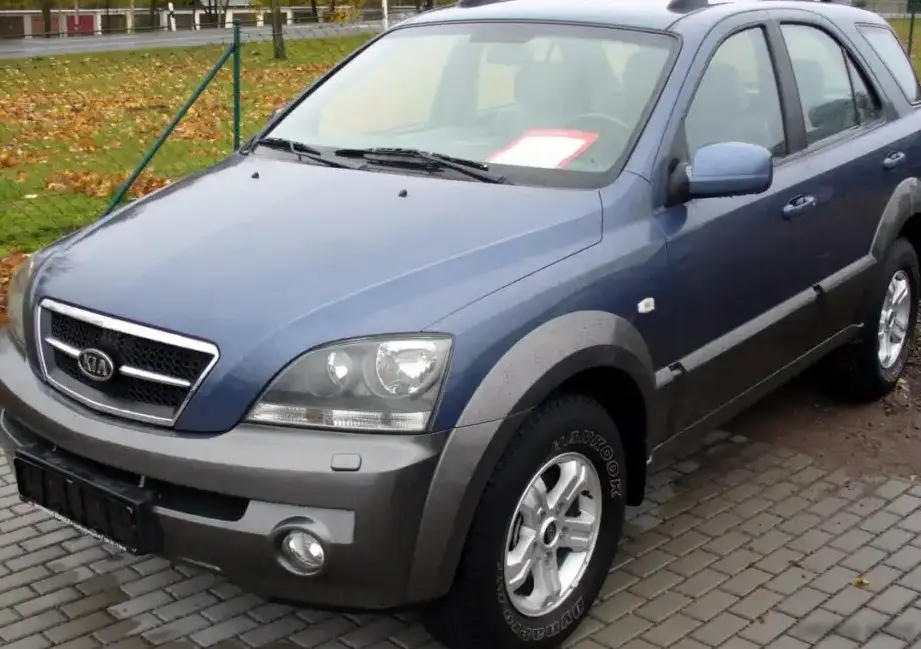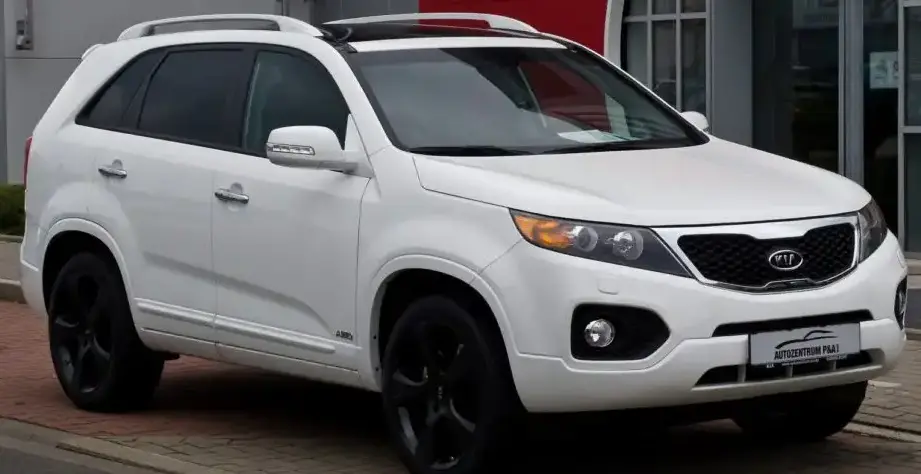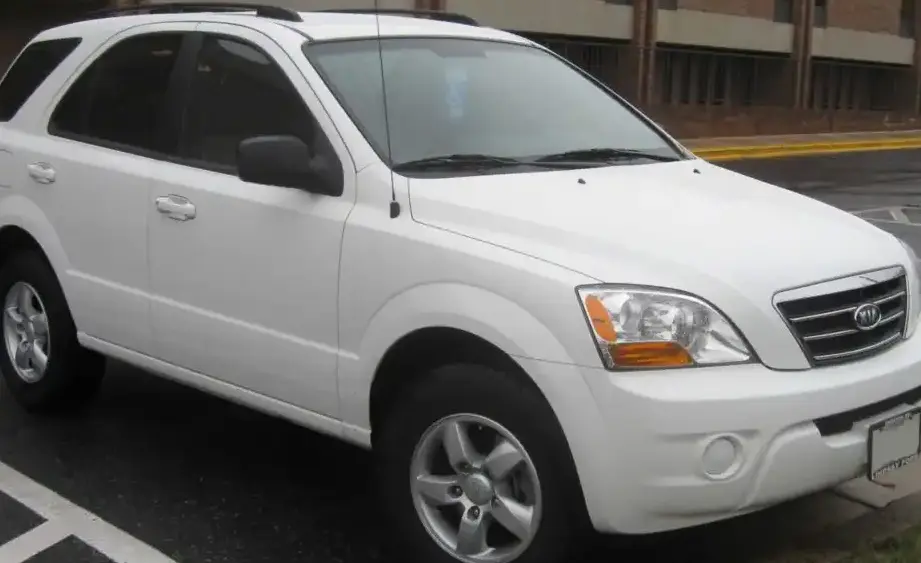
The Kia Sorento, introduced in 2002, represented Kia’s initial foray into the mid-size SUV segment. The first generation Sorento (internally designated as the MQ) aimed to provide a more affordable and rugged alternative to established Japanese and American SUVs. The 2006 facelift brought significant cosmetic and mechanical updates, including the availability of a 3.8-liter V6 engine paired with a five-speed automatic transmission. This particular configuration, produced from 2006 to 2009, occupied the top-tier position in the Sorento lineup, offering a blend of power and convenience aimed at families and those seeking a capable all-weather vehicle. It was primarily marketed in North America, the Middle East, and select European markets.
Technical Specifications
| Brand | Kia |
| Model | Sorento |
| Generation | Sorento I (facelift 2006) |
| Type (Engine) | 3.8i V6 (262 Hp) Automatic |
| Start of production | 2006 |
| End of production | 2009 |
| Powertrain Architecture | Internal Combustion engine |
| Body type | SUV |
| Seats | 5 |
| Doors | 5 |
| Fuel consumption (urban) | 13.8 l/100 km (17 US mpg, 20.5 UK mpg) |
| Fuel consumption (extra urban) | 10.2 l/100 km (23.1 US mpg, 27.7 UK mpg) |
| Fuel consumption (combined) | 12.4 l/100 km (19 US mpg, 22.8 UK mpg) |
| Fuel Type | Petrol (Gasoline) |
| Weight-to-power ratio | 7.2 kg/Hp, 139.2 Hp/tonne |
| Weight-to-torque ratio | 5.3 kg/Nm, 187.6 Nm/tonne |
| Power | 262 Hp @ 6000 rpm |
| Power per litre | 69.3 Hp/l |
| Torque | 353 Nm @ 4500 rpm (260.36 lb.-ft. @ 4500 rpm) |
| Engine layout | Front, Longitudinal |
| Engine Model/Code | Lambda / G6DA |
| Engine displacement | 3778 cm3 (230.55 cu. in.) |
| Number of cylinders | 6 |
| Engine configuration | V-engine |
| Cylinder Bore | 96 mm (3.78 in.) |
| Piston Stroke | 87 mm (3.43 in.) |
| Compression ratio | 10.4:1 |
| Number of valves per cylinder | 4 |
| Fuel injection system | Multi-port manifold injection |
| Engine aspiration | Naturally aspirated engine |
| Valvetrain | DOHC, CVVT |
| Engine oil capacity | 5.2 l (5.49 US qt | 4.58 UK qt) |
| Coolant capacity | 9 l (9.51 US qt | 7.92 UK qt) |
| Kerb Weight | 1882 kg (4149.1 lbs.) |
| Max. weight | 2480 kg (5467.46 lbs.) |
| Max load | 598 kg (1318.36 lbs.) |
| Trunk (boot) space – minimum | 441 l (15.57 cu. ft.) |
| Trunk (boot) space – maximum | 1751 l (61.84 cu. ft.) |
| Fuel tank capacity | 80 l (21.13 US gal | 17.6 UK gal) |
| Length | 4590 mm (180.71 in.) |
| Width | 1863 mm (73.35 in.) |
| Height | 1730 mm (68.11 in.) |
| Wheelbase | 2710 mm (106.69 in.) |
| Front track | 1580 mm (62.2 in.) |
| Rear (Back) track | 1580 mm (62.2 in.) |
| Ride height (ground clearance) | 208 mm (8.19 in.) |
| Drag coefficient (Cd) | 0.425 |
| Minimum turning circle | 11.8 m (38.71 ft.) |
| Drivetrain Architecture | Rear wheel drive |
| Number of gears | 5 |
| Gearbox type | Automatic transmission |
| Front brakes | Ventilated discs |
| Rear brakes | Ventilated discs |
| Assisting systems | ABS (Anti-lock braking system) |
| Tires size | 245/70 R16; 245/65 R17 |
| Wheel rims size | 7J x 16; 7J x 17 |
Powertrain & Engine Architecture
The heart of this Sorento variant is the Kia Lambda 3.8-liter V6 engine, designated as the G6DA. This engine is a naturally aspirated, 60-degree V6 featuring a cast iron block and aluminum cylinder heads. It utilizes a multi-port fuel injection system and a double overhead camshaft (DOHC) valvetrain with continuously variable valve timing (CVVT) on both intake and exhaust valves. The CVVT system optimizes engine performance and fuel efficiency by adjusting valve timing based on engine speed and load. The engine produces 262 horsepower at 6000 rpm and 353 Nm (260.36 lb-ft) of torque at 4500 rpm. The five-speed automatic transmission, while providing smooth shifts, wasn’t known for being particularly sporty or fuel-efficient compared to more modern automatic transmissions. It was a conventional torque converter automatic, prioritizing comfort and ease of use over outright performance.
Driving Characteristics
The 3.8L V6 automatic Sorento offered a noticeable step up in performance compared to the lower-trim 2.4L four-cylinder models. Acceleration was adequate for everyday driving and highway merging, though not particularly brisk. The automatic transmission, while smooth, had relatively long gear ratios, prioritizing fuel economy over quick acceleration. The rear-wheel-drive configuration contributed to a more balanced feel compared to the front-wheel-drive base models, especially in slippery conditions. However, the Sorento’s body-on-frame construction, while providing robustness, resulted in a less refined ride quality compared to more modern unibody SUVs. The weight of the vehicle, around 4150 lbs, was noticeable, particularly when fully loaded.
Equipment & Trim Levels
The 3.8L V6 automatic trim typically included features such as air conditioning, power windows and locks, a CD player with an auxiliary input, and alloy wheels. Higher trim levels added features like leather upholstery, a sunroof, and upgraded audio systems. Safety features included ABS brakes and dual front airbags. Optional extras included a navigation system, rear parking sensors, and a tow package. The interior design was functional but not particularly luxurious, with durable materials and a straightforward layout.
Chassis & Braking
The Sorento utilized a traditional body-on-frame construction, providing a robust and durable platform. The suspension consisted of independent double wishbones at the front and a multi-link setup at the rear. Braking duties were handled by ventilated disc brakes on all four wheels, providing adequate stopping power for the vehicle’s weight. ABS (Anti-lock Braking System) was standard. The rear track width was 1580mm. The ride height, or ground clearance, was 208mm, making it suitable for light off-road use.
Market Reception & Comparison
Critics generally praised the Sorento’s value proposition, offering a spacious interior and a capable V6 engine at a competitive price point. However, the ride quality and fuel economy were often criticized compared to rivals like the Honda Pilot and Toyota Highlander. The 3.8L V6 automatic was seen as a good compromise for those prioritizing power and convenience over fuel efficiency. Compared to the 2.4L four-cylinder models, the V6 offered significantly more power and a more refined driving experience, but at the cost of increased fuel consumption. The V6 was also a more attractive option for those who frequently towed trailers or needed extra power for off-road driving.
Legacy
The Kia Sorento I, particularly the 3.8L V6 automatic variant, established Kia as a serious contender in the mid-size SUV market. While not known for exceptional reliability, the Lambda V6 engine proved to be reasonably durable with proper maintenance. Today, these Sorentos are relatively affordable on the used car market, offering a budget-friendly option for those seeking a spacious and capable SUV. Common issues include oil leaks, sensor failures, and wear and tear on the automatic transmission. However, parts availability is generally good, and the Sorento’s simple mechanical design makes it relatively easy to repair. The 2006 facelift model is generally considered more desirable than earlier versions due to the improved styling and mechanical refinements.