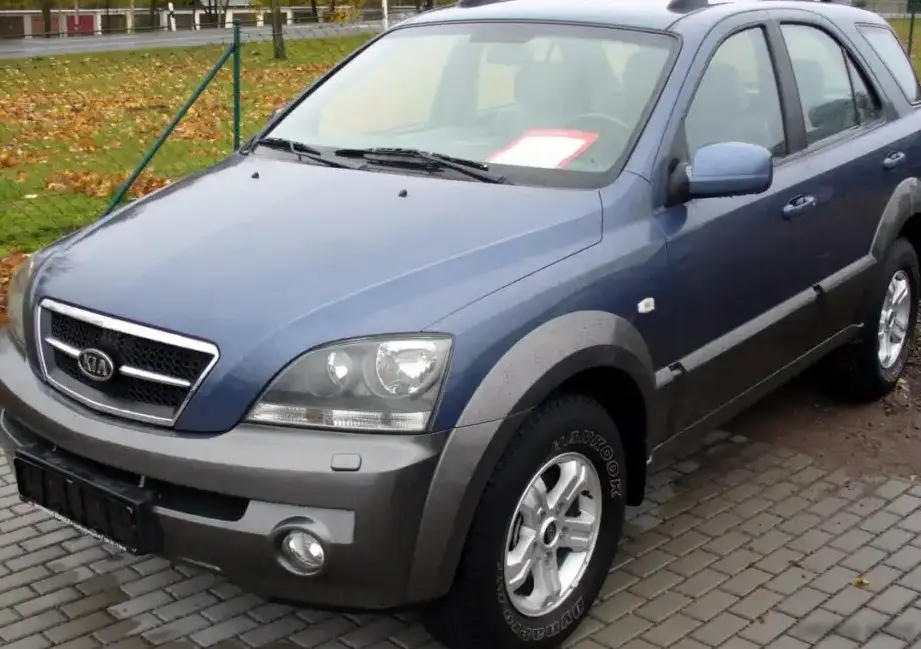
The Kia Sorento III (facelift, introduced in 2018) 2.2 CRDi 200 hp Automatic 7-seat variant represents a significant iteration of Kia’s popular mid-size SUV. Produced from 2018 to 2020, this version of the Sorento aimed to balance family practicality with a more refined driving experience and improved fuel efficiency. It slots into the Sorento III range as a mid-to-upper trim level, offering a step up in performance and features compared to the lower-powered engine options, while remaining more accessible than potential future high-performance or luxury-focused trims. The facelift brought styling updates, enhanced safety features, and refinements to the powertrain, solidifying the Sorento’s position in a competitive segment.
Technical Specifications
| Brand | Kia |
| Model | Sorento |
| Generation | Sorento III (facelift 2018) |
| Type (Engine) | 2.2 CRDi (200 Hp) Automatic 7 Seat |
| Start of production | 2018 |
| End of production | 2020 |
| Powertrain Architecture | Internal Combustion engine |
| Body type | SUV |
| Seats | 7 |
| Doors | 5 |
| Fuel consumption (urban) | 7.2 l/100 km (32.7 US mpg, 39.2 UK mpg, 13.9 km/l) |
| Fuel consumption (extra urban) | 5.3 l/100 km (44.4 US mpg, 53.3 UK mpg, 18.9 km/l) |
| Fuel consumption (combined) | 6 l/100 km (39.2 US mpg, 47.1 UK mpg, 16.7 km/l) |
| CO2 emissions | 159 g/km |
| Fuel Type | Diesel |
| Acceleration 0 – 100 km/h | 9.4 sec |
| Acceleration 0 – 62 mph | 9.4 sec |
| Acceleration 0 – 60 mph | 8.9 sec |
| Maximum speed | 205 km/h (127.38 mph) |
| Power | 200 Hp @ 3800 rpm |
| Torque | 450 Nm @ 1750-2750 rpm (331.9 lb.-ft. @ 1750-2750 rpm) |
| Engine layout | Front, Transverse |
| Engine Model/Code | D4HB |
| Engine displacement | 2199 cm3 (134.19 cu. in.) |
| Number of cylinders | 4 |
| Engine configuration | Inline |
| Cylinder Bore | 85.4 mm (3.36 in.) |
| Piston Stroke | 96 mm (3.78 in.) |
| Compression ratio | 16:1 |
| Number of valves per cylinder | 4 |
| Fuel injection system | Diesel Commonrail |
| Engine aspiration | Turbocharger, Intercooler |
| Engine oil capacity | 6.5 l (6.87 US qt | 5.72 UK qt) |
| Coolant capacity | 8.9 l (9.4 US qt | 7.83 UK qt) |
| Kerb Weight | 1901 kg (4190.99 lbs.) |
| Max. weight | 2560 kg (5643.83 lbs.) |
| Max load | 659 kg (1452.85 lbs.) |
| Trunk (boot) space – minimum | 142 l (5.01 cu. ft.) |
| Trunk (boot) space – maximum | 1662 l (58.69 cu. ft.) |
| Fuel tank capacity | 71 l (18.76 US gal | 15.62 UK gal) |
| Max. roof load | 100 kg (220.46 lbs.) |
| Permitted trailer load with brakes (12%) | 2000 kg (4409.25 lbs.) |
| Permitted trailer load without brakes | 750 kg (1653.47 lbs.) |
| Permitted towbar download | 100 kg (220.46 lbs.) |
| Length | 4800 mm (188.98 in.) |
| Width | 1890 mm (74.41 in.) |
| Width including mirrors | 2140 mm (84.25 in.) |
| Height | 1685-1690 mm (66.34 – 66.54 in.) |
| Wheelbase | 2780 mm (109.45 in.) |
| Front track | 1628-1633 mm (64.09 – 64.29 in.) |
| Rear (Back) track | 1639-1644 mm (64.53 – 64.72 in.) |
| Front overhang | 945 mm (37.2 in.) |
| Rear overhang | 1075 mm (42.32 in.) |
| Ride height (ground clearance) | 185 mm (7.28 in.) |
| Minimum turning circle | 11.34 m (37.2 ft.) |
| Front suspension | Independent, type McPherson with coil spring and anti-roll bar |
| Rear suspension | Independent multi-link suspension |
| Front brakes | Ventilated discs |
| Rear brakes | Disc |
| Gearbox | 8 gears, automatic transmission |
| Tires size | 235/65 R17; 235/60 R18; 235/55 R19 |
| Wheel rims size | 7.0J x 17; 7.5J x 18; 7.5J x 19 |
INTRODUCTION
The 2018-2020 Kia Sorento III facelift, powered by the 2.2 CRDi engine and paired with an 8-speed automatic transmission, was a key offering in Kia’s lineup. Built on the UN platform (internally designated as UM), this generation Sorento aimed to provide a compelling blend of space, comfort, and technology. The facelift brought a refreshed exterior design, upgraded interior materials, and enhanced safety systems. This particular variant, with its 200 horsepower diesel engine and automatic gearbox, was positioned as a versatile option for families seeking a comfortable and capable SUV for both daily commutes and longer journeys. It was primarily marketed in Europe and other regions where diesel engines remained popular due to their fuel efficiency and torque characteristics.
Powertrain & Engine Architecture
At the heart of this Sorento variant lies the D4HB 2.2-liter four-cylinder diesel engine. This engine utilizes a common-rail direct injection system, delivering fuel directly into the cylinders at extremely high pressure for optimized combustion. The D4HB is a turbocharged engine, employing a variable geometry turbocharger (VGT) to enhance low-end torque and overall performance. An intercooler further cools the intake air, increasing its density and contributing to improved power output. The engine produces 200 horsepower at 3800 rpm and a substantial 450 Nm (331.9 lb-ft) of torque between 1750 and 2750 rpm. This broad torque curve provides strong acceleration and effortless cruising. The engine also features a diesel particulate filter (DPF) to reduce harmful emissions, meeting Euro 6 standards. The 8-speed automatic transmission, sourced from Hyundai Powertech, provides smooth and efficient gear changes. It’s designed to work seamlessly with the engine’s torque characteristics, optimizing fuel economy and driveability.
Driving Characteristics
The 2.2 CRDi Automatic Sorento offers a comfortable and refined driving experience. The 8-speed automatic transmission contributes to smooth acceleration and minimizes gear hunting. While not a sports-oriented SUV, the 200 hp engine provides adequate power for overtaking and merging onto highways. The peak torque available from relatively low engine speeds ensures responsive performance in everyday driving situations. Compared to the lower-powered 1.6-liter diesel variants, the 2.2 CRDi offers a noticeable improvement in acceleration and overall responsiveness. However, it doesn’t match the performance of potential higher-output gasoline engines (if offered in some markets). The automatic transmission’s gear ratios are tuned for a balance between fuel efficiency and performance, with taller gears for highway cruising and shorter gears for quicker acceleration. The steering is light and precise, making it easy to maneuver in urban environments.
Equipment & Trim Levels
The 2.2 CRDi Automatic trim typically came well-equipped, reflecting its position as a mid-to-upper range offering. Standard features often included automatic climate control, a touchscreen infotainment system with navigation, Bluetooth connectivity, rear parking sensors, and cruise control. Higher trim levels added features such as leather upholstery, heated front seats, a panoramic sunroof, and advanced driver-assistance systems (ADAS) like lane departure warning, blind-spot monitoring, and autonomous emergency braking. Interior upholstery was typically a combination of cloth and leather, with higher trims offering full leather options. Dashboard configuration featured a modern design with a central touchscreen display and intuitive controls. Optional extras included a premium sound system, a rear-seat entertainment system, and various cosmetic enhancements.
Chassis & Braking
The Sorento III utilizes a front-wheel-drive (FWD) layout as standard, with all-wheel drive (AWD) available as an option. The front suspension consists of independent McPherson struts with coil springs and an anti-roll bar, providing a comfortable ride and stable handling. The rear suspension employs an independent multi-link setup, further enhancing ride quality and minimizing body roll. Braking duties are handled by ventilated discs on the front wheels and solid discs on the rear. The braking system is equipped with ABS (Anti-lock Braking System) and Electronic Stability Control (ESC) for enhanced safety. Steering is rack and pinion with electric power assistance, providing a light and responsive feel.
Market Reception & Comparison
The Kia Sorento III facelift, particularly the 2.2 CRDi Automatic variant, received generally positive reviews from automotive critics. It was praised for its spacious interior, comfortable ride, and well-equipped features. The diesel engine was noted for its fuel efficiency and strong torque output. Compared to competitors like the Hyundai Santa Fe, Nissan X-Trail, and Ford Kuga, the Sorento offered a compelling value proposition with its generous standard equipment and competitive pricing. Fuel economy was a strong point, with combined figures around 6 l/100 km (39.2 US mpg). Reliability was generally considered good, although some owners reported minor issues with the DPF system, a common concern with modern diesel engines.
Legacy
The Kia Sorento III 2.2 CRDi Automatic has proven to be a reliable and durable SUV in the used car market. The D4HB engine, while requiring regular maintenance (including DPF regeneration), is generally considered robust. The 8-speed automatic transmission has also demonstrated good longevity. As a used vehicle, this Sorento variant offers a practical and affordable option for families seeking a spacious and comfortable SUV. Its fuel efficiency and strong torque output continue to make it a viable choice for those who prioritize long-distance driving. The Sorento’s reputation for value and reliability has contributed to its continued popularity in the used car market.