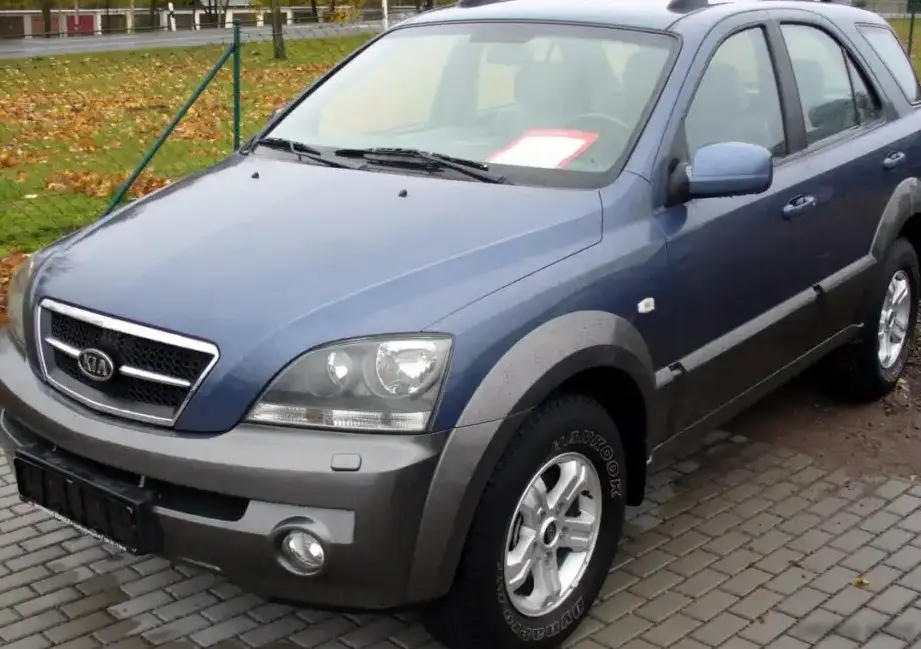
The Kia Sorento III, particularly the facelifted version introduced in 2018, represented a significant step forward for the Korean automaker in the highly competitive mid-size SUV segment. This iteration of the Sorento, produced through 2020, offered a compelling blend of practicality, technology, and style. Among the various powertrain options available, the 3.5-liter V6 engine paired with an eight-speed automatic transmission and all-wheel drive (AWD) held a prominent position as the premium offering. This configuration, typically found on higher trim levels, catered to buyers prioritizing performance and capability within a spacious, seven-passenger vehicle.
Technical Specifications
| Brand | Kia |
| Model | Sorento |
| Generation | Sorento III (facelift 2018) |
| Type | 3.5 V6 (249 Hp) AWD Automatic 7 Seat |
| Start of production | 2018 |
| End of production | 2020 |
| Powertrain Architecture | Internal Combustion engine |
| Body type | SUV |
| Seats | 7 |
| Doors | 5 |
| Fuel consumption (urban) | 14.5 l/100 km (16.2 US mpg, 19.5 UK mpg, 6.9 km/l) |
| Fuel consumption (extra urban) | 8.1 l/100 km (29 US mpg, 34.9 UK mpg, 12.3 km/l) |
| Fuel consumption (combined) | 10.4 l/100 km (22.6 US mpg, 27.2 UK mpg, 9.6 km/l) |
| Fuel Type | Petrol (Gasoline) |
| Acceleration 0 – 100 km/h | 7.8 sec |
| Acceleration 0 – 62 mph | 7.8 sec |
| Acceleration 0 – 60 mph | 7.4 sec |
| Maximum speed | 210 km/h (130.49 mph) |
| Weight-to-power ratio | 8 kg/Hp, 125.7 Hp/tonne |
| Weight-to-torque ratio | 5.9 kg/Nm, 169.6 Nm/tonne |
| Power | 249 Hp @ 6300 rpm |
| Power per litre | 71.8 Hp/l |
| Torque | 336 Nm @ 5000 rpm (247.82 lb.-ft. @ 5000 rpm) |
| Engine layout | Front, Transverse |
| Engine Model/Code | G6DC |
| Engine displacement | 3470 cm3 (211.75 cu. in.) |
| Number of cylinders | 6 |
| Engine configuration | V-engine |
| Cylinder Bore | 92 mm (3.62 in.) |
| Piston Stroke | 87 mm (3.43 in.) |
| Compression ratio | 10.6:1 |
| Number of valves per cylinder | 4 |
| Fuel injection system | Multi-port manifold injection |
| Engine aspiration | Naturally aspirated engine |
| Engine oil capacity | 5.7 l (6.02 US qt | 5.02 UK qt) |
| Kerb Weight | 1981 kg (4367.36 lbs.) |
| Max. weight | 2560 kg (5643.83 lbs.) |
| Max load | 579 kg (1276.48 lbs.) |
| Trunk (boot) space – minimum | 142 l (5.01 cu. ft.) |
| Trunk (boot) space – maximum | 1662 l (58.69 cu. ft.) |
| Fuel tank capacity | 71 l (18.76 US gal | 15.62 UK gal) |
| Length | 4800 mm (188.98 in.) |
| Width | 1890 mm (74.41 in.) |
| Width including mirrors | 2140 mm (84.25 in.) |
| Height | 1685-1690 mm (66.34 – 66.54 in.) |
| Wheelbase | 2780 mm (109.45 in.) |
| Front track | 1628-1633 mm (64.09 – 64.29 in.) |
| Rear (Back) track | 1639-1644 mm (64.53 – 64.72 in.) |
| Front overhang | 945 mm (37.2 in.) |
| Rear overhang | 1075 mm (42.32 in.) |
| Ride height (ground clearance) | 185 mm (7.28 in.) |
| Drag coefficient (Cd) | 0.33 |
| Minimum turning circle | 11.34 m (37.2 ft.) |
| Approach angle | 16.9° |
| Departure angle | 21° |
| Ramp-over angle | 18° |
| Drive wheel | All wheel drive (4×4) |
| Number of gears | 8 |
| Gearbox type | Automatic transmission |
| Front suspension | Independent, type McPherson with coil spring and anti-roll bar |
| Rear suspension | Independent multi-link suspension |
| Front brakes | Ventilated discs |
| Rear brakes | Disc |
| Assisting systems | ABS (Anti-lock braking system) |
| Steering type | Steering rack and pinion |
| Power steering | Electric Steering |
| Tires size | 235/65 R17; 235/60 R18 |
| Wheel rims size | 17; 18 |
INTRODUCTION
The 2018-2020 Kia Sorento facelift built upon the success of the third-generation model (UM), which debuted in 2015. Positioned as a mid-size crossover SUV, the Sorento aimed to provide a more refined and feature-rich experience than its predecessor. The facelift brought updated styling, improved safety technology, and enhancements to the powertrain options. The 3.5L V6 AWD Automatic 7-seat variant represented the top-tier offering, designed for families needing space, towing capacity, and a more responsive driving experience. It was a key model for Kia in markets like the United States and Canada, where larger SUVs are highly sought after.
Powertrain & Engine Architecture
At the heart of this Sorento variant lies the Kia-Hyundai G6DC 3.5-liter naturally aspirated V6 engine. This engine, a mainstay in several Hyundai and Kia models, is known for its smooth operation and respectable power output. It utilizes a dual overhead camshaft (DOHC) design with four valves per cylinder, and a multi-point fuel injection system. The engine produces 249 horsepower at 6,300 rpm and 247.82 lb-ft of torque at 5,000 rpm. The eight-speed automatic transmission, a significant upgrade from the previous six-speed unit, provides smooth and efficient gear changes. This transmission is designed to optimize fuel economy while delivering responsive acceleration. The AWD system is typically an on-demand system, automatically engaging all four wheels when traction is needed, enhancing stability in adverse weather conditions.
Driving Characteristics
The 3.5L V6 powertrain delivers a noticeably more spirited driving experience compared to the base 2.4L four-cylinder engine. Acceleration is brisk, with a 0-60 mph time of around 7.4 seconds. The eight-speed automatic transmission is well-tuned, providing seamless shifts and keeping the engine in its optimal power band. While not a sports SUV, the Sorento V6 offers ample power for highway merging, overtaking, and towing. The AWD system provides enhanced grip and stability, particularly in slippery conditions. The gear ratios are optimized for both acceleration and fuel efficiency, with a relatively tall final drive ratio contributing to comfortable highway cruising. Compared to the manual transmission options available on lower trims, the automatic prioritizes convenience and ease of use over outright driver engagement.
Equipment & Trim Levels
The 3.5L V6 AWD typically came equipped on the highest trim levels of the Sorento, such as the SX or Limited. Standard features included leather upholstery, heated and ventilated front seats, a panoramic sunroof, a premium audio system (often Harman Kardon), and a large touchscreen infotainment system with navigation. Available options often included advanced driver-assistance systems (ADAS) like adaptive cruise control, lane departure warning, blind-spot monitoring, and a surround-view camera system. Interior trim materials were generally of high quality, offering a comfortable and upscale feel. The seven-passenger configuration featured comfortable seating in all three rows, although third-row space was best suited for children or smaller adults.
Chassis & Braking
The Sorento III utilizes a front-engine, front-wheel-drive based platform with independent suspension all around. The front suspension employs a McPherson strut design with coil springs and an anti-roll bar, while the rear features a multi-link setup. This suspension configuration provides a good balance between ride comfort and handling. Braking duties are handled by ventilated discs at the front and solid discs at the rear. The braking system is equipped with ABS, electronic brake-force distribution (EBD), and brake assist. The chassis is designed to provide a stable and predictable driving experience, with a focus on comfort and safety.
Market Reception & Comparison
The Kia Sorento III, and particularly the 3.5L V6 AWD variant, received generally positive reviews from automotive critics. It was praised for its spacious interior, comfortable ride, and generous feature set. The V6 engine was noted for its smooth power delivery and adequate performance. Fuel economy, however, was a common criticism, as the V6 engine consumes more fuel than the base four-cylinder option. Compared to competitors like the Honda Pilot, Toyota Highlander, and Ford Explorer, the Sorento offered a compelling value proposition, often undercutting its rivals in price while offering similar levels of equipment and features. Reliability ratings were generally good, although some owners reported minor issues with the infotainment system.
Legacy
The 3.5L V6 engine in the Sorento III has proven to be a relatively reliable powertrain. While not immune to age-related issues, it generally holds up well with proper maintenance. In the used car market, these Sorentos are often sought after for their combination of space, features, and V6 power. The eight-speed automatic transmission has also proven to be durable. However, potential buyers should be aware of the potential for minor issues with the infotainment system and the occasional need for routine maintenance items like timing belt replacement (depending on mileage). Overall, the 2018-2020 Kia Sorento 3.5L V6 AWD remains a competitive and capable SUV, offering a good balance of practicality, performance, and value.