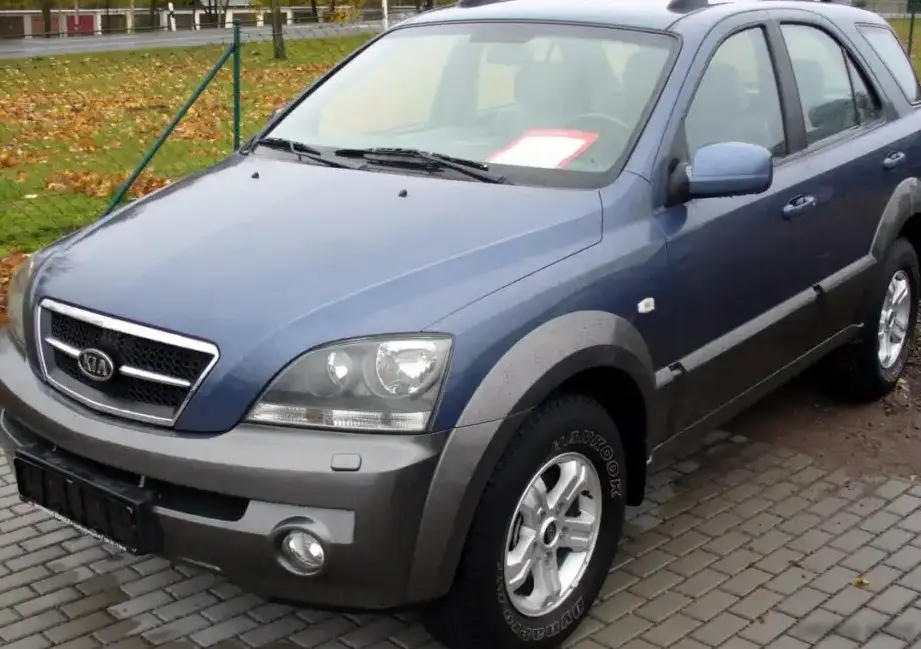
The Kia Sorento IV (facelift, introduced in March 2024) 2.5 T-GDI with the Dual Clutch Transmission (DCT) represents a significant offering in Kia’s mid-size SUV lineup. This variant, producing 281 horsepower, slots into the higher end of the Sorento range, positioned as a performance-oriented option while still maintaining the family-focused practicality the Sorento is known for. The facelift brought updated styling, enhanced technology, and refinements to the powertrain, building upon the already successful fourth-generation Sorento which debuted on the N3 platform.
Technical Specifications
| Brand | Kia |
| Model | Sorento |
| Generation | Sorento IV (facelift 2024) |
| Type (Engine) | 2.5 T-GDI (281 Hp) DCT |
| Start of production | March, 2024 |
| Powertrain Architecture | Internal Combustion engine |
| Body type | SUV |
| Seats | 6 |
| Doors | 5 |
| Fuel consumption (urban) | 10.7 l/100 km (22 US mpg, 26.4 UK mpg, 9.3 km/l) |
| Fuel consumption (extra urban) | 8.1 l/100 km (29 US mpg, 34.9 UK mpg, 12.3 km/l) |
| Fuel consumption (combined) | 9.4 l/100 km (25 US mpg, 30.1 UK mpg, 10.6 km/l) |
| Fuel Type | Petrol (Gasoline) |
| Acceleration 0 – 100 km/h | 7.4 sec |
| Acceleration 0 – 62 mph | 7.4 sec |
| Acceleration 0 – 60 mph | 7 sec |
| Maximum speed | 211 km/h (131.11 mph) |
| Power | 281 Hp @ 5800 rpm |
| Torque | 422 Nm @ 1700-4000 rpm (311.25 lb.-ft. @ 1700-4000 rpm) |
| Engine layout | Front, Transverse |
| Engine Model/Code | Smartstream / G4KP |
| Engine displacement | 2497 cm3 (152.38 cu. in.) |
| Number of cylinders | 4 |
| Engine configuration | Inline |
| Cylinder Bore | 88.5 mm (3.48 in.) |
| Piston Stroke | 101.5 mm (4 in.) |
| Compression ratio | 10.5:1 |
| Number of valves per cylinder | 4 |
| Fuel injection system | Direct injection and Multi-port manifold injection |
| Engine aspiration | Turbocharger, Intercooler |
| Valvetrain | DOHC |
| Engine oil capacity | 5.8 l (6.13 US qt | 5.1 UK qt) |
| Coolant capacity | 8.4 l (8.88 US qt | 7.39 UK qt) |
| Kerb Weight | 1749-1814 kg (3855.88 – 3999.19 lbs.) |
| Max. weight | 2430 kg (5357.23 lbs.) |
| Max load | 616-681 kg (1358.05 – 1501.35 lbs.) |
| Trunk (boot) space – minimum | 187 l (6.6 cu. ft.) |
| Trunk (boot) space – maximum | 2013 l (71.09 cu. ft.) |
| Fuel tank capacity | 67 l (17.7 US gal | 14.74 UK gal) |
| Permitted trailer load with brakes (12%) | 1588 kg (3500.94 lbs.) |
| Permitted trailer load without brakes | 750 kg (1653.47 lbs.) |
| Length | 4801 mm (189.02 in.) |
| Width | 1900 mm (74.8 in.) |
| Height | 1700 mm (66.93 in.) |
| Wheelbase | 2815 mm (110.83 in.) |
| Front track | 1637-1646 mm (64.45 – 64.8 in.) |
| Rear (Back) track | 1647-1656 mm (64.84 – 65.2 in.) |
| Front overhang | 925 mm (36.42 in.) |
| Rear overhang | 1060 mm (41.73 in.) |
| Ride height (ground clearance) | 175 mm (6.89 in.) |
| Minimum turning circle | 11.6 m (38.06 ft.) |
| Drivetrain Architecture | Front wheel drive |
| Number of gears and type of gearbox | 8 gears, automatic transmission DCT |
| Front suspension | Independent, type McPherson with coil spring and anti-roll bar |
| Rear suspension | Independent multi-link spring suspension with stabilizer |
| Front brakes | Ventilated discs, 325 mm |
| Rear brakes | Ventilated discs, 305 mm |
| Tires size | 235/60 R18; 255/45 R20 |
| Wheel rims size | 7.5J x 18; 8.5J x 20 |
INTRODUCTION
The 2024 Kia Sorento IV facelift, equipped with the 2.5 T-GDI engine and a Dual Clutch Transmission (DCT), builds upon the success of the fourth-generation Sorento. Introduced in March 2024, this variant offers a compelling blend of performance, efficiency, and technology within the competitive mid-size SUV segment. The Sorento has become a key model for Kia, particularly in markets like North America and Europe, offering a more premium alternative to traditional Japanese and American SUVs. The facelifted model further refines the Sorento’s appeal with updated styling and enhanced features.
Powertrain & Engine Architecture
At the heart of this Sorento variant lies the Smartstream G4KP 2.5-liter turbocharged gasoline direct injection (TGDI) engine. This engine utilizes a combination of direct injection and multi-port fuel injection to optimize combustion efficiency and power delivery. The engine produces 281 horsepower at 5800 rpm and 422 Nm (311.25 lb-ft) of torque between 1700 and 4000 rpm. The turbocharger, coupled with an intercooler, provides a broad torque curve for responsive acceleration. The engine features a Dual Overhead Camshaft (DOHC) valvetrain with four valves per cylinder. The engine is transversely mounted in the front of the vehicle. The 8-speed Dual Clutch Transmission (DCT) is a key component, offering quicker and smoother gear changes compared to a traditional automatic transmission. This DCT contributes to both improved performance and fuel efficiency.
Driving Characteristics
The 2.5 T-GDI DCT Sorento delivers a noticeably more spirited driving experience than lower-powered variants. The DCT provides rapid shifts, allowing the engine to stay within its optimal power band. Acceleration from 0 to 60 mph is achieved in approximately 7 seconds, and the vehicle feels confident during highway merging and overtaking maneuvers. The DCT’s programming prioritizes smooth transitions during normal driving, but can be shifted into a sport mode for more aggressive responses. While not a dedicated performance SUV, the 2.5 T-GDI offers a satisfying level of power and responsiveness for everyday driving and family adventures. The front-wheel-drive configuration contributes to fuel efficiency, but all-wheel drive is available as an option for enhanced traction.
Equipment & Trim Levels
The 2.5 T-GDI variant typically comes well-equipped, often positioned as a mid-to-high trim level within the Sorento lineup. Standard features generally include leather upholstery, heated and ventilated front seats, a large touchscreen infotainment system with Apple CarPlay and Android Auto compatibility, a premium sound system, and a suite of advanced driver-assistance systems (ADAS) such as adaptive cruise control, lane-keeping assist, and automatic emergency braking. Optional extras can include a panoramic sunroof, a head-up display, and upgraded interior trim materials. The specific feature set can vary depending on the market and package options selected.
Chassis & Braking
The Sorento IV utilizes a robust chassis with independent suspension on all four wheels. The front suspension employs a McPherson strut design with coil springs and an anti-roll bar, while the rear features a multi-link setup with a stabilizer bar. This suspension configuration provides a comfortable ride quality while maintaining good handling characteristics. The braking system consists of ventilated discs on all four wheels, with larger discs at the front (325mm) compared to the rear (305mm). Anti-lock Braking System (ABS) is standard, along with other electronic stability control systems.
Market Reception & Comparison
The 2.5 T-GDI DCT Sorento has been generally well-received by automotive critics. Reviewers praise its strong engine performance, smooth-shifting DCT, and comfortable ride. Compared to the base engine options, the 2.5 T-GDI offers a significant power upgrade, making it a more appealing choice for drivers who prioritize performance. Fuel economy is competitive within the segment, achieving around 25 US mpg combined. Compared to other mid-size SUVs with similar power outputs, the Sorento offers a compelling value proposition with its generous standard features and attractive styling.
Legacy
The Smartstream G4KP engine and the 8-speed DCT are relatively new technologies for Kia, and long-term reliability data is still emerging. However, early reports suggest that the powertrain is proving to be durable and reliable. The Sorento IV, in general, has established a reputation for being a well-built and dependable SUV. As the facelifted models enter the used car market, the 2.5 T-GDI DCT variant is expected to hold its value well due to its desirable combination of performance, features, and practicality. Its position as a more premium offering within the Sorento range should ensure continued demand in the years to come.