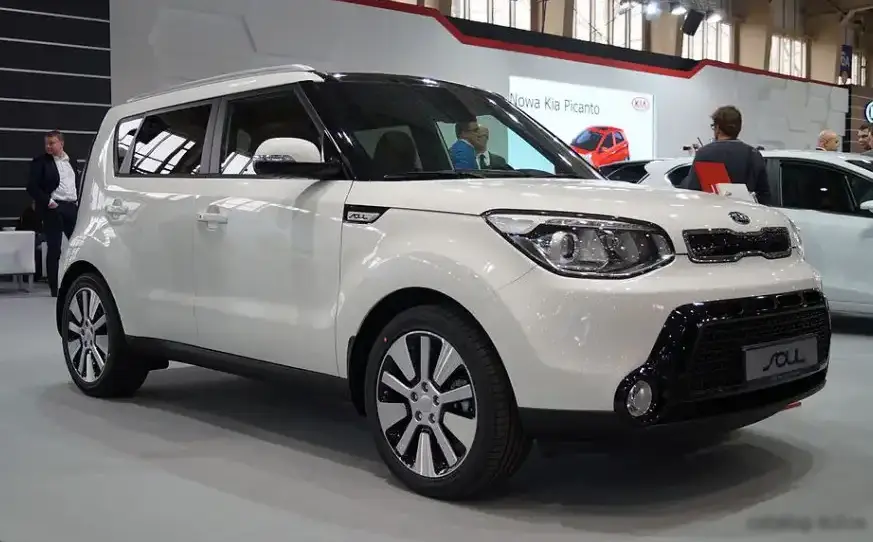
The Kia Soul II (facelift, 2016) 1.6 CRDI 136 hp with a Dual Clutch Transmission (DCT) represents a significant iteration within the second generation of Kia’s distinctive subcompact crossover. Introduced in 2016 and continuing through 2019, this variant aimed to balance fuel efficiency with acceptable performance, appealing to a broader segment of the European and Asian markets where diesel engines remained popular. Positioned as a mid-range offering within the Soul II lineup, it slotted between the base 1.6L gasoline engine and the more powerful diesel options. This model was designed to offer a more refined driving experience than the standard manual transmission, while maintaining the Soul’s core value proposition of affordability and unique styling.
Technical Specifications
| Brand | Kia |
| Model | Soul |
| Generation | Soul II (facelift 2016) |
| Type (Engine) | 1.6 CRDI (136 Hp) DCT |
| Start of production | 2016 |
| End of production | 2019 |
| Powertrain Architecture | Internal Combustion engine |
| Body type | Crossover |
| Seats | 5 |
| Doors | 5 |
| Fuel consumption (urban) | 5.5 l/100 km (42.8 US mpg, 51.4 UK mpg, 18.2 km/l) |
| Fuel consumption (extra urban) | 4.6 l/100 km (51.1 US mpg, 61.4 UK mpg, 21.7 km/l) |
| Fuel consumption (combined) | 5 l/100 km (47 US mpg, 56.5 UK mpg, 20 km/l) |
| CO2 emissions | 130 g/km |
| Fuel Type | Diesel |
| Acceleration 0 – 100 km/h | 11.1 sec |
| Acceleration 0 – 62 mph | 11.1 sec |
| Acceleration 0 – 60 mph | 10.5 sec |
| Maximum speed | 182 km/h (113.09 mph) |
| Emission standard | Euro 6 |
| Weight-to-power ratio | 9.9 kg/Hp, 100.7 Hp/tonne |
| Weight-to-torque ratio | 4.5 kg/Nm, 222.2 Nm/tonne |
| Power | 136 Hp @ 4000 rpm |
| Power per litre | 86 Hp/l |
| Torque | 300 Nm @ 1750-2500 rpm (221.27 lb.-ft. @ 1750-2500 rpm) |
| Engine layout | Front, Transverse |
| Engine Model/Code | D4FB |
| Engine displacement | 1582 cm3 (96.54 cu. in.) |
| Number of cylinders | 4 |
| Engine configuration | Inline |
| Cylinder Bore | 77.2 mm (3.04 in.) |
| Piston Stroke | 84.5 mm (3.33 in.) |
| Compression ratio | 16:1 |
| Number of valves per cylinder | 4 |
| Fuel injection system | Diesel Commonrail |
| Engine aspiration | Turbocharger, Intercooler |
| Engine oil capacity | 5.3 l (5.6 US qt | 4.66 UK qt) |
| Coolant | 6.8 l (7.19 US qt | 5.98 UK qt) |
| Kerb Weight | 1350-1492 kg (2976.24 – 3289.3 lbs.) |
| Max. weight | 1940 kg (4276.97 lbs.) |
| Max load | 448-590 kg (987.67 – 1300.73 lbs.) |
| Trunk (boot) space – minimum | 238 l (8.4 cu. ft.) |
| Trunk (boot) space – maximum | 878 l (31.01 cu. ft.) |
| Fuel tank capacity | 54 l (14.27 US gal | 11.88 UK gal) |
| Max. roof load | 80 kg (176.37 lbs.) |
| Permitted trailer load with brakes (12%) | 1100 kg (2425.08 lbs.) |
| Permitted trailer load without brakes | 550 kg (1212.54 lbs.) |
| Permitted towbar download | 80 kg (176.37 lbs.) |
| Length | 4140 mm (162.99 in.) |
| Width | 1800 mm (70.87 in.) |
| Width including mirrors | 2100 mm (82.68 in.) |
| Height | 1618 mm (63.7 in.) |
| Wheelbase | 2570 mm (101.18 in.) |
| Front track | 1560-1576 mm (61.42 – 62.05 in.) |
| Rear (Back) track | 1573-1588 mm (61.93 – 62.52 in.) |
| Front overhang | 840 mm (33.07 in.) |
| Rear overhang | 730 mm (28.74 in.) |
| Ride height (ground clearance) | 143 mm (5.63 in.) |
| Minimum turning circle (turning diameter) | 10.6 m (34.78 ft.) |
| Drivetrain Architecture | The Internal combustion engine (ICE) drives the front wheels of the vehicle. |
| Drive wheel | Front wheel drive |
| Number of gears and type of gearbox | 7 gears, automatic transmission DCT |
| Front suspension | Independent, type McPherson with coil spring and anti-roll bar |
| Rear suspension | Semi-independent, coil spring |
| Front brakes | Ventilated discs |
| Rear brakes | Disc |
| Assisting systems | ABS (Anti-lock braking system) |
| Steering type | Steering rack and pinion |
| Power steering | Electric Steering |
| Tires size | 215/55 R17 94V; 235/45 R18 94V |
| Wheel rims size | 6.5J x 17; 7.5J x 18 |
INTRODUCTION
The Kia Soul II facelift, launched in 2016, represented a mid-cycle refresh of the already distinctive second-generation Soul (introduced in 2013). This update brought revised styling, improved interior materials, and enhanced technology. The 1.6 CRDI DCT variant was a key component of this refresh, offering a diesel engine paired with a seven-speed dual-clutch transmission. Built on the UB platform, the Soul II aimed to appeal to younger buyers with its boxy design and customizable features. The 1.6 CRDI DCT was particularly aimed at European and Asian markets where diesel fuel was more prevalent and fuel economy was a high priority. It provided a balance between performance and efficiency, making it a practical choice for daily commuting and longer journeys.
Powertrain & Engine Architecture
At the heart of the Soul II 1.6 CRDI DCT lies the D4FB engine, a 1.6-liter inline-four cylinder diesel. This engine utilizes a common-rail direct injection system, delivering fuel at extremely high pressure for optimized combustion. A turbocharger with an intercooler further enhances performance by forcing more air into the cylinders. The engine produces 136 horsepower at 4000 rpm and 300 Nm (221 lb-ft) of torque between 1750 and 2500 rpm. The seven-speed dual-clutch transmission (DCT) is a crucial element of this variant. DCTs offer faster and smoother gear changes compared to traditional automatic transmissions, contributing to improved acceleration and fuel efficiency. The D4FB engine is known for its relatively robust design, though it does incorporate a diesel particulate filter (DPF) to meet stringent Euro 6 emissions standards. Regular maintenance, including the use of appropriate diesel exhaust fluid (DEF), is essential for the DPF to function correctly.
Driving Characteristics
The 1.6 CRDI DCT Soul offers a noticeable step up in responsiveness compared to the base gasoline engine. While not a performance-oriented vehicle, the 300 Nm of torque provides ample pulling power for everyday driving situations, including overtaking and highway merging. The DCT transmission contributes to a smoother driving experience, with quick and precise gear changes. However, some drivers have noted a slight hesitation from the DCT at low speeds. The gear ratios are tuned for fuel efficiency, meaning the engine doesn’t rev as high as it could, prioritizing economy over outright acceleration. Compared to the manual transmission version of the same engine, the DCT offers greater convenience, especially in urban traffic. It doesn’t quite match the performance of the more powerful diesel variants (like the 1.7 CRDI), but it provides a good balance of usability and efficiency.
Equipment & Trim Levels
The 1.6 CRDI DCT trim typically included a generous level of standard equipment. Features commonly found in this variant include air conditioning, power windows and mirrors, a touchscreen infotainment system with Bluetooth connectivity, and steering wheel-mounted audio controls. Higher trim levels offered additional features such as a rearview camera, parking sensors, automatic climate control, and upgraded interior upholstery. The Soul II was also known for its customizable options, allowing buyers to personalize the exterior and interior with various colors and trim pieces. Safety features such as ABS, electronic stability control, and multiple airbags were standard across the range.
Chassis & Braking
The Soul II utilizes a front-wheel-drive layout with an independent McPherson strut suspension at the front and a semi-independent coil spring suspension at the rear. This setup provides a comfortable ride quality, although it’s not particularly sporty. The front brakes are ventilated discs, while the rear brakes are solid discs. ABS (Anti-lock Braking System) is standard, providing enhanced braking performance in emergency situations. The suspension is tuned to prioritize ride comfort over handling precision, making it well-suited for everyday driving. Stabilizer bars are included to reduce body roll during cornering.
Market Reception & Comparison
The Kia Soul II 1.6 CRDI DCT was generally well-received by automotive critics. It was praised for its fuel efficiency, comfortable ride, and distinctive styling. However, some reviewers noted that the engine could be a bit noisy and that the DCT transmission wasn’t always the smoothest in stop-and-go traffic. Compared to the gasoline-powered Soul, the 1.6 CRDI DCT offered significantly better fuel economy. Compared to the more powerful diesel variants, it was more affordable and offered a slightly more refined driving experience. Its main competitors included other subcompact crossovers such as the Nissan Juke, Renault Captur, and Peugeot 2008.
Legacy
The Kia Soul II 1.6 CRDI DCT has proven to be a relatively reliable vehicle in the used car market. The D4FB engine, while requiring regular maintenance (particularly regarding the DPF), is generally durable. The DCT transmission can be prone to issues if not properly maintained, so it’s important to check the service history of any used example. Today, these Souls represent an affordable and practical option for buyers seeking a fuel-efficient and stylish subcompact crossover. Their unique design and customizable features continue to appeal to a wide range of drivers, and their relatively low running costs make them an attractive choice for budget-conscious buyers.