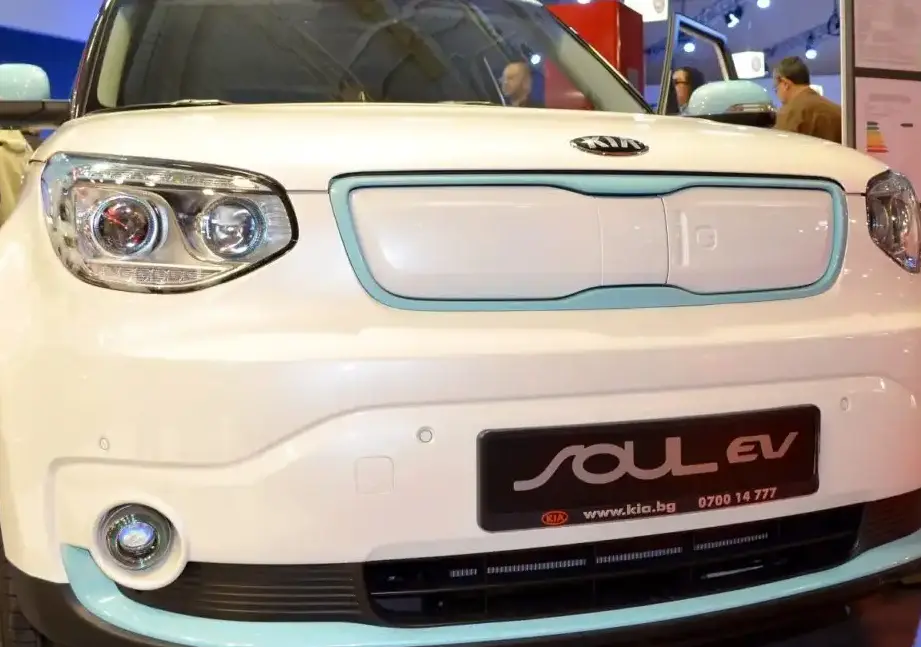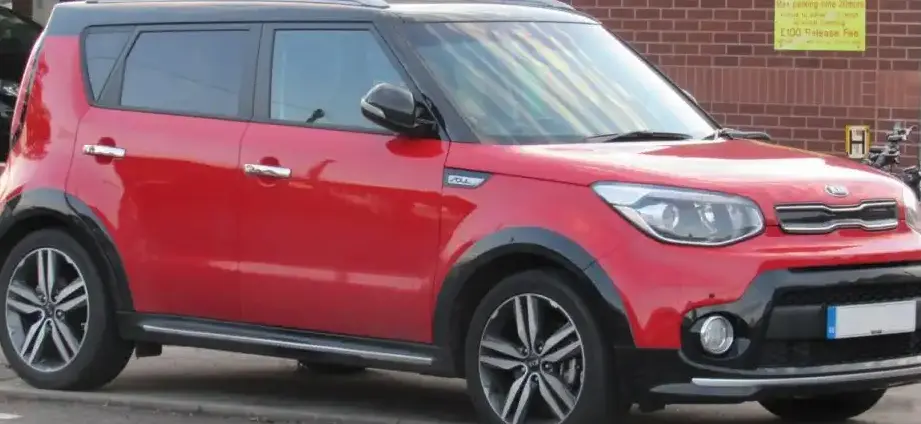
The Kia Soul II (facelift, 2016) 1.6 T-GDI, producing 204 horsepower, represents a significant step up in performance for the second-generation Soul. Introduced in 2016 and continuing through 2019, this variant aimed to broaden the Soul’s appeal beyond its initial focus on affordability and quirky styling. Positioned as a mid-to-upper trim level within the Soul II range, it offered a more engaging driving experience than the base 1.6-liter naturally aspirated engine, while remaining more accessible than potential future high-performance variants. This model was primarily marketed towards younger buyers seeking a stylish and practical crossover with a bit more punch. The facelift brought updated styling cues and refined interior elements, further enhancing the Soul’s market position.
Technical Specifications
| Brand | Kia |
| Model | Soul |
| Generation | Soul II (facelift 2016) |
| Type (Engine) | 1.6 T-GDI (204 Hp) DCT |
| Start of production | 2016 |
| End of production | 2019 |
| Powertrain Architecture | Internal Combustion engine |
| Body type | Crossover |
| Seats | 5 |
| Doors | 5 |
| Fuel consumption (urban) | 8.7 l/100 km (27 US mpg, 32.5 UK mpg, 11.5 km/l) |
| Fuel consumption (extra urban) | 5.8 l/100 km (40.6 US mpg, 48.7 UK mpg, 17.2 km/l) |
| Fuel consumption (combined) | 6.9 l/100 km (34.1 US mpg, 40.9 UK mpg, 14.5 km/l) |
| CO2 emissions | 156 g/km |
| Fuel Type | Petrol (Gasoline) |
| Acceleration 0 – 100 km/h | 7.8 sec |
| Acceleration 0 – 62 mph | 7.8 sec |
| Acceleration 0 – 60 mph | 7.4 sec |
| Maximum speed | 196 km/h (121.79 mph) |
| Emission standard | Euro 6 |
| Weight-to-power ratio | 6.3 kg/Hp, 158.3 Hp/tonne |
| Weight-to-torque ratio | 4.9 kg/Nm, 205.6 Nm/tonne |
| Power | 204 Hp @ 6000 rpm |
| Power per litre | 128.2 Hp/l |
| Torque | 265 Nm @ 1500-4500 rpm (195.45 lb.-ft. @ 1500-4500 rpm) |
| Engine layout | Front, Transverse |
| Engine Model/Code | Gamma II / G4FJ |
| Engine displacement | 1591 cm3 (97.09 cu. in.) |
| Number of cylinders | 4 |
| Engine configuration | Inline |
| Cylinder Bore | 77 mm (3.03 in.) |
| Piston Stroke | 85.44 mm (3.36 in.) |
| Compression ratio | 9.5:1 |
| Number of valves per cylinder | 4 |
| Fuel injection system | Direct injection |
| Engine aspiration | Turbocharger, Intercooler |
| Engine oil capacity | 4 l (4.23 US qt | 3.52 UK qt) |
| Coolant | 6 l (6.34 US qt | 5.28 UK qt) |
| Kerb Weight | 1289-1437 kg (2841.76 – 3168.04 lbs.) |
| Max. weight | 1890 kg (4166.74 lbs.) |
| Max load | 453-601 kg (998.69 – 1324.98 lbs.) |
| Trunk (boot) space – minimum | 238 l (8.4 cu. ft.) |
| Trunk (boot) space – maximum | 878 l (31.01 cu. ft.) |
| Fuel tank capacity | 54 l (14.27 US gal | 11.88 UK gal) |
| Max. roof load | 80 kg (176.37 lbs.) |
| Permitted trailer load with brakes (12%) | 1100 kg (2425.08 lbs.) |
| Permitted trailer load without brakes | 550 kg (1212.54 lbs.) |
| Permitted towbar download | 80 kg (176.37 lbs.) |
| Length | 4140 mm (162.99 in.) |
| Width | 1800 mm (70.87 in.) |
| Width including mirrors | 2100 mm (82.68 in.) |
| Height | 1618 mm (63.7 in.) |
| Wheelbase | 2570 mm (101.18 in.) |
| Front track | 1560-1576 mm (61.42 – 62.05 in.) |
| Rear (Back) track | 1573-1588 mm (61.93 – 62.52 in.) |
| Front overhang | 840 mm (33.07 in.) |
| Rear overhang | 730 mm (28.74 in.) |
| Ride height (ground clearance) | 143 mm (5.63 in.) |
| Minimum turning circle (turning diameter) | 10.6 m (34.78 ft.) |
| Drivetrain Architecture | The Internal combustion engine (ICE) drives the front wheels of the vehicle. |
| Drive wheel | Front wheel drive |
| Number of gears and type of gearbox | 7 gears, automatic transmission DCT |
| Front suspension | Independent, type McPherson with coil spring and anti-roll bar |
| Rear suspension | Semi-independent, coil spring |
| Front brakes | Ventilated discs |
| Rear brakes | Disc |
| Assisting systems | ABS (Anti-lock braking system) |
| Steering type | Steering rack and pinion |
| Power steering | Electric Steering |
| Tires size | 235/45 R18 94V |
| Wheel rims size | 7.5J x 18 |
Powertrain & Engine Architecture
At the heart of the 2016 Soul 1.6 T-GDI lies the Gamma II engine, specifically the G4FJ code. This 1.6-liter inline-four cylinder engine utilizes direct fuel injection and a single scroll turbocharger with an intercooler to deliver its 204 horsepower. The direct injection system allows for precise fuel delivery, optimizing combustion efficiency and power output. The engine features a dual continuously variable valve timing (CVVT) system, enhancing both performance and fuel economy across a wider RPM range. The seven-speed dual-clutch transmission (DCT) was a key component, offering quicker and smoother gear changes compared to a traditional automatic transmission. This DCT contributes significantly to the vehicle’s improved acceleration and responsiveness. The engine is transversely mounted, driving the front wheels.
Driving Characteristics
The 1.6 T-GDI with the DCT provides a noticeably more spirited driving experience than the base Soul models. Acceleration from 0-60 mph in approximately 7.4 seconds is a substantial improvement. The DCT’s quick shifts contribute to a feeling of immediacy, especially during overtaking maneuvers. While not a sports car, the Soul 1.6 T-GDI offers ample power for everyday driving and highway cruising. The DCT is programmed for fuel efficiency in normal driving modes, but can be shifted into a sport mode for more aggressive responses. Compared to manual transmission versions (not widely available in the US market), the DCT offers convenience without a significant performance penalty. The gear ratios are tuned to balance acceleration and fuel economy, with a relatively tall seventh gear for highway efficiency.
Equipment & Trim Levels
The 1.6 T-GDI trim typically included features such as alloy wheels (often 18-inch), a touchscreen infotainment system with Apple CarPlay and Android Auto compatibility, a rearview camera, and automatic climate control. Interior upholstery was generally a combination of cloth and leatherette, with available upgrades to full leather. Optional extras included a panoramic sunroof, premium audio system (Harman Kardon was a common upgrade), and advanced safety features like blind-spot monitoring and rear cross-traffic alert. The specific standard equipment varied slightly depending on regional specifications.
Chassis & Braking
The Soul II utilizes a McPherson strut front suspension and a semi-independent torsion beam rear suspension. This setup provides a comfortable ride quality while maintaining reasonable handling characteristics. The 1.6 T-GDI models typically featured larger diameter front brake rotors (ventilated discs) and rear disc brakes compared to the base models, providing improved stopping power. Anti-lock braking system (ABS) was standard. Stabilizer bars were fitted to both the front and rear axles to reduce body roll during cornering.
Market Reception & Comparison
Critics generally praised the Soul 1.6 T-GDI for its improved performance and refined driving experience. The combination of turbocharging and the DCT transmission was well-received. Fuel economy was considered competitive for its class, averaging around 34 mpg combined. Compared to the base 1.6-liter engine, the T-GDI offered a significant power boost without a substantial increase in fuel consumption. Compared to other small crossovers, the Soul stood out for its unique styling and spacious interior. Reliability reports were generally positive, although some owners reported minor issues with the DCT transmission.
Legacy
The 1.6 T-GDI powertrain has proven to be relatively reliable in the long term, with proper maintenance. The Gamma II engine is known for its durability, and the DCT transmission, while requiring occasional servicing, has generally held up well. On the used car market, the Soul 1.6 T-GDI commands a slightly higher price than the base models, reflecting its superior performance and features. It remains a popular choice for buyers seeking a stylish, practical, and relatively fuel-efficient crossover with a bit more pep.