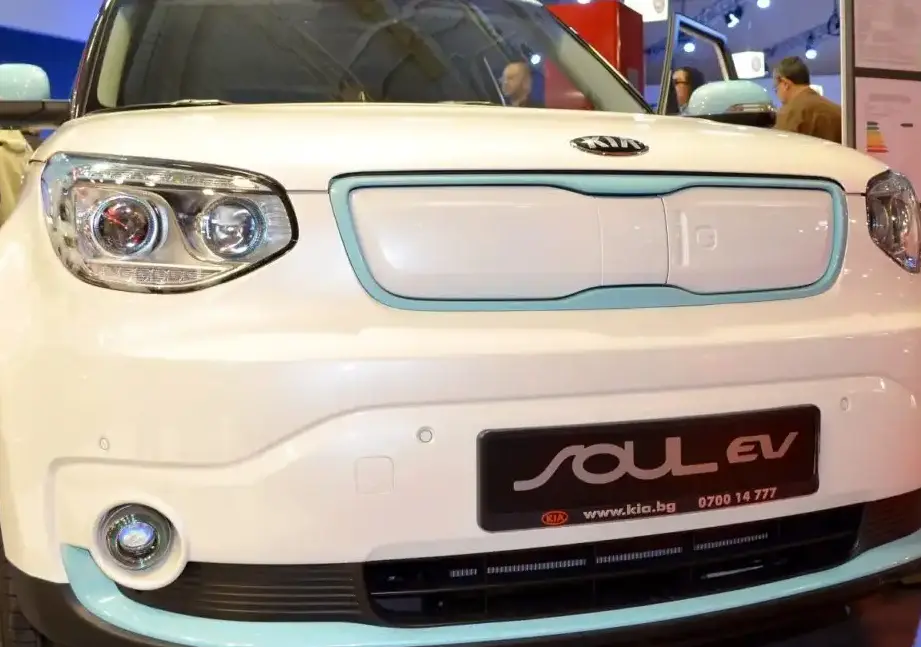
The Kia Soul III 2.0 MPI (147 hp) represents a significant iteration of Kia’s distinctive subcompact crossover, produced from 2020 through May 2022. Positioned as a mid-range offering within the Soul III lineup, this variant aimed to balance affordability with a reasonable level of performance and features. It built upon the foundation of the second-generation Soul (PS), continuing the model’s boxy design language and focus on interior space. The Soul III, and specifically this 2.0 MPI version, was primarily targeted at the North American and European markets, where the subcompact crossover segment was experiencing substantial growth. It served as a key model in Kia’s strategy to broaden its appeal to younger, style-conscious buyers.
Technical Specifications
| Brand | Kia |
| Model | Soul |
| Generation | Soul III |
| Type (Engine) | 2.0 MPI (147 Hp) |
| Start of production | 2020 |
| End of production | May, 2022 |
| Powertrain Architecture | Internal Combustion engine |
| Body type | Crossover |
| Seats | 5 |
| Doors | 5 |
| Fuel consumption (urban) | 9.4 l/100 km (25 US mpg) |
| Fuel consumption (extra urban) | 7.6 l/100 km (30.9 US mpg) |
| Fuel consumption (combined) | 8.7 l/100 km (27 US mpg) |
| Fuel Type | Petrol (Gasoline) |
| Weight-to-power ratio | 8.6 kg/Hp |
| Weight-to-torque ratio | 7.1 kg/Nm |
| Power | 147 Hp @ 6200 rpm |
| Power per litre | 73.5 Hp/l |
| Torque | 179 Nm @ 4500 rpm (132.02 lb.-ft. @ 4500 rpm) |
| Engine layout | Front, Transverse |
| Engine displacement | 1999 cm3 (121.99 cu. in.) |
| Number of cylinders | 4 |
| Engine configuration | Inline |
| Cylinder Bore | 81 mm (3.19 in.) |
| Piston Stroke | 97 mm (3.82 in.) |
| Compression ratio | 12.5:1 |
| Number of valves per cylinder | 4 |
| Fuel injection system | Multi-port manifold injection |
| Engine aspiration | Naturally aspirated engine |
| Valvetrain | DOHC, D-CVVT |
| Kerb Weight | 1271 kg (2802.08 lbs.) |
| Max. weight | 1750 kg (3858.09 lbs.) |
| Max load | 479 kg (1056.01 lbs.) |
| Trunk (boot) space – minimum | 529 l (18.68 cu. ft.) |
| Trunk (boot) space – maximum | 1758 l (62.08 cu. ft.) |
| Fuel tank capacity | 54 l (14.27 US gal) |
| Length | 4196 mm (165.2 in.) |
| Width | 1801 mm (70.91 in.) |
| Height | 1600 mm (62.99 in.) |
| Wheelbase | 2601 mm (102.4 in.) |
| Front track | 1575 mm (62.01 in.) |
| Rear (Back) track | 1585 mm (62.4 in.) |
| Front overhang | 866 mm (34.09 in.) |
| Rear overhang | 729 mm (28.7 in.) |
| Ride height (ground clearance) | 170 mm (6.69 in.) |
| Minimum turning circle | 10.6 m (34.78 ft.) |
| Drivetrain Architecture | Front wheel drive |
| Number of gears | 6 gears, manual transmission |
| Front suspension | Independent type McPherson |
| Rear suspension | independent torsion suspension |
| Front brakes | Ventilated discs, 279 mm |
| Rear brakes | Disc, 262 mm |
| Assisting systems | ABS (Anti-lock braking system) |
| Steering type | Steering rack and pinion |
| Power steering | Electric Steering |
| Tires size | 205/60 R16 |
| Wheel rims size | 6.5J x 16 |
Powertrain & Engine Architecture
At the heart of the Soul III 2.0 MPI is the Hyundai-Kia Smartstream G2.0 engine. This naturally aspirated, four-cylinder engine displaces 1999cc and utilizes multi-point fuel injection. The engine features a double overhead camshaft (DOHC) valvetrain with Kia’s Dual Continuous Variable Valve Timing (D-CVVT) technology. This system optimizes valve timing based on engine load and speed, improving both fuel efficiency and performance. The 147 horsepower peak is achieved at 6200 rpm, while the 179 Nm (132 lb-ft) of torque is delivered at 4500 rpm. The engine is transversely mounted in the front of the vehicle. The 6-speed manual transmission was standard on this trim, offering a direct connection to the engine and providing drivers with greater control. While an automatic transmission was available on other Soul III trims, the 2.0 MPI was primarily offered with the manual gearbox.
Driving Characteristics
The 2.0 MPI with the manual transmission provides a reasonably engaging driving experience for a subcompact crossover. Acceleration is adequate for everyday driving, with the engine feeling responsive in the mid-range. The 6-speed manual gearbox is well-matched to the engine’s powerband, allowing drivers to keep the engine in its optimal torque range. Compared to the base 1.6L engine, the 2.0 MPI offers noticeably more power and torque, resulting in quicker acceleration and improved highway passing capability. However, it doesn’t deliver the same level of performance as the more expensive turbocharged variants. The manual transmission provides a more connected feel than the automatic options available on other trims, appealing to drivers who enjoy a more involved driving experience. The suspension is tuned for comfort, providing a relatively smooth ride over most road surfaces, but it can feel a bit soft during more aggressive cornering.
Equipment & Trim Levels
The 2.0 MPI trim typically included standard features such as air conditioning, power windows and locks, a touchscreen infotainment system with Apple CarPlay and Android Auto compatibility, and a rearview camera. Safety features included ABS, electronic stability control, and multiple airbags. Higher trim levels offered additional features like a larger touchscreen display, a premium sound system, automatic climate control, and advanced driver-assistance systems (ADAS) such as forward collision warning and lane departure warning. Interior upholstery was typically cloth, with options for upgraded materials on higher trims. Exterior styling elements, such as alloy wheels and body-colored door handles, also varied depending on the trim level.
Chassis & Braking
The Soul III utilizes a front-wheel-drive platform with an independent McPherson strut suspension in the front and an independent torsion beam suspension in the rear. This suspension setup provides a good balance between ride comfort and handling. The front brakes are ventilated discs measuring 279mm, while the rear brakes are solid discs measuring 262mm. ABS (Anti-lock Braking System) is standard, providing enhanced braking performance in emergency situations. The steering system is an electric power-assisted rack and pinion system, offering light and precise steering feel. The relatively lightweight construction of the Soul III contributes to its nimble handling characteristics.
Market Reception & Comparison
The Kia Soul III 2.0 MPI was generally well-received by automotive critics. It was praised for its spacious interior, distinctive styling, and value for money. The 2.0 MPI engine was considered a good compromise between performance and fuel economy. Compared to the base 1.6L engine, the 2.0 MPI offered a significant performance upgrade without a substantial increase in price. However, some critics noted that the engine could feel strained when fully loaded or driving uphill. Fuel economy figures were competitive within the subcompact crossover segment, averaging around 27 US mpg in combined driving conditions. Compared to other similarly priced crossovers, the Soul III offered a more unique and stylish design, as well as a longer warranty.
Legacy
The Kia Soul III 2.0 MPI has proven to be a reliable and durable vehicle. The Smartstream G2.0 engine is known for its longevity and relatively low maintenance costs. The manual transmission is also generally considered to be reliable. On the used car market, the Soul III 2.0 MPI holds its value reasonably well, particularly models in good condition with low mileage. Its distinctive styling and practical features continue to appeal to a wide range of buyers. The Soul III, and this variant in particular, helped solidify Kia’s reputation as a manufacturer of well-built, affordable, and stylish vehicles.