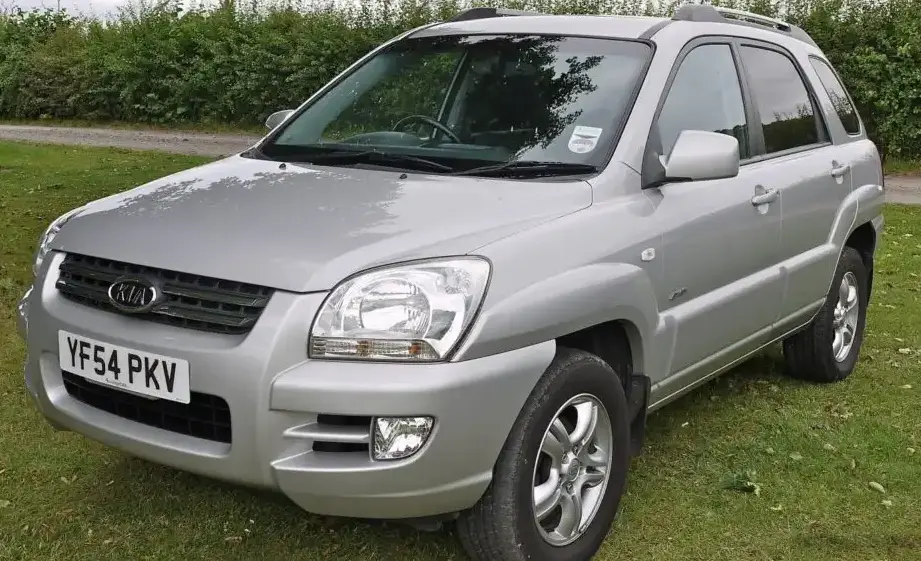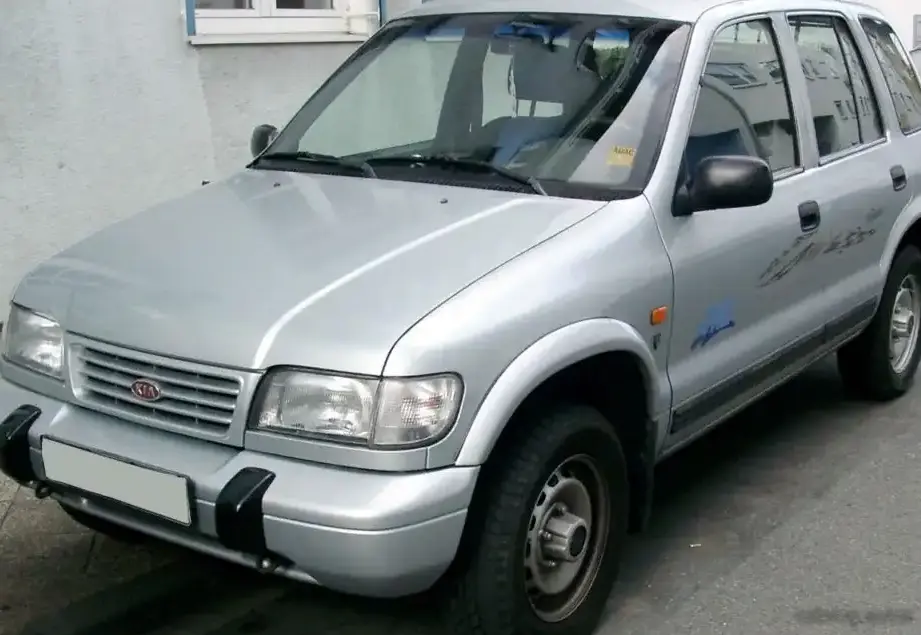
The Kia Sportage first generation, produced from 1998 to 2006, represented a significant step for the South Korean automaker into the rapidly growing compact SUV segment. Designed with a focus on affordability and ruggedness, the Sportage aimed to provide a practical and capable vehicle for families and individuals seeking a versatile transportation solution. The 2.0 i 16V Wagon, producing 118 horsepower, was a mainstay of the lineup, particularly in markets outside of North America where larger displacement engines were less common. This variant occupied a mid-range position within the Sportage’s offerings, slotting below the more powerful 2.0L V6 and above base models with smaller engines, offering a balance between performance and fuel economy.
Technical Specifications
| Brand | Kia |
| Model | Sportage |
| Generation | Sportage I |
| Type (Engine) | 2.0 i 16V Wagon (118 Hp) |
| Start of production | 1998 year |
| End of production | 2006 year |
| Powertrain Architecture | Internal Combustion engine |
| Body type | SUV |
| Seats | 5 |
| Doors | 5 |
| Fuel consumption (urban) | 11.5 l/100 km (20.5 US mpg) |
| Fuel consumption (extra urban) | 7.7 l/100 km (30.5 US mpg) |
| Fuel Type | Petrol (Gasoline) |
| Acceleration 0 – 100 km/h | 14.7 sec |
| Acceleration 0 – 62 mph | 14.7 sec |
| Acceleration 0 – 60 mph | 14 sec |
| Maximum speed | 172 km/h (106.88 mph) |
| Weight-to-power ratio | 12.8 kg/Hp |
| Weight-to-torque ratio | 9.1 kg/Nm |
| Power | 118 Hp @ 5300 rpm |
| Torque | 166 Nm @ 4500 rpm (122.44 lb.-ft. @ 4500 rpm) |
| Engine layout | Front, Longitudinal |
| Engine Model/Code | FE |
| Engine displacement | 1998 cm3 (121.93 cu. in.) |
| Number of cylinders | 4 |
| Engine configuration | Inline |
| Cylinder Bore | 86 mm (3.39 in.) |
| Piston Stroke | 86 mm (3.39 in.) |
| Compression ratio | 9.2:1 |
| Number of valves per cylinder | 4 |
| Fuel injection system | Multi-port manifold injection |
| Engine aspiration | Naturally aspirated engine |
| Engine oil capacity | 4.3 l (4.54 US qt | 3.78 UK qt) |
| Coolant capacity | 7.5 l (7.93 US qt | 6.6 UK qt) |
| Kerb Weight | 1505 kg (3317.96 lbs.) |
| Max. weight | 2060 kg (4541.52 lbs.) |
| Max load | 555 kg (1223.57 lbs.) |
| Trunk (boot) space – minimum | 483 l (17.06 cu. ft.) |
| Trunk (boot) space – maximum | 2220 l (78.4 cu. ft.) |
| Fuel tank capacity | 63 l (16.64 US gal | 13.86 UK gal) |
| Length | 4435 mm (174.61 in.) |
| Width | 1765 mm (69.49 in.) |
| Height | 1695 mm (66.73 in.) |
| Wheelbase | 2650 mm (104.33 in.) |
| Front track | 1440 mm (56.69 in.) |
| Rear (Back) track | 1440 mm (56.69 in.) |
| Drive wheel | All wheel drive (4×4) |
| Number of gears and type of gearbox | 5 gears, manual transmission |
| Front suspension | Double wishbone |
| Rear suspension | Spring Strut |
| Front brakes | Ventilated discs |
| Rear brakes | Drum |
| Assisting systems | ABS (Anti-lock braking system) |
| Power steering | Hydraulic Steering |
| Tires size | 205/70 R15 |
Powertrain & Engine Architecture
The heart of the Sportage 2.0 i 16V was the Kia FE engine, a 1.998-liter inline-four cylinder gasoline engine. This engine, while not particularly groundbreaking, was known for its relative simplicity and durability. The “16V” designation indicates a dual overhead camshaft (DOHC) valvetrain with four valves per cylinder, enhancing breathing and contributing to the engine’s power output. Fuel delivery was managed by a multi-point fuel injection system, providing precise fuel metering for improved efficiency and reduced emissions. The FE engine produced 118 horsepower at 5300 rpm and 166 Nm (122.44 lb-ft) of torque at 4500 rpm. The engine’s longitudinal mounting was typical for vehicles designed with all-wheel drive systems, allowing for a more efficient drivetrain layout. The five-speed manual transmission was the standard offering for this variant, providing drivers with direct control over gear selection. While an automatic transmission was available in some markets, the manual was favored by those prioritizing fuel economy and a more engaging driving experience.
Driving Characteristics
The 118 hp 2.0L engine paired with the five-speed manual transmission delivered adequate, though not exhilarating, performance. Acceleration from 0 to 60 mph took approximately 14 seconds, and the top speed was around 107 mph. The engine felt somewhat strained when pushed hard, particularly when fully loaded or tackling steep inclines. The gear ratios were reasonably well-spaced, allowing the engine to operate within its optimal power band during normal driving conditions. Compared to the V6 version, the 2.0L felt noticeably less powerful, but it offered a more economical driving experience. The manual transmission provided a more connected feel to the vehicle, allowing drivers to better manage the engine’s power and torque. The all-wheel drive system enhanced traction in slippery conditions, making the Sportage a capable vehicle for inclement weather or light off-road use.
Equipment & Trim Levels
The 2.0 i 16V Wagon typically came with a fairly basic level of equipment, reflecting its position as a mid-range offering. Standard features generally included power steering, air conditioning, and a basic audio system. Interior upholstery was typically cloth, and the dashboard featured a functional, if somewhat utilitarian, design. Optional extras included power windows, central locking, and an upgraded audio system. Higher trim levels, available in some markets, added features such as alloy wheels, a sunroof, and leather upholstery. Safety features were relatively limited by modern standards, typically consisting of ABS brakes and driver and passenger airbags.
Chassis & Braking
The Sportage’s chassis was a body-on-frame construction, providing a robust and durable platform. The front suspension utilized a double wishbone setup, while the rear suspension employed a spring strut arrangement. This suspension configuration provided a reasonably comfortable ride, although it could feel somewhat bouncy on rough roads. Braking duties were handled by ventilated discs at the front and drum brakes at the rear. The ABS system helped to prevent wheel lockup during hard braking, enhancing safety. The all-wheel drive system, available on this variant, contributed to improved stability and traction.
Market Reception & Comparison
The Kia Sportage 2.0 i 16V Wagon was generally well-received as an affordable and practical SUV. Critics praised its ruggedness, spacious interior, and all-wheel drive capability. However, the engine’s performance was often criticized as being somewhat underwhelming, particularly when compared to competitors with larger displacement engines. Fuel economy was considered to be reasonable for its class. Compared to the V6 version, the 2.0L offered a more economical option, but at the expense of performance. The 2.0L also proved to be more reliable than the V6, with fewer reported issues related to engine components.
Legacy
The Kia Sportage first generation, including the 2.0 i 16V Wagon, laid the foundation for Kia’s success in the SUV market. The FE engine proved to be a durable and reliable powerplant, and many examples are still on the road today. While not known for its blistering performance, the 2.0L Sportage offered a practical and affordable transportation solution for families and individuals. In the used car market, these models are often sought after for their affordability and simplicity. Maintenance costs are generally low, and parts availability is still relatively good. The Sportage’s robust construction and reliable engine make it a viable option for those seeking a budget-friendly SUV.