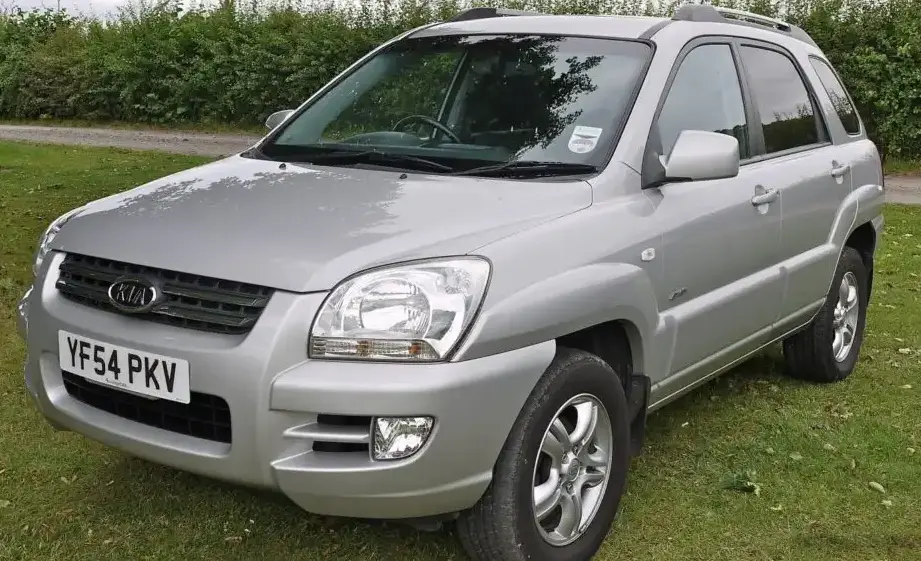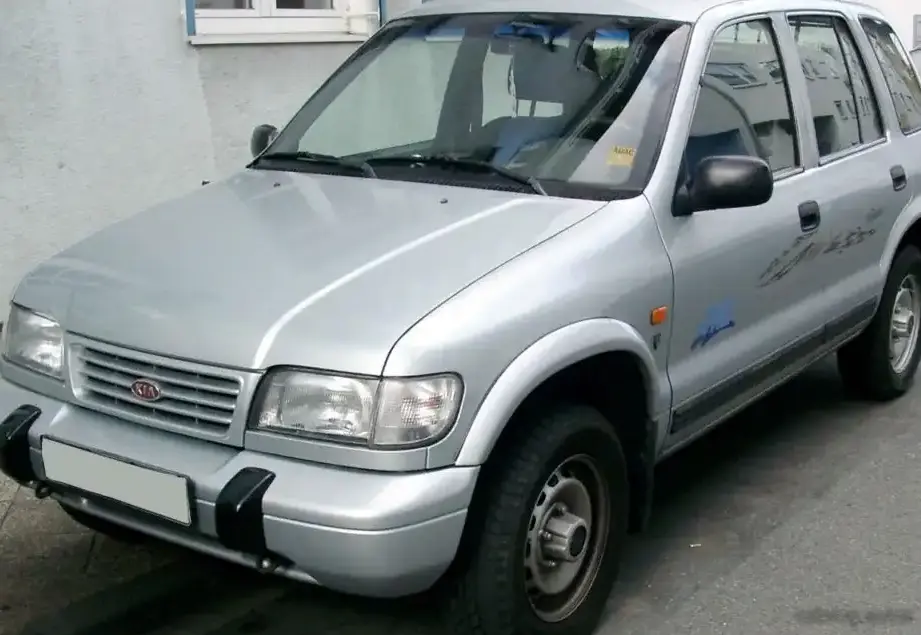
The Kia Sportage first generation, produced from 1997 through 2006, represented a pivotal moment for the South Korean automaker. It was Kia’s first dedicated SUV, designed to appeal to a growing market segment seeking affordable, capable, and relatively compact sport utility vehicles. The 2.0i 16V Wagon, producing 128 horsepower, was a significant variant within the Sportage I lineup, positioned as a balance between economy and performance. It was primarily sold in European, Asian, and South American markets, offering an alternative to established Japanese and European competitors. This model utilized the internal designation of the first generation Sportage, often referred to as the JA platform.
Technical Specifications
| Brand | Kia |
| Model | Sportage |
| Generation | Sportage I |
| Type | 2.0 i 16V Wagon (128 Hp) |
| Start of production | 1997 |
| End of production | 2006 |
| Powertrain Architecture | Internal Combustion engine |
| Body type | SUV |
| Seats | 5 |
| Doors | 5 |
| Fuel consumption (urban) | 14.6 l/100 km (16.1 US mpg) |
| Fuel consumption (extra urban) | 9 l/100 km (26.1 US mpg) |
| Fuel Type | Petrol (Gasoline) |
| Maximum speed | 172 km/h (106.88 mph) |
| Weight-to-power ratio | 11.8 kg/Hp |
| Weight-to-torque ratio | 8.6 kg/Nm |
| Power | 128 Hp @ 5300 rpm |
| Power per litre | 64.1 Hp/l |
| Torque | 175 Nm @ 4700 rpm (129.07 lb.-ft. @ 4700 rpm) |
| Engine layout | Front, Longitudinal |
| Engine Model/Code | FE |
| Engine displacement | 1998 cm3 (121.93 cu. in.) |
| Number of cylinders | 4 |
| Engine configuration | Inline |
| Cylinder Bore | 86 mm (3.39 in.) |
| Piston Stroke | 86 mm (3.39 in.) |
| Compression ratio | 9.2:1 |
| Number of valves per cylinder | 4 |
| Fuel injection system | Multi-port manifold injection |
| Engine aspiration | Naturally aspirated |
| Engine oil capacity | 4.3 l (4.54 US qt | 3.78 UK qt) |
| Coolant capacity | 7.5 l (7.93 US qt | 6.6 UK qt) |
| Kerb Weight | 1505 kg (3317.96 lbs.) |
| Max. weight | 2060 kg (4541.52 lbs.) |
| Max load | 555 kg (1223.57 lbs.) |
| Trunk (boot) space – minimum | 640 l (22.6 cu. ft.) |
| Trunk (boot) space – maximum | 2220 l (78.4 cu. ft.) |
| Fuel tank capacity | 65 l (17.17 US gal | 14.3 UK gal) |
| Length | 4435 mm (174.61 in.) |
| Width | 1764 mm (69.45 in.) |
| Height | 1695 mm (66.73 in.) |
| Wheelbase | 2650 mm (104.33 in.) |
| Front track | 1440 mm (56.69 in.) |
| Rear track | 1440 mm (56.69 in.) |
| Drive wheel | All wheel drive (4×4) |
| Number of gears | 5 |
| Gearbox type | Manual transmission |
| Front suspension | Double wishbone |
| Rear suspension | Spring Strut |
| Front brakes | Ventilated discs |
| Rear brakes | Disc |
| Assisting systems | ABS (Anti-lock braking system) |
| Power steering | Hydraulic |
| Tires size | 205/70 R15 |
Powertrain & Engine Architecture
The heart of the Sportage 2.0i 16V was the Kia FE engine, a 1.998-liter inline-four cylinder gasoline engine. This engine, while not particularly groundbreaking, was known for its relative simplicity and durability. The “16V” designation indicates a dual overhead camshaft (DOHC) valvetrain with four valves per cylinder, enhancing breathing and contributing to the engine’s power output. Fuel delivery was managed by a multi-point fuel injection system, providing precise fuel metering for improved efficiency and reduced emissions. The FE engine produced 128 horsepower at 5300 rpm and 175 Nm (129 lb-ft) of torque at 4700 rpm. The engine was mounted longitudinally in the chassis, a configuration common in vehicles designed for all-wheel drive. The standard transmission for this variant was a five-speed manual gearbox, although a four-speed automatic transmission was also offered as an option. The automatic transmission, while providing convenience, did impact acceleration and fuel economy compared to the manual.
Driving Characteristics
The 2.0i 16V Sportage with the five-speed manual transmission offered adequate performance for everyday driving. Acceleration was not brisk, but sufficient for merging onto highways and navigating city streets. The manual gearbox allowed drivers to maintain control and extract the most from the engine’s powerband. The automatic transmission, while smoother, resulted in noticeable performance degradation. The all-wheel drive system provided enhanced traction in slippery conditions, making the Sportage a capable vehicle in inclement weather. The suspension, tuned for comfort, provided a reasonably smooth ride, although it could feel somewhat soft during spirited driving. The steering was hydraulically assisted, offering reasonable feedback and ease of use.
Equipment & Trim Levels
The 2.0i 16V Sportage typically came equipped with basic amenities such as air conditioning, power steering, and a basic audio system. Higher trim levels offered features like alloy wheels, power windows and locks, and upgraded interior upholstery. Interior materials were generally durable but not luxurious, reflecting the Sportage’s positioning as an affordable SUV. Optional extras included a sunroof, upgraded audio systems, and metallic paint finishes. The interior layout was functional and straightforward, prioritizing practicality over aesthetics.
Chassis & Braking
The Sportage I utilized a body-on-frame construction, a traditional SUV design that provided robustness and off-road capability. The front suspension featured a double wishbone setup, while the rear suspension employed a spring strut arrangement. Braking duties were handled by ventilated discs at the front and solid discs at the rear. Anti-lock Braking System (ABS) was available, enhancing braking performance and safety. The all-wheel drive system was typically a part-time system, allowing drivers to switch between two-wheel drive and four-wheel drive modes as needed.
Market Reception & Comparison
The Kia Sportage 2.0i 16V was generally well-received as an affordable and practical SUV. Critics praised its value for money and its all-wheel drive capability. However, the engine was often criticized for being underpowered, particularly when paired with the automatic transmission. Compared to other trims, such as those with larger engines, the 2.0i offered better fuel economy but significantly less performance. It competed directly with vehicles like the Suzuki Vitara, the Mitsubishi Pajero Pinin, and early iterations of the Honda CR-V. The Sportage offered a more affordable alternative to many of its Japanese and European rivals.
Legacy
The Kia Sportage I, and specifically the 2.0i 16V variant, laid the foundation for Kia’s success in the SUV market. The FE engine proved to be relatively reliable, and many examples are still on the road today. While not known for exceptional performance, the 2.0i Sportage offered a practical and affordable transportation solution. In the used car market, these models are often sought after by those looking for a simple, durable, and capable SUV at a low price point. Maintenance is generally straightforward, and parts availability remains reasonable. The Sportage I represents a significant milestone in Kia’s history, marking its entry into the competitive world of sport utility vehicles.