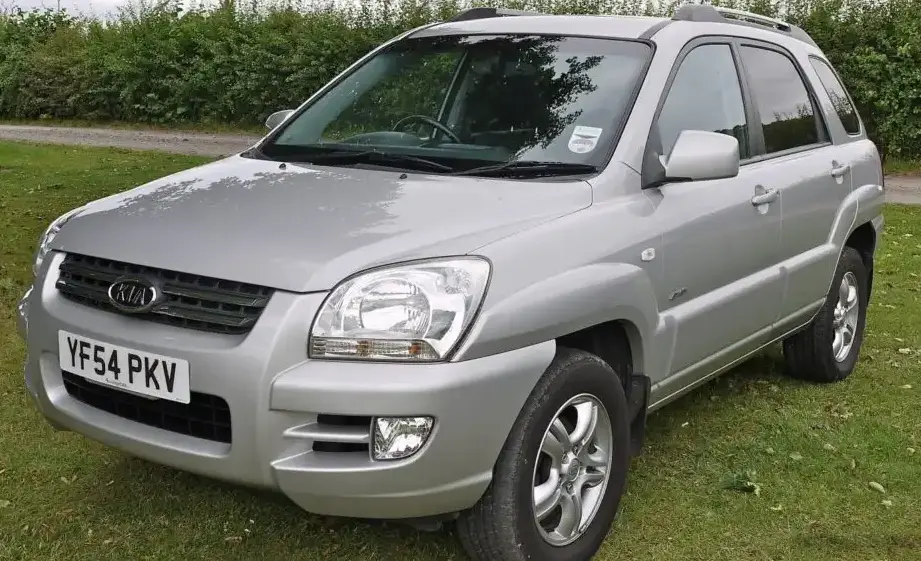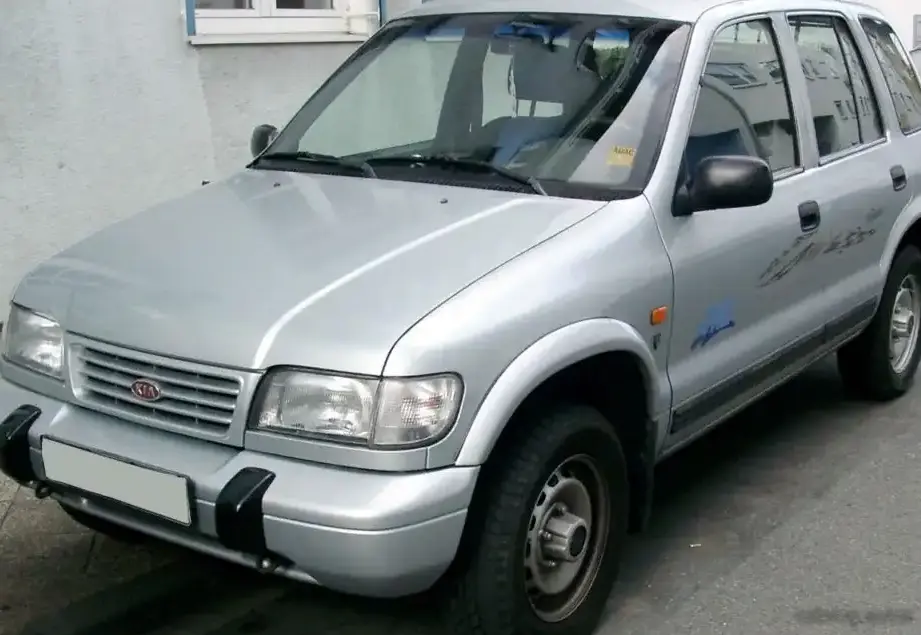
The Kia Sportage first generation, produced from 1998 to 2006, represented a pivotal moment for the South Korean automaker as it sought to establish a foothold in the burgeoning compact SUV market. The 2.0i 16V variant, equipped with a 118 horsepower engine and a five-speed manual transmission, served as a core offering within the Sportage lineup, positioned as a practical and affordable all-wheel-drive option. This model aimed to appeal to buyers seeking a versatile vehicle capable of handling both daily commutes and light off-road adventures. It was a key model in Kia’s expansion beyond its domestic market, particularly in Europe and other regions where compact SUVs were gaining popularity.
Technical Specifications
| Brand | Kia |
| Model | Sportage |
| Generation | Sportage I |
| Type (Engine) | 2.0i 16V (118 Hp) |
| Start of production | 1998 |
| End of production | 2006 |
| Powertrain Architecture | Internal Combustion engine |
| Body type | SUV |
| Seats | 5 |
| Doors | 5 |
| Fuel consumption (urban) | 13.6 l/100 km (17.3 US mpg) |
| Fuel consumption (extra urban) | 8.3 l/100 km (28.3 US mpg) |
| Fuel Type | Petrol (Gasoline) |
| Acceleration 0 – 100 km/h | 14.7 sec |
| Acceleration 0 – 62 mph | 14.7 sec |
| Acceleration 0 – 60 mph | 14 sec |
| Maximum speed | 172 km/h (106.88 mph) |
| Weight-to-power ratio | 12.2 kg/Hp |
| Weight-to-torque ratio | 8.7 kg/Nm |
| Power | 118 Hp @ 5300 rpm |
| Power per litre | 59.1 Hp/l |
| Torque | 166 Nm @ 4500 rpm (122.44 lb.-ft. @ 4500 rpm) |
| Engine layout | Front, Longitudinal |
| Engine Model/Code | FE |
| Engine displacement | 1998 cm3 (121.93 cu. in.) |
| Number of cylinders | 4 |
| Engine configuration | Inline |
| Cylinder Bore | 86 mm (3.39 in.) |
| Piston Stroke | 86 mm (3.39 in.) |
| Compression ratio | 9.2:1 |
| Number of valves per cylinder | 4 |
| Fuel injection system | Multi-port manifold injection |
| Engine aspiration | Naturally aspirated engine |
| Engine oil capacity | 4.3 l (4.54 US qt | 3.78 UK qt) |
| Coolant | 7.5 l (7.93 US qt | 6.6 UK qt) |
| Kerb Weight | 1440 kg (3174.66 lbs.) |
| Max. weight | 1930 kg (4254.92 lbs.) |
| Max load | 490 kg (1080.27 lbs.) |
| Trunk (boot) space – minimum | 373 l (13.17 cu. ft.) |
| Trunk (boot) space – maximum | 1510 l (53.33 cu. ft.) |
| Fuel tank capacity | 60 l (15.85 US gal | 13.2 UK gal) |
| Length | 4316 mm (169.92 in.) |
| Width | 1764 mm (69.45 in.) |
| Height | 1695 mm (66.73 in.) |
| Wheelbase | 2650 mm (104.33 in.) |
| Front track | 1440 mm (56.69 in.) |
| Rear (Back) track | 1440 mm (56.69 in.) |
| Drive wheel | All wheel drive (4×4) |
| Number of gears and type of gearbox | 5 gears, manual transmission |
| Front suspension | Double wishbone |
| Rear suspension | Spring Strut |
| Front brakes | Ventilated discs |
| Rear brakes | Drum |
| Assisting systems | ABS (Anti-lock braking system) |
| Power steering | Hydraulic Steering |
| Tires size | 205/70 R15 |
| Wheel rims size | 15 |
Powertrain & Engine Architecture
The heart of the Sportage 2.0i 16V is the Kia FE engine, a 1.998-liter inline-four cylinder gasoline engine. This engine utilizes a multi-port fuel injection (MPI) system, delivering fuel directly into the intake ports just before the intake valves. The FE engine features a single overhead camshaft (SOHC) design with four valves per cylinder, contributing to its relatively efficient breathing. The 16-valve configuration, combined with a compression ratio of 9.2:1, allowed for a reasonable balance between power and fuel economy. The engine’s longitudinal mounting within the chassis was a common layout for four-wheel-drive vehicles of the era, facilitating the connection to the transfer case. The five-speed manual transmission provided a direct and engaging driving experience, with gear ratios tailored for both on-road cruising and off-road capability.
Driving Characteristics
The 118 horsepower output of the 2.0i 16V engine, while adequate, didn’t deliver particularly brisk acceleration. The 0-60 mph time of around 14 seconds reflects this. However, the engine’s torque curve, peaking at 166 Nm (122.44 lb-ft) at 4500 rpm, provided sufficient pulling power for everyday driving and moderate towing. The manual transmission allowed drivers to maintain control over the engine’s powerband, making it easier to navigate hills or overtake slower vehicles. Compared to the later 2.7-liter V6 engine offered in some markets, the 2.0i was noticeably less powerful, but it offered superior fuel economy. The all-wheel-drive system, while primarily biased towards front-wheel drive under normal conditions, provided enhanced traction in slippery conditions, making the Sportage a capable vehicle for inclement weather or light off-road use.
Equipment & Trim Levels
The 2.0i 16V Sportage typically came with a fairly basic level of equipment, reflecting its position as an entry-level or mid-range trim. Standard features generally included power steering, air conditioning, and an AM/FM radio. Interior upholstery was typically cloth, and the dashboard featured a functional, if somewhat utilitarian, design. Optional extras could include power windows, central locking, and alloy wheels. Safety features were relatively limited by modern standards, typically consisting of ABS brakes and a driver’s airbag. The trim level often dictated the availability of these optional features, with higher trims offering more comfort and convenience items.
Chassis & Braking
The Sportage’s chassis was a body-on-frame construction, a common design for SUVs of that era, prioritizing durability and off-road capability. The front suspension utilized a double wishbone setup, providing a comfortable ride and good handling characteristics. The rear suspension employed a spring strut design, which was simpler and more cost-effective. Braking duties were handled by ventilated discs at the front and drum brakes at the rear. While adequate for the vehicle’s weight and performance, the drum brakes at the rear were a cost-saving measure and didn’t offer the same stopping power as disc brakes. The all-wheel-drive system, coupled with the relatively short wheelbase, contributed to the Sportage’s stability and handling in various conditions.
Market Reception & Comparison
The Kia Sportage 2.0i 16V was generally well-received as a practical and affordable SUV. Critics praised its all-wheel-drive capability and spacious interior, but noted its relatively modest performance. Compared to competitors like the Honda CR-V and Toyota RAV4, the Sportage offered a lower price point, but lacked the refinement and brand recognition of its Japanese rivals. Fuel economy was competitive for its class, but not exceptional. Reliability was generally considered to be good, although some owners reported issues with the engine’s timing belt and cooling system. The 2.0i variant was often seen as a sensible choice for buyers prioritizing practicality and value over outright performance.
Legacy
The Kia Sportage first generation, including the 2.0i 16V variant, played a significant role in establishing Kia as a credible player in the global automotive market. While the FE engine is known for its durability, regular maintenance, particularly timing belt replacement, is crucial to prevent engine damage. Today, the first-generation Sportage is becoming increasingly sought after by enthusiasts and collectors, particularly well-maintained examples. The 2.0i 16V variant, with its manual transmission and all-wheel-drive system, is considered a desirable configuration by those seeking a classic SUV with a rewarding driving experience. Its affordability and relative simplicity make it a popular choice for restoration projects and off-road adventures.