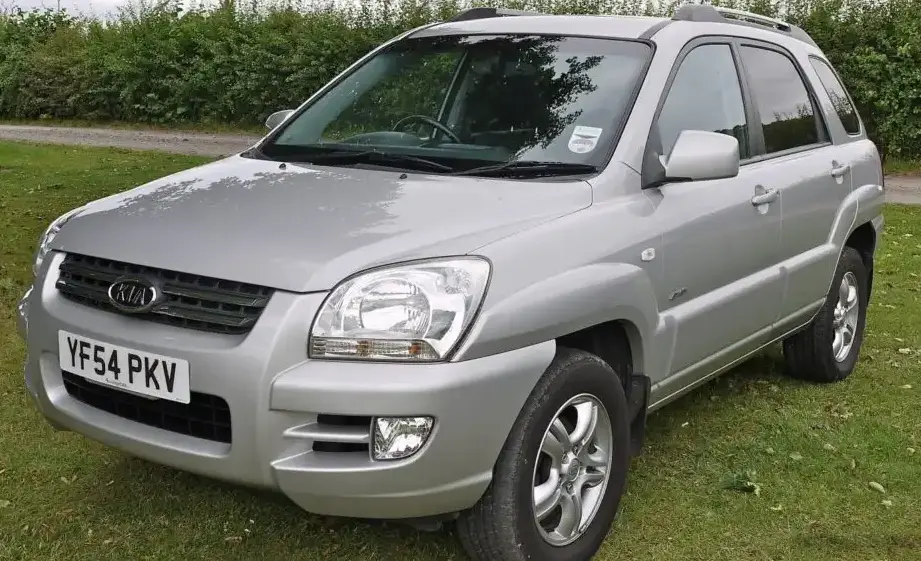
The Kia Sportage II 2.0 CRDi, produced between 2006 and 2008, represents a significant step forward for Kia in the compact SUV segment. This variant, powered by the D4EA 2.0-liter common-rail diesel engine producing 140 horsepower, was a key offering in European and Asian markets, aiming to balance fuel efficiency with respectable performance. It sat in the mid-range of the Sportage II lineup, offering a more refined and economical alternative to the base petrol engines while remaining more accessible than potential future, higher-powered diesel options. The Sportage II itself, built on the KM platform, was a crucial model for Kia, establishing the brand as a contender in a rapidly growing SUV market.
Technical Specifications
| Brand | Kia |
| Model | Sportage |
| Generation | Sportage II |
| Type (Engine) | 2.0 CRDi (140 Hp) |
| Start of production | 2006 |
| End of production | 2008 |
| Powertrain Architecture | Internal Combustion engine |
| Body type | SUV |
| Seats | 5 |
| Doors | 5 |
| Fuel consumption (urban) | 8.8 l/100 km (26.7 US mpg) |
| Fuel consumption (extra urban) | 5.9 l/100 km (39.9 US mpg) |
| Fuel Type | Diesel |
| Acceleration 0 – 100 km/h | 10.3 sec |
| Acceleration 0 – 62 mph | 10.3 sec |
| Acceleration 0 – 60 mph | 9.8 sec |
| Maximum speed | 178 km/h (110.6 mph) |
| Weight-to-power ratio | 11.2 kg/Hp |
| Weight-to-torque ratio | 5.1 kg/Nm |
| Power | 140 Hp @ 4000 rpm |
| Power per litre | 70.3 Hp/l |
| Torque | 305 Nm @ 1800 rpm (224.96 lb.-ft. @ 1800 rpm) |
| Engine layout | Front, Transverse |
| Engine Model/Code | D4EA |
| Engine displacement | 1991 cm3 (121.5 cu. in.) |
| Number of cylinders | 4 |
| Engine configuration | Inline |
| Cylinder Bore | 83 mm (3.27 in.) |
| Piston Stroke | 92 mm (3.62 in.) |
| Compression ratio | 17.3:1 |
| Number of valves per cylinder | 4 |
| Fuel injection system | Diesel Commonrail |
| Engine aspiration | Turbocharger, Intercooler |
| Valvetrain | OHC |
| Engine oil capacity | 5.9 l (6.23 US qt | 5.19 UK qt) |
| Coolant capacity | 8.7 l (9.19 US qt | 7.65 UK qt) |
| Kerb Weight | 1565 kg (3450.23 lbs.) |
| Max. weight | 2270 kg (5004.49 lbs.) |
| Max load | 705 kg (1554.26 lbs.) |
| Trunk (boot) space – minimum | 667 l (23.55 cu. ft.) |
| Trunk (boot) space – maximum | 1886 l (66.6 cu. ft.) |
| Fuel tank capacity | 58 l (15.32 US gal | 12.76 UK gal) |
| Length | 4350 mm (171.26 in.) |
| Width | 1840 mm (72.44 in.) |
| Height | 1730 mm (68.11 in.) |
| Wheelbase | 2630 mm (103.54 in.) |
| Front track | 1550 mm (61.02 in.) |
| Rear track | 1550 mm (61.02 in.) |
| Drivetrain Architecture | Front wheel drive |
| Number of gears | 6 |
| Gearbox type | Manual transmission |
| Front suspension | Independent, McPherson with coil spring and anti-roll bar |
| Rear suspension | Independent multi-link with stabilizer |
| Front brakes | Ventilated discs |
| Rear brakes | Disc |
| Assisting systems | ABS (Anti-lock braking system) |
| Steering type | Steering rack and pinion |
| Tires size | 235/60 R16 |
Powertrain & Engine Architecture
The heart of the Sportage II 2.0 CRDi is the Kia-developed D4EA engine. This 1991cc, four-cylinder diesel utilizes a second-generation common-rail direct injection system, delivering fuel at extremely high pressure for improved combustion efficiency and reduced emissions. The engine features a single overhead camshaft (OHC) design operating four valves per cylinder. A turbocharger with an intercooler is employed to boost power output, providing 140 horsepower at 4000 rpm and a substantial 305 Nm (224.96 lb-ft) of torque at a low 1800 rpm. This torque characteristic is particularly beneficial for a vehicle intended for everyday use and occasional towing. The six-speed manual transmission was the standard offering for this variant, providing a good balance between fuel economy and driver control. The engine’s architecture prioritized durability and refinement, aiming to address common criticisms of earlier diesel engines.
Driving Characteristics
The 2.0 CRDi with the six-speed manual transmission offered a noticeably more engaging driving experience than the base petrol versions of the Sportage II. While not a performance SUV, the 140 hp and 305 Nm of torque provided adequate power for highway cruising and overtaking maneuvers. The relatively long gearing, typical of diesel engines, prioritized fuel economy, but also meant that the engine needed to be revved slightly to access its full potential. Compared to a hypothetical higher-output diesel variant, this 2.0 CRDi offered a smoother, more linear power delivery, making it easier to drive in urban environments. The manual gearbox allowed for greater driver control, although it lacked the convenience of an automatic transmission.
Equipment & Trim Levels
The 2.0 CRDi typically came equipped with a reasonable level of standard features. Air conditioning, power windows, central locking, and an integrated audio system were common inclusions. Interior upholstery was generally cloth, with options for upgraded materials available. Higher trim levels could add features like alloy wheels, a sunroof, and upgraded audio systems. Safety features included ABS brakes and dual front airbags. The specific trim level and available options varied depending on the market, but the 2.0 CRDi generally represented a step up in terms of features compared to the base models.
Chassis & Braking
The Sportage II utilized a McPherson strut front suspension and a multi-link rear suspension, providing a comfortable ride quality. Stabilizer bars were fitted to both axles to reduce body roll during cornering. The front brakes were ventilated discs, offering good stopping power, while the rear brakes were solid discs. The suspension tuning was geared towards comfort rather than outright sportiness, making the Sportage II a pleasant vehicle for long journeys. The chassis was designed to handle the increased weight and torque of the diesel engine without compromising ride quality.
Market Reception & Comparison
The Kia Sportage II 2.0 CRDi was generally well-received by automotive critics. It was praised for its fuel efficiency, comfortable ride, and spacious interior. The diesel engine was considered a good compromise between performance and economy. Compared to its competitors, such as the Nissan X-Trail and Honda CR-V, the Sportage II offered a competitive price point and a longer warranty. However, some critics noted that the interior materials were not as refined as those found in some of its rivals. The 2.0 CRDi offered significantly better fuel economy than the petrol versions of the Sportage II, making it a popular choice for drivers who covered long distances.
Legacy
The D4EA engine, in its various iterations, proved to be a reliable and durable powerplant. The 2.0 CRDi version in the Sportage II is generally considered to be a robust unit, with many examples still on the road today. Common issues are typically related to wear and tear on components such as the turbocharger and fuel injectors, but these are generally repairable. On the used car market, the Sportage II 2.0 CRDi remains a relatively affordable and practical option for those seeking a compact SUV with good fuel economy and a decent level of equipment. Its reputation for reliability has helped it maintain a steady following among budget-conscious buyers.