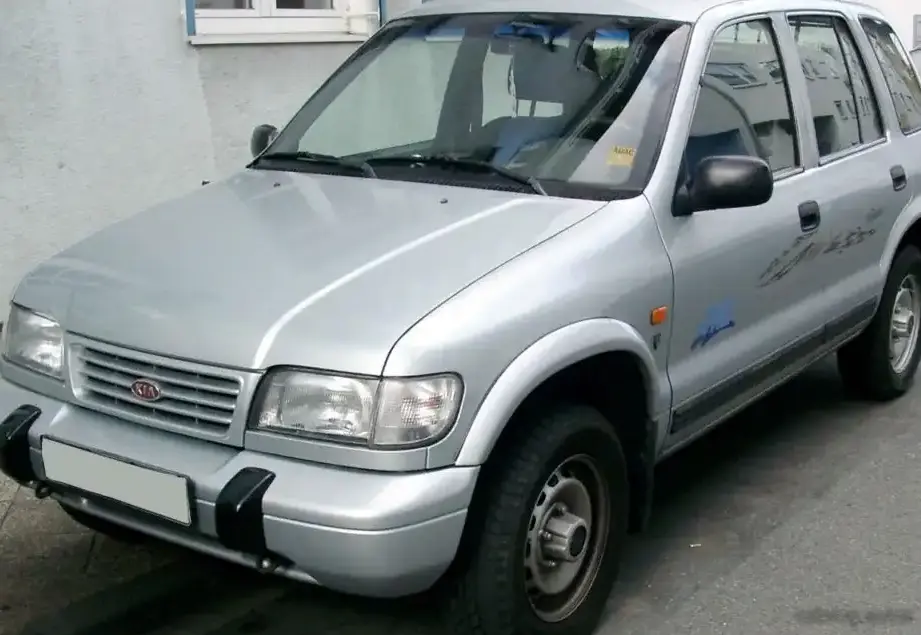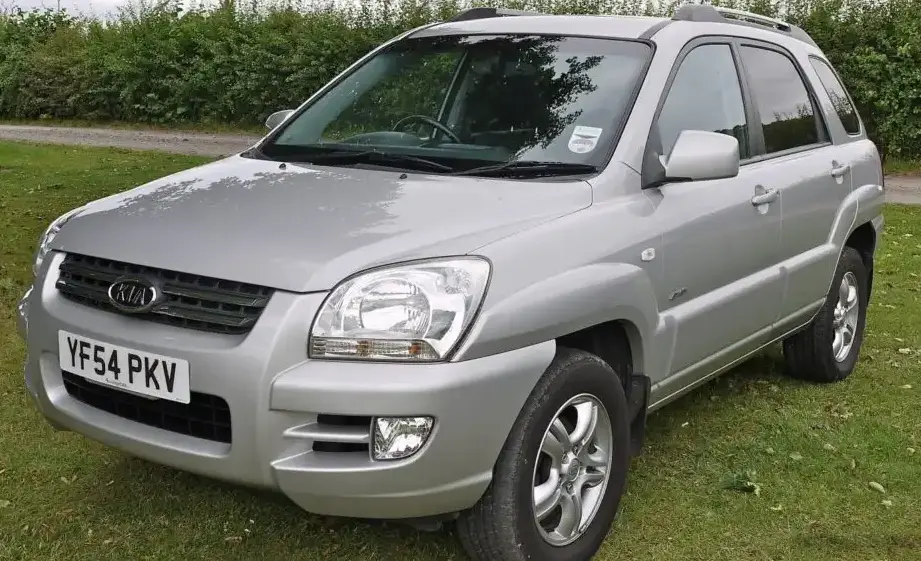
The Kia Sportage II 2.0i 16V 4WD, produced between 2004 and 2008, represents a significant step forward for Kia in the compact SUV segment. Part of the second generation (codename: JE), this variant offered a blend of practicality, affordability, and available all-wheel drive, making it a popular choice in both European and emerging markets. Positioned as a mid-range offering within the Sportage II lineup, it slotted between the base 2.0-liter front-wheel-drive models and the more powerful 2.7-liter V6 options. This particular configuration aimed to provide a balance between fuel efficiency and adequate performance for everyday driving, appealing to families and individuals seeking a versatile vehicle.
Technical Specifications
| Brand | Kia |
| Model | Sportage |
| Generation | Sportage II |
| Type (Engine) | 2.0i 16V (141 Hp) 4WD |
| Start of production | 2004 |
| End of production | 2008 |
| Powertrain Architecture | Internal Combustion engine |
| Body type | SUV |
| Seats | 5 |
| Doors | 5 |
| Fuel consumption (urban) | 10.6 l/100 km (22.2 US mpg) |
| Fuel consumption (extra urban) | 6.8 l/100 km (34.6 US mpg) |
| Fuel Type | Petrol (Gasoline) |
| Acceleration 0 – 100 km/h | 11.3 sec |
| Acceleration 0 – 62 mph | 11.3 sec |
| Acceleration 0 – 60 mph | 10.7 sec |
| Maximum speed | 176 km/h (109.36 mph) |
| Weight-to-power ratio | 10.8 kg/Hp |
| Weight-to-torque ratio | 8.3 kg/Nm |
| Power | 141 Hp @ 6000 rpm |
| Torque | 184 Nm @ 4500 rpm (135.71 lb.-ft. @ 4500 rpm) |
| Engine layout | Front, Transverse |
| Engine Model/Code | G4GC |
| Engine displacement | 1975 cm3 (120.52 cu. in.) |
| Number of cylinders | 4 |
| Engine configuration | Inline |
| Cylinder Bore | 82 mm (3.23 in.) |
| Piston Stroke | 93.5 mm (3.68 in.) |
| Compression ratio | 10.1:1 |
| Number of valves per cylinder | 4 |
| Fuel injection system | Multi-port manifold injection |
| Engine aspiration | Naturally aspirated engine |
| Valvetrain | OHC |
| Engine oil capacity | 4 l (4.23 US qt | 3.52 UK qt) |
| Coolant capacity | 7 l (7.4 US qt | 6.16 UK qt) |
| Kerb Weight | 1525 kg (3362.05 lbs.) |
| Max. weight | 2140 kg (4717.89 lbs.) |
| Max load | 615 kg (1355.84 lbs.) |
| Trunk (boot) space – minimum | 667 l (23.55 cu. ft.) |
| Trunk (boot) space – maximum | 1886 l (66.6 cu. ft.) |
| Fuel tank capacity | 58 l (15.32 US gal | 12.76 UK gal) |
| Length | 4350 mm (171.26 in.) |
| Width | 1840 mm (72.44 in.) |
| Height | 1730 mm (68.11 in.) |
| Wheelbase | 2630 mm (103.54 in.) |
| Front track | 1550 mm (61.02 in.) |
| Rear (Back) track | 1550 mm (61.02 in.) |
| Drive wheel | All wheel drive (4×4) |
| Number of gears and type of gearbox | 5 gears, manual transmission |
| Front suspension | Independent, type McPherson with coil spring and anti-roll bar |
| Rear suspension | Independent multi-link spring suspension with stabilizer |
| Front brakes | Ventilated discs |
| Rear brakes | Disc |
| Assisting systems | ABS (Anti-lock braking system) |
| Steering type | Steering rack and pinion |
| Tires size | 235/60 R16 |
| Wheel rims size | 16 |
Powertrain & Engine Architecture
The heart of the Sportage II 2.0i 4WD is the Kia-developed G4GC engine, a 1.975-liter inline-four cylinder gasoline engine. This engine utilizes a single overhead camshaft (SOHC) valvetrain with four valves per cylinder, contributing to its 16V designation. Fuel delivery is managed by a multi-point fuel injection system, providing a balance between efficiency and performance. The G4GC engine produces 141 horsepower at 6000 rpm and 184 Nm (135.71 lb-ft) of torque at 4500 rpm. The engine’s design prioritized reliability and ease of maintenance, making it a practical choice for a wide range of drivers. The 5-speed manual transmission was the standard offering for this variant, providing direct control over the engine’s power. The transmission’s gear ratios were tuned for a blend of acceleration and fuel economy, though it wasn’t particularly sporty.
Driving Characteristics
The 2.0i 4WD Sportage offered a competent, if not exhilarating, driving experience. Acceleration from 0-60 mph took around 10.7 seconds, and top speed was limited to 109.36 mph. The all-wheel-drive system provided enhanced traction in various conditions, making it suitable for inclement weather or light off-road use. However, the 141 hp engine felt somewhat strained when fully loaded or tackling steep inclines. Compared to the available 2.7-liter V6, the 2.0i offered significantly less power, but it also delivered better fuel economy. The manual transmission allowed for greater driver engagement, but the shift quality wasn’t as refined as some of its competitors. The suspension provided a comfortable ride, absorbing bumps and imperfections in the road reasonably well.
Equipment & Trim Levels
The 2.0i 4WD Sportage typically came equipped with features such as air conditioning, power windows, power door locks, and a basic audio system. Safety features included ABS brakes and dual front airbags. Higher trim levels offered options like alloy wheels, a sunroof, upgraded audio systems, and leather upholstery. The interior was functional and durable, with a focus on practicality rather than luxury. The dashboard layout was straightforward and easy to use, with clearly labeled controls. The rear seats offered ample space for passengers, and the cargo area was generous, especially with the rear seats folded down.
Chassis & Braking
The Sportage II utilized a McPherson strut front suspension and a multi-link rear suspension, providing a good balance between ride comfort and handling. The front suspension incorporated a stabilizer bar to reduce body roll during cornering. The braking system consisted of ventilated discs at the front and solid discs at the rear, providing adequate stopping power for the vehicle’s weight. The all-wheel-drive system employed a part-time four-wheel-drive setup, allowing drivers to switch between two-wheel drive and four-wheel drive as needed. This system enhanced traction in slippery conditions but didn’t offer the sophisticated all-wheel-drive capabilities of some more advanced SUVs.
Market Reception & Comparison
The Kia Sportage II 2.0i 4WD was generally well-received by critics as a value-oriented SUV. It offered a competitive price point, a spacious interior, and a practical feature set. However, some reviewers noted that the engine lacked power, particularly when compared to its competitors. Fuel economy was considered average for its class. Compared to other trims in the Sportage II lineup, the 2.0i 4WD offered a more affordable entry point into the all-wheel-drive market. The 2.7-liter V6 provided significantly more power but came at a higher price and with lower fuel economy. The front-wheel-drive 2.0-liter models were even more affordable but lacked the added traction of the 4WD system.
Legacy
The Kia Sportage II 2.0i 16V 4WD has proven to be a relatively reliable vehicle, with many examples still on the road today. The G4GC engine is known for its durability, and the manual transmission is generally trouble-free. Common maintenance issues include wear and tear on suspension components and occasional problems with the fuel injection system. In the used car market, these Sportages are often sought after for their affordability and practicality. While they may not offer the latest technology or the most refined driving experience, they represent a solid value for buyers seeking a dependable and versatile SUV.