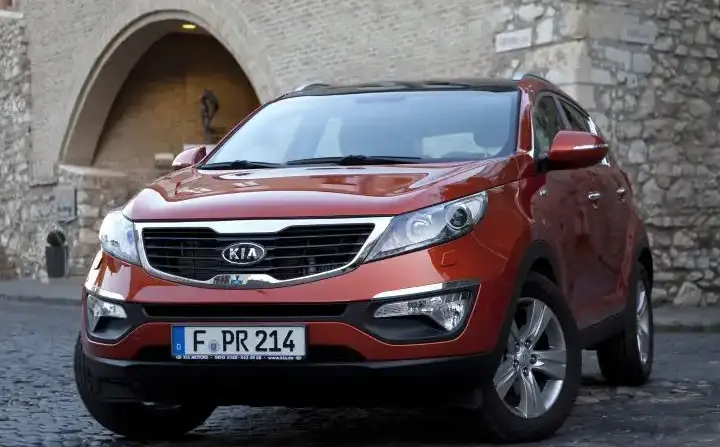
The Kia Sportage III, produced between 2010 and 2014, represented a significant step forward for the South Korean automaker in the competitive compact SUV segment. This generation, known internally as the SL, aimed to broaden Kia’s appeal with a more refined design and improved features. The 2.0-liter 16V (163 horsepower) variant paired with a four-speed automatic transmission was a key offering, positioned as a mainstream choice within the Sportage lineup, balancing affordability with acceptable performance and convenience. It served as a bridge between the base models and the more powerful, often all-wheel-drive equipped, options.
Technical Specifications
| Brand | Kia |
| Model | Sportage |
| Generation | Sportage III |
| Type (Engine) | 2.0 16V (163 Hp) Automatic |
| Start of production | 2010 |
| End of production | 2014 |
| Powertrain Architecture | Internal Combustion engine |
| Body type | SUV |
| Seats | 5 |
| Doors | 5 |
| Fuel consumption (urban) | 10.6 l/100 km (22.2 US mpg) |
| Fuel consumption (extra urban) | 6.8 l/100 km (34.6 US mpg) |
| Fuel consumption (combined) | 8.2 l/100 km (28.7 US mpg) |
| Fuel Type | Petrol (Gasoline) |
| Acceleration 0 – 100 km/h | 11.2 sec |
| Acceleration 0 – 62 mph | 11.2 sec |
| Acceleration 0 – 60 mph | 10.6 sec |
| Maximum speed | 180 km/h (111.85 mph) |
| Emission standard | Euro 5 |
| Weight-to-power ratio | 9.5 kg/Hp |
| Weight-to-torque ratio | 7.9 kg/Nm |
| Power | 163 Hp @ 6200 rpm |
| Torque | 195 Nm @ 4600 rpm (143.82 lb.-ft. @ 4600 rpm) |
| Engine layout | Front, Transverse |
| Engine Model/Code | G4KD |
| Engine displacement | 1998 cm3 (121.93 cu. in.) |
| Number of cylinders | 4 |
| Engine configuration | Inline |
| Number of valves per cylinder | 4 |
| Fuel injection system | Multi-port manifold injection |
| Engine aspiration | Naturally aspirated engine |
| Valvetrain | DOHC |
| Engine oil capacity | 5.8 l (6.13 US qt | 5.1 UK qt) |
| Coolant capacity | 6.7 l (7.08 US qt | 5.9 UK qt) |
| Kerb Weight | 1544 kg (3403.94 lbs.) |
| Max. weight | 2030 kg (4475.38 lbs.) |
| Max load | 486 kg (1071.45 lbs.) |
| Trunk (boot) space – minimum | 564 l (19.92 cu. ft.) |
| Trunk (boot) space – maximum | 1353 l (47.78 cu. ft.) |
| Fuel tank capacity | 58 l (15.32 US gal | 12.76 UK gal) |
| Length | 4440 mm (174.8 in.) |
| Width | 1855 mm (73.03 in.) |
| Height | 1685 mm (66.34 in.) |
| Wheelbase | 2640 mm (103.94 in.) |
| Minimum turning circle | 10.58 m (34.71 ft.) |
| Drivetrain | Front wheel drive |
| Number of gears | 4 |
| Gearbox type | automatic transmission |
| Front brakes | Ventilated discs |
| Rear brakes | Disc |
| Tires size | 225/60 R17 |
| Wheel rims size | 17 |
Powertrain & Engine Architecture
The heart of this Sportage variant is the G4KD 2.0-liter inline-four cylinder engine. This engine utilizes a dual overhead camshaft (DOHC) valvetrain with four valves per cylinder, contributing to its relatively efficient breathing. Fuel delivery is managed by a multi-point fuel injection system, a common setup for engines of this era. The G4KD engine is known for its durability and relatively simple design, making it easier to maintain compared to more complex, direct-injected engines. Paired with this engine is a four-speed automatic transmission. While not the most modern transmission available at the time, it provided smooth shifts and ease of use, appealing to a broader range of drivers. The four-speed configuration, however, meant wider gear ratios and potentially less optimal fuel economy at highway speeds compared to transmissions with more gears.
Driving Characteristics
The 163 hp and 195 Nm (144 lb-ft) of torque delivered by the 2.0-liter engine and four-speed automatic resulted in adequate, but not exhilarating, performance. Acceleration from 0-60 mph took around 10.6 seconds, placing it behind the more powerful engine options in the Sportage lineup. The automatic transmission prioritized comfort over sporty responsiveness. Gear changes were generally smooth, but downshifts could be slow to respond, especially during overtaking maneuvers. The wider gear ratios meant the engine often operated at higher RPMs during highway cruising, impacting fuel economy. Compared to the manual transmission versions of the same engine, the automatic offered less driver engagement but greater convenience, particularly in urban driving conditions.
Equipment & Trim Levels
The 2.0-liter automatic Sportage typically came with a reasonable level of standard equipment. This included air conditioning, power windows and locks, a basic audio system with CD player and auxiliary input, and standard safety features like ABS brakes and airbags. Interior upholstery was typically cloth, with options for upgraded materials available. Higher trim levels added features like alloy wheels, a sunroof, a more advanced audio system, and automatic climate control. The specific trim level (LX, EX, etc.) dictated the level of standard equipment, with the 2.0-liter automatic often serving as the base or mid-range offering.
Chassis & Braking
The Sportage III utilized a front-wheel-drive platform with independent suspension in the front and a multi-link rear suspension. This setup provided a comfortable ride quality, absorbing bumps and imperfections in the road reasonably well. Front brakes were ventilated discs, offering good stopping power, while rear brakes were solid discs. The suspension tuning was geared towards comfort rather than sporty handling, resulting in some body roll during cornering. Stabilizer bars were included to help reduce body roll, but their thickness was modest, reflecting the vehicle’s focus on everyday usability.
Market Reception & Comparison
The 2.0-liter automatic Sportage was generally well-received as a practical and affordable compact SUV. Critics noted its comfortable ride, spacious interior, and reasonable fuel economy. However, the engine’s performance was often described as adequate but not exciting, and the four-speed automatic transmission was considered outdated compared to the more advanced transmissions offered in competing vehicles. Compared to the more powerful 2.4-liter engine option, the 2.0-liter offered lower running costs but sacrificed performance. The 2.0-liter also provided a more economical alternative to the diesel variants available in European markets.
Legacy
The Kia Sportage III 2.0-liter automatic has proven to be a relatively reliable vehicle in the used car market. The G4KD engine is known for its durability, and the four-speed automatic transmission, while not the most sophisticated, is generally dependable. Common maintenance items include regular oil changes, timing belt replacement (depending on mileage), and inspection of suspension components. Today, these Sportages represent an affordable entry point into the compact SUV segment, offering a practical and comfortable transportation option for budget-conscious buyers. While not a performance standout, its reliability and reasonable running costs have ensured its continued presence on roads.