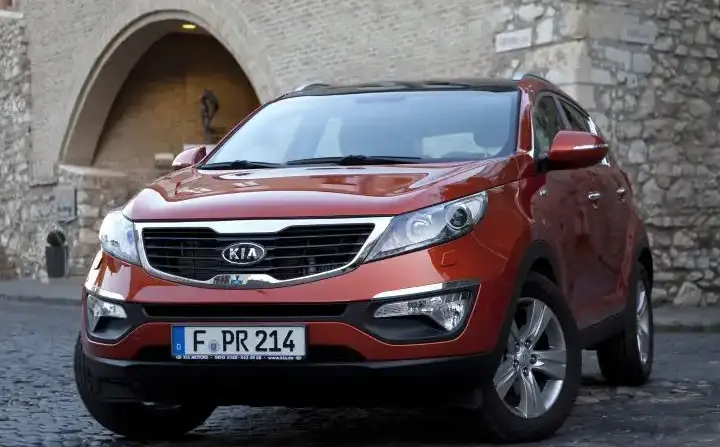
The Kia Sportage III, produced between 2010 and 2014, represented a significant step forward for the South Korean automaker in the competitive compact SUV segment. The 2.0 CRDI variant, generating 136 horsepower, was a mainstay of the lineup, particularly in European and Asian markets. Positioned as a mid-range offering, it aimed to balance fuel efficiency with acceptable performance for everyday driving. This generation (QB) Sportage marked a departure from its predecessors, adopting a more modern and stylish design penned by Peter Schreyer, Kia’s Chief Design Officer. It was built on the platform shared with the Hyundai ix35, offering a compelling alternative to established European and Japanese rivals.
Technical Specifications
| Brand | Kia |
| Model | Sportage |
| Generation | Sportage III |
| Type (Engine) | 2.0 CRDI (136 Hp) |
| Start of production | 2010 |
| End of production | 2014 |
| Powertrain Architecture | Internal Combustion engine |
| Body type | SUV |
| Seats | 5 |
| Doors | 5 |
| Fuel consumption (urban) | 6.7 l/100 km (35.1 US mpg, 42.2 UK mpg, 14.9 km/l) |
| Fuel consumption (extra urban) | 5.1 l/100 km (46.1 US mpg, 55.4 UK mpg, 19.6 km/l) |
| Fuel consumption (combined) | 5.7 l/100 km (41.3 US mpg, 49.6 UK mpg, 17.5 km/l) |
| Fuel Type | Diesel |
| Acceleration 0 – 100 km/h | 11.3 sec |
| Acceleration 0 – 62 mph | 11.3 sec |
| Acceleration 0 – 60 mph | 10.7 sec |
| Maximum speed | 181 km/h (112.47 mph) |
| Emission standard | Euro 5 |
| Weight-to-power ratio | 11.2 kg/Hp, 89.2 Hp/tonne |
| Weight-to-torque ratio | 4.8 kg/Nm, 209.2 Nm/tonne |
| Power | 136 Hp @ 4000 rpm |
| Power per litre | 68.2 Hp/l |
| Torque | 319 Nm @ 1800 rpm (235.28 lb.-ft. @ 1800 rpm) |
| Engine layout | Front, Transverse |
| Engine Model/Code | D4HA |
| Engine displacement | 1995 cm3 (121.74 cu. in.) |
| Number of cylinders | 4 |
| Engine configuration | Inline |
| Number of valves per cylinder | 4 |
| Fuel injection system | Diesel Commonrail |
| Engine aspiration | Turbocharger, Intercooler |
| Valvetrain | DOHC |
| Engine oil capacity | 8 l (8.45 US qt | 7.04 UK qt) |
| Coolant capacity | 8.5 l (8.98 US qt | 7.48 UK qt) |
| Kerb Weight | 1525 kg (3362.05 lbs.) |
| Max. weight | 2140 kg (4717.89 lbs.) |
| Max load | 615 kg (1355.84 lbs.) |
| Trunk (boot) space – minimum | 564 l (19.92 cu. ft.) |
| Trunk (boot) space – maximum | 1353 l (47.78 cu. ft.) |
| Fuel tank capacity | 58 l (15.32 US gal | 12.76 UK gal) |
| Length | 4440 mm (174.8 in.) |
| Width | 1855 mm (73.03 in.) |
| Height | 1685 mm (66.34 in.) |
| Wheelbase | 2640 mm (103.94 in.) |
| Minimum turning circle | 10.58 m (34.71 ft.) |
| Drivetrain Architecture | The Internal combustion engine (ICE) drives the front wheels of the vehicle. |
| Drive wheel | Front wheel drive |
| Number of gears | 6 gears, manual transmission |
| Front brakes | Ventilated discs |
| Rear brakes | Disc |
| Assisting systems | ABS (Anti-lock braking system) |
| Steering type | Steering rack and pinion |
| Tires size | 225/60 R17 |
| Wheel rims size | 17 |
Powertrain & Engine Architecture
The heart of the Sportage 2.0 CRDI is the D4HA engine, a 1995cc inline-four cylinder diesel. This engine utilizes a second-generation common rail direct injection system, delivering fuel at extremely high pressures for improved combustion efficiency and reduced emissions. A turbocharger with an intercooler further enhances performance, boosting power and torque. The engine features a double overhead camshaft (DOHC) valvetrain with four valves per cylinder, optimizing airflow for increased power output. The 136 horsepower output was achieved through careful calibration of the engine management system, prioritizing fuel economy and drivability over outright performance. The six-speed manual transmission was the standard offering for this variant, providing a good balance between fuel efficiency and driver control.
Driving Characteristics
The 2.0 CRDI with the manual transmission offered a reasonably engaging driving experience. While not particularly quick, the 319 Nm (235 lb-ft) of torque available from 1800 rpm provided ample pulling power for everyday driving and overtaking maneuvers. The six-speed gearbox was well-matched to the engine’s characteristics, allowing for comfortable cruising at highway speeds. Compared to the more powerful 2.0 CRDI variants (often exceeding 180 hp), this version felt less strained during acceleration, but also lacked the same level of responsiveness. The manual transmission provided more driver involvement than the optional automatic, offering better control and fuel economy. The gear ratios were tuned for efficiency, with a relatively long final drive contributing to good fuel consumption on the open road.
Equipment & Trim Levels
The 2.0 CRDI typically came equipped with a respectable level of standard features. Base models included air conditioning, power windows, central locking, and an audio system with USB connectivity. Higher trim levels, such as the LS and EX, added features like alloy wheels, fog lights, a leather-wrapped steering wheel, and a more advanced audio system. Optional extras included a sunroof, leather upholstery, and a navigation system. Interior upholstery was typically cloth on the base models, with leather available as an upgrade. The dashboard layout was functional and user-friendly, with a clear instrument cluster and logically placed controls.
Chassis & Braking
The Sportage III utilized a MacPherson strut front suspension and a multi-link rear suspension, providing a comfortable ride and decent handling characteristics. Front brakes were ventilated discs, offering good stopping power, while rear brakes were solid discs. Anti-lock Braking System (ABS) was standard, enhancing safety during emergency braking situations. The suspension was tuned for comfort rather than outright sportiness, prioritizing ride quality over sharp handling. Stabilizer bars were fitted to both the front and rear axles to reduce body roll during cornering.
Market Reception & Comparison
The Kia Sportage III 2.0 CRDI was generally well-received by automotive critics. It was praised for its stylish design, spacious interior, and competitive price. The 136 hp engine was considered adequate for most drivers, although some reviewers noted that it could feel underpowered when fully loaded or tackling steep hills. Fuel economy was a strong point, with the 2.0 CRDI achieving impressive figures in real-world testing. Compared to other compact SUVs in its class, such as the Nissan Qashqai and the Hyundai ix35, the Sportage offered a compelling combination of value, features, and fuel efficiency. The manual transmission version was favored by those seeking better fuel economy and a more engaging driving experience.
Legacy
The Kia Sportage III 2.0 CRDI has proven to be a relatively reliable vehicle, with the D4HA engine generally considered durable and long-lasting. However, like all diesel engines, it’s important to ensure regular maintenance, including oil changes and filter replacements. Common issues include potential problems with the diesel particulate filter (DPF) if the vehicle is primarily used for short trips, and occasional issues with the turbocharger. On the used car market, the Sportage III 2.0 CRDI remains a popular choice, offering a good balance of affordability, practicality, and fuel efficiency. Its stylish design and spacious interior continue to appeal to buyers looking for a versatile and reliable compact SUV.