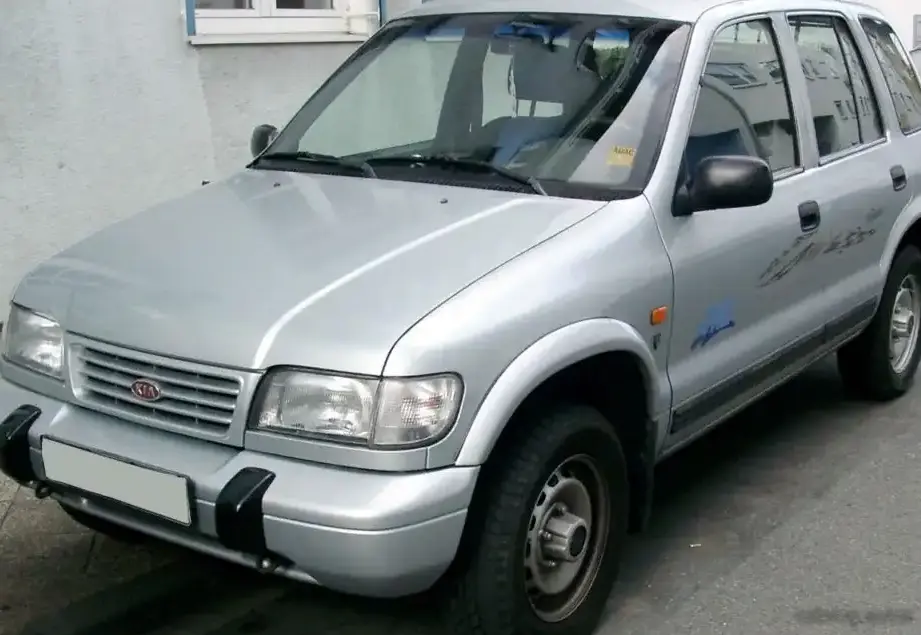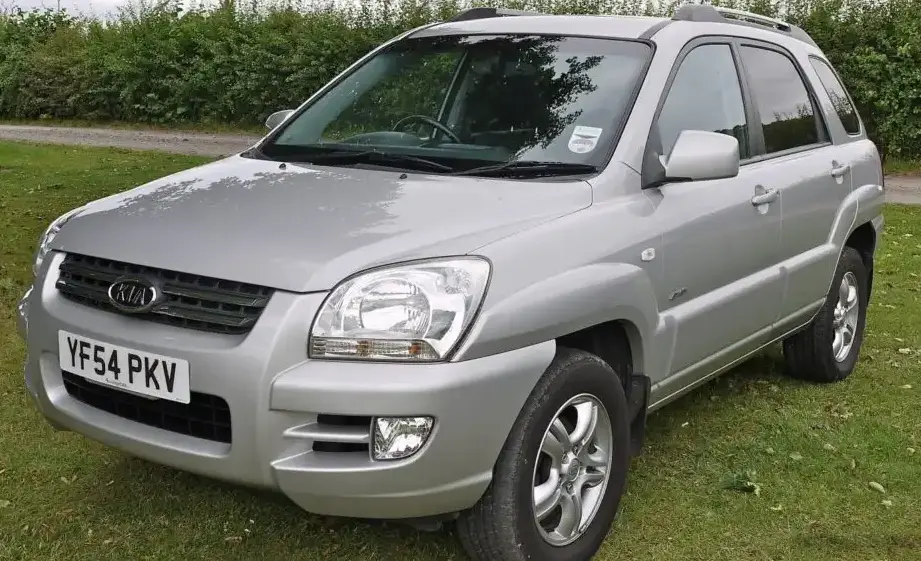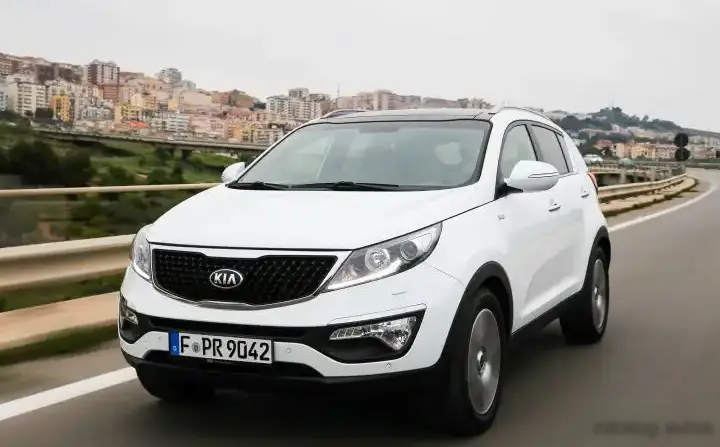
The Kia Sportage III, specifically the facelifted model released in 2014, represented a significant step forward for the South Korean automaker in the competitive compact SUV segment. This iteration, produced through 2016, aimed to offer a blend of style, practicality, and value. Among the various engine and drivetrain configurations available, the 2.0 GDI (Gasoline Direct Injection) model paired with a six-speed automatic transmission and all-wheel drive (4WD) occupied a middle-ground position in the lineup, appealing to buyers seeking a balance between performance and fuel efficiency. It was positioned above the base engine options but below the more powerful, and often more expensive, trims.
Technical Specifications
| Brand | Kia |
| Model | Sportage |
| Generation | Sportage III (facelift, 2014) |
| Type (Engine) | 2.0 GDI (166 Hp) 4WD |
| Start of production | 2014 |
| End of production | 2016 |
| Powertrain Architecture | Internal Combustion engine |
| Body type | SUV |
| Seats | 5 |
| Doors | 5 |
| Fuel consumption (urban) | 10.6 l/100 km (22.2 US mpg, 26.6 UK mpg, 9.4 km/l) |
| Fuel consumption (extra urban) | 6.3 l/100 km (37.3 US mpg, 44.8 UK mpg, 15.9 km/l) |
| Fuel consumption (combined) | 8 l/100 km (29.4 US mpg, 35.3 UK mpg, 12.5 km/l) |
| CO2 emissions | 186 g/km |
| Fuel Type | Petrol (Gasoline) |
| Acceleration 0 – 100 km/h | 10.9 sec |
| Acceleration 0 – 62 mph | 10.9 sec |
| Acceleration 0 – 60 mph | 10.4 sec |
| Maximum speed | 195 km/h (121.17 mph) |
| Emission standard | Euro 5 |
| Weight-to-power ratio | 9.2 kg/Hp, 108.9 Hp/tonne |
| Weight-to-torque ratio | 7.4 kg/Nm, 134.4 Nm/tonne |
| Power | 166 Hp @ 6200 rpm |
| Power per litre | 83.1 Hp/l |
| Torque | 205 Nm @ 4000 rpm (151.2 lb.-ft. @ 4000 rpm) |
| Engine layout | Front, Transverse |
| Engine Model/Code | G4NC |
| Engine displacement | 1998 cm3 (121.93 cu. in.) |
| Number of cylinders | 4 |
| Engine configuration | Inline |
| Cylinder Bore | 81 mm (3.19 in.) |
| Piston Stroke | 97 mm (3.82 in.) |
| Compression ratio | 11.5:1 |
| Number of valves per cylinder | 4 |
| Fuel injection system | Direct injection |
| Engine aspiration | Naturally aspirated engine |
| Valvetrain | DOHC |
| Engine oil capacity | 4 l (4.23 US qt | 3.52 UK qt) |
| Coolant | 6.7 l (7.08 US qt | 5.9 UK qt) |
| Kerb Weight | 1525 kg (3362.05 lbs.) |
| Max. weight | 2030 kg (4475.38 lbs.) |
| Max load | 505 kg (1113.33 lbs.) |
| Trunk (boot) space – minimum | 564 l (19.92 cu. ft.) |
| Trunk (boot) space – maximum | 1353 l (47.78 cu. ft.) |
| Fuel tank capacity | 58 l (15.32 US gal | 12.76 UK gal) |
| Permitted trailer load with brakes (12%) | 1900 kg (4188.78 lbs.) |
| Permitted trailer load without brakes | 750 kg (1653.47 lbs.) |
| Length | 4440 mm (174.8 in.) |
| Width | 1855 mm (73.03 in.) |
| Height | 1635 mm (64.37 in.) |
| Wheelbase | 2640 mm (103.94 in.) |
| Front track | 1611 mm (63.43 in.) |
| Rear (Back) track | 1612 mm (63.46 in.) |
| Ride height (ground clearance) | 172 mm (6.77 in.) |
| Drag coefficient (Cd) | 0.37 |
| Minimum turning circle (turning diameter) | 10.58 m (34.71 ft.) |
| Approach angle | 22.7° |
| Departure angle | 28.2° |
| Ramp-over (brakeover) angle | 17.7° |
| Drive wheel | All wheel drive (4×4) |
| Number of gears and type of gearbox | 6 gears, automatic transmission |
| Front brakes | Ventilated discs |
| Rear brakes | Disc |
| Assisting systems | ABS (Anti-lock braking system) |
| Steering type | Steering rack and pinion |
| Power steering | Electric Steering |
| Tires size | 225/60 R17 |
| Wheel rims size | 17 |
Powertrain & Engine Architecture
At the heart of this Sportage variant lies the G4NC 2.0-liter inline-four cylinder gasoline engine. This engine utilizes Gasoline Direct Injection (GDI) technology, where fuel is injected directly into the combustion chamber, enhancing efficiency and power output. The G4NC engine features a double overhead camshaft (DOHC) valvetrain with four valves per cylinder, optimizing airflow for improved performance. The engine’s 11.5:1 compression ratio contributes to its relatively high output for its displacement. The engine is transversely mounted in the front of the vehicle. The six-speed automatic transmission, while not known for being particularly sporty, provides smooth and adequate shifts for everyday driving. It’s a conventional torque-converter automatic, prioritizing comfort and ease of use over outright performance.
Driving Characteristics
The 166 horsepower and 151 lb-ft of torque produced by the 2.0 GDI engine, when coupled with the all-wheel-drive system, provided the Sportage with respectable, though not exhilarating, performance. Acceleration from 0-60 mph took around 10.4 seconds, making it competitive within its class. The automatic transmission’s gear ratios were tuned for fuel economy and drivability, rather than aggressive acceleration. Compared to the manual transmission version, the automatic offered a more relaxed driving experience, particularly in urban environments. However, it lacked the responsiveness and driver engagement of the manual. Compared to higher-output engine options, such as those found in some European markets, this variant felt less powerful, especially when fully loaded or tackling steep inclines.
Equipment & Trim Levels
The 2.0 GDI 4WD trim typically included standard features such as air conditioning, power windows and locks, a basic audio system with USB connectivity, and alloy wheels. Safety features like ABS, electronic stability control, and multiple airbags were also standard. Higher trim levels offered upgrades like leather upholstery, a panoramic sunroof, a more advanced infotainment system with navigation, and heated front seats. The interior design was functional and relatively modern for its time, though material quality was generally considered average for the segment.
Chassis & Braking
The Sportage III utilized a MacPherson strut front suspension and a multi-link rear suspension, providing a comfortable ride quality. The all-wheel-drive system employed a dynamic torque distribution system, automatically shifting power between the front and rear axles based on road conditions and driver input. Braking duties were handled by ventilated discs at the front and solid discs at the rear. The braking system, while adequate for normal driving, wasn’t particularly powerful or sporty. The suspension tuning prioritized comfort over handling precision.
Market Reception & Comparison
The 2.0 GDI 4WD Sportage received generally positive reviews, with critics praising its value for money, spacious interior, and comfortable ride. However, some reviewers noted that the engine lacked the punch of some competitors, and the automatic transmission could feel sluggish at times. Fuel economy was considered average for the class. Compared to diesel-powered Sportage models, the 2.0 GDI offered less torque and lower fuel efficiency, but it was quieter and produced fewer emissions. Against gasoline-powered competitors like the Honda CR-V and Toyota RAV4, the Sportage offered a more aggressive styling and a longer warranty, but often lagged behind in terms of refinement and resale value.
Legacy
The Kia Sportage III, including the 2.0 GDI 4WD variant, played a crucial role in establishing Kia as a major player in the global automotive market. The G4NC engine proved to be relatively reliable, though long-term maintenance, particularly regarding the direct injection system, requires attention. On the used car market, these Sportages are generally considered a good value, offering a lot of features for the price. However, potential buyers should be aware of potential issues with the GDI system, such as carbon buildup on the intake valves, and ensure that the vehicle has been properly maintained. The Sportage III laid the groundwork for the continued success of the Sportage line, which has become one of Kia’s best-selling models.