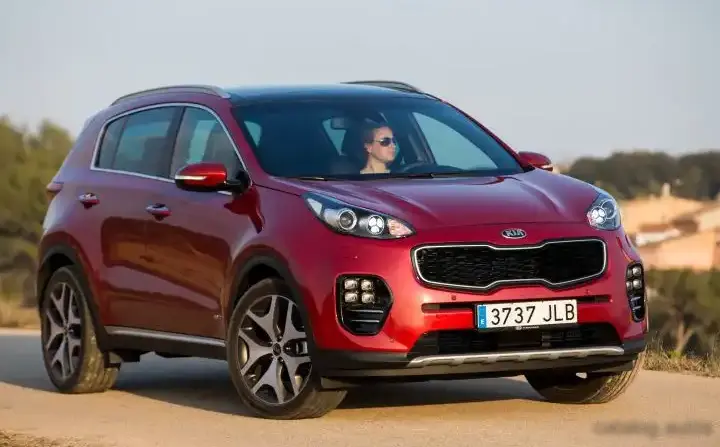
The Kia Sportage IV, produced from 2016 to 2018, represented a significant step forward for the South Korean automaker in the highly competitive compact SUV segment. Among the various engine and drivetrain configurations offered, the 2.0 T-GDI (237 Hp) AWD Sportmatic variant occupied a premium position in the lineup, blending performance with all-weather capability and a comfortable driving experience. This model, built on the platform designated as the QL, aimed to attract buyers seeking a more engaging alternative to base models while remaining a value proposition compared to European and Japanese rivals.
Technical Specifications
| Brand | Kia |
| Model | Sportage |
| Generation | Sportage IV |
| Type (Engine) | 2.0 T-GDI (237 Hp) AWD Sportmatic |
| Start of production | 2016 |
| End of production | 2018 |
| Powertrain Architecture | Internal Combustion engine |
| Body type | SUV |
| Seats | 5 |
| Doors | 5 |
| Fuel consumption (economy) – urban (EPA) | 11.8 l/100 km (19.9 US mpg) |
| Fuel consumption (economy) – extra urban (EPA) | 10.2 l/100 km (23.1 US mpg) |
| Fuel consumption (economy) – combined (EPA) | 11.2 l/100 km (21 US mpg) |
| Fuel Type | Petrol (Gasoline) |
| Emission standard | Euro 6 |
| Weight-to-power ratio | 7.2 kg/Hp, 138.8 Hp/tonne |
| Weight-to-torque ratio | 4.8 kg/Nm, 206.7 Nm/tonne |
| Power | 237 Hp @ 6000 rpm |
| Power per litre | 118.6 Hp/l |
| Torque | 353 Nm @ 1450-3500 rpm (260.36 lb.-ft. @ 1450-3500 rpm) |
| Engine layout | Front, Transverse |
| Engine Model/Code | Theta II / G4KH |
| Engine displacement | 1998 cm3 (121.93 cu. in.) |
| Number of cylinders | 4 |
| Engine configuration | Inline |
| Cylinder Bore | 86 mm (3.39 in.) |
| Piston Stroke | 86 mm (3.39 in.) |
| Compression ratio | 10:1 |
| Number of valves per cylinder | 4 |
| Fuel injection system | Direct injection |
| Engine aspiration | Twin-scroll turbo, Intercooler |
| Valvetrain | DOHC, CVVT |
| Engine oil capacity | 4.8 l (5.07 US qt | 4.22 UK qt) |
| Coolant | 7.2 l (7.61 US qt | 6.34 UK qt) |
| Kerb Weight | 1708-1813 kg (3765.5 – 3996.98 lbs.) |
| Trunk (boot) space – minimum | 491 l (17.34 cu. ft.) |
| Trunk (boot) space – maximum | 1492 l (52.69 cu. ft.) |
| Fuel tank capacity | 62 l (16.38 US gal | 13.64 UK gal) |
| Max. roof load | 100 kg (220.46 lbs.) |
| Permitted trailer load with brakes (12%) | 907 kg (1999.59 lbs.) |
| Permitted trailer load without brakes | 748 kg (1649.06 lbs.) |
| Length | 4480 mm (176.38 in.) |
| Width | 1855 mm (73.03 in.) |
| Height | 1655 mm (65.16 in.) |
| Wheelbase | 2670 mm (105.12 in.) |
| Front track | 1609 mm (63.35 in.) |
| Rear (Back) track | 1620 mm (63.78 in.) |
| Front overhang | 910 mm (35.83 in.) |
| Rear overhang | 900 mm (35.43 in.) |
| Ride height (ground clearance) | 172 mm (6.77 in.) |
| Minimum turning circle (turning diameter) | 10.6 m (34.78 ft.) |
| Approach angle | 28° |
| Departure angle | 24.6° |
| Ramp-over (brakeover) angle | 19.5° |
| Drivetrain Architecture | All wheel drive (4×4) |
| Number of gears and type of gearbox | 6 gears, automatic transmission Sportmatic |
| Front suspension | Independent, type McPherson with coil spring and anti-roll bar |
| Rear suspension | Independent multi-link spring suspension with stabilizer |
| Front brakes | Ventilated discs, 320 mm |
| Rear brakes | Disc, 302 mm |
| Assisting systems | ABS (Anti-lock braking system) |
| Steering type | Steering rack and pinion |
| Power steering | Electric Steering |
| Tires size | 245/45 R19 |
| Wheel rims size | 7.5J x 19 |
INTRODUCTION
The Kia Sportage IV, launched in 2016, marked a turning point for the model, moving it further upmarket and offering a more refined experience. The 2.0 T-GDI AWD Sportmatic variant was positioned as a mid-to-high trim level, appealing to buyers who desired a balance of performance, practicality, and all-weather confidence. It featured a turbocharged four-cylinder engine paired with a six-speed automatic transmission and Kia’s all-wheel-drive system. This combination aimed to deliver a more spirited driving experience than the base engine options while providing enhanced traction and stability.
Powertrain & Engine Architecture
At the heart of the Sportage 2.0 T-GDI AWD Sportmatic lies the Theta II engine, specifically the G4KH code. This 1998cc (121.93 cu. in.) inline-four cylinder engine utilizes direct fuel injection and a twin-scroll turbocharger with an intercooler to produce 237 horsepower at 6000 rpm and 353 Nm (260.36 lb.-ft.) of torque between 1450 and 3500 rpm. The engine incorporates a Double Overhead Camshaft (DOHC) valvetrain with Continuously Variable Valve Timing (CVVT) on both intake and exhaust sides, optimizing performance and efficiency. The six-speed automatic transmission, marketed as “Sportmatic,” allows for manual gear selection, offering drivers some control over the gear changes. The transmission is designed for smooth shifts and efficient power delivery, though it isn’t known for being particularly sporty or quick-shifting compared to dual-clutch transmissions found in some competitors.
Driving Characteristics
The 2.0 T-GDI engine provides a noticeable step up in performance compared to the naturally aspirated engines available in lower Sportage trims. Acceleration is brisk, and the engine feels responsive in most driving situations. The Sportmatic transmission generally shifts smoothly, but can sometimes feel hesitant during quick overtaking maneuvers. The all-wheel-drive system provides excellent traction in inclement weather, enhancing stability and confidence. However, the added weight of the AWD system and the automatic transmission does impact fuel economy compared to front-wheel-drive or manual transmission variants. The gear ratios are tuned more for comfortable cruising than outright performance, prioritizing fuel efficiency and a relaxed driving experience.
Equipment & Trim Levels
The 2.0 T-GDI AWD Sportmatic typically came well-equipped, often including features such as leather upholstery, heated front seats, a touchscreen infotainment system with navigation, a rearview camera, and automatic climate control. Optional extras could include a panoramic sunroof, premium audio system, and advanced safety features like lane departure warning and automatic emergency braking. Interior trim levels varied, but generally featured a modern and well-appointed cabin with a focus on practicality and comfort. The dashboard layout was straightforward and user-friendly, with logically placed controls.
Chassis & Braking
The Sportage IV utilizes an independent suspension setup at all four corners. The front suspension employs a McPherson strut design with coil springs and an anti-roll bar, while the rear features a multi-link setup with a stabilizer bar. This configuration provides a comfortable ride quality while maintaining reasonable handling characteristics. Braking duties are handled by ventilated discs at the front and solid discs at the rear. The inclusion of ABS (Anti-lock Braking System) is standard, enhancing safety during emergency braking situations. Steering is rack and pinion with electric power assistance, providing a light and responsive feel.
Market Reception & Comparison
The Kia Sportage IV 2.0 T-GDI AWD Sportmatic was generally well-received by automotive critics. It was praised for its stylish design, spacious interior, and generous equipment levels. The engine was considered adequately powerful, but some reviewers noted that the automatic transmission could be slow to respond at times. Compared to competitors like the Honda CR-V and Toyota RAV4, the Sportage offered a more aggressive styling and a more affordable price point. However, it often lagged behind in terms of overall refinement and fuel economy. Against other trims within the Sportage lineup, the 2.0 T-GDI AWD Sportmatic offered a significant performance upgrade over the base engines, but at a higher price and with slightly reduced fuel efficiency.
Legacy
The Kia Sportage IV 2.0 T-GDI AWD Sportmatic has proven to be a relatively reliable vehicle in the used car market. The Theta II engine, while not without its issues (some early versions experienced oil consumption problems), has generally proven durable with proper maintenance. The automatic transmission is also considered reasonably reliable. However, potential buyers should be aware of the possibility of oil consumption issues and ensure that the vehicle has been regularly serviced. Today, these Sportages represent a good value proposition for buyers seeking a capable and well-equipped compact SUV with all-wheel drive.