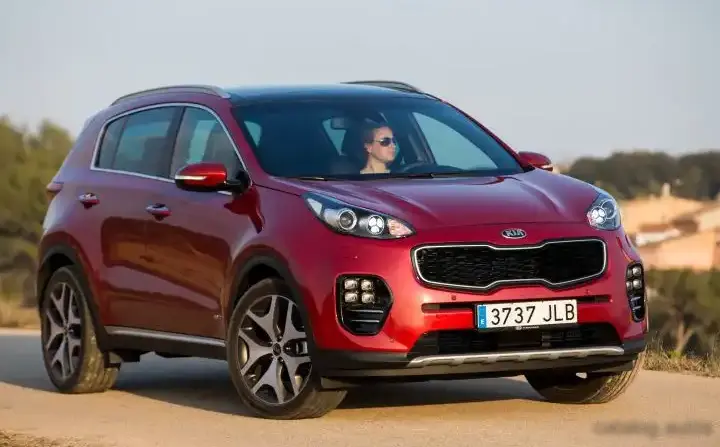
The Kia Sportage IV, produced from 2016 to 2018, represented a significant step forward for the South Korean automaker in the highly competitive compact SUV segment. The 2.4 GDI (Gasoline Direct Injection) Sportmatic variant, equipped with a 181 horsepower engine and a six-speed automatic transmission, was positioned as a mid-range offering, balancing performance with fuel efficiency and a comfortable driving experience. This model aimed to appeal to families and individuals seeking a practical and well-equipped SUV. It was a key component of Kia’s strategy to gain market share in North America and Europe, offering a compelling alternative to established rivals like the Honda CR-V and Toyota RAV4.
Technical Specifications
| Brand | Kia |
| Model | Sportage |
| Generation | Sportage IV |
| Type (Engine) | 2.4 GDI (181 Hp) Sportmatic |
| Start of production | 2016 |
| End of production | 2018 |
| Powertrain Architecture | Internal Combustion engine |
| Body type | SUV |
| Seats | 5 |
| Doors | 5 |
| Fuel consumption (urban) | 10.2-10.7 l/100 km (23.1 – 22 US mpg) |
| Fuel consumption (extra urban) | 7.8-8.1 l/100 km (30.2 – 29 US mpg) |
| Fuel consumption (combined) | 9-9.4 l/100 km (26.1 – 25 US mpg) |
| Fuel Type | Petrol (Gasoline) |
| Emission standard | Euro 6 |
| Weight-to-power ratio | 8.3 kg/Hp, 120.7 Hp/tonne |
| Weight-to-torque ratio | 6.3 kg/Nm, 158.1 Nm/tonne |
| Power | 181 Hp @ 6000 rpm |
| Power per litre | 76.7 Hp/l |
| Torque | 237 Nm @ 4000 rpm (174.8 lb.-ft. @ 4000 rpm) |
| Engine layout | Front, Transverse |
| Engine Model/Code | Theta II / G4KJ |
| Engine displacement | 2359 cm3 (143.96 cu. in.) |
| Number of cylinders | 4 |
| Engine configuration | Inline |
| Cylinder Bore | 88 mm (3.46 in.) |
| Piston Stroke | 97 mm (3.82 in.) |
| Compression ratio | 11.3:1 |
| Number of valves per cylinder | 4 |
| Fuel injection system | Direct injection |
| Engine aspiration | Naturally aspirated engine |
| Valvetrain | DOHC, CVVT |
| Engine oil capacity | 4.8 l (5.07 US qt | 4.22 UK qt) |
| Coolant | 7.1 l (7.5 US qt | 6.25 UK qt) |
| Kerb Weight | 1499-1631 kg (3304.73 – 3595.74 lbs.) |
| Trunk (boot) space – minimum | 491 l (17.34 cu. ft.) |
| Trunk (boot) space – maximum | 1492 l (52.69 cu. ft.) |
| Fuel tank capacity | 62 l (16.38 US gal | 13.64 UK gal) |
| Max. roof load | 100 kg (220.46 lbs.) |
| Permitted trailer load with brakes (12%) | 907 kg (1999.59 lbs.) |
| Permitted trailer load without brakes | 748 kg (1649.06 lbs.) |
| Length | 4480 mm (176.38 in.) |
| Width | 1855 mm (73.03 in.) |
| Height | 1645 mm (64.76 in.) |
| Wheelbase | 2670 mm (105.12 in.) |
| Front track | 1613 mm (63.5 in.) |
| Rear (Back) track | 1625 mm (63.98 in.) |
| Front overhang | 910 mm (35.83 in.) |
| Rear overhang | 900 mm (35.43 in.) |
| Ride height (ground clearance) | 163 mm (6.42 in.) |
| Minimum turning circle (turning diameter) | 10.6 m (34.78 ft.) |
| Approach angle | 16.7° |
| Departure angle | 23.9° |
| Ramp-over (brakeover) angle | 18.6° |
| Drivetrain Architecture | Front wheel drive |
| Number of gears and type of gearbox | 6 gears, automatic transmission Sportmatic |
| Front suspension | Independent, type McPherson with coil spring and anti-roll bar |
| Rear suspension | Independent multi-link spring suspension with stabilizer |
| Front brakes | Ventilated discs, 305 mm |
| Rear brakes | Disc, 302 mm |
| Assisting systems | ABS (Anti-lock braking system) |
| Steering type | Steering rack and pinion |
| Power steering | Electric Steering |
| Tires size | 225/60 R17; 225/55 R18 |
| Wheel rims size | 7J x 17; 7J x 18 |
Powertrain & Engine Architecture
The heart of the Sportage 2.4 GDI Sportmatic is the Theta II G4KJ engine, a 2.4-liter inline-four cylinder powerplant. This engine utilizes Gasoline Direct Injection (GDI) technology, where fuel is injected directly into the combustion chamber, improving efficiency and power output. The Theta II series was a significant upgrade over previous Kia engines, featuring a lightweight aluminum block and cylinder head, and Dual Continuously Variable Valve Timing (DOHC CVVT) for optimized valve control. This system adjusts the timing of both intake and exhaust valves based on engine speed and load, enhancing both performance and fuel economy. The engine produces 181 horsepower at 6000 rpm and 174.8 lb-ft of torque at 4000 rpm. Paired with this engine is a six-speed automatic transmission, marketed by Kia as “Sportmatic.” This transmission offers a degree of driver control, allowing for manual gear selection while still providing the convenience of an automatic.
Driving Characteristics
The 2.4 GDI Sportmatic offered a comfortable and predictable driving experience. While not particularly sporty, it provided adequate acceleration for everyday driving situations. The automatic transmission, while smooth, wasn’t known for its quick shifts. Compared to the available manual transmission or the more powerful turbocharged engines offered in other Sportage trims, this variant felt less engaging. The gear ratios were tuned for fuel efficiency rather than outright performance. The front-wheel-drive configuration contributed to decent fuel economy, but limited traction in adverse weather conditions. The Sportmatic function allowed drivers to hold gears for longer, useful for navigating hilly terrain or making passing maneuvers, but it didn’t transform the Sportage into a performance vehicle.
Equipment & Trim Levels
The 2.4 GDI Sportmatic trim typically included standard features such as air conditioning, power windows and locks, a touchscreen infotainment system with Bluetooth connectivity, and a rearview camera. Higher trim levels added features like leather upholstery, heated front seats, a panoramic sunroof, and advanced safety technologies like blind-spot monitoring and lane departure warning. Interior upholstery was typically cloth in the base 2.4 GDI Sportmatic, with optional upgrades to leather available. The dashboard layout was functional and user-friendly, with a focus on ease of use. Optional extras included a premium sound system, navigation system, and various accessory packages.
Chassis & Braking
The Sportage IV utilized a front-wheel-drive platform with independent suspension at all four corners. The front suspension employed a McPherson strut design with coil springs and an anti-roll bar, while the rear featured a multi-link setup, also with coil springs and a stabilizer bar. This suspension configuration provided a comfortable ride quality, absorbing bumps and imperfections in the road effectively. Braking duties were handled by ventilated discs at the front and solid discs at the rear. The inclusion of ABS (Anti-lock Braking System) was standard, enhancing safety during emergency braking situations. The steering system was a rack-and-pinion setup with electric power steering, providing light and responsive steering feel.
Market Reception & Comparison
The Kia Sportage IV 2.4 GDI Sportmatic received generally positive reviews from automotive critics. It was praised for its spacious interior, comfortable ride, and long warranty. However, some reviewers noted that the engine lacked the punch of its turbocharged competitors and that the automatic transmission could be slow to respond. Compared to the more powerful turbocharged engines available in the Sportage lineup, the 2.4 GDI offered better fuel economy but less exhilarating performance. The 1.6L diesel variants, popular in Europe, provided even better fuel efficiency but with a different driving character. The 2.4 GDI Sportmatic represented a sweet spot for buyers prioritizing comfort and practicality over outright performance.
Legacy
The Kia Sportage IV 2.4 GDI Sportmatic has proven to be a relatively reliable vehicle in the used car market. The Theta II engine, while not without its issues (some early versions experienced oil consumption problems), is generally considered durable when properly maintained. The six-speed automatic transmission is also known for its reliability. Today, these Sportages represent a good value for buyers seeking an affordable and well-equipped compact SUV. Regular maintenance, including oil changes and timing belt replacements (if applicable), is crucial for ensuring the long-term health of the powertrain. The Sportage IV helped solidify Kia’s reputation as a manufacturer of quality and reliable vehicles, paving the way for future success in the global automotive market.