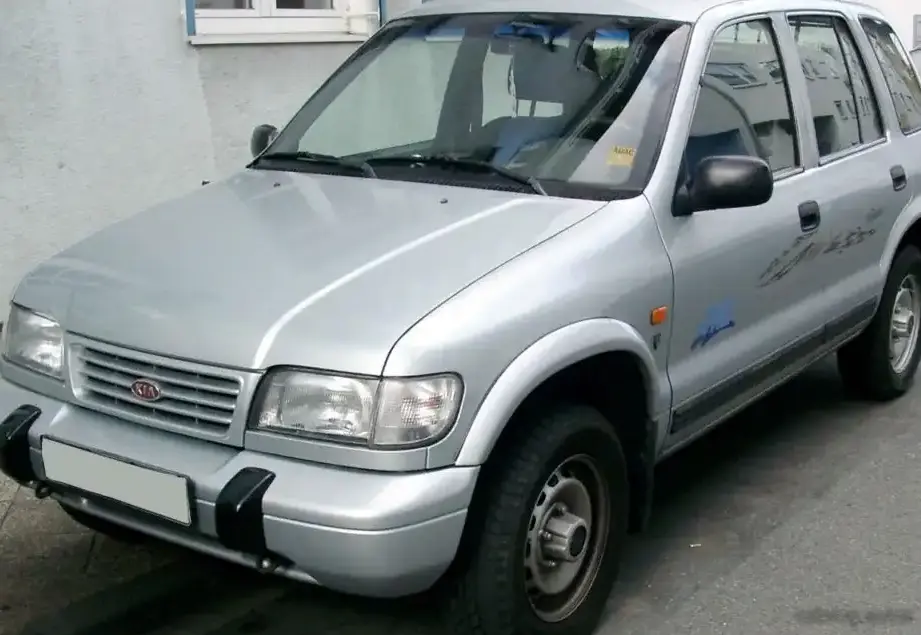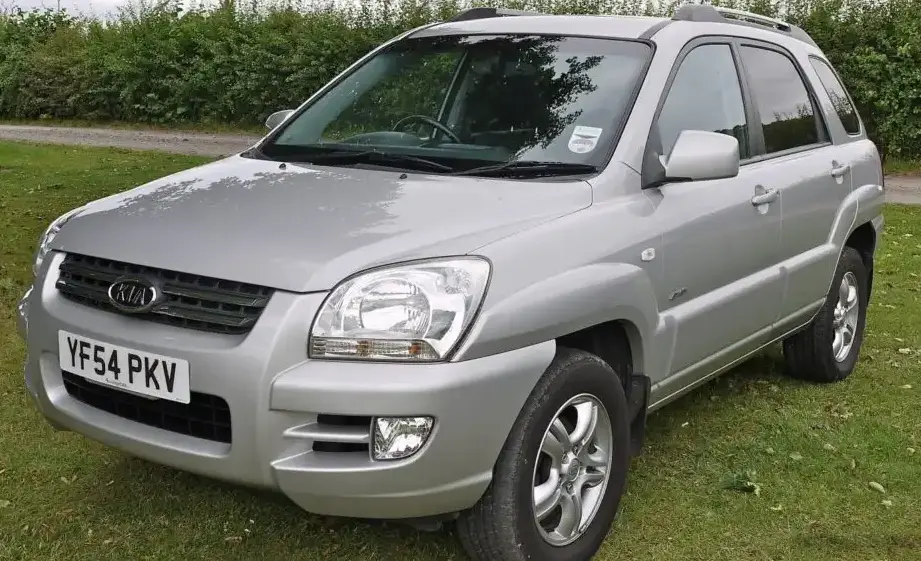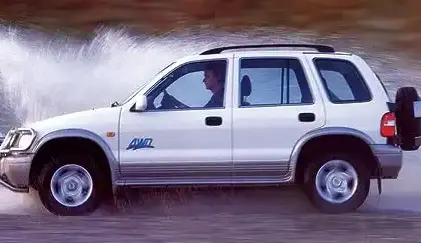
The Kia Sportage (K00) 2.0 i 16V, producing 128 horsepower, was a significant model for Kia, representing the brand’s entry into the increasingly popular compact SUV segment. Produced from 1994 through 2006, the K00 generation Sportage was Kia’s first dedicated SUV, and it played a crucial role in establishing the company as a more versatile automaker. This particular 2.0-liter, 16-valve engine paired with a five-speed manual transmission occupied a middle ground in the Sportage lineup, offering a balance between affordability, fuel economy, and capability. It was positioned as a practical choice for buyers seeking a capable all-wheel-drive vehicle without the expense of the larger engine options.
Technical Specifications
| Brand | Kia |
| Model | Sportage |
| Generation | Sportage (K00) |
| Type (Engine) | 2.0 i 16V (128 Hp) |
| Start of production | 1994 |
| End of production | 2006 |
| Powertrain Architecture | Internal Combustion engine |
| Body type | SUV |
| Seats | 5 |
| Doors | 5 |
| Fuel consumption (urban) | 13 l/100 km (18.1 US mpg, 21.7 UK mpg, 7.7 km/l) |
| Fuel consumption (extra urban) | 8.5 l/100 km (27.7 US mpg, 33.2 UK mpg, 11.8 km/l) |
| Fuel consumption (combined) | 11.9 l/100 km (19.8 US mpg, 23.7 UK mpg, 8.4 km/l) |
| Fuel Type | Petrol (Gasoline) |
| Acceleration 0 – 100 km/h | 14.7 sec |
| Acceleration 0 – 62 mph | 14.7 sec |
| Acceleration 0 – 60 mph | 14 sec |
| Maximum speed | 166 km/h (103.15 mph) |
| Weight-to-power ratio | 11.1 kg/Hp, 90.3 Hp/tonne |
| Weight-to-torque ratio | 8.1 kg/Nm, 123.4 Nm/tonne |
| Power | 128 Hp @ 5300 rpm |
| Power per litre | 64.1 Hp/l |
| Torque | 175 Nm @ 4700 rpm (129.07 lb.-ft. @ 4700 rpm) |
| Engine layout | Front, Longitudinal |
| Engine Model/Code | FE |
| Engine displacement | 1998 cm3 (121.93 cu. in.) |
| Number of cylinders | 4 |
| Engine configuration | Inline |
| Cylinder Bore | 86 mm (3.39 in.) |
| Piston Stroke | 86 mm (3.39 in.) |
| Compression ratio | 9.2:1 |
| Number of valves per cylinder | 4 |
| Fuel injection system | Multi-port manifold injection |
| Engine aspiration | Naturally aspirated engine |
| Engine oil capacity | 4.3 l (4.54 US qt | 3.78 UK qt) |
| Coolant | 7.5 l (7.93 US qt | 6.6 UK qt) |
| Kerb Weight | 1418 kg (3126.15 lbs.) |
| Max. weight | 1928 kg (4250.51 lbs.) |
| Max load | 510 kg (1124.36 lbs.) |
| Trunk (boot) space – minimum | 347 l (12.25 cu. ft.) |
| Trunk (boot) space – maximum | 640 l (22.6 cu. ft.) |
| Fuel tank capacity | 60 l (15.85 US gal | 13.2 UK gal) |
| Length | 4245 mm (167.13 in.) |
| Width | 1730 mm (68.11 in.) |
| Height | 1650 mm (64.96 in.) |
| Wheelbase | 2650 mm (104.33 in.) |
| Front track | 1440 mm (56.69 in.) |
| Rear (Back) track | 1440 mm (56.69 in.) |
| Drive wheel | All wheel drive (4×4) |
| Number of gears and type of gearbox | 5 gears, manual transmission |
| Front suspension | Double wishbone |
| Rear suspension | Spring Strut |
| Front brakes | Ventilated discs |
| Rear brakes | Drum |
| Assisting systems | ABS (Anti-lock braking system) |
| Steering type | Steering rack and pinion |
| Power steering | Hydraulic Steering |
| Tires size | 205/70 R15 S |
Powertrain & Engine Architecture
The heart of this Sportage variant is the Kia FE engine, a 2.0-liter inline-four cylinder gasoline engine. This engine, designated as the FE series, was a mainstay in several Kia and Hyundai models during the 1990s and early 2000s. It features a single overhead camshaft (SOHC) design with four valves per cylinder, contributing to its 16-valve configuration. Fuel delivery is managed by a multi-point fuel injection system, providing a balance between efficiency and performance. The engine’s 9.2:1 compression ratio was typical for the era, prioritizing reliability and compatibility with available fuel grades. The five-speed manual transmission was a common pairing, offering drivers a degree of control over the engine’s power band. While not a particularly sophisticated powertrain by modern standards, the FE engine was known for its durability and relatively straightforward maintenance.
Driving Characteristics
The 128 hp 2.0-liter engine in the Sportage K00 delivered adequate, but not exhilarating, performance. Acceleration from 0 to 60 mph took around 14 seconds, making it a leisurely performer compared to more powerful SUVs. The five-speed manual transmission allowed drivers to keep the engine in its optimal power range, but the relatively low horsepower and torque figures meant that overtaking maneuvers required careful planning. Compared to the available V6 engine options, this 2.0-liter version prioritized fuel economy and affordability. The all-wheel-drive system provided enhanced traction in slippery conditions, making it a capable vehicle for light off-road use and inclement weather. The gear ratios were tuned for everyday driving, emphasizing usability over outright speed.
Equipment & Trim Levels
The 2.0 i 16V Sportage typically came with a fairly basic level of equipment, reflecting its position as a more affordable trim. Standard features generally included power steering, air conditioning, and a basic audio system. Interior upholstery was typically cloth, and the dashboard featured a functional, if somewhat spartan, design. Optional extras could include power windows and locks, alloy wheels, and an upgraded audio system. The trim level often dictated the availability of these features, with higher trims offering more comfort and convenience options.
Chassis & Braking
The Sportage K00 utilized a body-on-frame construction, a common practice for SUVs of that era. The front suspension employed a double wishbone setup, providing a reasonable level of ride comfort and handling. The rear suspension utilized a spring strut design. Braking duties were handled by ventilated discs at the front and drum brakes at the rear. The inclusion of ABS (Anti-lock Braking System) was a notable safety feature for the time. The chassis was designed to handle the demands of both on-road and light off-road driving, offering a balance between comfort and capability.
Market Reception & Comparison
The Kia Sportage K00 2.0 i 16V was generally well-received as a practical and affordable SUV. Critics praised its all-wheel-drive capability and relatively low price point. However, the engine’s performance was often cited as a weakness, particularly when compared to competitors with more powerful engines. Fuel economy was considered average for the class. Compared to other trims in the Sportage lineup, the 2.0-liter version offered a more economical option for buyers who didn’t require the extra power of the V6 engines. Its reliability was generally good, making it a popular choice in the used car market.
Legacy
The Kia Sportage K00 2.0 i 16V powertrain has proven to be reasonably durable over the long term. While not without its age-related issues, the FE engine is generally considered reliable if properly maintained. Parts availability is still relatively good, making it a viable option for enthusiasts and budget-conscious buyers. In the used car market today, these Sportages are often sought after for their affordability and all-wheel-drive capability. They represent a significant milestone in Kia’s history, marking the brand’s successful entry into the competitive SUV segment.