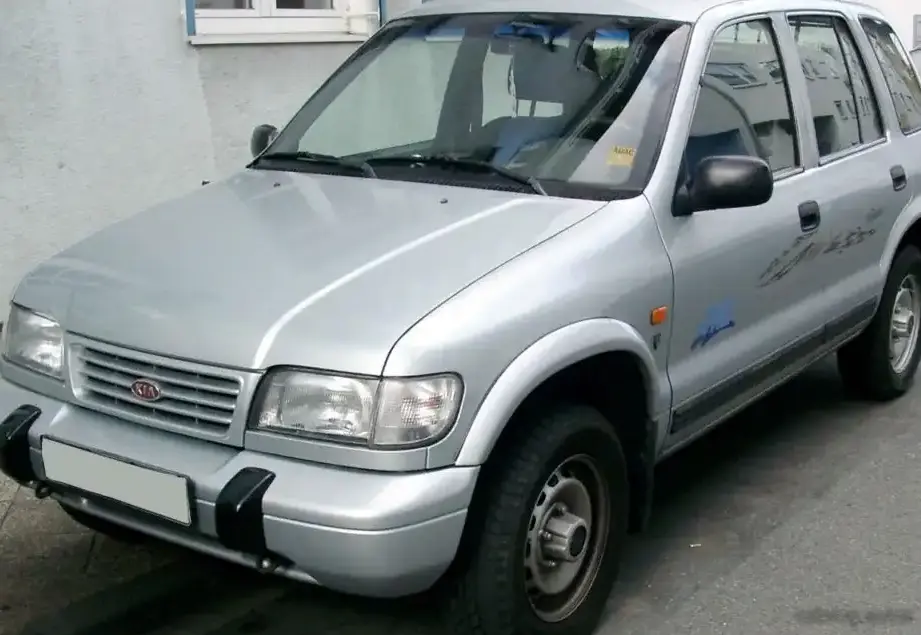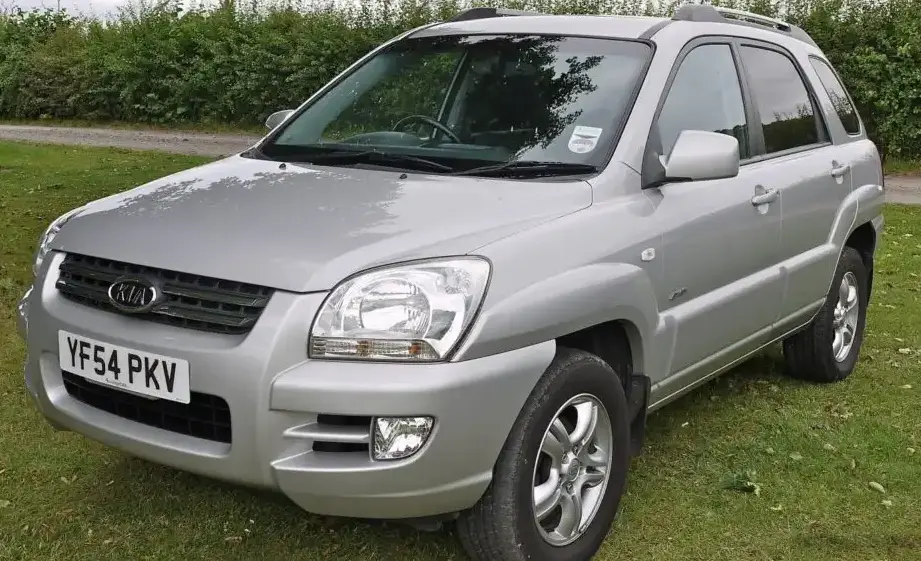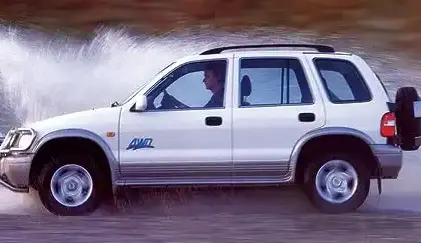
The Kia Sportage (K00) 2.0i, producing 95 horsepower, was a significant model for Kia, representing their entry into the increasingly popular compact SUV segment. Produced from 1994 through 2006, the K00 generation Sportage was a crucial vehicle for establishing the brand’s presence in global markets, particularly in Europe and, to a lesser extent, North America. This specific 2.0-liter variant occupied the entry-level position in the Sportage lineup, offering a more affordable option compared to later, more powerful engines introduced during the model’s lifespan. It was based on the Mazda Bongo platform, a result of Kia’s partnership with Mazda at the time.
Technical Specifications
| Brand | Kia |
| Model | Sportage |
| Generation | Sportage (K00) |
| Type (Engine) | 2.0 i (95 Hp) |
| Start of production | 1994 |
| End of production | 2006 |
| Powertrain Architecture | Internal Combustion engine |
| Body type | SUV |
| Seats | 5 |
| Doors | 5 |
| Fuel consumption (urban) | 13.5 l/100 km (17.4 US mpg, 20.9 UK mpg, 7.4 km/l) |
| Fuel consumption (extra urban) | 9.3 l/100 km (25.3 US mpg, 30.4 UK mpg, 10.8 km/l) |
| Fuel consumption (combined) | 12.5 l/100 km (18.8 US mpg, 22.6 UK mpg, 8 km/l) |
| Fuel Type | Petrol (Gasoline) |
| Acceleration 0 – 100 km/h | 18.4 sec |
| Acceleration 0 – 62 mph | 18.4 sec |
| Acceleration 0 – 60 mph | 17.5 sec |
| Maximum speed | 155 km/h (96.31 mph) |
| Weight-to-power ratio | 14.9 kg/Hp (67 Hp/tonne) |
| Weight-to-torque ratio | 9 kg/Nm (110.7 Nm/tonne) |
| Power | 95 Hp @ 5000 rpm |
| Power per litre | 47.5 Hp/l |
| Torque | 157 Nm @ 2500 rpm (115.8 lb.-ft. @ 2500 rpm) |
| Engine layout | Front, Longitudinal |
| Engine Model/Code | FE |
| Engine displacement | 1998 cm3 (121.93 cu. in.) |
| Number of cylinders | 4 |
| Engine configuration | Inline |
| Cylinder Bore | 86 mm (3.39 in.) |
| Piston Stroke | 86 mm (3.39 in.) |
| Compression ratio | 8.6:1 |
| Number of valves per cylinder | 2 |
| Fuel injection system | Multi-port manifold injection |
| Engine aspiration | Naturally aspirated |
| Engine oil capacity | 4.3 l (4.54 US qt | 3.78 UK qt) |
| Coolant capacity | 7.5 l (7.93 US qt | 6.6 UK qt) |
| Kerb Weight | 1418 kg (3126.15 lbs.) |
| Max. weight | 1928 kg (4250.51 lbs.) |
| Max load | 510 kg (1124.36 lbs.) |
| Trunk (boot) space – minimum | 347 l (12.25 cu. ft.) |
| Trunk (boot) space – maximum | 640 l (22.6 cu. ft.) |
| Fuel tank capacity | 60 l (15.85 US gal | 13.2 UK gal) |
| Length | 4245 mm (167.13 in.) |
| Width | 1730 mm (68.11 in.) |
| Height | 1650 mm (64.96 in.) |
| Wheelbase | 2650 mm (104.33 in.) |
| Front track | 1440 mm (56.69 in.) |
| Rear track | 1440 mm (56.69 in.) |
| Drive wheel | All wheel drive (4×4) |
| Number of gears | 5 |
| Gearbox type | Manual transmission |
| Front suspension | Double wishbone |
| Rear suspension | Spring Strut |
| Front brakes | Ventilated discs |
| Rear brakes | Drum |
| Steering type | Steering rack and pinion |
| Power steering | Hydraulic |
| Tires size | 205/70 R15 S |
Powertrain & Engine Architecture
The heart of the K00 Sportage 2.0i is the Kia FE engine, a 1.998-liter inline-four cylinder gasoline engine. This engine, part of Kia’s FE series, utilized a cast iron block and an aluminum cylinder head. It featured a single overhead camshaft (SOHC) design with two valves per cylinder. Fuel delivery was managed by a multi-point fuel injection system, providing adequate, though not exceptional, fuel atomization for the time. The FE engine was known for its relative simplicity and durability, characteristics that contributed to the Sportage’s reputation for reliability. The 95 horsepower output was achieved at 5000 rpm, while peak torque of 157 Nm (115.8 lb-ft) arrived at 2500 rpm. The engine was mounted longitudinally in the chassis. The standard transmission for this variant was a five-speed manual gearbox, designed to maximize fuel efficiency and provide reasonable acceleration.
Driving Characteristics
The 2.0i Sportage with a manual transmission offered a driving experience best described as adequate. Acceleration was leisurely, taking approximately 18.4 seconds to reach 62 mph (100 km/h). The engine lacked the punch of the later 2.4-liter or V6 options, making overtaking maneuvers require careful planning. The five-speed manual transmission was well-matched to the engine’s characteristics, offering a reasonable spread of gears. However, the relatively long gearing emphasized fuel economy over outright performance. The all-wheel-drive system provided enhanced traction in slippery conditions, making it a capable vehicle for inclement weather or light off-road use. Compared to the later automatic transmission options, the manual version felt more responsive and engaging to drive.
Equipment & Trim Levels
The 2.0i Sportage typically came with a fairly basic level of equipment, reflecting its position as the entry-level model. Standard features generally included power steering, central locking, and basic instrumentation. Interior upholstery was typically cloth, and the dashboard featured a functional, if somewhat utilitarian, design. Air conditioning was often an optional extra, as were power windows and upgraded audio systems. Higher trim levels, available with the more powerful engines, offered features like leather upholstery, alloy wheels, and more sophisticated audio systems. The 2.0i model was often chosen by buyers prioritizing affordability and practicality over luxury features.
Chassis & Braking
The K00 Sportage utilized a body-on-frame construction, a common practice for SUVs of that era. The front suspension consisted of a double wishbone setup, providing a reasonable level of ride comfort and handling. The rear suspension employed a spring strut design. Braking duties were handled by ventilated discs at the front and drum brakes at the rear. While adequate for everyday driving, the braking system lacked the stopping power of more modern vehicles. The all-wheel-drive system was typically a part-time system, allowing the driver to select between two-wheel drive and four-wheel drive depending on road conditions.
Market Reception & Comparison
The Kia Sportage 2.0i was generally well-received as an affordable and practical SUV. Critics noted its spacious interior and capable all-wheel-drive system. However, the engine’s lack of power was a common criticism. Compared to competitors like the Suzuki Vitara or Honda CR-V, the Sportage offered a more rugged appearance and a lower price point. Fuel economy was average for the class, with combined consumption around 12.5 l/100 km (18.8 US mpg). Reliability was generally good, although maintenance costs could be higher compared to some Japanese competitors.
Legacy
The Kia Sportage K00 2.0i remains a relatively common sight on used car markets today. The FE engine is known for its durability, and with proper maintenance, it can provide many years of reliable service. However, potential buyers should be aware of the engine’s limited power output and the potential for rust, particularly in regions with harsh winters. The K00 generation Sportage played a vital role in establishing Kia as a credible player in the global automotive market, paving the way for the brand’s subsequent success. While not a performance icon, the 2.0i variant represents a practical and affordable entry point into the world of compact SUVs.