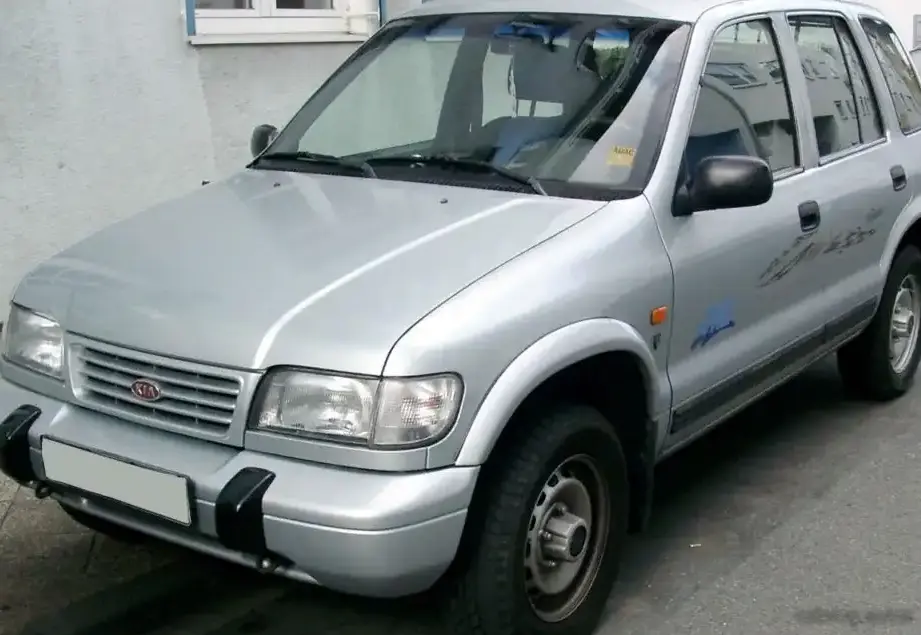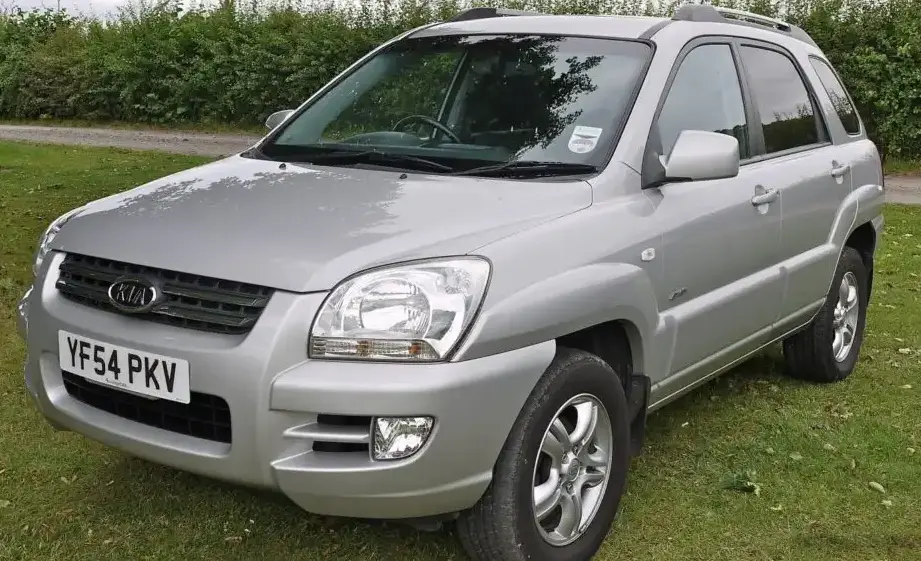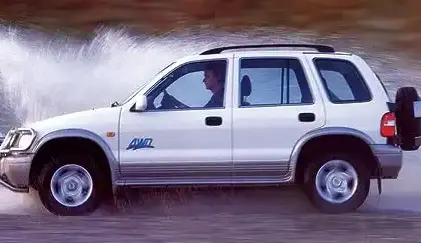
The Kia Sportage (K00) 2.0 TD with an automatic transmission, produced between 1997 and 2006, represented Kia’s entry into the increasingly popular compact SUV segment. This variant, powered by a 2.0-liter turbocharged diesel engine producing 83 horsepower, was primarily aimed at the European market where fuel efficiency and all-wheel drive capability were highly valued. It served as a more affordable and accessible option within the Sportage lineup, positioned below the more powerful gasoline engine choices. The K00 generation Sportage was a significant step for Kia, showcasing a more modern design and improved build quality compared to their earlier offerings.
Technical Specifications
| Brand | Kia |
| Model | Sportage |
| Generation | Sportage (K00) |
| Type (Engine) | 2.0 TD (83 Hp) Automatic |
| Start of production | 1997 |
| End of production | 2006 |
| Powertrain Architecture | Internal Combustion engine |
| Body type | SUV |
| Seats | 5 |
| Doors | 5 |
| Fuel consumption (urban) | 11.5 l/100 km (20.5 US mpg) |
| Fuel consumption (extra urban) | 7.7 l/100 km (30.5 US mpg) |
| Fuel consumption (combined) | 9.1 l/100 km (25.8 US mpg) |
| Fuel Type | Diesel |
| Acceleration 0 – 100 km/h | 21.7 sec |
| Acceleration 0 – 62 mph | 21.7 sec |
| Acceleration 0 – 60 mph | 20.6 sec |
| Maximum speed | 140 km/h (86.99 mph) |
| Weight-to-power ratio | 17.7 kg/Hp |
| Weight-to-torque ratio | 7.5 kg/Nm |
| Power | 83 Hp @ 4000 rpm |
| Torque | 195 Nm @ 2000 rpm (143.82 lb.-ft. @ 2000 rpm) |
| Engine layout | Front, Longitudinal |
| Engine Model/Code | RF |
| Engine displacement | 1998 cm3 (121.93 cu. in.) |
| Number of cylinders | 4 |
| Engine configuration | Inline |
| Cylinder Bore | 86 mm (3.39 in.) |
| Piston Stroke | 86 mm (3.39 in.) |
| Compression ratio | 21:1 |
| Number of valves per cylinder | 2 |
| Fuel injection system | Precombustion chamber injection |
| Engine aspiration | Turbocharger |
| Engine oil capacity | 6.4 l (6.76 US qt | 5.63 UK qt) |
| Kerb Weight | 1465 kg (3229.77 lbs.) |
| Max. weight | 1930 kg (4254.92 lbs.) |
| Max load | 465 kg (1025.15 lbs.) |
| Trunk (boot) space – minimum | 347 l (12.25 cu. ft.) |
| Trunk (boot) space – maximum | 640 l (22.6 cu. ft.) |
| Fuel tank capacity | 60 l (15.85 US gal | 13.2 UK gal) |
| Length | 4245 mm (167.13 in.) |
| Width | 1730 mm (68.11 in.) |
| Height | 1650 mm (64.96 in.) |
| Wheelbase | 2650 mm (104.33 in.) |
| Front track | 1440 mm (56.69 in.) |
| Rear (Back) track | 1440 mm (56.69 in.) |
| Drive wheel | All wheel drive (4×4) |
| Number of gears | 4 |
| Gearbox type | Automatic transmission |
| Front suspension | Double wishbone |
| Rear suspension | Spring Strut |
| Front brakes | Ventilated discs |
| Rear brakes | Drum |
| Assisting systems | ABS (Anti-lock braking system) |
| Power steering | Hydraulic Steering |
| Tires size | 205/75 R15 |
| Wheel rims size | 15 |
Powertrain & Engine Architecture
The heart of this Sportage variant is the RF engine, a 2.0-liter inline-four cylinder diesel. This engine utilized a precombustion chamber injection system, a common technology for diesel engines of the era, designed to improve combustion efficiency and reduce noise. The addition of a turbocharger boosted power output to 83 horsepower, a modest figure by modern standards, but adequate for the vehicle’s intended purpose. The engine’s longitudinal mounting allowed for a front-engine, all-wheel-drive configuration. The four-speed automatic transmission, while providing convenience, was a relatively simple unit, prioritizing durability over outright performance. It featured standard torque converter technology and lacked the advanced electronic controls found in later automatic transmissions.
Driving Characteristics
The 2.0 TD automatic Sportage offered a comfortable, if not particularly exciting, driving experience. Acceleration was slow, with a 0-60 mph time of around 20.6 seconds. The automatic transmission’s gear ratios were geared towards fuel economy and relaxed cruising rather than spirited driving. The turbocharger did provide a noticeable boost in power at lower RPMs, helping with everyday driving situations like merging onto highways. However, overtaking maneuvers required careful planning. The all-wheel-drive system provided enhanced traction in slippery conditions, making it a capable vehicle for inclement weather or light off-road use. Compared to the gasoline engine options, the diesel offered significantly better fuel economy, but at the expense of performance.
Equipment & Trim Levels
The 2.0 TD automatic Sportage typically came with a fairly basic level of equipment. Standard features generally included power steering, air conditioning, and an AM/FM radio. Interior upholstery was typically cloth, and the dashboard featured a functional, if somewhat utilitarian, design. Optional extras could include power windows, central locking, and alloy wheels. The trim level was generally considered entry-level to mid-range within the Sportage lineup, appealing to buyers who prioritized practicality and affordability over luxury features.
Chassis & Braking
The Sportage K00 utilized a body-on-frame construction, a common design for SUVs of that era, providing robustness and off-road capability. The front suspension featured a double wishbone setup, while the rear employed a simpler spring strut arrangement. Braking duties were handled by ventilated discs at the front and drum brakes at the rear. Anti-lock braking system (ABS) was included as a standard safety feature. The suspension was tuned for comfort, providing a relatively smooth ride on paved roads, although it could feel somewhat bouncy when fully loaded or driving on rough terrain.
Market Reception & Comparison
The Kia Sportage 2.0 TD automatic was generally well-received in the European market as a practical and affordable SUV. Critics praised its fuel efficiency and all-wheel-drive capability, but noted its lack of outright performance. Compared to other trims in the Sportage lineup, the 2.0 TD automatic offered the best fuel economy but the slowest acceleration. It was often compared to competitors like the Suzuki Vitara and the Hyundai Santa Fe, offering a similar blend of practicality and affordability. Reliability was generally considered good, although maintenance costs for the diesel engine and turbocharger could be higher than for gasoline counterparts.
Legacy
The Kia Sportage K00 2.0 TD automatic, while not a performance icon, holds a significant place in Kia’s history as one of the first models to establish the brand as a credible competitor in the European SUV market. The RF diesel engine, while relatively simple by modern standards, proved to be durable and reliable when properly maintained. Today, these vehicles are relatively rare and are often sought after by enthusiasts looking for a classic, affordable, and capable SUV. The 4-speed automatic transmission, while not known for its sophistication, is generally considered robust and long-lasting. Finding well-maintained examples can be challenging, but they offer a unique glimpse into the early days of Kia’s global expansion.