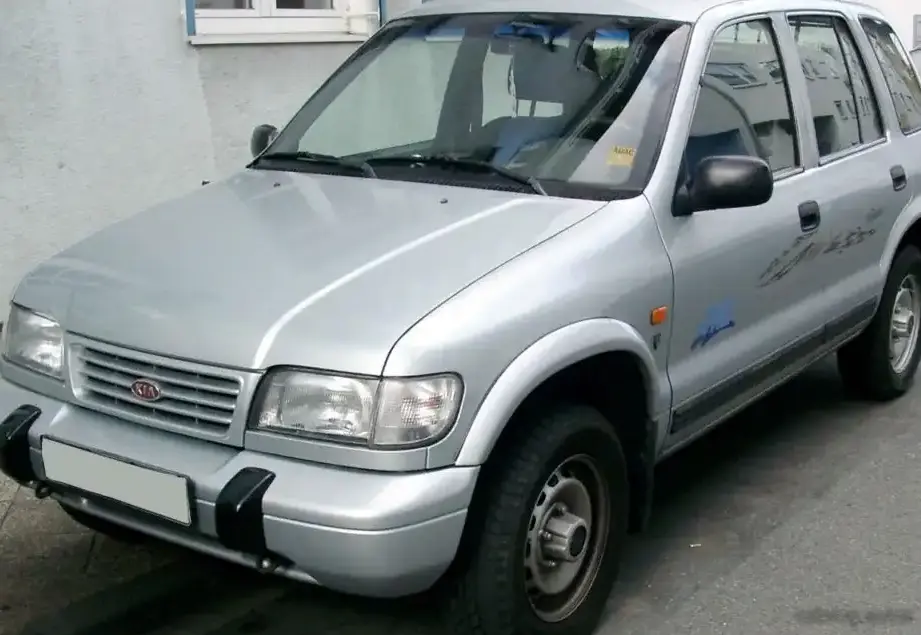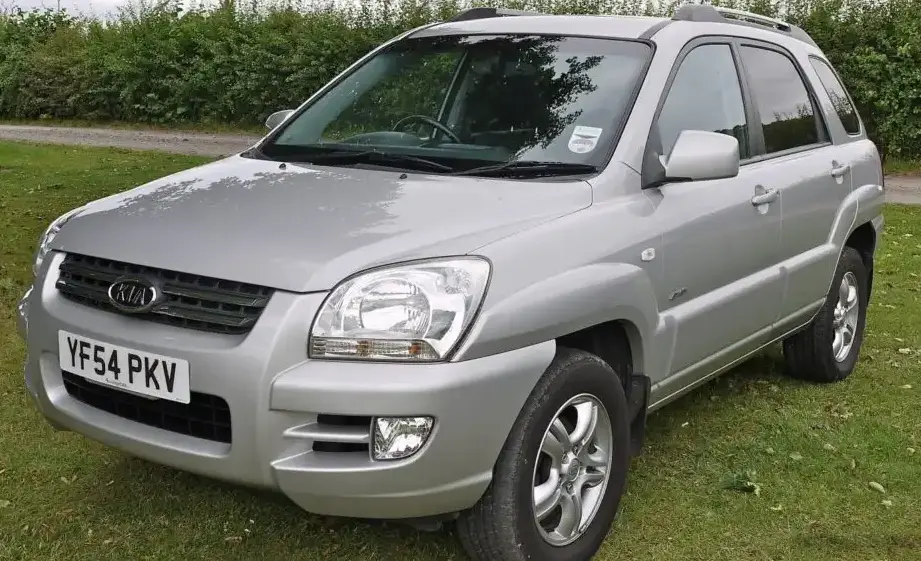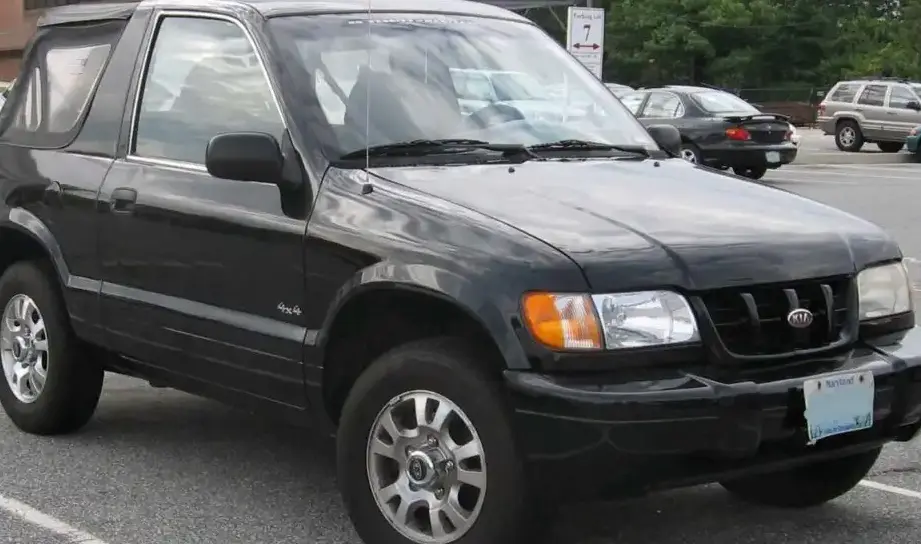
The Kia Sportage Soft Top I, specifically the 2.0i 16V variant with an automatic transmission, represents a unique offering from Kia during its initial foray into the compact SUV market. Produced from 1997 to 2006, this model distinguished itself with its available convertible soft-top configuration, a feature rarely seen in the SUV segment. Positioned as a mid-range option within the first-generation Sportage lineup (codenamed K01), it aimed to provide a blend of affordability, practicality, and open-air driving enjoyment. The Sportage, in general, was Kia’s first dedicated SUV, designed to broaden the brand’s appeal beyond its established sedan offerings and compete with vehicles like the Suzuki Vitara and Honda CR-V, though with a more rugged aesthetic.
Technical Specifications
| Brand | Kia |
| Model | Sportage |
| Generation | Sportage Soft Top I |
| Type (Engine) | 2.0i 16V (128 Hp) Automatic |
| Start of production | 1997 |
| End of production | 2006 |
| Powertrain Architecture | Internal Combustion engine |
| Body type | SUV |
| Seats | 4 |
| Doors | 3 |
| Fuel consumption (urban) | 15.4 l/100 km (15.3 US mpg, 18.3 UK mpg, 6.5 km/l) |
| Fuel consumption (extra urban) | 9.4 l/100 km (25 US mpg, 30.1 UK mpg, 10.6 km/l) |
| Fuel consumption (combined) | 11.1 l/100 km (21.2 US mpg, 25.4 UK mpg, 9 km/l) |
| Fuel Type | Petrol (Gasoline) |
| Acceleration 0 – 100 km/h | 14.7 sec |
| Acceleration 0 – 62 mph | 14.7 sec |
| Acceleration 0 – 60 mph | 14 sec |
| Maximum speed | 172 km/h (106.88 mph) |
| Weight-to-power ratio | 11.4 kg/Hp, 88.1 Hp/tonne |
| Weight-to-torque ratio | 8.3 kg/Nm, 120.4 Nm/tonne |
| Power | 128 Hp @ 5300 rpm |
| Power per litre | 64.1 Hp/l |
| Torque | 175 Nm @ 4700 rpm (129.07 lb.-ft. @ 4700 rpm) |
| Engine layout | Front, Longitudinal |
| Engine Model/Code | FE |
| Engine displacement | 1998 cm3 (121.93 cu. in.) |
| Number of cylinders | 4 |
| Engine configuration | Inline |
| Cylinder Bore | 86 mm (3.39 in.) |
| Piston Stroke | 86 mm (3.39 in.) |
| Compression ratio | 9.2:1 |
| Number of valves per cylinder | 4 |
| Fuel injection system | Multi-port manifold injection |
| Engine aspiration | Naturally aspirated engine |
| Engine oil capacity | 4.3 l (4.54 US qt | 3.78 UK qt) |
| Coolant capacity | 7.5 l (7.93 US qt | 6.6 UK qt) |
| Kerb Weight | 1453 kg (3203.32 lbs.) |
| Max. weight | 1850 kg (4078.55 lbs.) |
| Max load | 397 kg (875.24 lbs.) |
| Trunk (boot) space – minimum | 247 l (8.72 cu. ft.) |
| Trunk (boot) space – maximum | 1032 l (36.44 cu. ft.) |
| Fuel tank capacity | 60 l (15.85 US gal | 13.2 UK gal) |
| Length | 4025 mm (158.46 in.) |
| Width | 1764 mm (69.45 in.) |
| Height | 1650 mm (64.96 in.) |
| Wheelbase | 2360 mm (92.91 in.) |
| Front track | 1440 mm (56.69 in.) |
| Rear (Back) track | 1440 mm (56.69 in.) |
| Drive wheel | All wheel drive (4×4) |
| Number of gears | 4 |
| Gearbox type | Automatic transmission |
| Front suspension | Double wishbone |
| Rear suspension | Spring Strut |
| Front brakes | Ventilated discs |
| Rear brakes | Drum |
| Assisting systems | ABS (Anti-lock braking system) |
| Steering type | Steering rack and pinion |
| Power steering | Hydraulic Steering |
| Tires size | 205/70 R15 |
| Wheel rims size | 7J x 15 |
Powertrain & Engine Architecture
The 2.0i 16V engine, designated the FE series by Kia, is a naturally aspirated, inline-four cylinder gasoline engine. It features a single overhead camshaft (SOHC) design with four valves per cylinder, contributing to its 128 horsepower output at 5300 rpm and 175 Nm (129 lb-ft) of torque at 4700 rpm. The engine utilizes a multi-point fuel injection system, which, while common for the era, provided a balance between fuel efficiency and performance. The FE engine was known for its relative simplicity and durability, though it wasn’t a particularly high-tech design. Paired with this engine was a four-speed automatic transmission. This transmission, while providing convenience, was not known for its responsiveness or fuel efficiency compared to the available five-speed manual. The automatic transmission was geared towards comfortable cruising rather than spirited driving.
Driving Characteristics
The 2.0i automatic Sportage offered a comfortable, if not particularly exciting, driving experience. Acceleration from 0-60 mph took around 14 seconds, making it noticeably slower than the manual transmission or higher-powered versions. The automatic transmission’s gear ratios were optimized for fuel economy and smooth operation, resulting in a somewhat lethargic response to throttle inputs. The all-wheel-drive system provided enhanced traction in slippery conditions, making it suitable for light off-road use, but it wasn’t designed for serious trail work. The soft top, while adding a unique element, did introduce some body flex compared to the hardtop models.
Equipment & Trim Levels
The 2.0i automatic Sportage typically came equipped with features such as air conditioning, power steering, and an AM/FM radio. Higher trim levels added options like alloy wheels, a sunroof (in addition to the soft top), and upgraded interior upholstery. The interior generally featured durable, though basic, plastics and cloth seats. The soft top itself was manually operated, requiring physical effort to raise and lower. Safety features were relatively basic for the time, typically including only ABS brakes as a standard offering.
Chassis & Braking
The Sportage Soft Top I utilized a body-on-frame construction, contributing to its ruggedness. The front suspension employed a double wishbone setup, while the rear featured a simpler spring strut arrangement. Braking duties were handled by ventilated discs at the front and drum brakes at the rear. The braking system, while adequate for everyday use, lacked the stopping power of more modern vehicles. The all-wheel-drive system was typically a part-time system, allowing the driver to switch between two-wheel drive and four-wheel drive as needed.
Market Reception & Comparison
The 2.0i automatic Sportage was generally well-received as an affordable and practical SUV, particularly for those seeking a unique open-air experience. However, critics often noted its relatively slow acceleration and the somewhat dated feel of the automatic transmission. Compared to the manual transmission version, the automatic offered less engaging driving dynamics and slightly worse fuel economy. The higher-powered engines available in other Sportage trims provided a more spirited driving experience, but at a higher price point. The soft top version, while appealing to some, was less popular than the hardtop models due to concerns about security and weather protection.
Legacy
The Kia Sportage Soft Top I, particularly the 2.0i automatic variant, has become a relatively sought-after vehicle among enthusiasts and collectors. The FE engine is known for its reliability, though regular maintenance is crucial to prevent issues. The automatic transmission, while not the most refined, is generally durable if properly serviced. Finding well-maintained examples can be challenging, as many have suffered from neglect or have been modified. Today, these Sportages represent a unique chapter in Kia’s history and offer a nostalgic glimpse into the early days of the compact SUV market. Parts availability can be limited, but many components are still obtainable through aftermarket suppliers or salvaged vehicles.