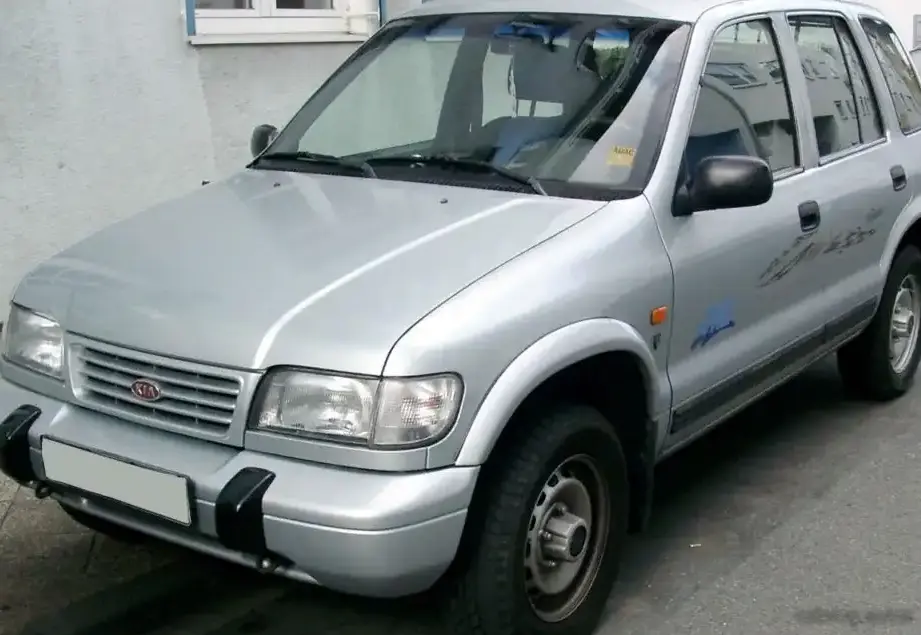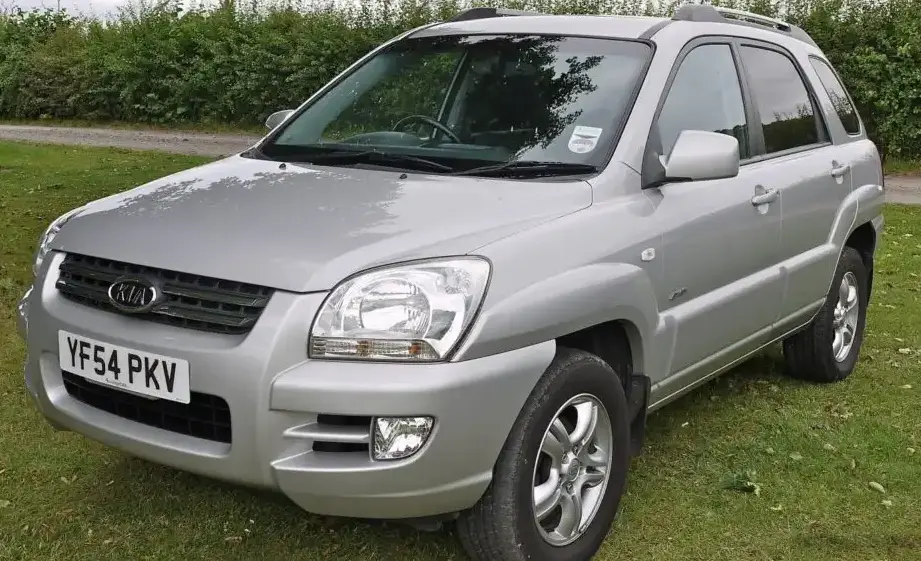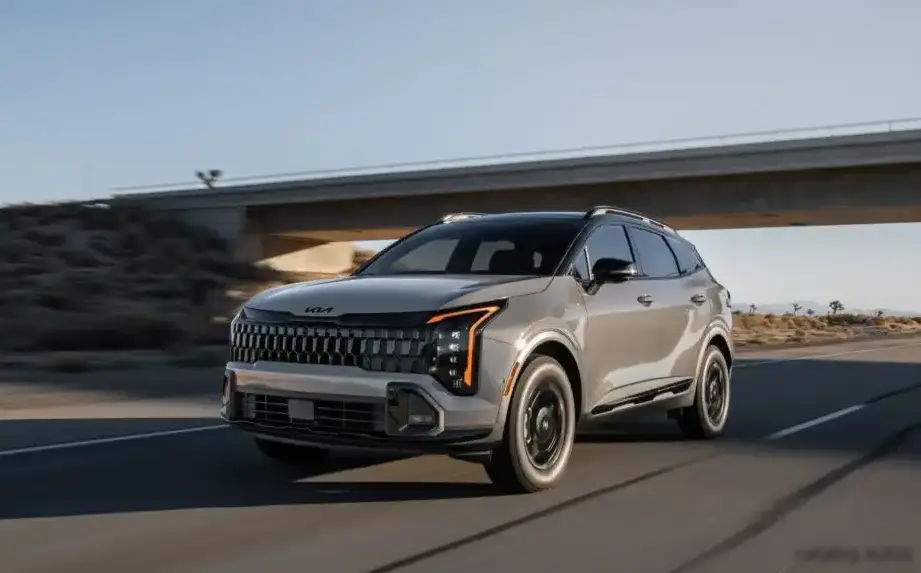
The Kia Sportage V (facelift, introduced in 2024) 1.6 T-GDI, producing 150 horsepower, represents a key offering within the fifth-generation Sportage lineup. Production began in July 2025. This variant is positioned as a mainstream choice, balancing fuel efficiency with adequate performance for everyday driving. It caters to buyers seeking a practical and well-equipped compact SUV without the higher price tag of more powerful or technologically advanced trims. The Sportage V facelift builds upon the success of the previous generation, offering updated styling, enhanced technology, and refined driving dynamics. This particular engine and transmission combination is primarily aimed at the European and Asian markets, where fuel economy and affordability are significant purchasing factors.
Technical Specifications
| Brand | Kia |
| Model | Sportage |
| Generation | Sportage V (facelift 2024) |
| Type (Engine) | 1.6 T-GDI (150 Hp) |
| Start of production | July, 2025 |
| Powertrain Architecture | Internal Combustion engine |
| Body type | SUV |
| Seats | 5 |
| Doors | 5 |
| Fuel consumption at Low speed (WLTP) | 9.4 l/100 km (25 US mpg, 30.1 UK mpg, 10.6 km/l) |
| Fuel consumption at Medium speed (WLTP) | 7.2 l/100 km (32.7 US mpg, 39.2 UK mpg, 13.9 km/l) |
| Fuel consumption at high speed (WLTP) | 6.5 l/100 km (36.2 US mpg, 43.5 UK mpg, 15.4 km/l) |
| Fuel consumption at very high speed (WLTP) | 7.7 l/100 km (30.5 US mpg, 36.7 UK mpg, 13 km/l) |
| Combined fuel consumption (WLTP) | 7.5 l/100 km (31.4 US mpg, 37.7 UK mpg, 13.3 km/l) |
| CO2 emissions (WLTP) | 169 g/km |
| Fuel Type | Petrol (Gasoline) |
| Acceleration 0 – 100 km/h | 9.7 sec |
| Acceleration 0 – 62 mph | 9.7 sec |
| Acceleration 0 – 60 mph | 9.2 sec |
| Maximum speed | 193 km/h (119.92 mph) |
| Emission standard | Euro 6e bis |
| Weight-to-power ratio | 9.8 kg/Hp, 101.6 Hp/tonne |
| Weight-to-torque ratio | 5.9 kg/Nm, 169.3 Nm/tonne |
| Power | 150 Hp @ 4500-6000 rpm |
| Power per litre | 93.9 Hp/l |
| Torque | 250 Nm @ 1500-4000 rpm (184.39 lb.-ft. @ 1500-4000 rpm) |
| Engine layout | Front, Transverse |
| Engine Model/Code | G4FP |
| Engine displacement | 1598 cm3 (97.52 cu. in.) |
| Number of cylinders | 4 |
| Engine configuration | Inline |
| Cylinder Bore | 75.6 mm (2.98 in.) |
| Piston Stroke | 89 mm (3.5 in.) |
| Compression ratio | 10.5:1 |
| Number of valves per cylinder | 4 |
| Fuel injection system | Direct injection |
| Engine aspiration | Turbocharger, Intercooler |
| Valvetrain | CVVD |
| Engine oil capacity | 4.8 l (5.07 US qt | 4.22 UK qt) |
| Coolant | 7.9 l (8.35 US qt | 6.95 UK qt) |
| Kerb Weight | 1477-1633 kg (3256.23 – 3600.15 lbs.) |
| Max. weight | 2125 kg (4684.82 lbs.) |
| Max load | 492-648 kg (1084.67 – 1428.6 lbs.) |
| Trunk (boot) space – minimum | 562 l (19.85 cu. ft.) |
| Trunk (boot) space – maximum | 1751 l (61.84 cu. ft.) |
| Fuel tank capacity | 54 l (14.27 US gal | 11.88 UK gal) |
| Max. roof load | 100 kg (220.46 lbs.) |
| Permitted trailer load with brakes (12%) | 1650 kg (3637.63 lbs.) |
| Permitted trailer load without brakes | 750 kg (1653.47 lbs.) |
| Permitted towbar download | 100 kg (220.46 lbs.) |
| Length | 4540 mm (178.74 in.) |
| Width | 1865 mm (73.43 in.) |
| Height | 1645 mm (64.76 in.) |
| Wheelbase | 2680 mm (105.51 in.) |
| Front track | 1615-1630 mm (63.58 – 64.17 in.) |
| Rear (Back) track | 1622-1637 mm (63.86 – 64.45 in.) |
| Front overhang | 930 mm (36.61 in.) |
| Rear overhang | 930 mm (36.61 in.) |
| Ride height (ground clearance) | 170 mm (6.69 in.) |
| Minimum turning circle (turning diameter) | 10.92 m (35.83 ft.) |
| Approach angle | 17° |
| Departure angle | 26.4° |
| Ramp-over (brakeover) angle | 16.7° |
| Drivetrain Architecture | The Internal combustion engine (ICE) drives the front wheels of the vehicle. |
| Drive wheel | Front wheel drive |
| Number of gears and type of gearbox | 6 gears, manual transmission |
| Front suspension | Independent type McPherson, Transverse stabilizer |
| Rear suspension | Independent multi-link suspension, Transverse stabilizer |
| Front brakes | Ventilated discs, 320 mm |
| Rear brakes | Disc, 300 mm |
| Assisting systems | ABS (Anti-lock braking system) |
| Steering type | Steering rack and pinion |
| Power steering | Electric Steering |
| Tires size | 215/65 R17 103V; 235/55 R18 104V; 235/50 R19 103V |
| Wheel rims size | 7.0J x 17 ET43.5; 7.5J x 18 ET51; 7.5J x 19 ET51 |
Powertrain & Engine Architecture
The heart of this Sportage variant is the G4FP 1.6-liter turbocharged gasoline direct injection (TGDI) engine. This engine is part of Kia/Hyundai’s Gamma family, known for its compact size and efficiency. The G4FP utilizes a single-scroll turbocharger with an intercooler to boost power output. A key feature is Kia’s Continuously Variable Valve Duration (CVVD) technology, which optimizes valve timing based on driving conditions, improving both performance and fuel economy. The engine employs direct fuel injection, delivering fuel directly into the combustion chamber for precise control and reduced emissions. The 1.6 T-GDI engine produces 150 horsepower at 4500-6000 rpm and 250 Nm (184 lb-ft) of torque between 1500-4000 rpm. This engine is paired with a 6-speed manual transmission, delivering power to the front wheels.
Driving Characteristics
The 1.6 T-GDI with the manual transmission offers a reasonably engaging driving experience. Acceleration from 0-60 mph takes approximately 9.2 seconds, which is adequate for everyday commuting and highway merging. The turbocharger provides a noticeable boost in power, but it’s not as dramatic as in higher-output versions of the Sportage. The 6-speed manual transmission is well-matched to the engine’s torque curve, allowing for smooth gear changes. Compared to the more powerful 2.5-liter engine option, this variant feels less responsive, particularly during quick overtaking maneuvers. However, it excels in fuel efficiency, making it a practical choice for drivers prioritizing economy.
Equipment & Trim Levels
The 1.6 T-GDI variant typically comes with a solid base level of equipment. Standard features generally include air conditioning, a touchscreen infotainment system with Apple CarPlay and Android Auto compatibility, Bluetooth connectivity, and a suite of safety features such as lane keeping assist, forward collision avoidance assist, and automatic emergency braking. Interior upholstery is typically cloth, with options for leather upgrades on higher trim levels. Available options include a panoramic sunroof, heated seats, and a premium sound system.
Chassis & Braking
The Sportage V utilizes a McPherson strut front suspension and a multi-link rear suspension, providing a comfortable and controlled ride. Stabilizer bars are fitted to both axles to reduce body roll during cornering. The braking system consists of ventilated discs at the front and solid discs at the rear. ABS (Anti-lock Braking System) is standard. The suspension is tuned to prioritize comfort over sporty handling, making it well-suited for everyday driving conditions.
Market Reception & Comparison
The 1.6 T-GDI Sportage variant has been well-received in markets where fuel efficiency and affordability are key considerations. Critics have praised its comfortable ride, spacious interior, and comprehensive list of standard features. Compared to the higher-output engine options, it offers a more economical driving experience, but at the expense of some performance. Its fuel economy figures of around 31.4 US mpg combined are competitive within its class. Reliability has been generally good, with few reported issues specific to this powertrain.
Legacy
The G4FP 1.6 T-GDI engine has proven to be a reliable and efficient powerplant in various Kia and Hyundai models. While not known for exceptional longevity or high-performance potential, it offers a good balance of performance, economy, and durability. In the used car market, Sportage models equipped with this engine are generally considered a good value, offering a practical and well-equipped SUV at a reasonable price point. Regular maintenance, including timely oil changes and adherence to the manufacturer’s recommended service intervals, is crucial for ensuring the long-term reliability of this powertrain.