Technical Specifications
| Brand | Kia |
| Model | Sportage |
| Generation | Sportage V (facelift 2024) |
| Type (Engine) | 2.0 (146 Hp) LPG Automatic |
| Start of production | November, 2024 |
| Powertrain Architecture | Internal Combustion engine |
| Body type | SUV |
| Seats | 5 |
| Doors | 5 |
| Fuel consumption (urban) | 12.2-13.1 l/100 km (19.3 – 18 US mpg, 23.2 – 21.6 UK mpg, 8.2 – 7.6 km/l) |
| Fuel consumption (extra urban) | 9.4-9.9 l/100 km (25 – 23.8 US mpg, 30.1 – 28.5 UK mpg, 10.6 – 10.1 km/l) |
| Fuel consumption (combined) | 10.9-11.6 l/100 km (21.6 – 20.3 US mpg, 25.9 – 24.4 UK mpg, 9.2 – 8.6 km/l) |
| CO2 emissions | 143-153 g/km |
| Fuel Type | LPG |
| Weight-to-power ratio | 10.7 kg/Hp, 93.3 Hp/tonne |
| Weight-to-torque ratio | 8.2 kg/Nm, 122 Nm/tonne |
| Power | 146 Hp @ 6000 rpm |
| Power per litre | 73 Hp/l |
| Torque | 191 Nm @ 4200 rpm (140.87 lb.-ft. @ 4200 rpm) |
| Engine layout | Front, Transverse |
| Engine displacement | 1999 cm3 (121.99 cu. in.) |
| Number of cylinders | 4 |
| Engine configuration | Inline |
| Number of valves per cylinder | 4 |
| Fuel injection system | Multi-port manifold injection |
| Engine aspiration | Naturally aspirated engine |
| Engine systems | Start & Stop System |
| Kerb Weight | 1565-1605 kg (3450.23 – 3538.42 lbs.) |
| Length | 4685 mm (184.45 in.) |
| Width | 1865 mm (73.43 in.) |
| Height | 1665 mm (65.55 in.) |
| Wheelbase | 2755 mm (108.46 in.) |
| Front track | 1615-1620 mm (63.58 – 63.78 in.) |
| Rear track | 1622-1627 mm (63.86 – 64.06 in.) |
| Drivetrain Architecture | The Internal combustion engine (ICE) drives the front wheels of the vehicle. |
| Drive wheel | Front wheel drive |
| Number of gears | 6 |
| Gearbox type | automatic transmission |
| Front suspension | Independent type McPherson |
| Rear suspension | Independent multi-link suspension |
| Front brakes | Ventilated discs |
| Rear brakes | Disc |
| Assisting systems | ABS (Anti-lock braking system) |
| Steering type | Steering rack and pinion |
| Power steering | Electric Steering |
| Wheel rims size | 17; 18; 19 |
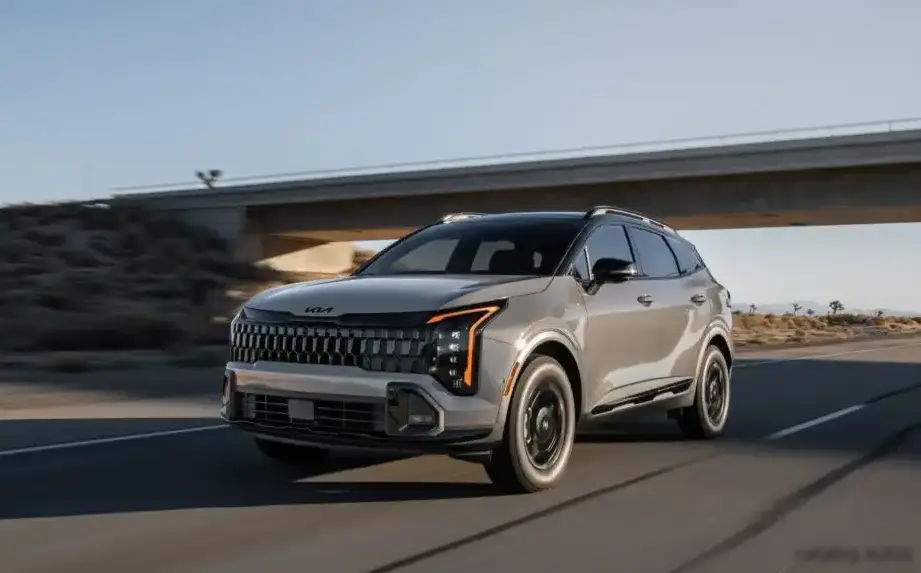
The Kia Sportage V (facelift, introduced in November 2024) 2.0 (146 hp) LPG Automatic represents a specific configuration within the fifth generation (V) of Kia’s popular Sportage SUV. This variant is positioned as a fuel-efficient and reasonably powered option, particularly relevant in markets where LPG (Liquefied Petroleum Gas) is a common alternative fuel. The facelift brought styling updates and potentially minor revisions to equipment levels, building upon the foundation established by the initial V generation, which debuted on the 1HX0 platform. This particular trim caters to buyers seeking a balance between affordability, practicality, and lower running costs.
Powertrain & Engine Architecture
The heart of this Sportage variant is a 2.0-liter inline-four cylinder engine, specifically designed to run on LPG. While the exact engine code may vary depending on the specific market, it’s likely a derivative of Kia/Hyundai’s established Nu engine family. This engine utilizes a multi-point fuel injection system, delivering fuel directly into the intake ports. The engine features a dual overhead camshaft (DOHC) valvetrain with four valves per cylinder, contributing to improved breathing and efficiency. The LPG conversion is typically performed by a third-party specialist, involving the installation of a dedicated LPG tank, vaporizer, and fuel regulator. The six-speed automatic transmission is a conventional torque-converter type, prioritizing smooth shifts and ease of use over outright performance. It’s designed to work in harmony with the engine’s torque curve, providing adequate acceleration for everyday driving.
Driving Characteristics
The 146 hp output and 191 Nm (140.87 lb-ft) of torque delivered by this powertrain configuration results in a driving experience geared towards comfort and fuel economy rather than sporty performance. Acceleration is adequate for merging onto highways and navigating city streets, but it won’t provide the briskness of higher-horsepower variants. The automatic transmission is tuned for smooth, progressive shifts, and may exhibit some hesitation during quick overtaking maneuvers. The LPG fuel system generally provides a slightly different power delivery characteristic compared to gasoline, often resulting in a smoother, more linear response. The front-wheel-drive layout contributes to a relatively neutral handling balance, but it lacks the all-weather capability of all-wheel-drive models.
Equipment & Trim Levels
The 2.0 LPG Automatic trim typically falls within the mid-range of the Sportage V lineup. Standard equipment generally includes air conditioning, power windows and locks, a basic audio system with Bluetooth connectivity, and standard safety features like ABS, airbags, and stability control. Higher trim levels add features such as a touchscreen infotainment system, navigation, leather upholstery, sunroof, and advanced driver-assistance systems (ADAS) like lane departure warning and automatic emergency braking. The interior upholstery is typically cloth, with options for upgraded materials available on higher trims. Dashboard configuration is consistent across the range, with a focus on user-friendliness and practicality.
Chassis & Braking
The Sportage V utilizes a McPherson strut front suspension and a multi-link rear suspension, providing a comfortable ride quality and reasonable handling characteristics. The suspension is tuned to prioritize comfort over sporty handling. The braking system consists of ventilated discs at the front and solid discs at the rear, providing adequate stopping power for the vehicle’s weight and performance. ABS (Anti-lock Braking System) is standard, enhancing safety during emergency braking situations. Stabilizer bars are fitted to both the front and rear axles to reduce body roll during cornering.
Market Reception & Comparison
The 2.0 LPG Automatic variant of the Sportage V was generally well-received in markets where LPG is a popular fuel choice. Critics praised its fuel efficiency and lower running costs compared to gasoline-powered models. However, some reviewers noted the engine’s lack of outright power and the slightly compromised driving dynamics compared to higher-performance trims. Compared to the gasoline-powered 1.6 T-GDi engine, the 2.0 LPG offers lower horsepower but potentially lower fuel costs, depending on local LPG and gasoline prices. Compared to diesel variants, the LPG model offers a cleaner-burning alternative, but with slightly lower torque and fuel economy.
Legacy
The Kia Sportage V 2.0 LPG Automatic powertrain has proven to be reasonably reliable in the long term, provided that the LPG conversion system is properly maintained. Regular servicing of the LPG components, including the tank, vaporizer, and fuel filter, is crucial to ensure optimal performance and safety. The engine itself is generally robust and durable, with a good track record for reliability. In the used car market, this variant represents a value-oriented option for buyers seeking a practical and fuel-efficient SUV. Its lower purchase price and potential fuel savings make it an attractive choice for budget-conscious consumers.