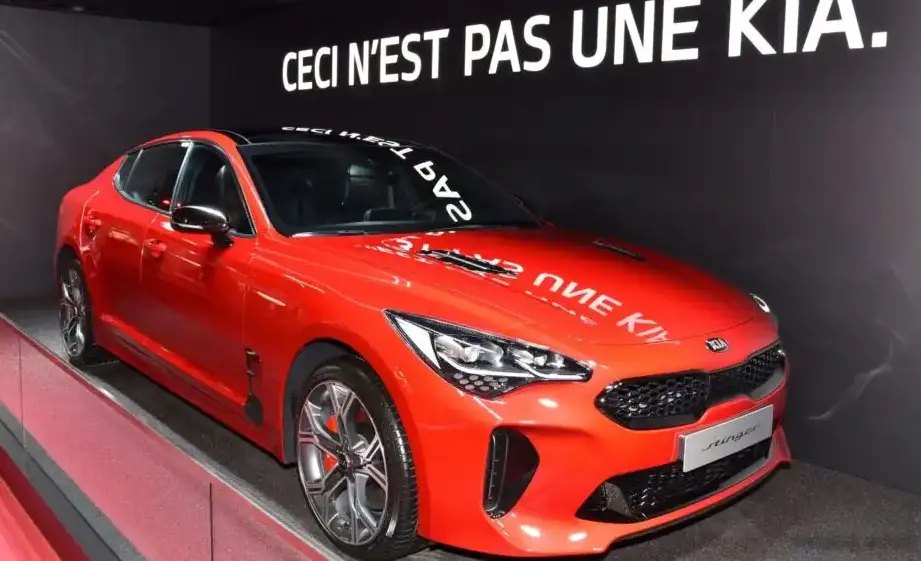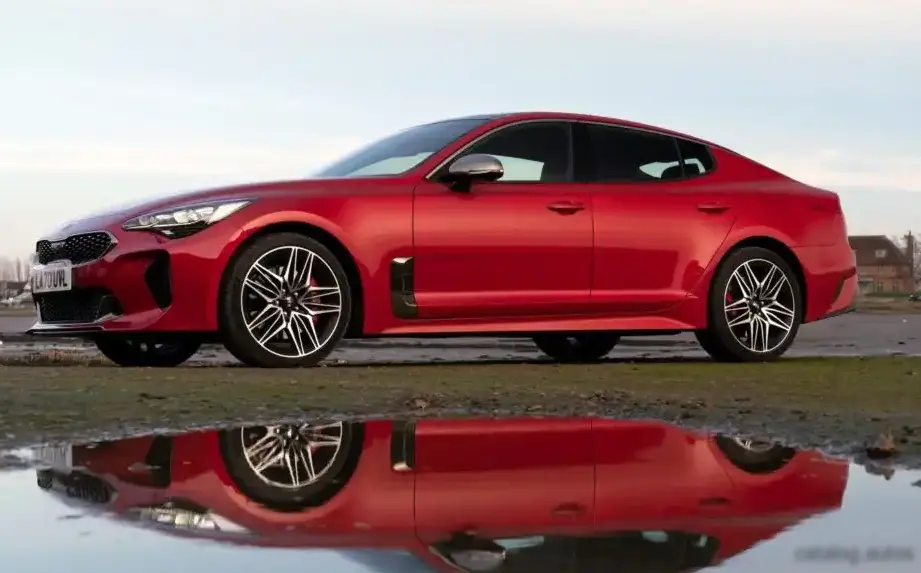
The Kia Stinger (facelift, introduced in August 2020) 2.5 T-GDi Automatic represents a significant iteration of Kia’s performance liftback. Positioned as a mid-range offering within the refreshed Stinger lineup, it slots between the base 2.0L turbocharged engine and the higher-performance 3.3L twin-turbo V6 models. This variant aimed to deliver a compelling blend of power, style, and technology, appealing to buyers seeking a sporty driving experience without the premium price tag of the top-tier trim. The facelift brought updated styling, enhanced technology, and refinements to the driving dynamics, solidifying the Stinger’s position as a genuine competitor in the sports sedan segment.
Technical Specifications
| Brand | Kia |
| Model | Stinger |
| Generation | Stinger (facelift 2020) |
| Type (Engine) | 2.5 T-GDi (304 Hp) Automatic |
| Start of production | August, 2020 |
| Powertrain Architecture | Internal Combustion engine |
| Body type | Liftback |
| Seats | 5 |
| Doors | 5 |
| Fuel consumption (urban) | 10.2-10.3 l/100 km (23.1 – 22.8 US mpg) |
| Fuel consumption (extra urban) | 7.5-8.1 l/100 km (31.4 – 29 US mpg) |
| Fuel consumption (combined) | 8.9-9.2 l/100 km (26.4 – 25.6 US mpg) |
| CO2 emissions | 151-156 g/km |
| Fuel Type | Petrol (Gasoline) |
| Weight-to-power ratio | 5.6 kg/Hp, 179.9 Hp/tonne |
| Weight-to-torque ratio | 4 kg/Nm, 249.7 Nm/tonne |
| Power | 304 Hp @ 5800 rpm |
| Power per litre | 121.7 Hp/l |
| Torque | 422 Nm @ 1650-4000 rpm (311.25 lb.-ft. @ 1650-4000 rpm) |
| Engine layout | Front, Longitudinal |
| Engine Model/Code | G4KR |
| Engine displacement | 2497 cm3 (152.38 cu. in.) |
| Number of cylinders | 4 |
| Engine configuration | Inline |
| Fuel injection system | Direct injection |
| Engine oil capacity | 6.4 l (6.76 US qt | 5.63 UK qt) |
| Coolant capacity | 9.5 l (10.04 US qt | 8.36 UK qt) |
| Engine systems | Start & Stop System |
| Kerb Weight | 1690-1705 kg (3725.81 – 3758.88 lbs.) |
| Length | 4830 mm (190.16 in.) |
| Width | 1870 mm (73.62 in.) |
| Height | 1400 mm (55.12 in.) |
| Wheelbase | 2905 mm (114.37 in.) |
| Front track | 1596 mm (62.83 in.) |
| Rear track | 1619-1647 mm (63.74 – 64.84 in.) |
| Drivetrain Architecture | Rear wheel drive |
| Drive wheel | Rear wheel drive |
| Number of gears | 8 |
| Gearbox type | Automatic transmission |
| Front suspension | Independent type McPherson |
| Rear suspension | Independent multi-link suspension |
| Front brakes | Ventilated discs |
| Rear brakes | Ventilated discs |
| Assisting systems | ABS (Anti-lock braking system) |
| Steering type | Steering rack and pinion |
| Tires size | 225/45 R18; 225/40 R19; 255/35 R19 |
| Wheel rims size | 18; 19 |
Powertrain & Engine Architecture
At the heart of the 2020 Kia Stinger 2.5 T-GDi lies the G4KR engine, a 2.5-liter turbocharged inline-four cylinder gasoline engine. This engine represents a departure from the previous 2.0-liter unit, offering a substantial increase in both horsepower and torque. The G4KR utilizes direct fuel injection, a technology that precisely meters fuel directly into the combustion chamber, optimizing combustion efficiency and power output. The turbocharger, coupled with an intercooler, forces more air into the engine, further enhancing performance. The engine’s architecture is longitudinally mounted within the front of the vehicle, contributing to a balanced weight distribution. The eight-speed automatic transmission, sourced from ZF, is a crucial component of this powertrain. It’s known for its smooth and quick shifts, contributing to both performance and fuel efficiency. The transmission features a wide range of gear ratios, optimized for both acceleration and highway cruising.
Driving Characteristics
The 2.5 T-GDi Automatic Stinger delivers a noticeably more engaging driving experience compared to the base 2.0L model. The increased horsepower and torque are readily available, providing strong acceleration in various driving situations. While not as brutally fast as the 3.3L twin-turbo V6, the 2.5T offers a satisfying level of performance for everyday driving and spirited weekend excursions. The eight-speed automatic transmission contributes to a refined driving experience, with smooth gear changes and a responsive feel. The rear-wheel-drive configuration enhances handling balance and provides a more connected feel to the road. Compared to manual transmission versions (not widely available in the US for this engine), the automatic prioritizes convenience and ease of use, though it may slightly diminish driver engagement. The gear ratios are tuned to provide quick off-the-line acceleration, while higher gears are optimized for fuel efficiency during highway cruising.
Equipment & Trim Levels
The 2.5 T-GDi trim typically included a generous array of standard features. These commonly included leather upholstery, a touchscreen infotainment system with Apple CarPlay and Android Auto compatibility, a premium sound system, automatic climate control, and a suite of advanced driver-assistance systems (ADAS) such as forward collision warning, lane keeping assist, and adaptive cruise control. Optional extras often included a panoramic sunroof, upgraded interior trim materials, and a more sophisticated sound system. The Stinger’s interior design emphasized a sporty and luxurious aesthetic, with a driver-focused cockpit and high-quality materials. The dashboard layout was clean and intuitive, with easy access to essential controls.
Chassis & Braking
The Stinger’s chassis is engineered to provide a balance of comfort and handling prowess. It utilizes an independent McPherson strut suspension in the front and an independent multi-link suspension in the rear. This suspension setup effectively absorbs road imperfections while maintaining a controlled and stable ride. The 2.5 T-GDi models typically featured ventilated disc brakes on all four wheels, providing ample stopping power. Anti-lock braking system (ABS) was standard, enhancing safety and control during emergency braking situations. Stabilizer bars were incorporated into both the front and rear suspension to minimize body roll during cornering. The steering system employed a rack-and-pinion setup, offering precise and responsive steering feel.
Market Reception & Comparison
The 2020 Kia Stinger 2.5 T-GDi was generally well-received by automotive critics. It was praised for its stylish design, strong performance, and generous feature set. Critics noted that the 2.5T offered a compelling alternative to more established sports sedans from European and Japanese manufacturers. Compared to the 2.0L Stinger, the 2.5T provided a significant performance upgrade, making it a more attractive option for driving enthusiasts. In terms of fuel economy, the 2.5T was comparable to other turbocharged four-cylinder engines in its class. Reliability reports have been generally positive, with owners reporting few major issues. However, like any vehicle, regular maintenance is crucial to ensure long-term reliability.
Legacy
The Kia Stinger, and specifically the 2.5 T-GDi variant, has established itself as a significant model in Kia’s history. It demonstrated Kia’s ability to produce a genuinely sporty and desirable vehicle that could compete with established players in the premium segment. On the used car market, the 2020 Stinger 2.5 T-GDi holds its value relatively well, reflecting its appealing combination of performance, style, and features. The G4KR engine, while not without its potential maintenance needs (like any turbocharged engine), has proven to be reasonably durable when properly maintained. The Stinger’s impact extends beyond its sales figures; it elevated Kia’s brand image and paved the way for future performance-oriented models.