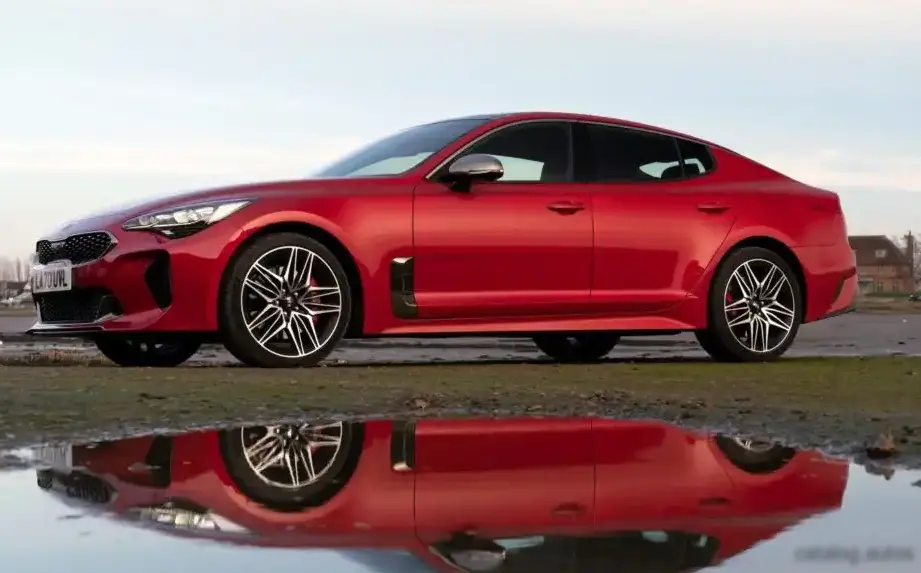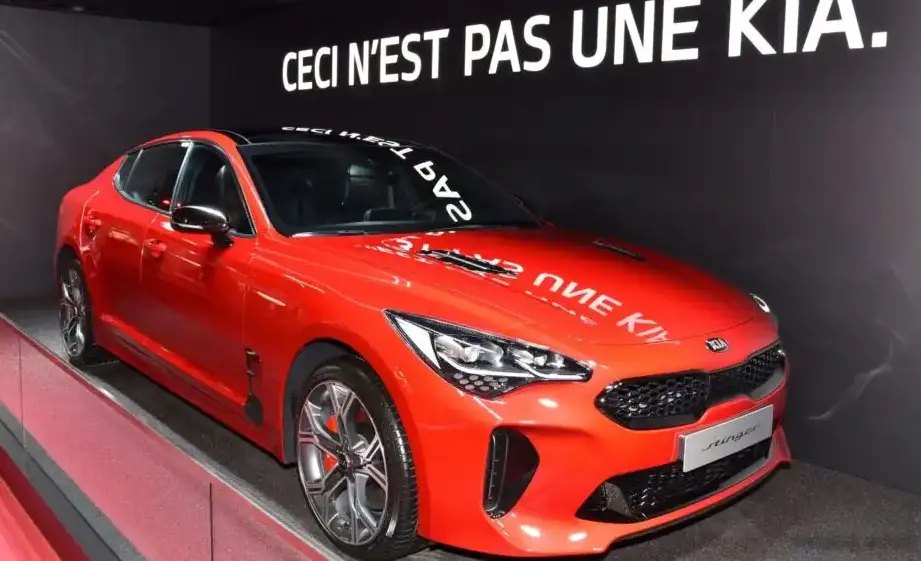
The Kia Stinger GT 3.3 GDI AWD Automatic, produced from 2019 to August 2020, represents Kia’s ambitious entry into the performance liftback segment. Positioned as the flagship trim of the Stinger lineup, it aimed to challenge established European sports sedans with a blend of style, performance, and value. Built on Kia’s dedicated rear-wheel-drive platform (though this version features all-wheel drive), the Stinger GT 3.3 offered a significant step up in power and refinement compared to the base 2.0-liter turbocharged models. It was primarily marketed towards enthusiasts seeking a practical yet engaging driving experience, and marked a turning point for the brand, demonstrating a commitment to performance engineering.
Technical Specifications
| Brand | Kia |
| Model | Stinger |
| Generation | Stinger |
| Type (Engine) | GT 3.3 GDI (366 Hp) AWD Automatic |
| Start of production | 2019 |
| End of production | August, 2020 |
| Powertrain Architecture | Internal Combustion engine |
| Body type | Liftback |
| Seats | 5 |
| Doors | 5 |
| Fuel consumption (economy) – urban | 14.3 l/100 km (16.4 US mpg, 19.8 UK mpg, 7 km/l) |
| Fuel consumption (economy) – extra urban | 8.3 l/100 km (28.3 US mpg, 34 UK mpg, 12 km/l) |
| Fuel consumption (economy) – combined | 10.5 l/100 km (22.4 US mpg, 26.9 UK mpg, 9.5 km/l) |
| CO2 emissions | 240 g/km |
| Fuel Type | Petrol (Gasoline) |
| Acceleration 0 – 100 km/h | 5.5 sec |
| Acceleration 0 – 62 mph | 5.5 sec |
| Acceleration 0 – 60 mph | 5.2 sec |
| Maximum speed | 270 km/h (167.77 mph) |
| Emission standard | Euro 6d-Temp |
| Weight-to-power ratio | 5.1 kg/Hp, 197 Hp/tonne |
| Weight-to-torque ratio | 3.6 kg/Nm, 274.5 Nm/tonne |
| Power | 366 Hp @ 6000 rpm |
| Power per litre | 109.5 Hp/l |
| Torque | 510 Nm @ 1300-4500 rpm (376.16 lb.-ft. @ 1300-4500 rpm) |
| Engine layout | Front, Longitudinal |
| Engine Model/Code | G6DP |
| Engine displacement | 3342 cm3 (203.94 cu. in.) |
| Number of cylinders | 6 |
| Engine configuration | V-engine |
| Cylinder Bore | 92 mm (3.62 in.) |
| Piston Stroke | 83.8 mm (3.3 in.) |
| Compression ratio | 10:1 |
| Number of valves per cylinder | 4 |
| Fuel injection system | Direct injection |
| Engine aspiration | Turbocharger, Intercooler |
| Valvetrain | DCVVT |
| Engine oil capacity | 6.9 l (7.29 US qt | 6.07 UK qt) |
| Coolant | 11.6 l (12.26 US qt | 10.21 UK qt) |
| Kerb Weight | 1858-1905 kg (4096.19 – 4199.81 lbs.) |
| Max. weight | 2325 kg (5125.75 lbs.) |
| Max load | 420-467 kg (925.94 – 1029.56 lbs.) |
| Trunk (boot) space – minimum | 406 l (14.34 cu. ft.) |
| Trunk (boot) space – maximum | 1114 l (39.34 cu. ft.) |
| Fuel tank capacity | 60 l (15.85 US gal | 13.2 UK gal) |
| Max. roof load | 90 kg (198.42 lbs.) |
| Permitted trailer load with brakes (12%) | 1000 kg (2204.62 lbs.) |
| Permitted trailer load without brakes | 750 kg (1653.47 lbs.) |
| Permitted towbar download | 75 kg (165.35 lbs.) |
| Length | 4830 mm (190.16 in.) |
| Width | 1870 mm (73.62 in.) |
| Height | 1400 mm (55.12 in.) |
| Wheelbase | 2905 mm (114.37 in.) |
| Front track | 1596 mm (62.83 in.) |
| Rear (Back) track | 1619 mm (63.74 in.) |
| Front overhang | 830 mm (32.68 in.) |
| Rear overhang | 1095 mm (43.11 in.) |
| Ride height (ground clearance) | 130 mm (5.12 in.) |
| Minimum turning circle (turning diameter) | 11.7 m (38.39 ft.) |
| Drive wheel | All wheel drive (4×4) |
| Number of gears and type of gearbox | 8 gears, automatic transmission |
| Front suspension | Independent, type McPherson with coil spring and anti-roll bar |
| Rear suspension | Independent multi-link spring suspension with stabilizer |
| Front brakes | Ventilated discs, 350 mm |
| Rear brakes | Ventilated discs, 340 mm |
| Assisting systems | ABS (Anti-lock braking system) |
| Steering type | Steering rack and pinion |
| Power steering | Electric Steering |
| Tires size | 225/40 R19 93Y; 255/35 R19 96Y |
| Wheel rims size | 8.0J x 19; 8.5J x 19 |
Powertrain & Engine Architecture
The heart of the Stinger GT 3.3 is the Lambda II 3.3-liter twin-turbocharged V6 engine, designated G6DP. This engine produces 366 horsepower at 6,000 rpm and 376 lb-ft of torque between 1,300 and 4,500 rpm. It features direct injection, a cast aluminum block, and cylinder heads with dual continuously variable valve timing (DCVVT). The twin-scroll turbochargers minimize turbo lag and contribute to a broad torque curve. The engine is longitudinally mounted, driving all four wheels through a sophisticated all-wheel-drive system. The eight-speed automatic transmission, sourced from ZF, is known for its smooth and quick shifts. It’s programmed for both comfortable cruising and aggressive downshifts, and features steering wheel-mounted paddle shifters for manual control.
Driving Characteristics
The Stinger GT 3.3 delivers a genuinely sporty driving experience. The all-wheel-drive system provides excellent traction, allowing for confident acceleration even in inclement weather. The 0-60 mph sprint takes approximately 5.2 seconds, and the car feels stable and composed at high speeds. The eight-speed automatic transmission is well-matched to the engine’s characteristics, providing seamless gear changes. While not as raw or visceral as some dedicated sports cars, the Stinger GT offers a compelling balance of performance and everyday usability. The steering is precise and well-weighted, and the suspension effectively manages body roll without sacrificing ride comfort. Compared to the 2.0-liter turbocharged models, the 3.3 GT offers a significant increase in power and torque, resulting in noticeably quicker acceleration and more effortless passing maneuvers.
Equipment & Trim Levels
The Stinger GT 3.3 came standard with a generous array of features, including leather upholstery, heated and ventilated front seats, a 7-inch touchscreen infotainment system with Apple CarPlay and Android Auto compatibility, a premium sound system, and a suite of advanced driver-assistance systems such as forward collision avoidance assist, lane keeping assist, and adaptive cruise control. Optional extras included a larger 8-inch touchscreen, a head-up display, and Nappa leather upholstery. The interior design was modern and well-appointed, with a focus on driver ergonomics. The GT trim also featured unique exterior styling cues, such as a sportier front bumper, a rear diffuser, and quad exhaust outlets.
Chassis & Braking
The Stinger’s chassis is designed for dynamic handling. It utilizes a multi-link rear suspension, which contributes to excellent stability and cornering grip. The GT 3.3 is equipped with larger brakes than the base models, featuring ventilated discs at all four corners. Front brakes measure 350mm, while rear brakes are 340mm. The braking system is responsive and provides ample stopping power. The all-wheel-drive system is rear-biased, enhancing the car’s sporty character. The standard suspension setup provides a good balance between comfort and control, while an optional adaptive suspension system allowed drivers to adjust the damping rates to suit their preferences.
Market Reception & Comparison
The Kia Stinger GT 3.3 was generally well-received by automotive critics. It was praised for its stylish design, strong performance, and value for money. Some reviewers noted that the interior materials weren’t quite as luxurious as those found in some European competitors, but the overall package was considered highly competitive. Compared to rivals such as the Audi A5 Sportback and BMW 4 Series Gran Coupe, the Stinger GT offered a similar level of performance at a lower price point. Fuel economy was reasonable for a performance car of this type, averaging around 22.4 mpg in combined driving. Reliability reports have been generally positive, with few major issues reported.
Legacy
The Kia Stinger GT 3.3 GDI AWD Automatic, despite its relatively short production run, has established itself as a desirable used car. The 3.3-liter twin-turbo V6 engine has proven to be robust and reliable, with proper maintenance. The car’s unique blend of style, performance, and practicality has made it a popular choice among enthusiasts. As the Stinger has been discontinued, its value is expected to hold steady or even appreciate in the coming years, particularly for well-maintained examples. It represents a significant milestone in Kia’s history, demonstrating the brand’s ability to create genuinely engaging and competitive performance vehicles.