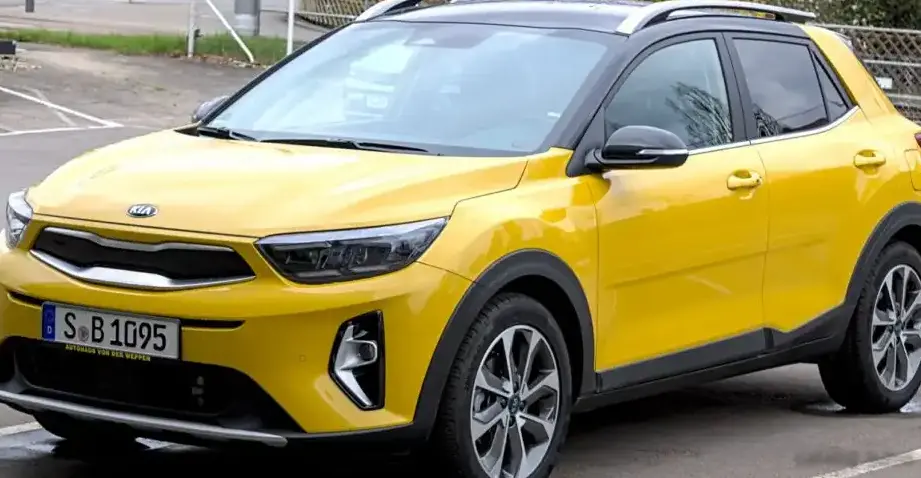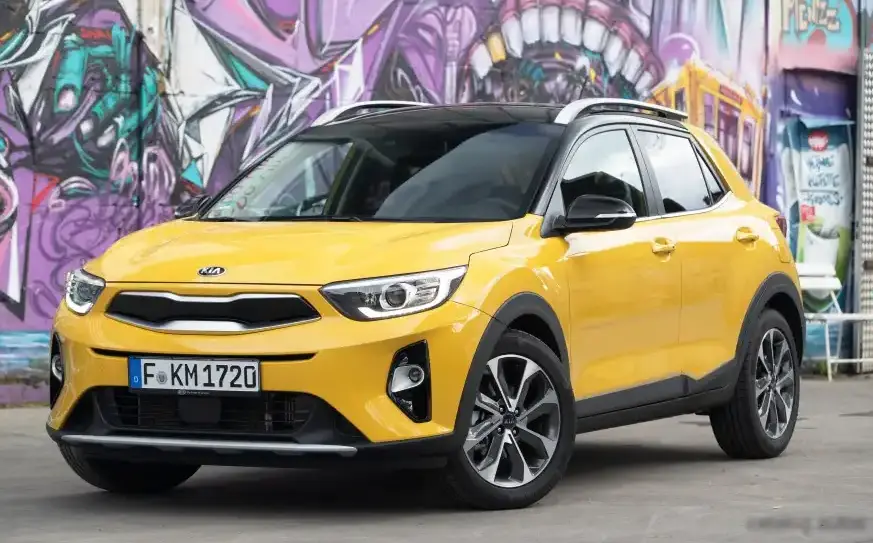
The Kia Stonic 1.0 T-GDI, producing 120 horsepower, was a key variant in Kia’s entry into the European subcompact crossover market. Introduced in 2017 and continuing through the 2020 model year, it represented a significant step for the Korean automaker in offering a stylish and fuel-efficient vehicle tailored to urban driving. The Stonic, built on Kia’s platform shared with the Hyundai Kona, aimed to attract younger buyers with its customizable aesthetics and modern features. This particular 1.0 T-GDI engine and transmission combination occupied a central position in the Stonic lineup, offering a balance between performance, economy, and affordability.
Technical Specifications
| Brand | Kia |
| Model | Stonic |
| Generation | Stonic |
| Type (Engine) | 1.0 T-GDI (120 Hp) |
| Start of production | 2017 |
| End of production | 2020 |
| Powertrain Architecture | Internal Combustion engine |
| Body type | Crossover |
| Seats | 5 |
| Doors | 5 |
| Fuel consumption (urban) | 6 l/100 km (39.2 US mpg, 47.1 UK mpg, 16.7 km/l) |
| Fuel consumption (extra urban) | 4.5 l/100 km (52.3 US mpg, 62.8 UK mpg, 22.2 km/l) |
| Fuel consumption (combined) | 5 l/100 km (47 US mpg, 56.5 UK mpg, 20 km/l) |
| CO2 emissions | 115 g/km |
| Fuel Type | Petrol (Gasoline) |
| Acceleration 0 – 100 km/h | 10.3 sec |
| Acceleration 0 – 62 mph | 10.3 sec |
| Acceleration 0 – 60 mph | 9.8 sec |
| Maximum speed | 184 km/h (114.33 mph) |
| Emission standard | Euro 6 |
| Weight-to-power ratio | 9.9 kg/Hp, 101.3 Hp/tonne |
| Weight-to-torque ratio | 6.9 kg/Nm, 145.1 Nm/tonne |
| Power | 120 Hp @ 6000 rpm |
| Power per litre | 120.2 Hp/l |
| Torque | 172 Nm @ 1500-4000 rpm (126.86 lb.-ft. @ 1500-4000 rpm) |
| Engine layout | Front, Transverse |
| Engine Model/Code | Kappa II / G3LC |
| Engine displacement | 998 cm3 (60.9 cu. in.) |
| Number of cylinders | 3 |
| Engine configuration | Inline |
| Cylinder Bore | 71 mm (2.8 in.) |
| Piston Stroke | 84 mm (3.31 in.) |
| Compression ratio | 10:1 |
| Number of valves per cylinder | 4 |
| Fuel injection system | Direct injection |
| Engine aspiration | Turbocharger, Intercooler |
| Valvetrain | DOHC |
| Engine oil capacity | 3.6 l (3.8 US qt | 3.17 UK qt) |
| Coolant | 5.5 l (5.81 US qt | 4.84 UK qt) |
| Kerb Weight | 1185 kg (2612.48 lbs.) |
| Max. weight | 1640 kg (3615.58 lbs.) |
| Max load | 455 kg (1003.1 lbs.) |
| Trunk (boot) space – minimum | 332 l (11.72 cu. ft.) |
| Trunk (boot) space – maximum | 1135 l (40.08 cu. ft.) |
| Fuel tank capacity | 45 l (11.89 US gal | 9.9 UK gal) |
| Length | 4140 mm (162.99 in.) |
| Width | 1760 mm (69.29 in.) |
| Height | 1520 mm (59.84 in.) |
| Wheelbase | 2580 mm (101.57 in.) |
| Ride height (ground clearance) | 165-183 mm (6.5 – 7.2 in.) |
| Minimum turning circle | 10.4 m (34.12 ft.) |
| Drivetrain Architecture | ICE, Front wheel drive |
| Drive wheel | Front wheel drive |
| Number of gears | 6 gears, manual transmission |
| Front brakes | Ventilated discs |
| Rear brakes | Disc |
| Assisting systems | ABS (Anti-lock braking system) |
| Steering type | Steering rack and pinion |
| Power steering | Electric Steering |
| Tires size | 185/65 R15; 205/55 R17 |
| Wheel rims size | 15; 17 |
INTRODUCTION
The Kia Stonic 1.0 T-GDI, launched in 2017, was Kia’s response to the growing demand for subcompact crossovers in Europe. Positioned as an affordable and stylish option, the Stonic aimed to attract a younger demographic. This variant, powered by the Kappa II 1.0-liter turbocharged three-cylinder engine producing 120 horsepower, was a mainstay of the Stonic range. It offered a compelling blend of fuel efficiency and adequate performance for city driving. The Stonic shared its platform (the 1HX0/A3) with the Hyundai Kona, benefiting from collaborative engineering efforts between the two Hyundai Motor Group brands.
Powertrain & Engine Architecture
At the heart of the Stonic 1.0 T-GDI lies the Kappa II engine, specifically the G3LC code. This 998cc, inline-three cylinder engine utilizes direct fuel injection and a single scroll turbocharger with an intercooler. The direct injection system optimizes fuel delivery for improved efficiency and power output. The engine features a dual overhead camshaft (DOHC) valvetrain with four valves per cylinder, contributing to its responsive nature. The 120 horsepower peak is achieved at 6,000 rpm, while the 172 Nm (126.86 lb.-ft.) of torque is available from a low 1500 rpm and sustained through 4000 rpm. The engine is transversely mounted, driving the front wheels. The six-speed manual transmission was the standard offering for this variant, providing a direct connection between the engine and the wheels.
Driving Characteristics
The Stonic 1.0 T-GDI with a manual transmission delivers a surprisingly lively driving experience for its size and engine displacement. While not a performance-oriented vehicle, the turbocharger provides a noticeable boost in power, making overtaking and merging onto highways manageable. The six-speed gearbox is well-matched to the engine’s powerband, allowing drivers to keep the engine in its optimal torque range. Acceleration from 0-60 mph takes around 9.8 seconds, and the top speed is approximately 114 mph. Compared to higher-output versions (which weren’t widely available in the Stonic range), this variant prioritizes fuel economy over outright speed. The manual transmission offers more driver engagement than an automatic would, but also requires more effort in stop-and-go traffic.
Equipment & Trim Levels
The Stonic 1.0 T-GDI was typically offered in several trim levels, with the base models including standard features like air conditioning, electric front windows, a basic audio system with Bluetooth connectivity, and essential safety equipment such as ABS, ESC (Electronic Stability Control), and multiple airbags. Higher trim levels added features like alloy wheels, a touchscreen infotainment system with Apple CarPlay and Android Auto compatibility, rear parking sensors, a reversing camera, and climate control. Interior upholstery was typically cloth, with options for different color schemes. Customization was a key selling point for the Stonic, with a range of exterior color combinations and roof colors available.
Chassis & Braking
The Stonic utilizes a front-wheel-drive chassis with a MacPherson strut front suspension and a torsion beam rear suspension. This setup provides a comfortable ride quality for everyday driving, although it’s not particularly sporty. The front brakes are ventilated discs, offering good stopping power, while the rear brakes are solid discs. The electric power steering provides light and easy steering, making it ideal for maneuvering in urban environments. Stabilizer bars are fitted to both the front and rear axles to reduce body roll during cornering.
Market Reception & Comparison
The Kia Stonic 1.0 T-GDI was generally well-received by automotive critics for its stylish design, fuel efficiency, and competitive pricing. It was often compared to rivals like the Hyundai Kona, Nissan Juke, and Renault Captur. The Stonic’s fuel economy of around 5 liters per 100 kilometers (47 US mpg) was a significant selling point, particularly in Europe where fuel costs are high. Reliability reports have been generally positive, with the Kappa engine proving to be relatively robust. However, some reviewers noted that the interior materials felt somewhat basic compared to some competitors.
Legacy
The Kia Stonic 1.0 T-GDI played a crucial role in establishing Kia as a serious contender in the European subcompact crossover market. The Kappa engine, while not without its quirks, has proven to be a reliable and efficient powerplant. On the used car market, the Stonic 1.0 T-GDI remains a popular choice for buyers seeking an affordable, fuel-efficient, and stylish crossover. Its relatively low running costs and decent reliability make it a practical option for urban commuters and first-time car buyers. The Stonic’s success paved the way for Kia to expand its crossover lineup and further strengthen its brand image in Europe.