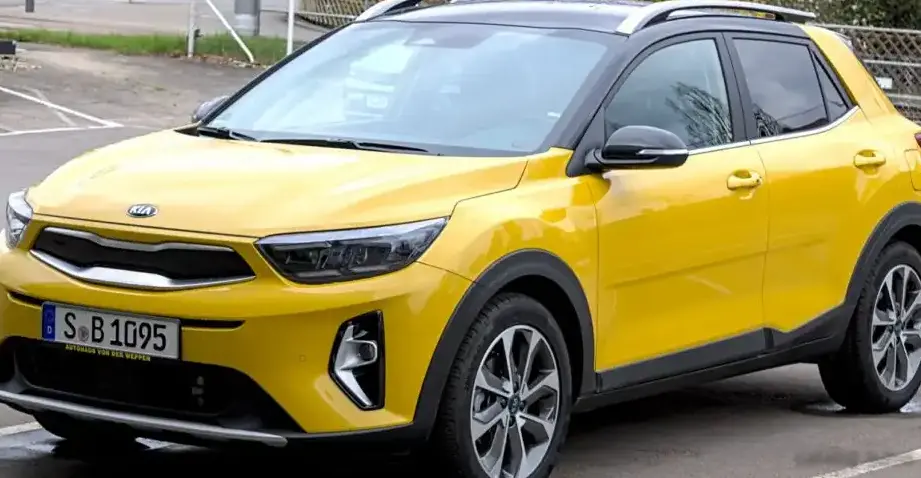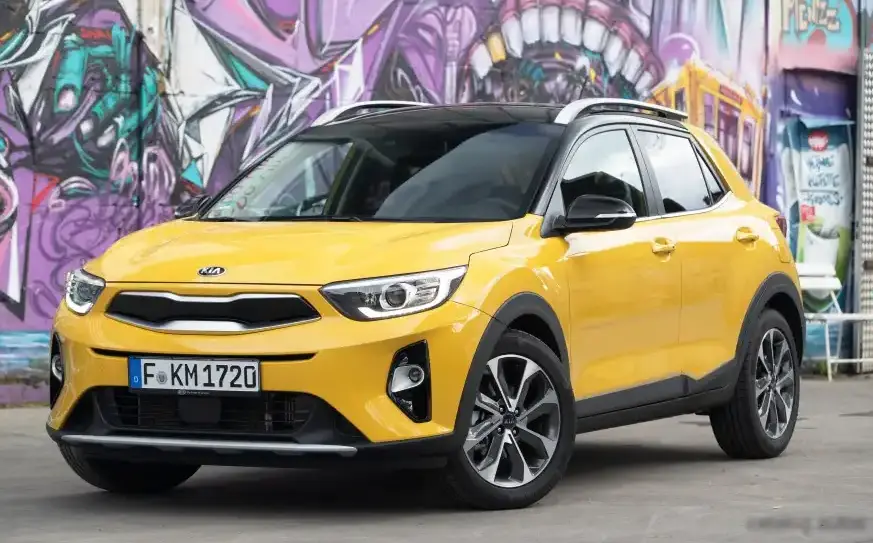
The Kia Stonic 1.2i (84 hp) was a subcompact crossover marketed by Kia from 2017 to 2020. Positioned as the entry-level trim within the Stonic range, it served as an accessible and fuel-efficient option for buyers seeking a small, practical vehicle. The Stonic, Kia’s first model specifically designed for the European market, aimed to attract younger buyers with its customizable styling and modern features. This particular 1.2-liter variant played a crucial role in establishing the Stonic’s presence in a competitive segment, offering a balance between affordability and functionality. It was built on the Hyundai-Kia UB platform, shared with the Hyundai Accent.
Technical Specifications
| Brand | Kia |
| Model | Stonic |
| Generation | Stonic |
| Type (Engine) | 1.2i (84 Hp) |
| Start of production | 2017 |
| End of production | 2020 |
| Powertrain Architecture | Internal Combustion engine |
| Body type | Crossover |
| Seats | 5 |
| Doors | 5 |
| Fuel consumption (urban) | 6.4 l/100 km (36.8 US mpg, 44.1 UK mpg, 15.6 km/l) |
| Fuel consumption (extra urban) | 4.6 l/100 km (51.1 US mpg, 61.4 UK mpg, 21.7 km/l) |
| Fuel consumption (combined) | 5.2 l/100 km (45.2 US mpg, 54.3 UK mpg, 19.2 km/l) |
| CO2 emissions | 118 g/km |
| Fuel Type | Petrol (Gasoline) |
| Acceleration 0 – 100 km/h | 13.2 sec |
| Acceleration 0 – 62 mph | 13.2 sec |
| Acceleration 0 – 60 mph | 12.5 sec |
| Maximum speed | 165 km/h (102.53 mph) |
| Emission standard | Euro 6 |
| Weight-to-power ratio | 13.6 kg/Hp, 73.4 Hp/tonne |
| Weight-to-torque ratio | 9.4 kg/Nm, 106.6 Nm/tonne |
| Power | 84 Hp @ 6000 rpm |
| Power per litre | 67.3 Hp/l |
| Torque | 122 Nm @ 4000 rpm (89.98 lb.-ft. @ 4000 rpm) |
| Engine layout | Front, Transverse |
| Engine Model/Code | G4LA |
| Engine displacement | 1248 cm3 (76.16 cu. in.) |
| Number of cylinders | 4 |
| Engine configuration | Inline |
| Number of valves per cylinder | 4 |
| Fuel injection system | Multi-port manifold injection |
| Engine aspiration | Naturally aspirated engine |
| Valvetrain | DOHC |
| Engine oil capacity | 3.5 l (3.7 US qt | 3.08 UK qt) |
| Coolant capacity | 5.1 l (5.39 US qt | 4.49 UK qt) |
| Kerb Weight | 1145 kg (2524.29 lbs.) |
| Max. weight | 1600 kg (3527.4 lbs.) |
| Max load | 455 kg (1003.1 lbs.) |
| Trunk (boot) space – minimum | 332 l (11.72 cu. ft.) |
| Trunk (boot) space – maximum | 1135 l (40.08 cu. ft.) |
| Fuel tank capacity | 45 l (11.89 US gal | 9.9 UK gal) |
| Length | 4140 mm (162.99 in.) |
| Width | 1760 mm (69.29 in.) |
| Height | 1520 mm (59.84 in.) |
| Wheelbase | 2580 mm (101.57 in.) |
| Ride height (ground clearance) | 165-183 mm (6.5 – 7.2 in.) |
| Minimum turning circle | 10.4 m (34.12 ft.) |
| Drivetrain Architecture | Front wheel drive |
| Number of gears | 5 |
| Gearbox type | Manual transmission |
| Front brakes | Ventilated discs |
| Rear brakes | Disc |
| Assisting systems | ABS (Anti-lock braking system) |
| Steering type | Steering rack and pinion |
| Power steering | Electric Steering |
| Tires size | 185/65 R15; 205/55 R17 |
| Wheel rims size | 15; 17 |
Powertrain & Engine Architecture
The Kia Stonic 1.2i utilized the Kappa II family of engines, specifically the G4LA code. This 1.2-liter, naturally aspirated inline-four cylinder engine was designed with fuel efficiency in mind. It featured a multi-point fuel injection system and a double overhead camshaft (DOHC) valvetrain with four valves per cylinder. The engine produced 84 horsepower at 6000 rpm and 122 Nm (89.98 lb-ft) of torque at 4000 rpm. The engine’s relatively low output was paired with a five-speed manual transmission, optimized for economy rather than outright performance. This combination was a common choice in Europe for smaller city cars and crossovers.
Driving Characteristics
The 1.2i Stonic offered modest performance. Acceleration from 0 to 60 mph took approximately 12.5 seconds, and top speed was limited to 165 km/h (102.53 mph). The five-speed manual transmission was geared for fuel efficiency, meaning higher gears were engaged at lower speeds. This resulted in a relaxed driving experience on the highway, but required more frequent downshifts when overtaking or climbing hills. Compared to higher-spec Stonic models with larger engines, the 1.2i felt noticeably less powerful. However, its lighter weight and responsive steering made it nimble in urban environments. The gear ratios were spaced to maximize fuel economy, prioritizing everyday usability over sporty driving dynamics.
Equipment & Trim Levels
The 1.2i trim typically served as the base model for the Stonic. Standard equipment generally included air conditioning, electric front windows, a basic audio system with USB connectivity, and a suite of safety features such as ABS, ESC (Electronic Stability Control), and multiple airbags. Interior upholstery was typically cloth, and the dashboard featured a simple, functional design. Optional extras included alloy wheels, a touchscreen infotainment system with Apple CarPlay and Android Auto compatibility, rear parking sensors, and a rearview camera. The trim level was designed to appeal to budget-conscious buyers who prioritized practicality and essential features.
Chassis & Braking
The Stonic 1.2i featured a front-wheel-drive layout with a MacPherson strut front suspension and a torsion beam rear suspension. The front brakes were ventilated discs, while the rear brakes were solid discs. The suspension setup was tuned for comfort and ride quality, rather than sporty handling. The torsion beam rear suspension contributed to a relatively low cost and compact design. Steering was provided by an electric power steering system, offering light and easy maneuverability. Tire sizes varied depending on the trim level, with 15-inch or 17-inch wheels being common options.
Market Reception & Comparison
The Kia Stonic 1.2i was generally well-received as an affordable and practical subcompact crossover. Critics praised its stylish design, spacious interior, and good value for money. However, the 1.2-liter engine was often criticized for its lack of power, particularly when fully loaded or driving on inclines. Compared to other trims in the Stonic lineup, such as the 1.0 T-GDi turbocharged engine, the 1.2i offered significantly lower performance but superior fuel economy. It competed with other subcompact crossovers like the Hyundai Kona, Nissan Juke, and Renault Captur, often undercutting them in price.
Legacy
The Kia Stonic 1.2i, while not known for its blistering performance, proved to be a reliable and economical choice for many buyers. The G4LA engine is generally considered to be a durable unit, with relatively few reported issues. On the used car market, these models represent an affordable entry point into crossover ownership. Maintenance costs are typically low, and parts availability is good. While it may not appeal to drivers seeking a sporty driving experience, the Stonic 1.2i remains a practical and dependable option for those prioritizing fuel efficiency and affordability.