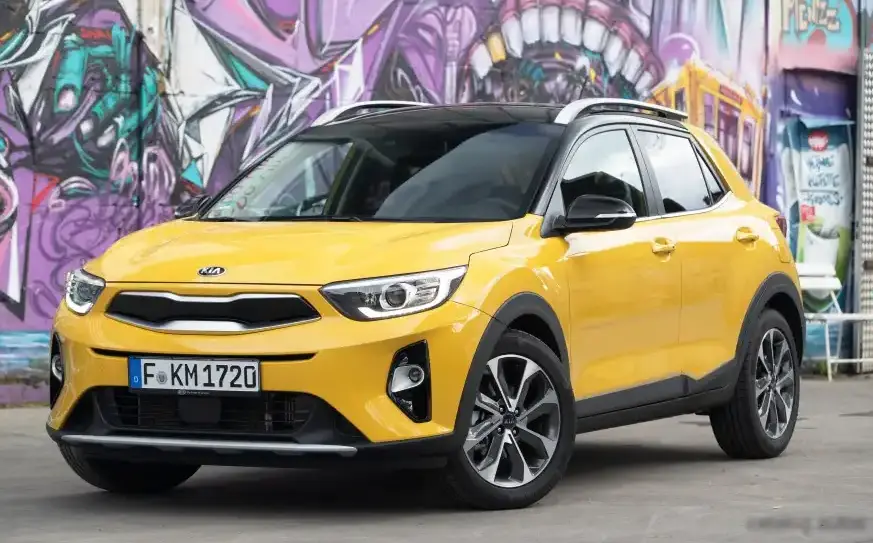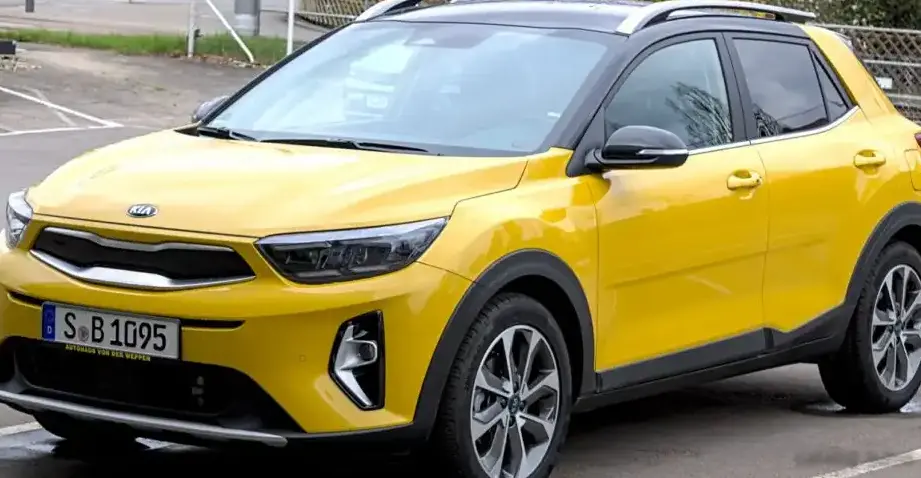
The Kia Stonic, specifically the facelifted version introduced in 2020, represents Kia’s entry into the highly competitive subcompact crossover segment. The 1.0 T-GDI (100 hp) variant with a dual-clutch transmission (DCT) was offered from May 2024 through September 2025, primarily targeting European and Asian markets where smaller, fuel-efficient vehicles are highly sought after. This configuration aimed to provide a balance between affordability, practicality, and modern technology. It sat as a mid-range offering within the Stonic lineup, positioned above the naturally aspirated engine options and below the more powerful turbocharged variants.
Technical Specifications
| Brand | Kia |
| Model | Stonic |
| Generation | Stonic (facelift 2020) |
| Type (Engine) | 1.0 T-GDI (100 Hp) DCT |
| Start of production | May, 2024 |
| End of production | September, 2025 |
| Powertrain Architecture | Internal Combustion engine |
| Body type | Crossover |
| Seats | 5 |
| Doors | 5 |
| Fuel consumption at Low speed (WLTP) | 7.1 l/100 km (33.1 US mpg, 39.8 UK mpg, 14.1 km/l) |
| Fuel consumption at Medium speed (WLTP) | 5.3 l/100 km (44.4 US mpg, 53.3 UK mpg, 18.9 km/l) |
| Fuel consumption at high speed (WLTP) | 4.7 l/100 km (50 US mpg, 60.1 UK mpg, 21.3 km/l) |
| Fuel consumption at very high speed (WLTP) | 6.0 l/100 km (39.2 US mpg, 47.1 UK mpg, 16.7 km/l) |
| Combined fuel consumption (WLTP) | 5.6 l/100 km (42 US mpg, 50.4 UK mpg, 17.9 km/l) |
| CO2 emissions (WLTP) | 127 g/km |
| Fuel Type | Petrol (Gasoline) |
| Acceleration 0 – 100 km/h | 12.4 sec |
| Acceleration 0 – 62 mph | 12.4 sec |
| Acceleration 0 – 60 mph | 11.8 sec |
| Maximum speed | 176 km/h (109.36 mph) |
| Emission standard | Euro 6e |
| Weight-to-power ratio | 11.6 kg/Hp, 86.6 Hp/tonne |
| Weight-to-torque ratio | 6.7 kg/Nm, 148.9 Nm/tonne |
| Power | 100 Hp @ 6000 rpm |
| Power per litre | 100.2 Hp/l |
| Torque | 172 Nm @ 1500-3500 rpm (126.86 lb.-ft. @ 1500-3500 rpm) |
| Engine layout | Front, Transverse |
| Engine Model/Code | G3LE |
| Engine displacement | 998 cm3 (60.9 cu. in.) |
| Number of cylinders | 3 |
| Engine configuration | Inline |
| Cylinder Bore | 71 mm (2.8 in.) |
| Piston Stroke | 84 mm (3.31 in.) |
| Compression ratio | 10.5:1 |
| Number of valves per cylinder | 4 |
| Fuel injection system | Direct injection |
| Engine aspiration | Turbocharger, Intercooler |
| Valvetrain | CVVD |
| Engine oil capacity | 3.6 l (3.8 US qt | 3.17 UK qt) |
| Coolant | 5.9 l (6.23 US qt | 5.19 UK qt) |
| Kerb Weight | 1155-1258 kg (2546.34 – 2773.42 lbs.) |
| Max. weight | 1680 kg (3703.77 lbs.) |
| Max load | 422-525 kg (930.35 – 1157.43 lbs.) |
| Trunk (boot) space – minimum | 352 l (12.43 cu. ft.) |
| Trunk (boot) space – maximum | 1155 l (40.79 cu. ft.) |
| Fuel tank capacity | 45 l (11.89 US gal | 9.9 UK gal) |
| Max. roof load | 70 kg (154.32 lbs.) |
| Permitted trailer load with brakes (12%) | 710 kg (1565.28 lbs.) |
| Permitted trailer load without brakes | 450 kg (992.08 lbs.) |
| Permitted towbar download | 75 kg (165.35 lbs.) |
| Length | 4140 mm (162.99 in.) |
| Width | 1760 mm (69.29 in.) |
| Width including mirrors | 2025 mm (79.72 in.) |
| Height | 1520 mm (59.84 in.) |
| Wheelbase | 2580 mm (101.57 in.) |
| Front track | 1531-1573 mm (60.28 – 61.93 in.) |
| Rear (Back) track | 1539-1544 mm (60.59 – 60.79 in.) |
| Front overhang | 830 mm (32.68 in.) |
| Rear overhang | 730 mm (28.74 in.) |
| Minimum turning circle (turning diameter) | 10.4 m (34.12 ft.) |
| Drivetrain Architecture | The Internal combustion engine (ICE) drives the front wheels of the vehicle. |
| Drive wheel | Front wheel drive |
| Number of gears and type of gearbox | 7 gears, automatic transmission DCT |
| Front suspension | Independent type McPherson, Transverse stabilizer |
| Rear suspension | Coil spring, Elastic beam |
| Front brakes | Ventilated discs, 280 mm |
| Rear brakes | Disc, 262 mm |
| Assisting systems | ABS (Anti-lock braking system) |
| Steering type | Steering rack and pinion |
| Power steering | Electric Steering |
| Tires size | 185/65 R15 88H; 195/55 R16 87H; 205/55 R17 91V |
| Wheel rims size | 6.0J x 15 ET46; 6.0J x 16 ET49; 6.5J x 17 ET49 |
Powertrain & Engine Architecture
The heart of this Stonic variant is Kia’s G3LE 1.0-liter turbocharged three-cylinder engine. This engine, part of Kia’s “Smartstream” family, utilizes direct fuel injection and a single-scroll turbocharger with an intercooler to deliver a respectable 100 horsepower at 6000 rpm and 172 Nm (126.86 lb.-ft.) of torque between 1500 and 3500 rpm. A key feature of this engine is its Continuously Variable Valve Duration (CVVD) technology, which optimizes valve timing based on driving conditions, improving both performance and fuel efficiency. The engine is transversely mounted at the front of the vehicle. The power is then transferred to the front wheels via a seven-speed dual-clutch transmission (DCT). This DCT provides quicker and smoother gear changes compared to a traditional automatic transmission, contributing to a more engaging driving experience.
Driving Characteristics
The 1.0 T-GDI with the DCT offers a noticeable step up in responsiveness compared to the base engine Stonic models. While not a performance-oriented vehicle, the turbocharger provides adequate power for everyday driving situations, including highway merging and overtaking. The DCT transmission is generally quick-shifting, but some drivers have noted occasional hesitation at low speeds. The gear ratios are tuned for fuel efficiency, meaning the engine can feel slightly strained when accelerating hard. Compared to the manual transmission versions of the same engine, the DCT offers greater convenience, especially in urban traffic, but may sacrifice a small degree of driver engagement. The 0-60 mph time of around 11.8 seconds reflects its focus on efficiency rather than outright speed.
Equipment & Trim Levels
The 1.0 T-GDI DCT trim typically included standard features such as air conditioning, a touchscreen infotainment system with Apple CarPlay and Android Auto compatibility, Bluetooth connectivity, and a suite of safety features including ABS, ESC (Electronic Stability Control), and multiple airbags. Higher trim levels added features like automatic climate control, a larger touchscreen display, a rearview camera, parking sensors, and alloy wheels. Interior upholstery was typically cloth, with options for leatherette available on higher trims. The dashboard layout was functional and modern, with a focus on ease of use.
Chassis & Braking
The Stonic utilizes a front-wheel-drive configuration with an independent McPherson strut suspension in the front and a semi-independent elastic beam suspension in the rear. This setup provides a comfortable ride quality, although it’s not particularly sporty. The front brakes are ventilated discs measuring 280mm, while the rear brakes are solid discs measuring 262mm. ABS (Anti-lock Braking System) is standard, providing enhanced braking performance in emergency situations. Stabilizer bars are included on both axles to reduce body roll during cornering.
Market Reception & Comparison
The Kia Stonic 1.0 T-GDI DCT was generally well-received by automotive critics as a practical and affordable subcompact crossover. Its fuel efficiency and modern features were praised, while some reviewers noted the engine could feel underpowered at times, especially when fully loaded. Compared to competitors like the Hyundai Kona, Volkswagen T-Cross, and Renault Captur, the Stonic offered a competitive price point and a generous warranty. Fuel economy figures of around 42 US mpg combined made it an attractive option for budget-conscious buyers. Reliability reports have been generally positive, with few major issues reported with the powertrain.
Legacy
The Kia Stonic 1.0 T-GDI DCT has proven to be a relatively reliable and durable vehicle in the used car market. The G3LE engine, while small, has demonstrated good longevity when properly maintained. The DCT transmission, however, requires regular servicing to ensure smooth operation. As a result of its fuel efficiency, practicality, and affordability, the Stonic continues to be a popular choice for buyers seeking a compact and versatile crossover. Its introduction helped solidify Kia’s position as a major player in the European and Asian subcompact crossover segments.