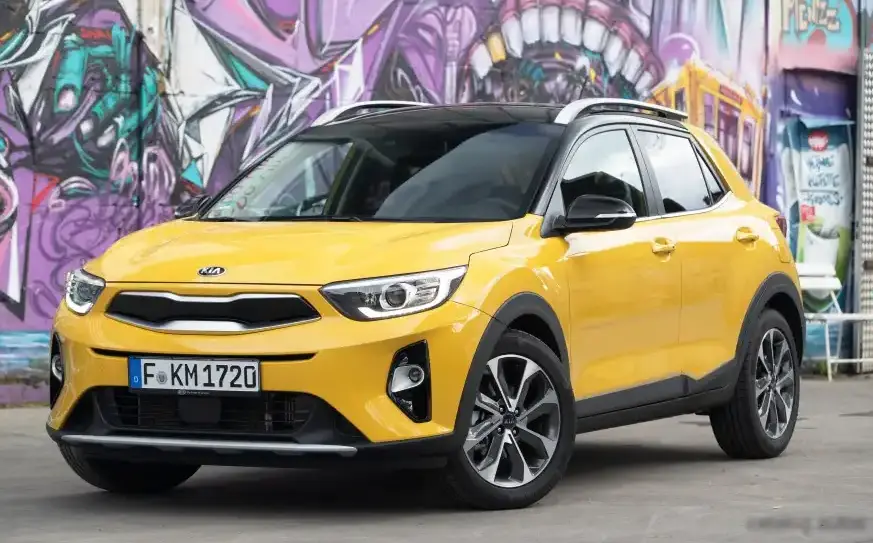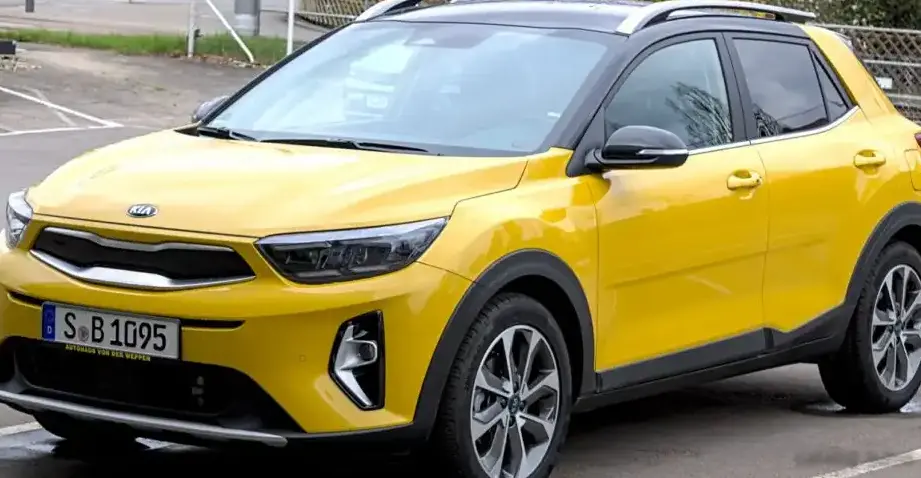
The Kia Stonic, specifically the facelifted model introduced in September 2020, represents Kia’s entry into the highly competitive subcompact crossover segment. The 1.0 T-GDI EcoDynamics+ (120 hp) Mild Hybrid iMT variant, produced through May 2024, was a key offering within the Stonic range, positioned as a fuel-efficient and technologically advanced option. This version combined a turbocharged three-cylinder engine with a 48-volt mild hybrid system and an intelligent manual transmission (iMT) to balance performance and economy. It primarily targeted European and Asian markets, where demand for smaller, efficient vehicles is high.
Technical Specifications
| Brand | Kia |
| Model | Stonic |
| Generation | Stonic (facelift 2020) |
| Type (Engine) | 1.0 T-GDI EcoDynamics+ (120 Hp) Mild Hybrid iMT |
| Start of production | September, 2020 |
| End of production | May, 2024 |
| Powertrain Architecture | MHEV (Mild Hybrid Electric Vehicle) |
| Body type | Crossover |
| Seats | 5 |
| Doors | 5 |
| Combined fuel consumption (WLTP) | 5.6 l/100 km (42 US mpg, 50.4 UK mpg, 17.9 km/l) |
| CO2 emissions (WLTP) | 128 g/km |
| Fuel consumption (economy) – urban (NEDC) | 4.8 l/100 km (49 US mpg, 58.9 UK mpg, 20.8 km/l) |
| Fuel consumption (economy) – extra urban (NEDC) | 4.2 l/100 km (56 US mpg, 67.3 UK mpg, 23.8 km/l) |
| Fuel consumption (economy) – combined (NEDC) | 4.5 l/100 km (52.3 US mpg, 62.8 UK mpg, 22.2 km/l) |
| CO2 emissions (NEDC) | 102 g/km |
| Fuel Type | Petrol (Gasoline) |
| Acceleration 0 – 100 km/h | 10.4 sec |
| Acceleration 0 – 62 mph | 10.4 sec |
| Acceleration 0 – 60 mph | 9.9 sec |
| Maximum speed | 185 km/h (114.95 mph) |
| Emission standard | Euro 6d-ISC-FCM |
| Weight-to-power ratio | 9.6 kg/Hp, 104.3 Hp/tonne |
| Weight-to-torque ratio | 6.7 kg/Nm, 149.6 Nm/tonne |
| Battery voltage | 48 V |
| Battery technology | Lithium-ion (Li-Ion) |
| Electric motor | 1 |
| Electric motor location | Front, Transverse |
| Power | 120 Hp @ 6000 rpm |
| Torque | 172 Nm @ 1500-4000 rpm (126.86 lb.-ft. @ 1500-4000 rpm) |
| Engine layout | Front, Transverse |
| Engine Model/Code | G3LF |
| Engine displacement | 998 cm3 (60.9 cu. in.) |
| Number of cylinders | 3 |
| Engine configuration | Inline |
| Cylinder Bore | 71 mm (2.8 in.) |
| Piston Stroke | 84 mm (3.31 in.) |
| Compression ratio | 10.5:1 |
| Number of valves per cylinder | 4 |
| Fuel injection system | Direct injection |
| Engine aspiration | Turbocharger, Intercooler |
| Valvetrain | DOHC |
| Engine oil capacity | 3.6 l (3.8 US qt | 3.17 UK qt) |
| Coolant | 5.9 l (6.23 US qt | 5.19 UK qt) |
| Kerb Weight | 1150-1253 kg (2535.32 – 2762.39 lbs.) |
| Max. weight | 1680 kg (3703.77 lbs.) |
| Max load | 427-530 kg (941.37 – 1168.45 lbs.) |
| Trunk (boot) space – minimum | 352 l (12.43 cu. ft.) |
| Trunk (boot) space – maximum | 1155 l (40.79 cu. ft.) |
| Fuel tank capacity | 45 l (11.89 US gal | 9.9 UK gal) |
| Max. roof load | 70 kg (154.32 lbs.) |
| Permitted trailer load with brakes (12%) | 900 kg (1984.16 lbs.) |
| Permitted trailer load without brakes | 450 kg (992.08 lbs.) |
| Permitted towbar download | 75 kg (165.35 lbs.) |
| Length | 4140 mm (162.99 in.) |
| Width | 1760 mm (69.29 in.) |
| Width including mirrors | 2025 mm (79.72 in.) |
| Height | 1520 mm (59.84 in.) |
| Wheelbase | 2580 mm (101.57 in.) |
| Front track | 1531-1537 mm (60.28 – 60.51 in.) |
| Rear (Back) track | 1539-1544 mm (60.59 – 60.79 in.) |
| Front overhang | 830 mm (32.68 in.) |
| Rear overhang | 730 mm (28.74 in.) |
| Ride height (ground clearance) | 165-183 mm (6.5 – 7.2 in.) |
| Minimum turning circle (turning diameter) | 10.4 m (34.12 ft.) |
| Front suspension | Independent type McPherson, Transverse stabilizer |
| Rear suspension | Coil spring, Elastic beam |
| Front brakes | Ventilated discs, 280 mm |
| Rear brakes | Disc, 262 mm |
| Gearbox | 6 gears, manual transmission iMT |
| Tires size | 185/65 R15; 195/55 R16; 205/55 R17 |
| Wheel rims size | 6J x 15; 6J x 16; 6.5J x 17 |
INTRODUCTION
The Kia Stonic, launched in 2017, was Kia’s first model specifically designed for the European subcompact crossover market. The 2020 facelift brought a refreshed exterior design, upgraded interior features, and enhanced safety technology. The 1.0 T-GDI EcoDynamics+ 120 hp iMT variant occupied a central position in the Stonic lineup, offering a balance between affordability, fuel efficiency, and acceptable performance. It was designed to appeal to buyers seeking a practical and stylish urban vehicle with modern technology. The “EcoDynamics+” designation signifies the inclusion of Kia’s mild-hybrid system, aimed at reducing emissions and improving fuel economy.
Powertrain & Engine Architecture
At the heart of this Stonic variant lies the Kappa 1.0 T-GDI (Turbocharged Gasoline Direct Injection) engine, bearing the internal code G3LF. This is a three-cylinder engine displacing 998cc, producing 120 horsepower at 6000 rpm and 172 Nm (126.86 lb-ft) of torque between 1500 and 4000 rpm. The engine utilizes direct fuel injection and a single scroll turbocharger with an intercooler to enhance efficiency and responsiveness. The mild-hybrid system incorporates a 48V lithium-ion battery and a belt-driven starter generator (BSG). The BSG assists the engine during acceleration, recaptures energy during braking (regenerative braking), and enables an extended start-stop system operation. The iMT (intelligent Manual Transmission) is a 6-speed manual gearbox with a clutch actuator. This system analyzes the driver’s gear shift patterns and automatically engages or disengages the clutch to optimize gear changes, improving fuel efficiency and reducing driver fatigue.
Driving Characteristics
The 1.0 T-GDI 120 hp iMT Stonic delivers adequate performance for urban and highway driving. While not particularly sporty, the turbocharger provides a noticeable boost in power, making overtaking maneuvers manageable. The iMT transmission, while aiming for efficiency, can feel slightly detached compared to a traditional manual gearbox. The gear ratios are tuned for fuel economy, meaning the engine can feel strained when accelerating hard or climbing hills. Compared to higher-output Stonic variants (which were not widely available in all markets), this version offers less outright acceleration. However, it provides a smoother and more refined driving experience than the base 1.2-liter naturally aspirated engine. The mild-hybrid system is largely unobtrusive, providing a subtle boost during acceleration and contributing to improved fuel economy.
Equipment & Trim Levels
The 1.0 T-GDI EcoDynamics+ iMT Stonic typically came equipped with a reasonable level of standard features. These included air conditioning, a 8-inch touchscreen infotainment system with Apple CarPlay and Android Auto compatibility, Bluetooth connectivity, and a suite of safety features such as lane departure warning, forward collision avoidance assist, and hill-start assist control. Interior upholstery was typically cloth, with options for upgraded materials available. Higher trim levels offered additional features such as a rear-view camera, parking sensors, automatic climate control, and a premium audio system. Exterior options included alloy wheels, privacy glass, and a contrasting roof color.
Chassis & Braking
The Stonic utilizes a front-wheel-drive platform with a McPherson strut front suspension and a torsion beam rear suspension. This setup provides a comfortable ride quality, although it’s not particularly engaging for enthusiastic drivers. The front brakes are ventilated discs measuring 280mm, while the rear brakes are solid discs measuring 262mm. The steering is electrically assisted, providing light and precise control. Stabilizer bars are fitted to both the front and rear axles to reduce body roll during cornering. The suspension tuning is geared towards comfort and practicality, prioritizing ride quality over sporty handling.
Market Reception & Comparison
The Kia Stonic 1.0 T-GDI EcoDynamics+ iMT was generally well-received by automotive critics. It was praised for its fuel efficiency, stylish design, and generous equipment levels. However, some reviewers noted that the engine could feel underpowered at times, particularly when fully loaded. Compared to other trims in the Stonic lineup, this variant offered a compelling balance between price and performance. It was more affordable than the higher-output options, while still providing a respectable level of performance and fuel economy. In terms of competition, the Stonic faced rivals such as the Hyundai Kona, Nissan Juke, and Renault Captur. The Stonic often stood out due to its value for money and Kia’s industry-leading warranty.
Legacy
The 1.0 T-GDI engine, in general, has proven to be a relatively reliable unit, although some owners have reported issues with the turbocharger and fuel injectors. The mild-hybrid system has also demonstrated good long-term durability. As a used car, the Stonic 1.0 T-GDI EcoDynamics+ iMT represents a sensible and affordable option for buyers seeking a fuel-efficient and well-equipped subcompact crossover. Its combination of practicality, style, and technology continues to make it a popular choice in the used car market. Regular maintenance, including oil changes and adherence to the manufacturer’s service schedule, is crucial for ensuring the long-term reliability of this powertrain.