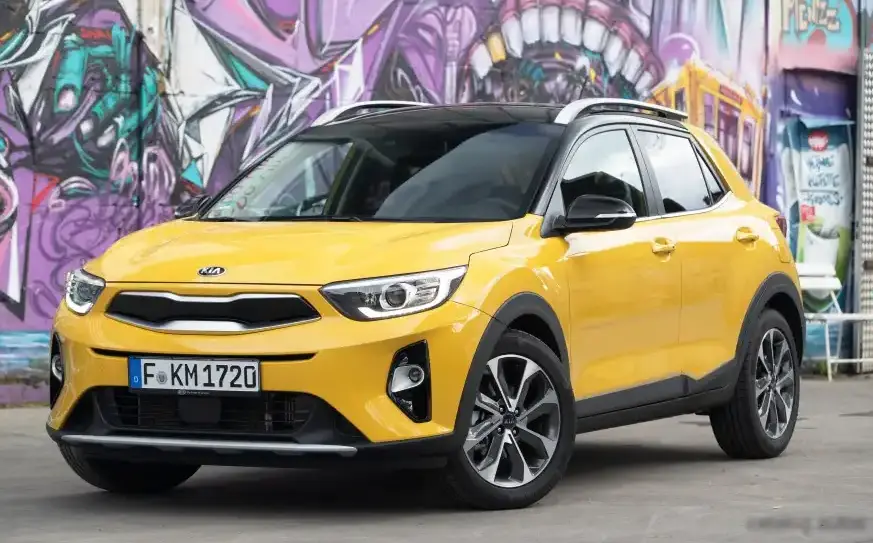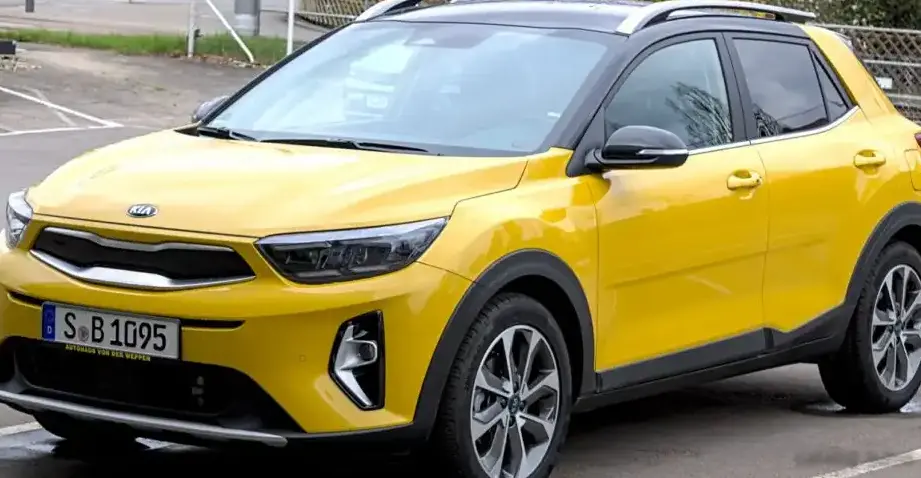
The Kia Stonic, specifically the facelifted version introduced in September 2020 and produced through May 2024, represented Kia’s entry into the highly competitive European subcompact crossover market. The 1.2-liter (84 horsepower) variant, paired with a five-speed manual transmission, served as the base model for many European markets, offering an affordable and fuel-efficient option. Positioned as the entry point to the Stonic range, it aimed to attract buyers prioritizing economy and practicality over outright performance. This model was a key component of Kia’s strategy to expand its presence in the B-segment crossover class, competing with vehicles like the Renault Captur, Peugeot 2008, and Volkswagen T-Cross.
Technical Specifications
| Brand | Kia |
| Model | Stonic |
| Generation | Stonic (facelift 2020) |
| Type (Engine) | 1.2 (84 Hp) |
| Start of production | September, 2020 |
| End of production | May, 2024 |
| Powertrain Architecture | Internal Combustion engine |
| Body type | Crossover |
| Seats | 5 |
| Doors | 5 |
| Combined fuel consumption (WLTP) | 6.1 l/100 km (38.6 US mpg, 46.3 UK mpg, 16.4 km/l) |
| CO2 emissions (WLTP) | 139 g/km |
| Fuel consumption (economy) – urban (NEDC) | 6.6 l/100 km (35.6 US mpg, 42.8 UK mpg, 15.2 km/l) |
| Fuel consumption (economy) – extra urban (NEDC) | 4.7 l/100 km (50 US mpg, 60.1 UK mpg, 21.3 km/l) |
| Fuel consumption (economy) – combined (NEDC) | 5.4 l/100 km (43.6 US mpg, 52.3 UK mpg, 18.5 km/l) |
| CO2 emissions (NEDC) | 123 g/km |
| Fuel Type | Petrol (Gasoline) |
| Acceleration 0 – 100 km/h | 13.5 sec |
| Acceleration 0 – 62 mph | 13.5 sec |
| Acceleration 0 – 60 mph | 12.8 sec |
| Maximum speed | 165 km/h (102.53 mph) |
| Emission standard | Euro 6d-ISC-FCM |
| Weight-to-power ratio | 12.9 kg/Hp, 77.8 Hp/tonne |
| Weight-to-torque ratio | 9.2 kg/Nm, 109.3 Nm/tonne |
| Power | 84 Hp @ 6000 rpm |
| Power per litre | 70.2 Hp/l |
| Torque | 118 Nm @ 4200 rpm (87.03 lb.-ft. @ 4200 rpm) |
| Engine layout | Front, Transverse |
| Engine Model/Code | G4LG |
| Engine displacement | 1197 cm3 (73.05 cu. in.) |
| Number of cylinders | 4 |
| Engine configuration | Inline |
| Cylinder Bore | 71 mm (2.8 in.) |
| Piston Stroke | 75.6 mm (2.98 in.) |
| Compression ratio | 11:1 |
| Number of valves per cylinder | 4 |
| Fuel injection system | Multi-port manifold injection |
| Engine aspiration | Naturally aspirated engine |
| Valvetrain | DOHC |
| Engine oil capacity | 3.4 l (3.59 US qt, 2.99 UK qt) |
| Coolant | 5.4 l (5.71 US qt, 4.75 UK qt) |
| Kerb Weight | 1080-1183 kg (2380.99 – 2608.07 lbs.) |
| Max. weight | 1600 kg (3527.4 lbs.) |
| Max load | 417-520 kg (919.33 – 1146.4 lbs.) |
| Trunk (boot) space – minimum | 352 l (12.43 cu. ft.) |
| Trunk (boot) space – maximum | 1155 l (40.79 cu. ft.) |
| Fuel tank capacity | 45 l (11.89 US gal, 9.9 UK gal) |
| Max. roof load | 70 kg (154.32 lbs.) |
| Permitted trailer load with brakes (12%) | 910 kg (2006.21 lbs.) |
| Permitted trailer load without brakes | 450 kg (992.08 lbs.) |
| Permitted towbar download | 75 kg (165.35 lbs.) |
| Length | 4140 mm (162.99 in.) |
| Width | 1760 mm (69.29 in.) |
| Width including mirrors | 2025 mm (79.72 in.) |
| Height | 1520 mm (59.84 in.) |
| Wheelbase | 2580 mm (101.57 in.) |
| Front track | 1531-1537 mm (60.28 – 60.51 in.) |
| Rear (Back) track | 1539-1544 mm (60.59 – 60.79 in.) |
| Front overhang | 830 mm (32.68 in.) |
| Rear overhang | 730 mm (28.74 in.) |
| Ride height (ground clearance) | 165-183 mm (6.5 – 7.2 in.) |
| Minimum turning circle (turning diameter) | 10.4 m (34.12 ft.) |
| Front suspension | Independent type McPherson, Transverse stabilizer |
| Rear suspension | Coil spring, Elastic beam |
| Front brakes | Ventilated discs, 280 mm |
| Rear brakes | Disc, 262 mm |
| Assisting systems | ABS (Anti-lock braking system) |
| Steering type | Steering rack and pinion |
| Power steering | Electric Steering |
| Tires size | 185/65 R15; 195/55 R16; 205/55 R17 |
| Wheel rims size | 6J x 15; 6J x 16; 6.5J x 17 |
| Number of gears and type of gearbox | 5 gears, manual transmission |
INTRODUCTION
The Kia Stonic, launched in 2017 and receiving a significant facelift in 2020, is a subcompact crossover SUV designed to appeal to buyers seeking a stylish and practical vehicle in a competitive segment. The 1.2-liter, 84 horsepower variant with a five-speed manual transmission was a cornerstone of the Stonic lineup, particularly in European markets. This version was designed to offer a balance of affordability, fuel efficiency, and everyday usability. The facelift brought updated styling, improved technology, and enhanced safety features, further solidifying the Stonic’s position as a viable option in its class. Built on the Hyundai-Kia B-platform, shared with models like the Hyundai Kona, the Stonic aimed to provide a more youthful and dynamic alternative to more established competitors.
Powertrain & Engine Architecture
The heart of this Stonic variant is the Kia G4LG 1.2-liter naturally aspirated inline-four cylinder engine. This engine, a member of Kia’s Gamma family, utilizes multi-point fuel injection and a double overhead camshaft (DOHC) valvetrain with four valves per cylinder. The engine produces 84 horsepower at 6000 rpm and 118 Nm (87 lb-ft) of torque at 4200 rpm. The compression ratio is set at 11:1. The engine is transversely mounted at the front of the vehicle. The five-speed manual transmission is a standard unit, chosen for its simplicity and cost-effectiveness. It features typical gear ratios optimized for fuel economy and acceptable acceleration in urban and highway driving. The transmission lacks advanced features like overdrive, focusing on providing a reliable and straightforward driving experience. The G4LG engine is known for its relatively simple design, contributing to its generally good reliability.
Driving Characteristics
The 1.2-liter Stonic, while not a performance-oriented vehicle, offers adequate performance for everyday driving. Acceleration from 0 to 100 km/h (0-62 mph) takes approximately 13.5 seconds. The engine feels somewhat strained when accelerating hard, particularly when fully loaded or on inclines. The five-speed manual transmission requires frequent shifting to maintain momentum, especially at higher speeds. The gear ratios are spaced to prioritize fuel efficiency over rapid acceleration. Compared to higher-output versions of the Stonic, such as those equipped with the 1.0 T-GDi turbocharged engine, the 1.2-liter feels noticeably less powerful. However, the manual transmission provides a more engaging driving experience than the optional four-speed automatic available on some trims. The steering is light and easy to use, making it well-suited for navigating city streets.
Equipment & Trim Levels
The base 1.2-liter Stonic typically came equipped with a modest level of standard features. These generally included air conditioning, electric front windows, a basic audio system with USB connectivity, and a suite of safety features including ABS, ESC (Electronic Stability Control), and multiple airbags. Higher trim levels, available as options, added features such as alloy wheels, a touchscreen infotainment system with Apple CarPlay and Android Auto compatibility, rear parking sensors, and a rearview camera. Interior upholstery was typically cloth, with a simple and durable design. The dashboard layout was functional and straightforward, prioritizing ease of use over luxury. Optional extras included a panoramic sunroof and various styling packages.
Chassis & Braking
The Stonic utilizes a front-wheel-drive layout with an independent McPherson strut suspension at the front and a torsion beam suspension at the rear. This setup provides a reasonable balance of ride comfort and handling. The front suspension incorporates a transverse stabilizer bar to reduce body roll during cornering. Braking duties are handled by ventilated discs at the front and solid discs at the rear. ABS (Anti-lock Braking System) is standard, enhancing braking performance and stability. The suspension tuning is geared towards comfort, resulting in a relatively soft ride quality. The steering is electrically assisted, providing light and precise control.
Market Reception & Comparison
The 1.2-liter Stonic received generally positive reviews for its affordability, fuel efficiency, and stylish design. Critics noted that the engine lacked outright power, particularly when compared to turbocharged alternatives. However, the combination of a low purchase price and reasonable running costs made it an attractive option for budget-conscious buyers. Compared to other trims in the Stonic lineup, the 1.2-liter offered the lowest price point but sacrificed performance. The more powerful turbocharged engines provided a more refined and engaging driving experience, but at a higher cost. Fuel economy was a strong point for the 1.2-liter, with combined fuel consumption figures around 6.1 l/100 km (38.6 US mpg).
Legacy
The Kia Stonic 1.2-liter has proven to be a reliable and durable vehicle in the used car market. The G4LG engine is known for its relatively simple design and generally good longevity. Maintenance costs are typically low, and parts availability is good. While not a particularly exciting vehicle to drive, the 1.2-liter Stonic offers a practical and affordable transportation solution. Its popularity in European markets has established the Stonic as a credible competitor in the subcompact crossover segment, paving the way for Kia’s continued growth in the region. The model continues to be a common sight on European roads, appreciated for its value and dependability.