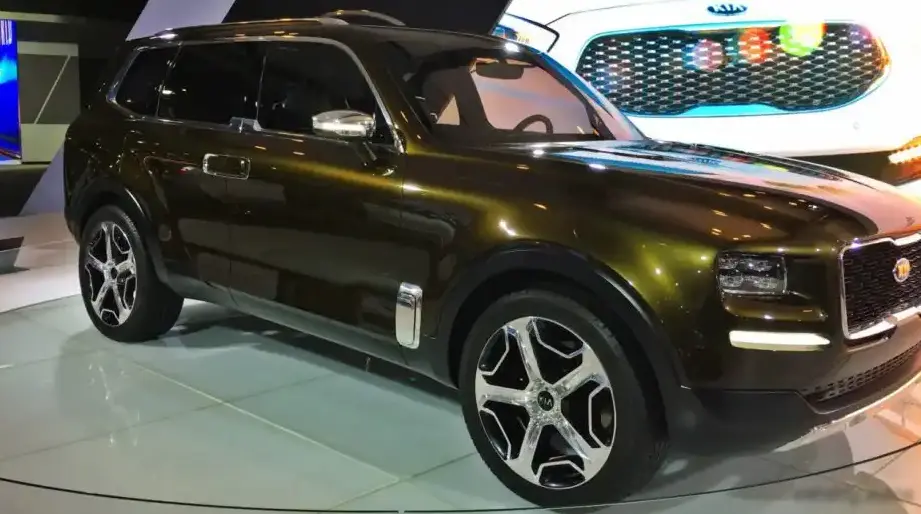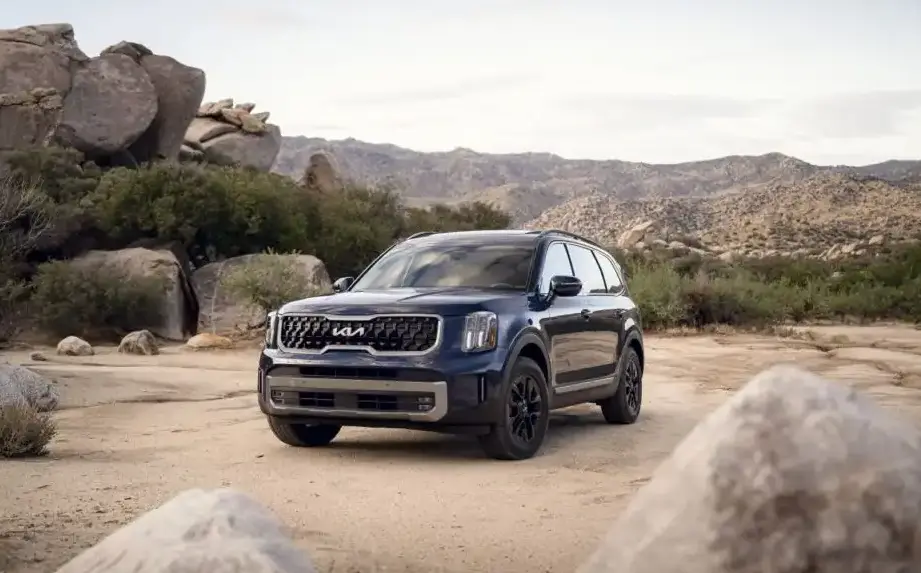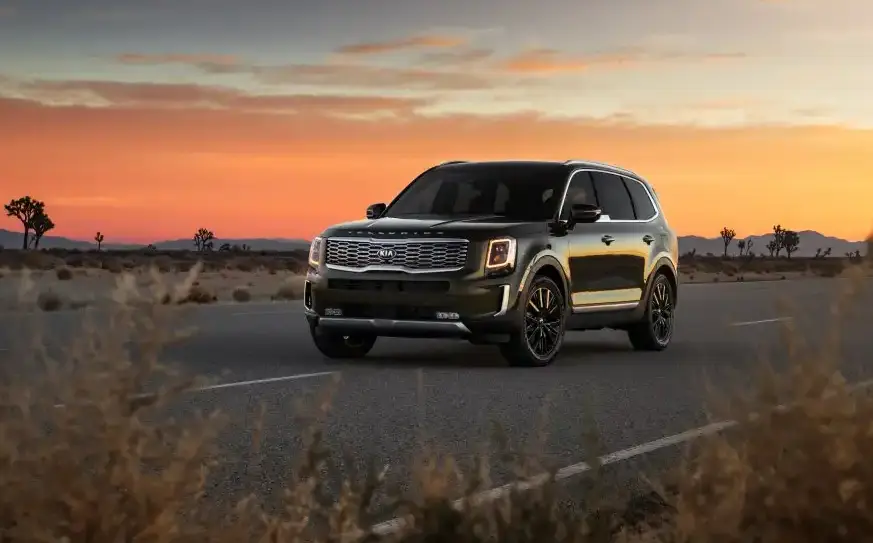
The Kia Telluride, launched for the 2020 model year (with initial production beginning in February 2019), quickly became a standout in the mid-size SUV segment. The 3.8-liter V6 engine paired with an eight-speed automatic transmission and all-wheel drive (AWD) represents a significant portion of the Telluride’s sales volume. This configuration, often referred to as the “Sportmatic” due to the transmission’s selectable shift modes, positioned itself as the sweet spot in the lineup, offering a balance of power, capability, and features for families seeking a spacious and well-equipped vehicle. Production of this initial generation (Telluride I) continued through the 2023 model year.
Technical Specifications
| Brand | Kia |
| Model | Telluride |
| Generation | Telluride I |
| Type (Engine) | 3.8 V6 (291 Hp) AWD Sportmatic |
| Start of production | February, 2019 |
| End of production | 2023 |
| Powertrain Architecture | Internal Combustion engine |
| Body type | SUV |
| Seats | 7-8 |
| Doors | 5 |
| Fuel consumption (economy) – urban (EPA) | 12.4 l/100 km (19 US mpg, 22.8 UK mpg, 8.1 km/l) |
| Fuel consumption (economy) – extra urban (EPA) | 9.8 l/100 km (24 US mpg, 28.8 UK mpg, 10.2 km/l) |
| Fuel consumption (economy) – combined (EPA) | 11.2 l/100 km (21 US mpg, 25.2 UK mpg, 8.9 km/l) |
| Fuel Type | Petrol (Gasoline) |
| Emission standard | ULEV70 |
| Weight-to-power ratio | 6.6 kg/Hp, 150.8 Hp/tonne |
| Weight-to-torque ratio | 5.4 kg/Nm, 183.9 Nm/tonne |
| Power | 291 Hp @ 6000 rpm |
| Power per litre | 77 Hp/l |
| Torque | 355 Nm @ 5200 rpm (261.83 lb.-ft. @ 5200 rpm) |
| Engine layout | Front, Transverse |
| Engine Model/Code | Lambda II / G6DN |
| Engine displacement | 3778 cm3 (230.55 cu. in.) |
| Number of cylinders | 6 |
| Engine configuration | V-engine |
| Cylinder Bore | 96 mm (3.78 in.) |
| Piston Stroke | 87 mm (3.43 in.) |
| Compression ratio | 13:1 |
| Number of valves per cylinder | 4 |
| Fuel injection system | Direct injection |
| Engine aspiration | Naturally aspirated engine |
| Valvetrain | DOHC, Dual CVVT |
| Engine oil capacity | 6.5 l (6.87 US qt | 5.72 UK qt) |
| Coolant | 12.2 l (12.89 US qt | 10.73 UK qt) |
| Kerb Weight | 1930-2033 kg (4254.92 – 4482 lbs.) |
| Max. weight | 2620-2684 kg (5776.11 – 5917.21 lbs.) |
| Max load | 651-690 kg (1435.21 – 1521.19 lbs.) |
| Trunk (boot) space – minimum | 595 l (21.01 cu. ft.) |
| Trunk (boot) space – maximum | 2464 l (87.02 cu. ft.) |
| Fuel tank capacity | 71 l (18.76 US gal | 15.62 UK gal) |
| Permitted trailer load with brakes (12%) | 2268 kg (5000.08 lbs.) |
| Length | 5000 mm (196.85 in.) |
| Width | 1990 mm (78.35 in.) |
| Height | 1750 mm (68.9 in.) |
| Wheelbase | 2900 mm (114.17 in.) |
| Front track | 1708 mm (67.24 in.) |
| Rear (Back) track | 1716 mm (67.56 in.) |
| Ride height (ground clearance) | 203 mm (7.99 in.) |
| Minimum turning circle (turning diameter) | 11.8 m (38.71 ft.) |
| Front brakes | Ventilated discs, 340 mm |
| Rear brakes | Disc, 305 mm |
| Number of gears and type of gearbox | 8 gears, automatic transmission Sportmatic |
Powertrain & Engine Architecture
The heart of this Telluride variant is Kia’s Lambda II 3.8-liter naturally aspirated V6 engine, designated as the G6DN engine code. This engine utilizes direct injection, a technology that improves fuel efficiency and power output by injecting fuel directly into the combustion chamber. The engine also features a Dual Continuous Variable Valve Timing (CVVT) system, optimizing valve timing for improved performance across the engine’s operating range. The Lambda II engine is known for its smooth operation and relatively simple design, contributing to its overall reliability. The eight-speed automatic transmission, sourced from Hyundai Powertech, is a crucial component. The “Sportmatic” designation refers to the transmission’s ability to allow the driver to manually select gears, offering a degree of control over the driving experience. The transmission’s gear ratios are tuned for a balance of acceleration and fuel economy, with a relatively tall final drive ratio to aid in highway cruising.
Driving Characteristics
The 3.8L V6 and eight-speed automatic combination delivers a comfortable and capable driving experience. While not a performance-oriented setup, the 291 horsepower and 261 lb-ft of torque provide ample power for everyday driving and highway passing maneuvers. Acceleration from 0 to 60 mph typically takes around 7.5-8.0 seconds. Compared to the base 2.0L turbocharged four-cylinder engine, the V6 offers a more linear power delivery and a more refined feel. It also feels significantly more powerful than the later-introduced hybrid variant. The eight-speed automatic generally shifts smoothly, although some drivers have noted occasional hesitation during downshifts. The AWD system provides enhanced traction in inclement weather conditions, making it a suitable vehicle for regions with snow or rain. The transmission’s Sportmatic mode allows for more engaged driving, but it doesn’t transform the Telluride into a sporty SUV.
Equipment & Trim Levels
The 3.8L V6 AWD Sportmatic was available across several Telluride trim levels, including the EX, SX, and Limited. The EX trim typically included features such as leather upholstery, heated front seats, a power driver’s seat, and a suite of advanced driver-assistance systems (ADAS) like forward collision avoidance assist and lane keeping assist. The SX trim added features like a panoramic sunroof, premium audio system, and a larger touchscreen display. The top-of-the-line Limited trim included features like Nappa leather upholstery, ventilated front and rear seats, and a head-up display. Optional extras included a tow package, premium paint colors, and various accessory packages.
Chassis & Braking
The Telluride utilizes a robust chassis designed for both on-road comfort and light off-road capability. The front suspension features a McPherson strut design with coil springs and an anti-roll bar, while the rear suspension employs an independent multi-link setup, also with a stabilizer bar. This suspension configuration provides a comfortable ride quality while maintaining good handling characteristics. Braking duties are handled by ventilated discs at the front and solid discs at the rear. The Telluride is equipped with ABS, electronic stability control, and traction control as standard safety features. The brake system is generally considered adequate for the vehicle’s weight and performance.
Market Reception & Comparison
The Kia Telluride, and particularly the 3.8L V6 AWD variant, received overwhelmingly positive reviews from automotive critics. It was praised for its spacious interior, comfortable ride, long list of standard features, and competitive pricing. Compared to rivals like the Honda Pilot, Toyota Highlander, and Ford Explorer, the Telluride offered a more upscale interior and a more engaging driving experience at a similar price point. Fuel economy was generally considered average for the segment, with the EPA-estimated 21 mpg combined being comparable to its competitors. Reliability has been generally good, although some owners have reported minor issues with the infotainment system.
Legacy
The Kia Telluride quickly established itself as a benchmark in the mid-size SUV segment. The 3.8L V6 AWD Sportmatic powertrain has proven to be reliable and durable, with many examples exceeding 100,000 miles without major mechanical issues. On the used car market, these Tellurides hold their value well due to their strong reputation and high demand. The success of the first-generation Telluride paved the way for a refreshed model in 2024, continuing Kia’s commitment to offering a compelling and well-rounded SUV option for families.