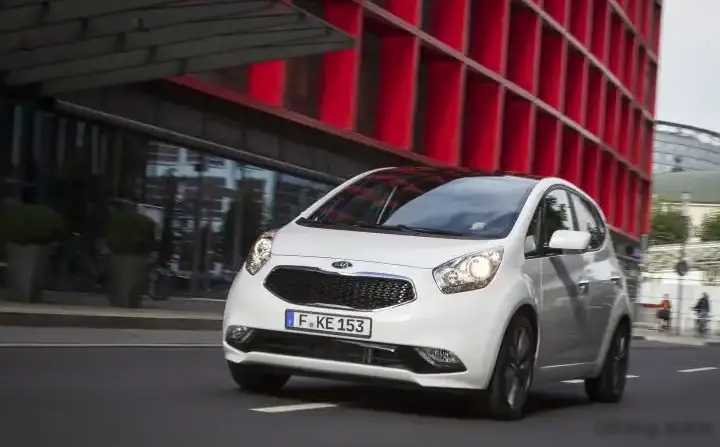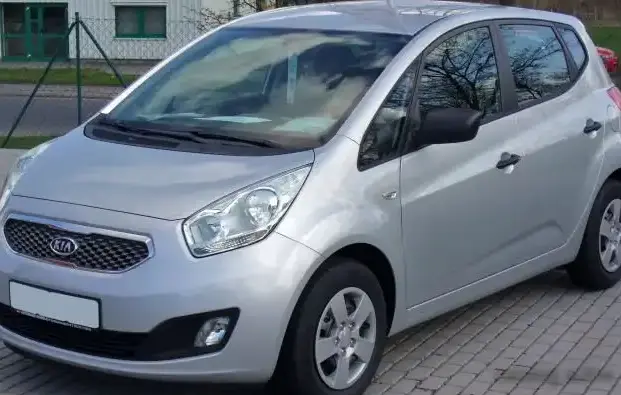
The Kia Venga (YN) 1.6 16V CVVT with a 125 horsepower engine and automatic transmission was a key variant in Kia’s European small MPV lineup, produced from 2010 to 2014. Positioned as a mid-range offering, it aimed to provide a balance between affordability, practicality, and convenience for families and urban drivers. The Venga, Kia’s first model specifically designed for the European market, sought to challenge established players in the B-segment multi-purpose vehicle (MPV) class. This particular engine and transmission combination represented a popular choice for buyers prioritizing ease of use over outright performance.
Technical Specifications
| Brand | Kia |
| Model | Venga |
| Generation | Venga (YN) |
| Type (Engine) | 1.6 16V CVVT (125 Hp) Automatic |
| Start of production | 2010 |
| End of production | 2014 |
| Powertrain Architecture | Internal Combustion engine |
| Body type | Hatchback |
| Seats | 5 |
| Doors | 5 |
| Fuel consumption (urban) | 9 l/100 km (26.1 US mpg, 31.4 UK mpg, 11.1 km/l) |
| Fuel consumption (extra urban) | 5.8 l/100 km (40.6 US mpg, 48.7 UK mpg, 17.2 km/l) |
| Fuel consumption (combined) | 7 l/100 km (33.6 US mpg, 40.4 UK mpg, 14.3 km/l) |
| Fuel Type | Petrol (Gasoline) |
| Acceleration 0 – 100 km/h | 12.2 sec |
| Acceleration 0 – 62 mph | 12.2 sec |
| Acceleration 0 – 60 mph | 11.6 sec |
| Maximum speed | 178 km/h (110.6 mph) |
| Emission standard | Euro 5 |
| Weight-to-power ratio | 10.4 kg/Hp, 96.6 Hp/tonne |
| Weight-to-torque ratio | 8.3 kg/Nm, 120.6 Nm/tonne |
| Power | 125 Hp |
| Power per litre | 78.6 Hp/l |
| Torque | 156 Nm @ 4200 rpm (115.06 lb.-ft. @ 4200 rpm) |
| Engine layout | Front, Transverse |
| Engine Model/Code | G4FC |
| Engine displacement | 1591 cm3 (97.09 cu. in.) |
| Number of cylinders | 4 |
| Engine configuration | Inline |
| Number of valves per cylinder | 4 |
| Fuel injection system | Multi-port manifold injection |
| Engine aspiration | Naturally aspirated engine |
| Valvetrain | DOHC |
| Engine oil capacity | 3.3 l (3.49 US qt | 2.9 UK qt) |
| Coolant capacity | 5.3 l (5.6 US qt | 4.66 UK qt) |
| Kerb Weight | 1294 kg (2852.78 lbs.) |
| Max. weight | 1730 kg (3814 lbs.) |
| Max load | 436 kg (961.22 lbs.) |
| Trunk (boot) space – minimum | 440 l (15.54 cu. ft.) |
| Fuel tank capacity | 48 l (12.68 US gal | 10.56 UK gal) |
| Length | 4068 mm (160.16 in.) |
| Width | 1765 mm (69.49 in.) |
| Height | 1600 mm (62.99 in.) |
| Wheelbase | 2615 mm (102.95 in.) |
| Minimum turning circle | 10.4 m (34.12 ft.) |
| Drivetrain Architecture | The Internal combustion engine (ICE) drives the front wheels of the vehicle. |
| Drive wheel | Front wheel drive |
| Number of gears | 4 |
| Gearbox type | automatic transmission |
| Assisting systems | ABS (Anti-lock braking system) |
| Steering type | Steering rack and pinion |
| Tires size | 205/55 R16 |
| Wheel rims size | 16 |
Introduction
The Kia Venga, launched in 2010, represented a significant step for the Korean automaker in targeting the European market. Designed as a compact MPV, it aimed to offer a more spacious and versatile alternative to traditional hatchback models. The YN series, the first generation Venga, was built on Kia’s own platform, rather than sharing underpinnings with other manufacturers. The 1.6L CVVT engine paired with a four-speed automatic transmission was a popular configuration, offering a balance of fuel efficiency and ease of driving. It sat in the middle of the Venga range, above the base 1.4L engine and below the more powerful 1.6L direct injection (GDI) variants.
Powertrain & Engine Architecture
The heart of this Venga variant is the Kia G4FC 1.6-liter inline-four cylinder engine. This engine utilizes a multi-point fuel injection system and a double overhead camshaft (DOHC) valvetrain with continuously variable valve timing (CVVT) on both intake and exhaust sides. The CVVT system optimizes engine performance and fuel efficiency by adjusting valve timing based on engine speed and load. The engine produces 125 horsepower and 156 Nm (115 lb-ft) of torque at 4200 rpm. The four-speed automatic transmission, while not the most modern, was chosen for its reliability and cost-effectiveness. It features conventional hydraulic control and provides smooth, if not particularly quick, gear changes. The engine code ‘G4FC’ is crucial for identifying specific parts and service information.
Driving Characteristics
The 1.6L automatic Venga offered a comfortable and predictable driving experience. Acceleration was adequate for everyday driving, with a 0-60 mph time of around 11.6 seconds. However, it wasn’t designed for spirited performance. The four-speed automatic transmission, while smooth, lacked the responsiveness of more modern transmissions with more gears. Gear ratios were tuned for fuel economy rather than outright acceleration. Compared to the manual transmission versions of the 1.6L engine, the automatic offered less direct control and slightly reduced fuel efficiency. The higher-output 1.6 GDI models provided significantly more power and a more engaging driving experience, but at a higher price point.
Equipment & Trim Levels
The 1.6 16V CVVT Automatic Venga typically came equipped with features such as air conditioning, electric front windows, central locking, and a basic audio system with USB connectivity. Higher trim levels, such as the ‘2’ or ‘3’ variants, added features like alloy wheels, rear electric windows, a more advanced audio system, and fog lights. Interior upholstery was typically cloth, with options for different color schemes. Optional extras included a sunroof, parking sensors, and a navigation system. The dashboard layout was functional and straightforward, prioritizing ease of use over aesthetic flair.
Chassis & Braking
The Venga’s chassis featured a MacPherson strut front suspension and a torsion beam rear suspension. This setup provided a comfortable ride quality, well-suited for urban driving. Braking systems varied depending on the trim level. Lower trims typically featured disc brakes on the front wheels and drum brakes on the rear, while higher trims often included disc brakes all around. Anti-lock Braking System (ABS) was standard across the range. Stabilizer bars were fitted to both the front and rear axles to reduce body roll during cornering. The suspension was tuned for comfort rather than sporty handling.
Market Reception & Comparison
The Kia Venga 1.6 Automatic received generally positive reviews for its practicality, spacious interior, and competitive price. Critics praised its comfortable ride and ease of driving, making it a good choice for families and urban commuters. However, the four-speed automatic transmission was often criticized for being somewhat dated and lacking responsiveness. Compared to rivals like the Renault Modus, Opel Meriva, and Ford Fusion, the Venga offered a strong value proposition with a generous warranty. Fuel economy was competitive, but not class-leading. Reliability proved to be good, with few reported issues with the engine or transmission.
Legacy
The Kia Venga 1.6 16V CVVT Automatic has proven to be a relatively reliable and durable vehicle in the used car market. The G4FC engine is known for its longevity, and the four-speed automatic transmission, while not sophisticated, is generally robust. Common maintenance items include regular oil changes, timing belt replacement (typically around 60,000 miles), and inspection of the cooling system. Today, these Vengas represent an affordable and practical option for buyers seeking a small MPV with a proven track record. While not a performance car, its blend of practicality, comfort, and reliability continues to appeal to a wide range of drivers.