Technical Specifications
| Brand | Kia |
| Model | Venga |
| Generation | Venga (YN) |
| Type (Engine) | 1.6 CRDI 16V (128 Hp) |
| Start of production | 2010 |
| End of production | 2014 |
| Powertrain Architecture | Internal Combustion engine |
| Body type | Hatchback |
| Seats | 5 |
| Doors | 5 |
| Fuel consumption (urban) | 5.8 l/100 km (40.6 US mpg, 48.7 UK mpg, 17.2 km/l) |
| Fuel consumption (extra urban) | 4.4 l/100 km (53.5 US mpg, 64.2 UK mpg, 22.7 km/l) |
| Fuel consumption (combined) | 4.9 l/100 km (48 US mpg, 57.6 UK mpg, 20.4 km/l) |
| Fuel Type | Diesel |
| Acceleration 0 – 100 km/h | 11.1 sec |
| Acceleration 0 – 62 mph | 11.1 sec |
| Acceleration 0 – 60 mph | 10.5 sec |
| Maximum speed | 185 km/h (114.95 mph) |
| Emission standard | Euro 5 |
| Weight-to-power ratio | 10.8 kg/Hp, 92.8 Hp/tonne |
| Weight-to-torque ratio | 5.3 kg/Nm, 188.4 Nm/tonne |
| Power | 128 Hp |
| Power per litre | 80.9 Hp/l |
| Torque | 260 Nm @ 1900 rpm (191.77 lb.-ft. @ 1900 rpm) |
| Engine layout | Front, Transverse |
| Engine Model/Code | D4FB |
| Engine displacement | 1582 cm3 (96.54 cu. in.) |
| Number of cylinders | 4 |
| Engine configuration | Inline |
| Number of valves per cylinder | 4 |
| Fuel injection system | Diesel Commonrail |
| Engine aspiration | Turbocharger, Intercooler |
| Valvetrain | DOHC |
| Engine oil capacity | 5.3 l (5.6 US qt | 4.66 UK qt) |
| Coolant capacity | 6.4 l (6.76 US qt | 5.63 UK qt) |
| Kerb Weight | 1380 kg (3042.38 lbs.) |
| Max. weight | 1810 kg (3990.37 lbs.) |
| Max load | 430 kg (947.99 lbs.) |
| Trunk (boot) space – minimum | 440 l (15.54 cu. ft.) |
| Fuel tank capacity | 48 l (12.68 US gal | 10.56 UK gal) |
| Length | 4068 mm (160.16 in.) |
| Width | 1765 mm (69.49 in.) |
| Height | 1600 mm (62.99 in.) |
| Wheelbase | 2615 mm (102.95 in.) |
| Minimum turning circle | 10.4 m (34.12 ft.) |
| Drivetrain Architecture | Front wheel drive |
| Number of gears | 6 |
| Gearbox type | Manual transmission |
| Assisting systems | ABS (Anti-lock braking system) |
| Steering type | Steering rack and pinion |
| Tires size | 205/55 R16 |
| Wheel rims size | 16 |
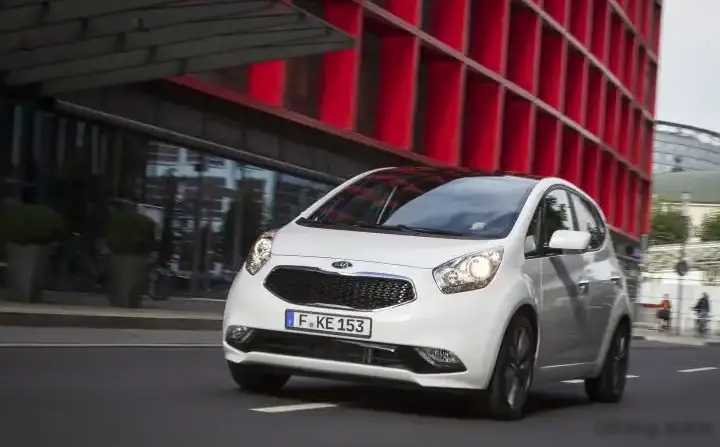
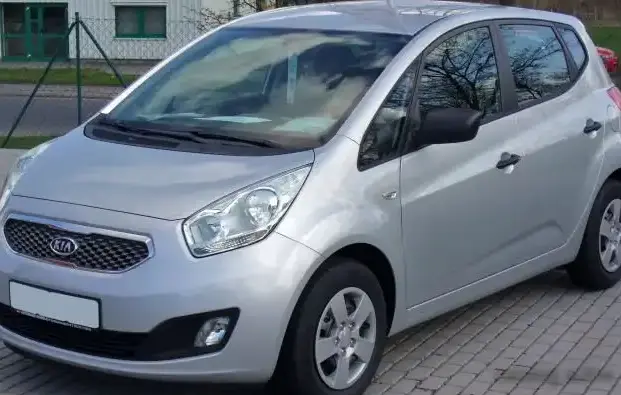
The Kia Venga 1.6 CRDI 16V (YN) was introduced in 2010 as part of the first generation Venga model range. Built on Kia’s ‘YN’ platform, it was designed as a compact multi-purpose vehicle (MPV) aimed at providing a practical and affordable option for families and individuals needing flexible space. The Venga was a departure for Kia in the European market, focusing on maximizing interior volume within a relatively small footprint. This 128 hp diesel variant was a popular choice, offering a balance between fuel efficiency and usable performance for everyday driving.
Powertrain & Engine Architecture
At the heart of the Venga 1.6 CRDI was the D4FB engine, a 1.6-liter inline-four cylinder diesel engine. This engine utilized a second-generation common rail direct injection system, delivering fuel at extremely high pressures for optimized combustion. The engine featured a turbocharger with an intercooler, boosting power output and improving torque delivery. The 16-valve DOHC (Double Overhead Camshaft) configuration further enhanced breathing and efficiency. The engine produced 128 horsepower and a substantial 260 Nm (191.77 lb-ft) of torque at just 1900 rpm, making it surprisingly responsive for its size. The Venga 1.6 CRDI was typically paired with a six-speed manual transmission, providing precise gear changes and contributing to the vehicle’s fuel economy. The engine was designed to meet Euro 5 emission standards, incorporating a diesel particulate filter (DPF) to reduce harmful emissions.
Driving Characteristics
The Venga 1.6 CRDI with the manual transmission offered a reasonably engaging driving experience. While not a performance-oriented vehicle, the engine’s torque output provided ample power for overtaking and maintaining highway speeds. The six-speed gearbox allowed for efficient cruising, and the relatively short gearing kept the engine within its optimal power band. Compared to the lower-powered 1.4-liter gasoline engine option, the 1.6 CRDI offered significantly more punch. It also outperformed the base diesel in terms of acceleration and overall responsiveness. However, it didn’t match the refinement or outright power of larger engine options available in other MPVs. The suspension was tuned for comfort, providing a compliant ride on most road surfaces, although body roll was noticeable during cornering.
Equipment & Trim Levels
The Venga 1.6 CRDI was available in several trim levels, typically including base, LS, and EX variants. Standard equipment on the base model included air conditioning, electric front windows, a radio/CD player, and ABS brakes. The LS trim added features like alloy wheels, remote central locking, and a trip computer. The top-of-the-line EX trim offered additional luxuries such as climate control, parking sensors, and a more sophisticated audio system. Interior upholstery was typically cloth, with options for upgraded materials on higher trims. The dashboard layout was functional and straightforward, prioritizing usability over stylistic flair. Optional extras included a panoramic sunroof, leather upholstery, and a navigation system.
Chassis & Braking
The Venga utilized a front-wheel-drive platform with a MacPherson strut suspension at the front and a torsion beam suspension at the rear. This setup provided a good balance between ride comfort and handling. Braking duties were handled by disc brakes on the front wheels and drum brakes on the rear wheels. ABS (Anti-lock Braking System) was standard across all trim levels. The steering was a rack and pinion system, offering reasonable precision and feedback. Stabilizer bars were fitted to both the front and rear axles to reduce body roll during cornering. The Venga’s relatively lightweight construction contributed to its agility and fuel efficiency.
Market Reception & Comparison
The Kia Venga 1.6 CRDI was generally well-received by automotive critics for its practicality, fuel efficiency, and competitive pricing. It was praised for its spacious interior and flexible seating arrangements. However, some reviewers noted that the interior materials felt somewhat low-rent compared to some of its rivals. Compared to other MPVs in its class, the Venga offered a compelling value proposition, particularly in terms of standard equipment. Its fuel economy was competitive with other diesel-powered MPVs, and its reliability proved to be generally good. The 1.6 CRDI engine offered a noticeable improvement in performance over the smaller gasoline engines, making it a popular choice for drivers who frequently carried passengers or cargo.
Legacy
The Kia Venga 1.6 CRDI (YN) has proven to be a reliable and durable vehicle in the used car market. The D4FB engine, while not without its potential issues (such as DPF clogging if not properly maintained), is generally considered robust and long-lasting. Common maintenance items include regular oil changes, filter replacements, and periodic DPF regeneration. Today, used Vengas with this engine are available at affordable prices, making them an attractive option for budget-conscious buyers seeking a practical and fuel-efficient MPV. The Venga helped establish Kia as a serious contender in the European small car market, paving the way for future models and demonstrating the brand’s commitment to quality and value.