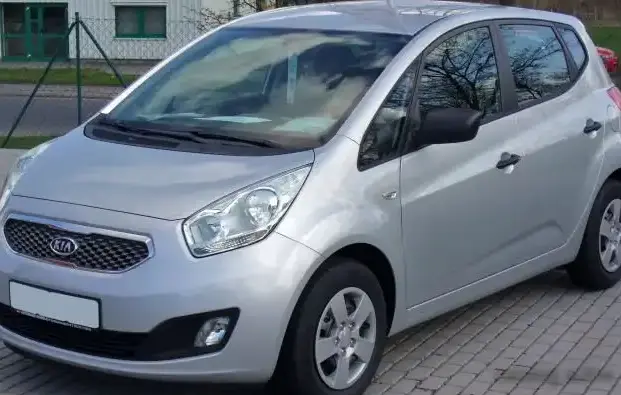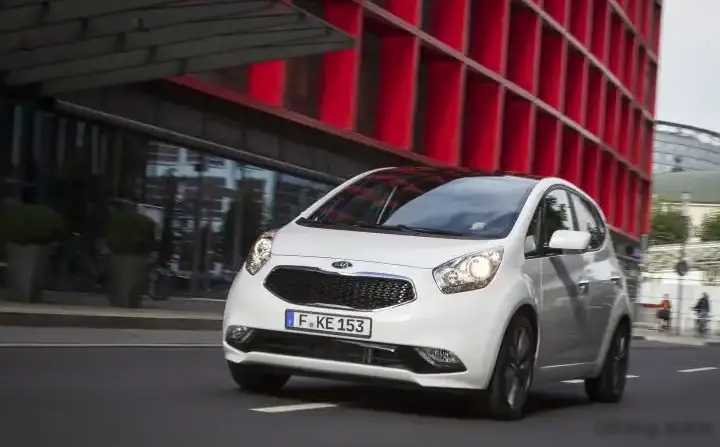
The Kia Venga (YN) facelift, specifically the 1.6-liter (125 hp) automatic variant, represents a significant offering in the European B-segment multi-purpose vehicle (MPV) market. Introduced in 2014, this iteration of the Venga built upon the original YN platform launched in 2009, incorporating styling updates and refined powertrain options. Positioned as a mid-range trim, it aimed to provide a balance between affordability, practicality, and convenience, appealing to families and individuals seeking a versatile and economical vehicle. The Venga, unlike many of its competitors, was primarily designed for the European market, and was not widely sold in North America.
Technical Specifications
| Brand | Kia |
| Model | Venga |
| Generation | Venga (YN, facelift 2014) |
| Type (Engine) | 1.6 (125 Hp) Automatic |
| Start of production | 2014 |
| Powertrain Architecture | Internal Combustion engine |
| Body type | Hatchback |
| Seats | 5 |
| Doors | 5 |
| Fuel consumption (urban) | 8.6 l/100 km (27.4 US mpg) |
| Fuel consumption (extra urban) | 5.2 l/100 km (45.2 US mpg) |
| Fuel consumption (combined) | 6.5 l/100 km (36.2 US mpg) |
| CO2 emissions | 150 g/km |
| Fuel Type | Petrol (Gasoline) |
| Acceleration 0 – 100 km/h | 12.2 sec |
| Acceleration 0 – 62 mph | 12.2 sec |
| Acceleration 0 – 60 mph | 11.6 sec |
| Maximum speed | 180 km/h (111.85 mph) |
| Emission standard | Euro 6 |
| Weight-to-power ratio | 9.8 kg/Hp |
| Weight-to-torque ratio | 7.8 kg/Nm |
| Power | 125 Hp @ 6300 rpm |
| Torque | 156 Nm @ 4200 rpm (115.06 lb.-ft. @ 4200 rpm) |
| Engine layout | Front, Transverse |
| Engine Model/Code | G4FC |
| Engine displacement | 1591 cm3 (97.09 cu. in.) |
| Number of cylinders | 4 |
| Engine configuration | Inline |
| Cylinder Bore | 77 mm (3.03 in.) |
| Piston Stroke | 85.44 mm (3.36 in.) |
| Compression ratio | 10.5:1 |
| Number of valves per cylinder | 4 |
| Fuel injection system | Multi-port manifold injection |
| Engine aspiration | Naturally aspirated engine |
| Engine oil capacity | 3.3 l (3.49 US qt | 2.9 UK qt) |
| Coolant | 5.3 l (5.6 US qt | 4.66 UK qt) |
| Kerb Weight | 1222-1335 kg (2694.05 – 2943.17 lbs.) |
| Max. weight | 1780 kg (3924.23 lbs.) |
| Max load | 445-558 kg (981.06 – 1230.18 lbs.) |
| Trunk (boot) space – minimum | 314 l (11.09 cu. ft.) |
| Trunk (boot) space – maximum | 1486 l (52.48 cu. ft.) |
| Fuel tank capacity | 50 l (13.21 US gal | 11 UK gal) |
| Max. roof load | 70 kg (154.32 lbs.) |
| Permitted trailer load with brakes (12%) | 1100 kg (2425.08 lbs.) |
| Permitted trailer load without brakes | 550 kg (1212.54 lbs.) |
| Permitted towbar download | 75 kg (165.35 lbs.) |
| Length | 4075 mm (160.43 in.) |
| Width | 1765 mm (69.49 in.) |
| Width including mirrors | 2020 mm (79.53 in.) |
| Height | 1600 mm (62.99 in.) |
| Wheelbase | 2615 mm (102.95 in.) |
| Front track | 1541-1553 mm (60.67 – 61.14 in.) |
| Rear (Back) track | 1545-1557 mm (60.83 – 61.3 in.) |
| Front overhang | 792 mm (31.18 in.) |
| Rear overhang | 668 mm (26.3 in.) |
| Minimum turning circle | 10.42 m (34.19 ft.) |
| Drivetrain Architecture | Front wheel drive |
| Number of gears and type of gearbox | 6 gears, automatic transmission |
| Front suspension | Independent, type McPherson with coil spring and anti-roll bar |
| Rear suspension | Semi-independent, coil spring |
| Front brakes | Ventilated discs |
| Rear brakes | Disc |
| Assisting systems | ABS (Anti-lock braking system) |
| Steering type | Steering rack and pinion |
| Power steering | Electric Steering |
| Tires size | 195/65 R15; 205/55 R16; 205/50 R17 |
| Wheel rims size | 6.0J X 15; 6.0J X 16; 6.5J X 17 |
INTRODUCTION
The Kia Venga, launched in 2009 and facelifted in 2014, was Kia’s foray into the European B-segment MPV market. Designed specifically to appeal to European tastes, it offered a more spacious and practical alternative to traditional hatchbacks. The 1.6-liter, 125 horsepower automatic variant, introduced with the facelift, aimed to broaden the Venga’s appeal by offering a convenient and accessible entry point into the range. This trim level sat comfortably in the middle of the lineup, offering a step up from the base 1.4-liter engine while remaining more affordable than the more powerful 1.6-liter direct injection (GDI) options.
Powertrain & Engine Architecture
The heart of this Venga variant is the Kia G4FC 1.6-liter inline-four cylinder gasoline engine. This engine, a mainstay in several Kia and Hyundai models, utilizes a multi-point fuel injection system. While not featuring direct injection, it provides a good balance of fuel efficiency and adequate power for everyday driving. The engine produces 125 hp at 6,300 rpm and 156 Nm (115 lb-ft) of torque at 4,200 rpm. The engine features a single overhead camshaft (SOHC) valvetrain with four valves per cylinder. Paired with this engine is a six-speed automatic transmission, offering smooth gear changes and ease of use, particularly in urban environments. This transmission isn’t known for being particularly sporty, prioritizing comfort and fuel economy over rapid shifts.
Driving Characteristics
The 1.6-liter automatic Venga delivers a comfortable, if not particularly exhilarating, driving experience. Acceleration from 0-60 mph takes around 11.6 seconds, and top speed is rated at 111.85 mph. The automatic transmission, while convenient, does impact performance somewhat. The gear ratios are tuned for fuel efficiency, meaning the engine can feel strained during quick acceleration or when climbing hills. Compared to the manual transmission versions of the 1.6, the automatic sacrifices some responsiveness. However, for drivers prioritizing ease of use and a relaxed driving experience, the automatic is a suitable choice. The Venga’s suspension is tuned for comfort, absorbing bumps and imperfections in the road well.
Equipment & Trim Levels
The 1.6-liter automatic Venga typically came equipped with a reasonable level of standard features. These included air conditioning, electric front and rear windows, central locking, a radio with USB connectivity, and ABS brakes. Higher trim levels, available as options, added features such as alloy wheels, a touchscreen infotainment system, rear parking sensors, and cruise control. Interior upholstery was typically cloth, with a functional and durable design. The Venga’s interior is known for its practicality, with numerous storage compartments and a flexible seating arrangement.
Chassis & Braking
The Venga utilizes a front-wheel-drive layout with an independent McPherson strut suspension at the front and a semi-independent coil spring suspension at the rear. This setup provides a comfortable ride and predictable handling. Braking duties are handled by ventilated discs at the front and solid discs at the rear. ABS (Anti-lock Braking System) is standard, enhancing safety during emergency braking situations. The Venga’s chassis is designed to prioritize comfort and practicality over sporty handling, resulting in a stable and predictable driving experience.
Market Reception & Comparison
The Kia Venga, and specifically the 1.6-liter automatic variant, received generally positive reviews for its practicality, spaciousness, and value for money. Critics praised its comfortable ride and well-equipped interior. However, some noted that the engine lacked outright power and the automatic transmission wasn’t the most responsive. Compared to other B-segment MPVs like the Renault Modus or Opel Meriva, the Venga offered a competitive package with a longer warranty and a more modern design. Fuel economy was respectable, averaging around 36.2 US mpg in combined driving, making it an economical choice for daily commutes.
Legacy
The Kia Venga, while discontinued in Europe in 2019, remains a popular choice in the used car market. The 1.6-liter automatic powertrain is generally considered reliable, with few major issues reported. Regular maintenance, including oil changes and timing belt replacements, is crucial for ensuring long-term reliability. The Venga’s simple engine design and robust automatic transmission contribute to its durability. Today, it represents a practical and affordable option for buyers seeking a spacious and versatile MPV.