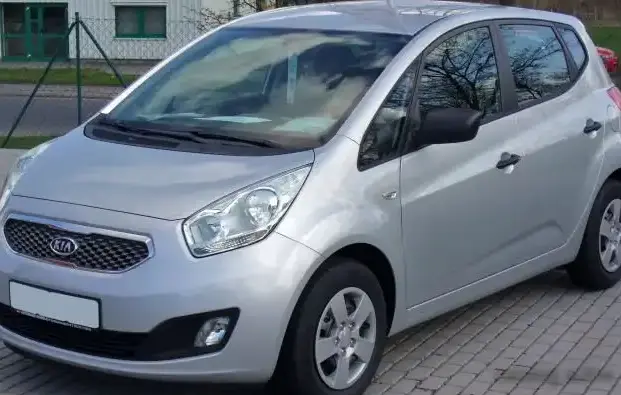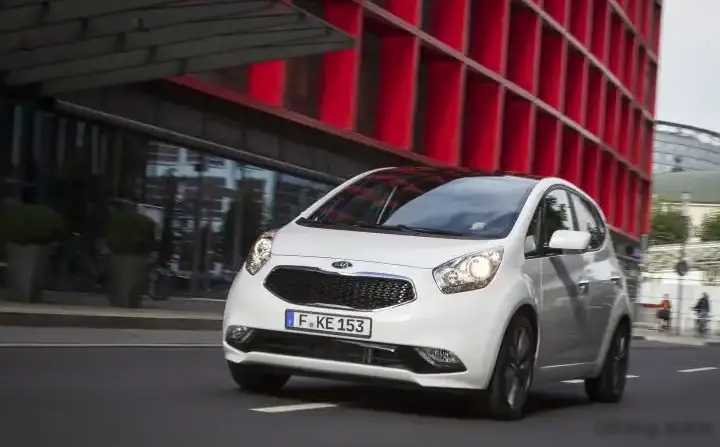
The Kia Venga (YN) facelift, introduced in 2014, represented a mid-cycle refresh of Kia’s B-segment MPV, marketed primarily in Europe. This variant, equipped with the 1.6 CRDI diesel engine producing 128 horsepower, occupied a middle ground within the Venga lineup, offering a balance between fuel efficiency, performance, and affordability. Production continued until the end of the Venga’s lifecycle, with this engine becoming a popular choice for buyers seeking a practical and economical family vehicle. The facelift brought subtle styling updates and improvements to interior trim and equipment levels.
Technical Specifications
| Brand | Kia |
| Model | Venga |
| Generation | Venga (YN, facelift 2014) |
| Type (Engine) | 1.6 CRDI (128 Hp) |
| Start of production | 2014 |
| Powertrain Architecture | Internal Combustion engine |
| Body type | Hatchback |
| Seats | 5 |
| Doors | 5 |
| Fuel consumption (urban) | 5.5 l/100 km (42.8 US mpg, 51.4 UK mpg, 18.2 km/l) |
| Fuel consumption (extra urban) | 4 l/100 km (58.8 US mpg, 70.6 UK mpg, 25 km/l) |
| Fuel consumption (combined) | 4.5 l/100 km (52.3 US mpg, 62.8 UK mpg, 22.2 km/l) |
| CO2 emissions | 120 g/km |
| Fuel Type | Diesel |
| Acceleration 0 – 100 km/h | 11.1 sec |
| Acceleration 0 – 62 mph | 11.1 sec |
| Acceleration 0 – 60 mph | 10.5 sec |
| Maximum speed | 185 km/h (114.95 mph) |
| Emission standard | Euro 6 |
| Weight-to-power ratio | 10 kg/Hp, 99.9 Hp/tonne |
| Weight-to-torque ratio | 4.9 kg/Nm, 203 Nm/tonne |
| Power | 128 Hp @ 4000 rpm |
| Power per litre | 80.9 Hp/l |
| Torque | 260 Nm @ 1900-2750 rpm (191.77 lb.-ft. @ 1900-2750 rpm) |
| Engine layout | Front, Transverse |
| Engine Model/Code | D4FB |
| Engine displacement | 1582 cm3 (96.54 cu. in.) |
| Number of cylinders | 4 |
| Engine configuration | Inline |
| Cylinder Bore | 77.2 mm (3.04 in.) |
| Piston Stroke | 84.5 mm (3.33 in.) |
| Compression ratio | 17:1 |
| Number of valves per cylinder | 4 |
| Fuel injection system | Diesel Commonrail |
| Engine aspiration | Turbocharger, Intercooler |
| Engine oil capacity | 5.3 l (5.6 US qt | 4.66 UK qt) |
| Coolant | 6.4 l (6.76 US qt | 5.63 UK qt) |
| Kerb Weight | 1281-1380 kg (2824.12 – 3042.38 lbs.) |
| Max. weight | 1810 kg (3990.37 lbs.) |
| Max load | 430-529 kg (947.99 – 1166.25 lbs.) |
| Trunk (boot) space – minimum | 314 l (11.09 cu. ft.) |
| Trunk (boot) space – maximum | 1486 l (52.48 cu. ft.) |
| Fuel tank capacity | 50 l (13.21 US gal | 11 UK gal) |
| Max. roof load | 70 kg (154.32 lbs.) |
| Permitted trailer load with brakes (12%) | 1300 kg (2866.01 lbs.) |
| Permitted trailer load without brakes | 550 kg (1212.54 lbs.) |
| Permitted towbar download | 75 kg (165.35 lbs.) |
| Length | 4075 mm (160.43 in.) |
| Width | 1765 mm (69.49 in.) |
| Width including mirrors | 2020 mm (79.53 in.) |
| Height | 1600 mm (62.99 in.) |
| Wheelbase | 2615 mm (102.95 in.) |
| Front track | 1541-1553 mm (60.67 – 61.14 in.) |
| Rear (Back) track | 1545-1557 mm (60.83 – 61.3 in.) |
| Front overhang | 792 mm (31.18 in.) |
| Rear overhang | 668 mm (26.3 in.) |
| Minimum turning circle (turning diameter) | 10.42 m (34.19 ft.) |
| Drivetrain Architecture | The Internal combustion engine (ICE) drives the front wheels of the vehicle. |
| Drive wheel | Front wheel drive |
| Number of gears and type of gearbox | 6 gears, manual transmission |
| Front suspension | Independent, type McPherson with coil spring and anti-roll bar |
| Rear suspension | Semi-independent, coil spring |
| Front brakes | Ventilated discs |
| Rear brakes | Disc |
| Assisting systems | ABS (Anti-lock braking system) |
| Steering type | Steering rack and pinion |
| Power steering | Electric Steering |
| Tires size | 195/65 R15; 205/55 R16; 205/50 R17 |
| Wheel rims size | 6.0J X 15; 6.0J X 16; 6.5J X 17 |
INTRODUCTION
The Kia Venga 1.6 CRDI (128 Hp) facelift, launched in 2014, was a key variant within the second generation (YN) of Kia’s compact MPV. Designed as a practical and affordable family vehicle, the Venga aimed to compete with established European rivals like the Renault Modus and Opel Meriva. The facelift brought revised front and rear styling, along with interior enhancements, to maintain the Venga’s appeal. This 1.6 CRDI engine option, producing 128 horsepower, was positioned as a mid-range offering, providing a good balance between performance and fuel economy for everyday driving. It was primarily sold in the European market, where the demand for small, versatile MPVs remained strong.
Powertrain & Engine Architecture
The heart of the Venga 1.6 CRDI is the D4FB engine, a 1.6-liter inline-four cylinder diesel engine. This engine utilizes a second-generation common-rail direct injection system, delivering fuel at extremely high pressure for improved combustion efficiency and reduced emissions. The engine features a variable geometry turbocharger (VGT) with an intercooler, enhancing low-end torque and overall power output. The D4FB engine is known for its relatively quiet operation for a diesel and its robust construction. The engine produces 128 horsepower at 4,000 rpm and 260 Nm (191.77 lb.-ft.) of torque between 1,900 and 2,750 rpm. This engine was typically paired with a six-speed manual transmission, although an optional four-speed automatic transmission was also available, though less common. The automatic transmission, while offering convenience, was generally considered less efficient and responsive than the manual counterpart.
Driving Characteristics
The Venga 1.6 CRDI with the manual transmission offered a reasonably engaging driving experience for a B-segment MPV. The 260 Nm of torque provided ample pulling power for everyday driving, making overtaking and hill climbing relatively effortless. The six-speed gearbox allowed for efficient cruising on the highway, while the relatively short gearing kept the engine in its optimal power band. The automatic transmission, however, noticeably dulled the driving experience. Gear changes were not always smooth, and the transmission often hunted for the right gear, especially under heavy acceleration. The Venga’s suspension, tuned for comfort, provided a compliant ride, absorbing bumps and imperfections in the road well. However, this came at the expense of some body roll in corners. Overall, the 1.6 CRDI manual offered a more enjoyable and efficient driving experience compared to the automatic version.
Equipment & Trim Levels
The Venga 1.6 CRDI facelift was available in several trim levels, typically including ‘1’, ‘2’, and ‘3’ (or equivalent designations depending on the specific market). Even the base ‘1’ trim included features such as air conditioning, electric front windows, central locking, and a basic audio system. The mid-range ‘2’ trim added features like alloy wheels, a trip computer, and upgraded interior trim. The top-of-the-line ‘3’ trim included luxuries such as automatic climate control, a touchscreen infotainment system, rear parking sensors, and heated front seats. Optional extras included a panoramic sunroof, leather upholstery, and a navigation system. Safety features such as ABS, ESP (Electronic Stability Program), and multiple airbags were standard across all trim levels.
Chassis & Braking
The Venga’s chassis featured a McPherson strut front suspension and a semi-independent torsion beam rear suspension. This setup prioritized ride comfort and space efficiency over outright handling prowess. The front brakes were ventilated discs, providing adequate stopping power, while the rear brakes were typically solid discs. The steering was electrically assisted, offering light and easy maneuverability, particularly useful in urban environments. The Venga’s weight, ranging from 1281 to 1380 kg (2824.12 – 3042.38 lbs.) depending on trim and options, was relatively competitive for its class. Stabilizer bars were fitted to both the front and rear axles to reduce body roll during cornering.
Market Reception & Comparison
The Kia Venga 1.6 CRDI was generally well-received by automotive critics for its practicality, fuel efficiency, and value for money. It was often praised for its spacious interior and versatile seating arrangements. However, some critics noted that the interior materials felt somewhat low-rent compared to some rivals. Compared to the lower-powered 1.4-liter petrol versions, the 1.6 CRDI offered significantly improved performance and torque, making it a more suitable choice for drivers who frequently carry passengers or luggage. Compared to other diesel variants in the Venga lineup, the 1.6 CRDI struck a good balance between performance and economy, offering a more refined driving experience than the smaller 1.4 CRDI while being more affordable than the more powerful 1.7 CRDI.
Legacy
The Kia Venga 1.6 CRDI, particularly with the manual transmission, has proven to be a relatively reliable and durable powertrain. The D4FB engine is known for its longevity, provided it is properly maintained. Common issues are typically related to the diesel particulate filter (DPF), especially on vehicles that primarily undertake short journeys. In the used car market, the Venga 1.6 CRDI remains a popular choice for budget-conscious buyers seeking a practical and economical family vehicle. Its combination of space, fuel efficiency, and affordability continues to make it a compelling option in the B-segment MPV class. While no longer in production, the Venga established Kia as a serious contender in the European small car market.