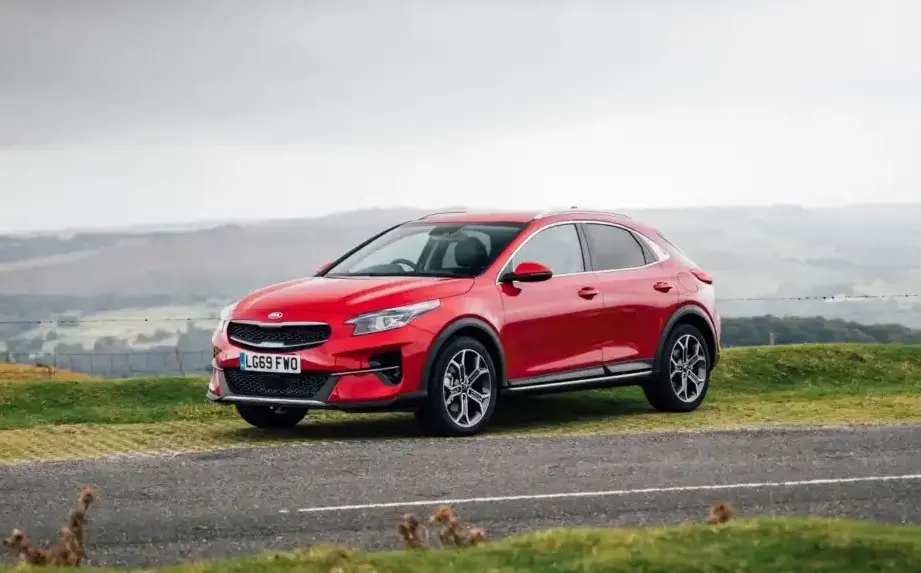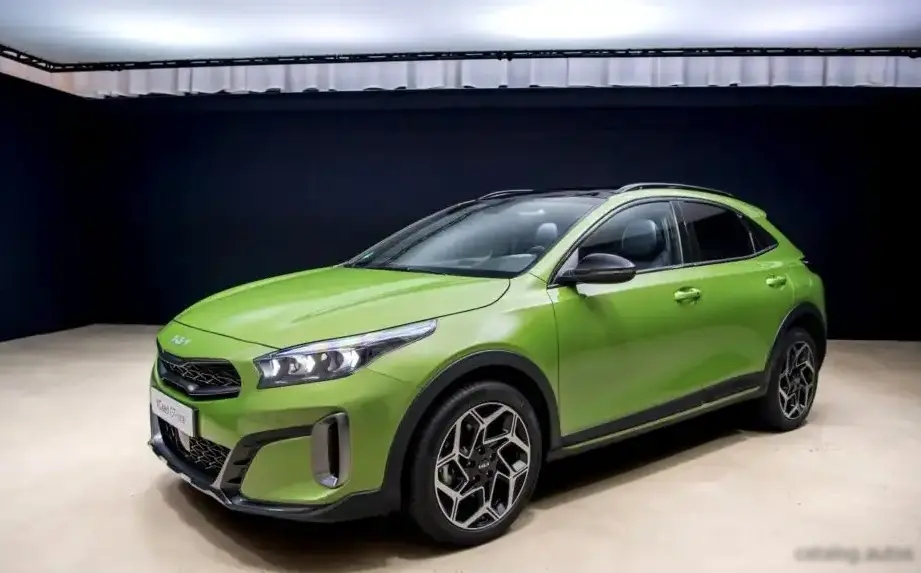
The Kia XCeed (facelift, introduced in July 2022 and produced through April 2024) 1.5 T-GDI with the 7-speed Dual Clutch Transmission (DCT) represents a key offering within Kia’s European-focused C-segment crossover lineup. Positioned as a mid-range trim, it aimed to balance fuel efficiency, performance, and modern technology for buyers seeking a practical and stylish compact vehicle. This variant builds upon the initial XCeed model launched in 2019, incorporating styling updates and refined powertrain options. The XCeed, unlike its more traditionally styled Ceed hatchback sibling, adopted a crossover aesthetic with a slightly raised ride height and rugged styling cues, targeting a broader demographic.
Technical Specifications
| Brand | Kia |
| Model | XCeed |
| Generation | Xceed (facelift 2022) |
| Type (Engine) | 1.5 T-GDI (160 Hp) DCT |
| Start of production | July, 2022 |
| End of production | April, 2024 |
| Powertrain Architecture | Internal Combustion engine |
| Body type | SUV, Crossover |
| Seats | 5 |
| Doors | 5 |
| Combined fuel consumption (WLTP) | 6.2-6.4 l/100 km (37.9 – 36.8 US mpg, 45.6 – 44.1 UK mpg, 16.1 – 15.6 km/l) |
| CO2 emissions (WLTP) | 132-144 g/km |
| Fuel consumption (economy) – urban (NEDC, WLTP equivalent) | 6.7-7.6 l/100 km (35.1 – 30.9 US mpg, 42.2 – 37.2 UK mpg, 14.9 – 13.2 km/l) |
| Fuel consumption (economy) – extra urban (NEDC, WLTP equivalent) | 5-5.3 l/100 km (47 – 44.4 US mpg, 56.5 – 53.3 UK mpg, 20 – 18.9 km/l) |
| Fuel consumption (economy) – combined (NEDC, WLTP equivalent) | 5.6-6.1 l/100 km (42 – 38.6 US mpg, 50.4 – 46.3 UK mpg, 17.9 – 16.4 km/l) |
| CO2 emissions (NEDC, WLTP equivalent) | 128-139 g/km |
| Fuel Type | Petrol (Gasoline) |
| Acceleration 0 – 100 km/h | 9.2 sec |
| Acceleration 0 – 62 mph | 9.2 sec |
| Acceleration 0 – 60 mph | 8.7 sec |
| Maximum speed | 208 km/h (129.25 mph) |
| Emission standard | Euro 6d |
| Weight-to-power ratio | 8.3 kg/Hp, 120.8 Hp/tonne |
| Weight-to-torque ratio | 5.2 kg/Nm, 190.9 Nm/tonne |
| Power | 160 Hp @ 5500 rpm |
| Power per litre | 108 Hp/l |
| Torque | 253 Nm @ 1500-3500 rpm (186.6 lb.-ft. @ 1500-3500 rpm) |
| Engine layout | Front, Transverse |
| Engine Model/Code | G4LH |
| Engine displacement | 1482 cm3 (90.44 cu. in.) |
| Number of cylinders | 4 |
| Engine configuration | Inline |
| Cylinder Bore | 71.6 mm (2.82 in.) |
| Piston Stroke | 92 mm (3.62 in.) |
| Compression ratio | 10.5:1 |
| Number of valves per cylinder | 4 |
| Fuel injection system | Direct injection |
| Engine aspiration | Turbocharger, Intercooler |
| Engine oil capacity | 4.2 l (4.44 US qt | 3.7 UK qt) |
| Coolant | 6.1 l (6.45 US qt | 5.37 UK qt) |
| Kerb Weight | 1325-1446 kg (2921.12 – 3187.88 lbs.) |
| Max. weight | 1870 kg (4122.64 lbs.) |
| Max load | 424-545 kg (934.76 – 1201.52 lbs.) |
| Trunk (boot) space – minimum | 426 l (15.04 cu. ft.) |
| Trunk (boot) space – maximum | 1378 l (48.66 cu. ft.) |
| Fuel tank capacity | 50 l (13.21 US gal | 11 UK gal) |
| Max. roof load | 80 kg (176.37 lbs.) |
| Permitted trailer load with brakes (12%) | 1410 kg (3108.52 lbs.) |
| Permitted trailer load without brakes | 600 kg (1322.77 lbs.) |
| Permitted towbar download | 75 kg (165.35 lbs.) |
| Length | 4395 mm (173.03 in.) |
| Width | 1826 mm (71.89 in.) |
| Height | 1483-1495 mm (58.39 – 58.86 in.) |
| Wheelbase | 2650 mm (104.33 in.) |
| Front track | 1575-1585 mm (62.01 – 62.4 in.) |
| Rear (Back) track | 1573-1583 mm (61.93 – 62.32 in.) |
| Front overhang | 905 mm (35.63 in.) |
| Rear overhang | 840 mm (33.07 in.) |
| Minimum turning circle (turning diameter) | 10.6 m (34.78 ft.) |
| Drivetrain Architecture | The Internal combustion engine (ICE) drives the front wheels of the vehicle. |
| Drive wheel | Front wheel drive |
| Number of gears and type of gearbox | 7 gears, automatic transmission DCT |
| Front suspension | Independent type McPherson |
| Rear suspension | Independent multi-link spring suspension with stabilizer |
| Front brakes | Ventilated discs, 305×25 mm |
| Rear brakes | Disc, 284×10 mm |
| Assisting systems | ABS (Anti-lock braking system) |
| Steering type | Steering rack and pinion |
| Power steering | Electric Steering |
| Tires size | 205/60 R16 92H; 235/45 R18 94V |
| Wheel rims size | 6.5J x 16 ET40; 7.5J x 18 ET45 |
Powertrain & Engine Architecture
At the heart of the XCeed 1.5 T-GDI DCT lies the G4LH engine, a 1.5-liter turbocharged inline-four cylinder gasoline engine. This engine is part of Kia/Hyundai’s “Smartstream” engine family, designed for improved efficiency and reduced emissions. It utilizes direct fuel injection, delivering fuel directly into the combustion chamber for precise control and optimized combustion. The engine also features a twin-scroll turbocharger with an intercooler, enhancing responsiveness and power output. The 7-speed Dual Clutch Transmission (DCT) provides quick and smooth gear changes, contributing to both performance and fuel economy. The DCT operates with two separate clutches, pre-selecting the next gear for seamless transitions. The engine incorporates a Start & Stop System and a particulate filter to meet stringent Euro 6d emission standards.
Driving Characteristics
The 160 horsepower and 186.6 lb.-ft. of torque produced by the 1.5 T-GDI engine, coupled with the 7-speed DCT, provide a respectable level of performance for everyday driving. Acceleration from 0-60 mph takes approximately 8.7 seconds, and 0-100 km/h in 9.2 seconds. While not a sports-oriented vehicle, the XCeed 1.5 T-GDI offers sufficient power for highway merging and overtaking. The DCT transmission contributes to a more engaging driving experience compared to a traditional automatic, with quicker shifts and a more direct feel. Compared to lower-powered XCeed variants, such as the 1.0 T-GDI, this engine provides a noticeable improvement in acceleration and overall responsiveness. However, it doesn’t match the performance of the more expensive and less common diesel options.
Equipment & Trim Levels
The 1.5 T-GDI DCT trim typically included a generous array of standard features. These commonly included an 8-inch touchscreen infotainment system with Apple CarPlay and Android Auto compatibility, a rear-view camera, automatic climate control, and a suite of advanced driver-assistance systems (ADAS) such as lane keeping assist, forward collision avoidance assist, and driver attention warning. Interior upholstery was typically cloth, with options for leather upgrades. Higher trim levels within the XCeed range offered additional features like a larger touchscreen, premium sound system, heated seats, and a panoramic sunroof.
Chassis & Braking
The XCeed utilizes a front-wheel-drive platform with independent suspension at all four corners. The front suspension employs a McPherson strut design, while the rear features a multi-link setup with a stabilizer bar. This configuration provides a good balance between ride comfort and handling. Braking duties are handled by ventilated discs at the front and solid discs at the rear. The inclusion of ABS (Anti-lock Braking System) is standard, enhancing safety during emergency braking situations. Steering is rack and pinion with electric power assistance.
Market Reception & Comparison
The Kia XCeed 1.5 T-GDI DCT was generally well-received by automotive critics. It was praised for its stylish design, spacious interior, and comfortable ride. The engine was considered a good compromise between performance and fuel efficiency. Compared to rivals like the Nissan Qashqai and Volkswagen T-Roc, the XCeed offered a competitive package with a longer warranty and a more modern interior. Fuel economy figures of 6.2-6.4 l/100 km (37.9 – 36.8 US mpg) were considered respectable for its class. Reliability reports have been generally positive, with few major issues reported with the 1.5 T-GDI engine and DCT transmission.
Legacy
The Kia XCeed 1.5 T-GDI DCT has established itself as a popular choice in the used car market. Its combination of practicality, style, and technology continues to appeal to buyers. The G4LH engine has proven to be relatively reliable, and the DCT transmission, while requiring occasional maintenance, has generally performed well. As a result, well-maintained examples of this variant hold their value reasonably well, making it a sensible and attractive option for those seeking a compact crossover.